Plant Conservatory, Parque Isidora Cousiño (Lota Park)
Lota, Biobío Region

Sources checked October 2026
- Style
- Glass-walled conservatory for tropical plants, in a historic park
- Dimensions
- Footprint of about 240 m² (OpenStreetMap outline)
- Status
- Park open to the public; access to the inside of the conservatory to be checked
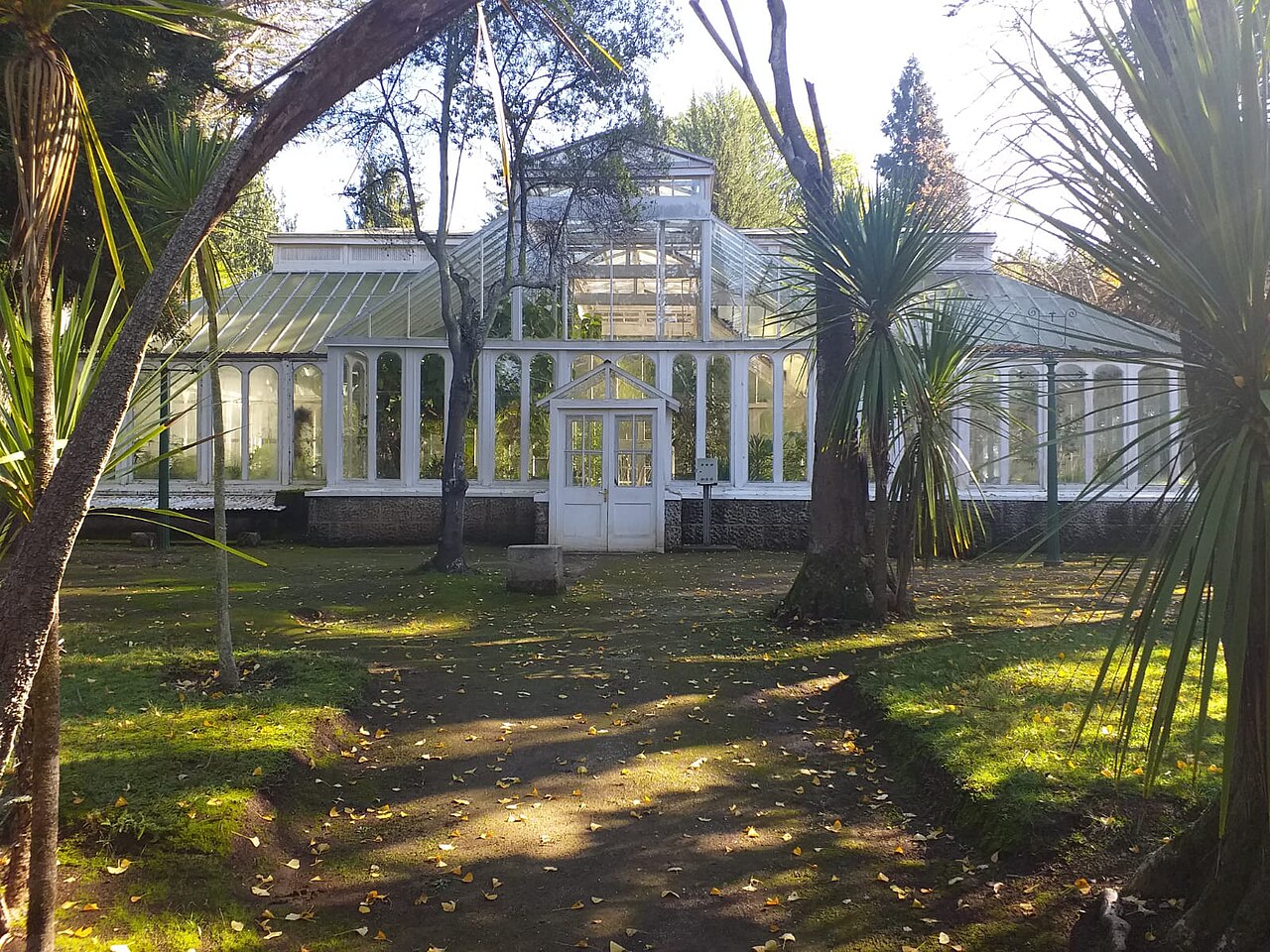
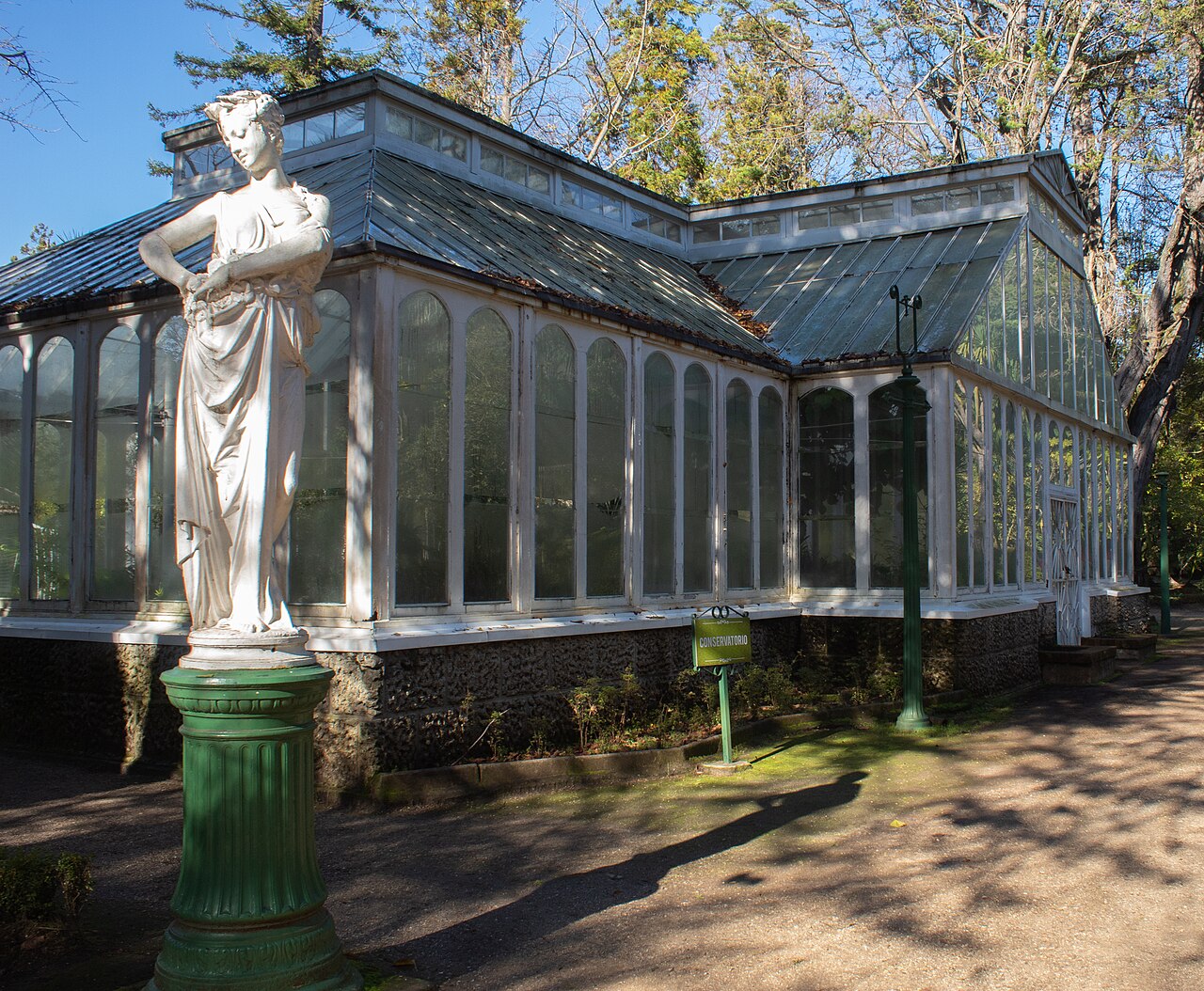
In the heart of Parque Isidora Cousiño, the historic garden of Lota that overlooks the Gulf of Arauco and has been a national historic monument since 2009, a glass-walled conservatory shelters tropical plants: orchids, ferns, begonias and a breadfruit tree from Java. It was heated by a hand-built coal-and-wood boiler that sent hot water through pipes, adding to the warmth captured by the glass; its roof was formerly glass too.
Affiliate links — booking through Verrière helps fund our research, at no extra cost to you.
History
Lota's park grew out of the Cousiño family's coal fortune. Matías Cousiño Jorquera began working the Lota coal mines in 1852; his son Luis Cousiño Squella conceived the park as a gift for his wife, Isidora Goyenechea. The English landscape gardener Bartlet laid it out between 1862 and 1872, combining the formality of French gardens with an English manner; a 2012 article gives 1862-1873 for Bartlet's layout, continued by O'Reilly. After Luis died in 1873, Isidora carried on the work and hired the Irish technician Guillermo O'Reilly, who introduced native and exotic plants. She looked after the park until her death, in 1898 according to the Circuito Lota website and in 1899 according to the 2012 article.
For the conservatory, a brochure put online by the Archivo Histórico de Concepción, "La Flor de Lota", explains its function: to look after mainly tropical plants and to give a permanent home to imported trees that could not cope with the park's climate, which the neighbouring meteorological observatory, the second of its kind in the country, was used to study.
In 1929 the Compañía Carbonífera de Lota bought the park and opened it to the public. The Cousiño palace is gone. The park has been a national historic monument since 2009 and belongs to the Lota mining complex on Chile's UNESCO tentative list. A foundation, Procultura, took over its development in 2020 under an emergency plan signed with Corfo (Diario Financiero, 2022); Wikipedia and the Circuito Lota website now point to the Fundación CEPAS.
Architecture and engineering
The conservatory is a glass-walled building whose warmth came from two sources. A hand-built coal-and-wood boiler sent hot water through pipes, regulated according to the temperature, to produce 23 °C; the natural heat captured by the glass added to it. According to the brochure of the Archivo Histórico de Concepción, the roof was formerly glass as well. The neighbouring observatory, by contrast, keeps a roof of glazed ceramic tiles made in Lota. The OpenStreetMap outline of the conservatory indicates a footprint of about 240 m².
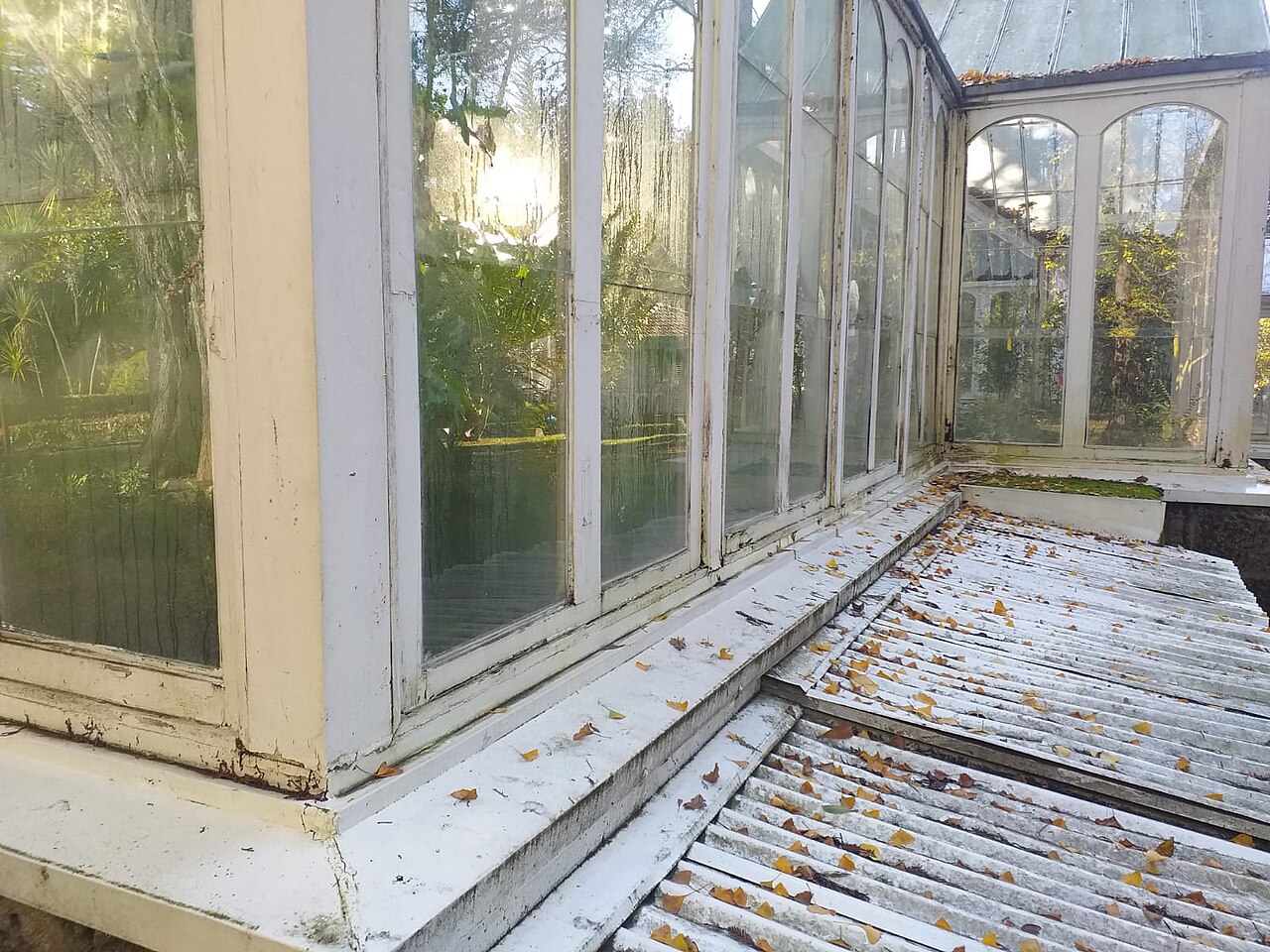
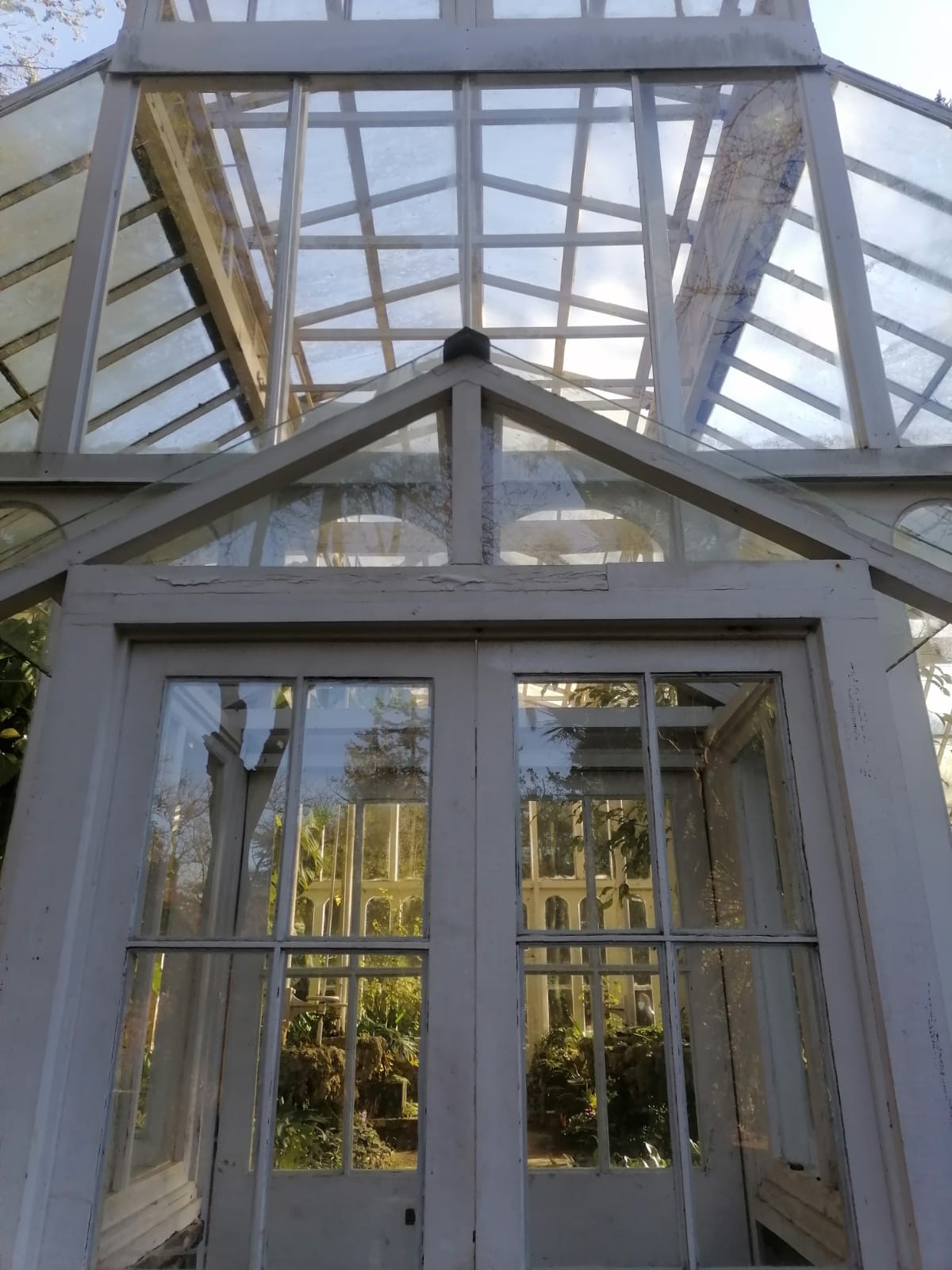
In the photographs published on Wikimedia Commons, taken in May 2022, the building stands on a stone plinth; its glazed walls are framed by white-painted uprights with arched fanlights, and its hipped roof carries a glazed lantern. A double door with glazed leaves opens in the middle of one front. The four statues of the Seasons, attributed to Dúlos in the brochure, stand around it.
Plant collections
The sources agree on three elements: orchids of several varieties, ferns and a breadfruit tree from the island of Java, a species whose fruit grows straight out of the trunk. Wikipedia adds begonias and speaks of tropical plants; the official Chilean tourism site mentions exotic plants. According to the brochure, the orchids and the breadfruit tree are the most remarkable species.
At the scale of the park, the Circuito Lota website counts more than 83 plant species from five continents, while a 2022 article refers to a collection in the order of 2,000 species. The park also has 27 cast-iron sculptures from the French Val d'Osne foundry, more than fifty vases, benches and pedestals, a valley of camellias and peacocks.
Visiting
The conservatory stands in the fourteen-hectare park of Lota Alto, among the statues of the Seasons. The park has viewpoints over the Gulf of Arauco, the pier and the former mining installations. The conservatory can be seen from the paths.
The park belongs to the Circuito Lota, which also includes the Lota historical museum and the Chiflón del Diablo mine, whose temporary closure for maintenance was announced on the circuit's website when it was consulted in October 2026. From Concepción, allow about forty minutes by road on Route 160; by train, Biotrén line 2 goes to Coronel, and a bus or shared taxi covers the last eight kilometres.
37.09° S, 73.17° W
More greenhouses — Chile
All greenhouses — Chile →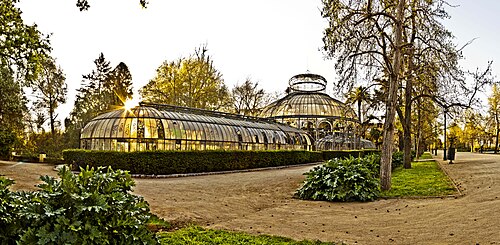
Do you have a good photo of this greenhouse? Suggest it for this page →
Sources (8)
- circuitolota.cl/parqueisidoracousino.php
- circuitolota.cl
- es.wikipedia.org/wiki/Parque_de_Lota
- archivohistoricoconcepcion.cl/wp-content/uploads/2025/08/PArque-Isidora-Goyenechea.pdf
- revistas.ubiobio.cl/index.php/RU/article/download/255/222/892
- chile.travel/?p=61621
- df.cl/capital/cultura/estilo-de-vida-ed/el-sorprendente-parque-que-atrae-turismo-a-lota
- wikidata.org/wiki/Q6062246
Affiliate links — booking through Verrière helps fund our research, at no extra cost to you.