Invernáculo, Santa Teresa National Park
Santa Teresa National Park, Rocha Department
No freely licensed photo of this greenhouse yet. Do you have one? Suggest it for this page →
Sources checked October 2026
- Year
- 1939
- Style
- Granite and glass greenhouse, called "eclectic" in a Uruguayan press article
- Dimensions
- Footprint of about 500 m² (calculated from the OpenStreetMap outline)
- Status
- Inside a national park open to the public (free entry); access to the interior to be checked
Built of granite and glass, the invernáculo of Santa Teresa National Park, in Uruguay's Rocha Department, is dated 1939 by the departmental tourism page, a Uruguayan guide and a travel blog. Heated and humidity-controlled, it houses, according to the departmental tourism board, tropical flora from the five continents, with a small aquarium, koi ponds and a cactus area mentioned in the same passage. The Ministry of Education and Culture lists it among the park's historic buildings, the park itself having been declared a national historic monument at a ceremony on 19 November 2024.
Affiliate links — booking through Verrière helps fund our research, at no extra cost to you.
History
Santa Teresa National Park, on the Atlantic coast of Rocha Department, was created by Law 8172 on 26 December 1927 and is still run by the Uruguayan Army. It grew up around the Fortaleza de Santa Teresa, which the Portuguese began fortifying in 1762 and which passed in 1825 into the hands of the “Orientales” (the Uruguayans), before a long period of neglect. The historian, archaeologist, museologist and landscape designer Horacio Arredondo was its main promoter: he wanted to showcase the fortress by surrounding it with native flora, and to plant exotic species on the dune sector. From 1917 he set out to hold the dunes with plantings; the first small trees to fix them arrived in 1923, and the planting of hundreds of European varieties, followed by the laying out of the park's roads, began in 1930.
According to the Spanish Wikipedia article on him, the buildings of the Capatacía, the Sombráculo and the Invernáculo were added afterwards, without precise dates. The Rocha departmental tourism page, a Uruguayan travel guide and a Brazilian travel blog date the invernáculo to 1939, the same year as the sombráculo. The greenhouse and the sombráculo were enriched with exotic plants from several countries. On 19 November 2024 the national Commission for Cultural Heritage declared the park a national historic monument, and the invernáculo is among the historic buildings protected together with their setting and original fittings.
Architecture and engineering
The invernáculo is built of granite and covered with glass. The Rocha tourism page speaks of granite and glass "capsules", Spanish Wikipedia of glass domes; both phrases suggest dome- or capsule-shaped glazed elements. A heating system and regulated humidity allow tropical plants to be grown there.
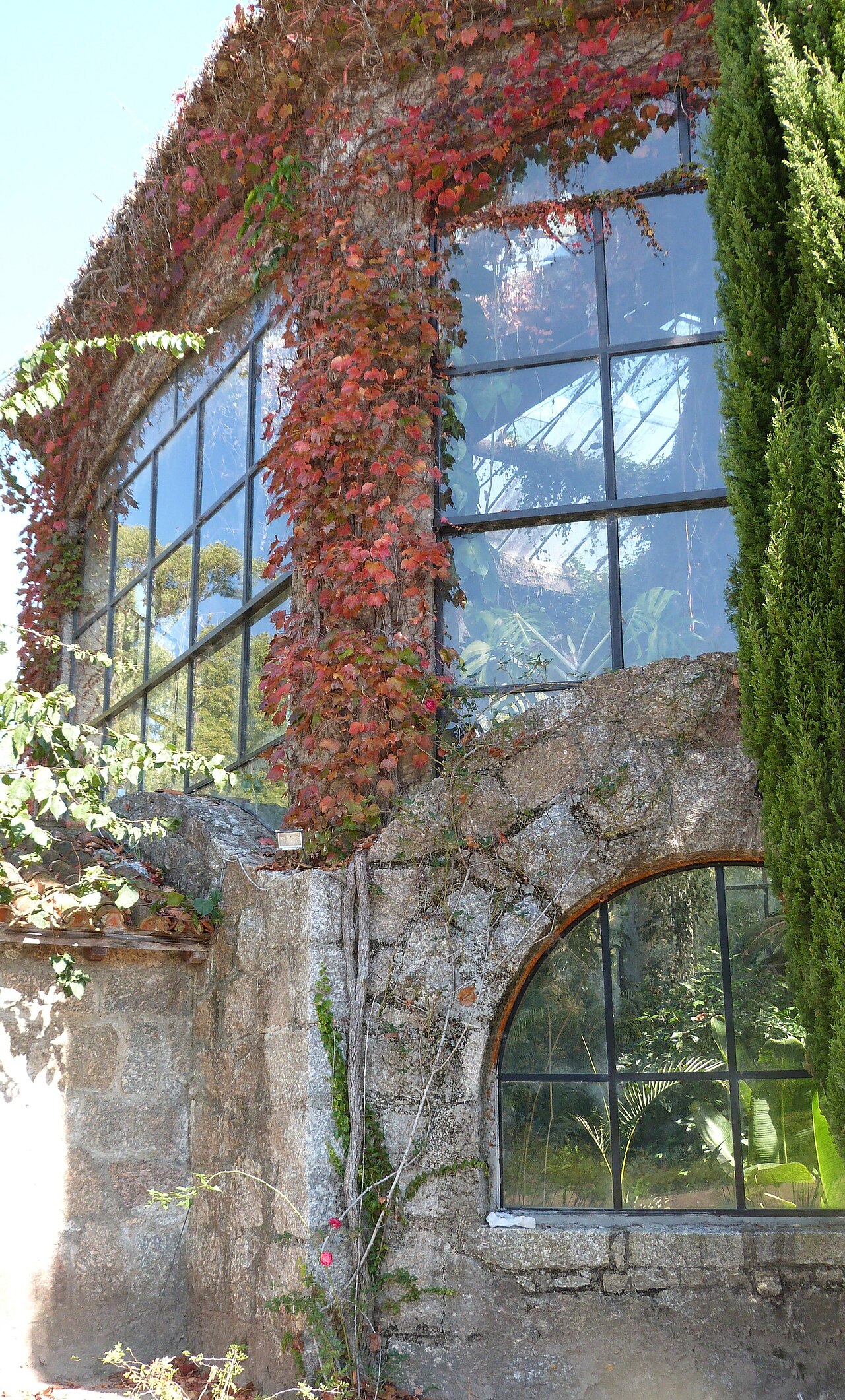
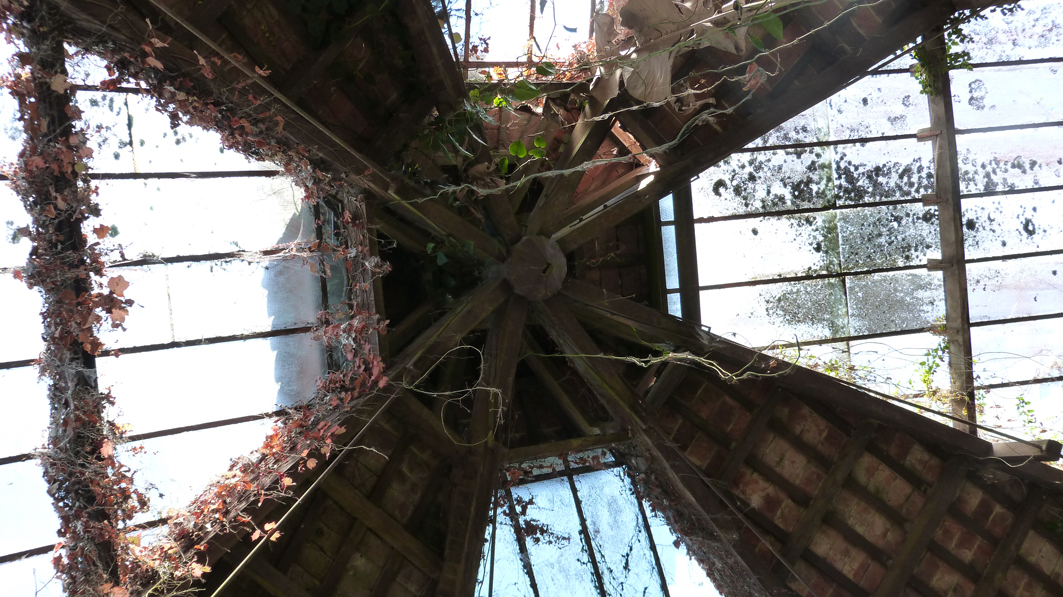
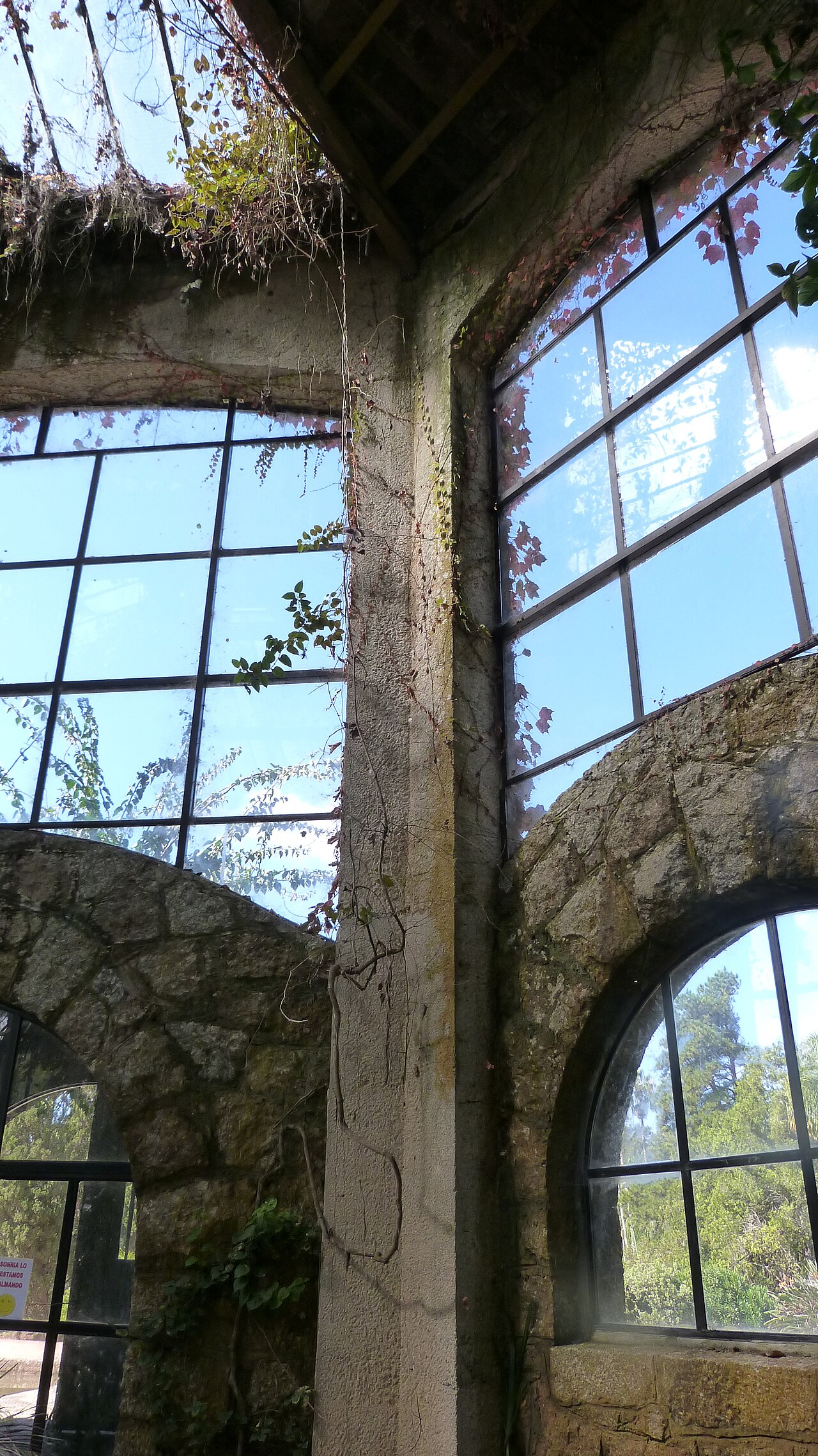
Photographs on Wikimedia Commons show stone walls pierced by large arched windows, glazed in small panes within metal frames, and, from the inside, glazed sections of the roof. The building's outline on OpenStreetMap is irregular, fitting a box of roughly 43 m by 33 m and a calculated area of about 500 m².
Its style is described in two ways. The announcement by the Ministry of Education and Culture places the park's historic buildings in a colonial style similar to the fortress, while a Uruguayan press article of December 2025 calls the invernáculo "eclectic".
Plant collections
The Rocha departmental tourism page describes tropical flora from the five continents as dominating the invernáculo, without naming species. The same passage lists a small aquarium of freshwater and saltwater species, two large ponds of multicoloured koi carp and a cactus area recreating a desert environment.
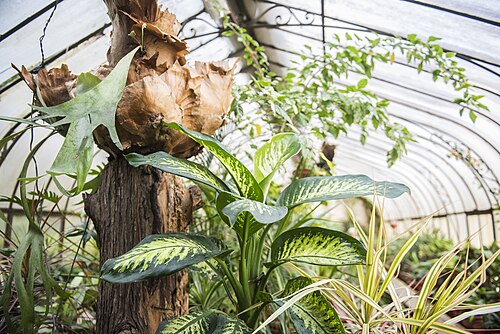
According to a Uruguayan travel guide, plants grown in the invernáculo are later moved to other parts of the park. The Spanish Wikipedia article on Arredondo adds that the greenhouse, like the sombráculo, was enriched with exotic plants brought from various countries. Photographs on Commons show large tropical foliage behind the glazing. The park also has a rose garden of more than 300 varieties and an aviary for endangered birds, which are not part of the greenhouse.
Visiting
The greenhouse stands inside the national park, which can be entered only from Route 9 at kilometre 302. Photographs taken from the interior are published on Commons.
The same park holds the Capatacía building, the rose garden, the aviary and the sombráculo, as well as the Fortaleza de Santa Teresa, built in 1762 and open to visitors in summer according to a travel guide. Photographs taken in April 2013 show the walls covered by a climbing plant with reddened leaves. The park, of 3,000 hectares, also borders Atlantic beaches.
34.00° S, 53.56° W
Greenhouses nearby
Do you have a good photo of this greenhouse? Suggest it for this page →
Sources (8)
- turismorocha.gub.uy/atractivos/aire-libre/parque-nacional-santa-teresa
- es.wikipedia.org/wiki/Parque_nacional_de_Santa_Teresa
- es.wikipedia.org/wiki/Horacio_Arredondo
- gub.uy/ministerio-educacion-cultura/comunicacion/noticias/parque-nacional-santa-teresa-esc
- gub.uy/ministerio-educacion-cultura/comunicacion/calendario-actividades/parque-nacional-sa
- guiaturista.com.uy/santa-teresa/invernaculo-fortaleza-dos-atractivos-espectaculares-parque
- montevideo.com.uy/Tiempo-libre/Parque-Nacional-Santa-Teresa-naturaleza-historia-y-playas-u
- commons.wikimedia.org/wiki/Category:Parque_Nacional_de_Santa_Teresa
Affiliate links — booking through Verrière helps fund our research, at no extra cost to you.