Orangery of the E. Z. Gareev Botanical Garden (Oranzhereya Botanicheskogo sada)
Bishkek

Sources checked October 2026
- Year
- 1947
- Style
- Post-war Soviet glasshouse with glazed vaults, a palm house and an upper succulent level
- Dimensions
- About 500 m²
- Status
- Open to the public (booked guided tours); ceiling and heating renewed in 2023
In the ornamental-plant section of the National Academy of Sciences' botanical garden on Gorky Street, the orangery is presented as Kyrgyzstan's only glasshouse of tropical and subtropical plants. Begun in 1947 by German prisoners of war, it gathers more than 500 species on 500 m² beneath glazed vaults: a palm house with a butia of about 70 years, a banana plant that reaches the ceiling, a large-flowered magnolia and, on an upper level, cacti and succulents. Long dilapidated and frozen when Bishkek's heating plant failed in January 2018, it had its ceiling and heating renewed in 2023.
Affiliate links — booking through Verrière helps fund our research, at no extra cost to you.
History
The Botanical Garden of the Kirghiz SSR Academy of Sciences was founded in March 1938 by decree, on a master plan drawn up by the Komarov Botanical Institute. Its first site, of about a hundred hectares, lay beyond the railway line on the southern edge of Frunze, today's Bishkek. That is where, on Gorky Street, the dendrarium-reserve and the ornamental-plant section with its collection orangery remain, while a 142-hectare estate allotted in 1962 in the Alamedin floodplain became the main site, on Akhunbaev Street.
According to the head of the ornamental-plant laboratory, interviewed by 24.kg in April 2026, construction of the orangery began in 1947 with the labour of German prisoners of war; in 2017 the garden marked the glasshouse's jubilee. The tropical and subtropical collection was assembled from the 1950s by two former heads, Lyubov Krivosheyeva and Yulia Pototskaya; the official history dates the start of these collections to 1952 and the creation of the flower and ornamental plant laboratory, which still runs the house, to 1964. In 1996 the garden was named after Enver Gareev, its long-serving director.
Recent decades have been hard. In 2017 the press described a building so decrepit that staff patched and reglazed the holes themselves, the heating having been replaced the previous year. In late January 2018 a failure of Bishkek's heating plant during a hard frost burst the pipes: the indoor temperature fell to –10 °C and monsteras, ficus and banana plants froze, the rest being saved with a diesel hot-air blower. Rebuilding the glasshouse was then written into the garden's development plan; in 2023 the ceiling and heating were finally renewed, and in January 2025 the garden gained the status of a specially protected natural area.
Architecture and engineering
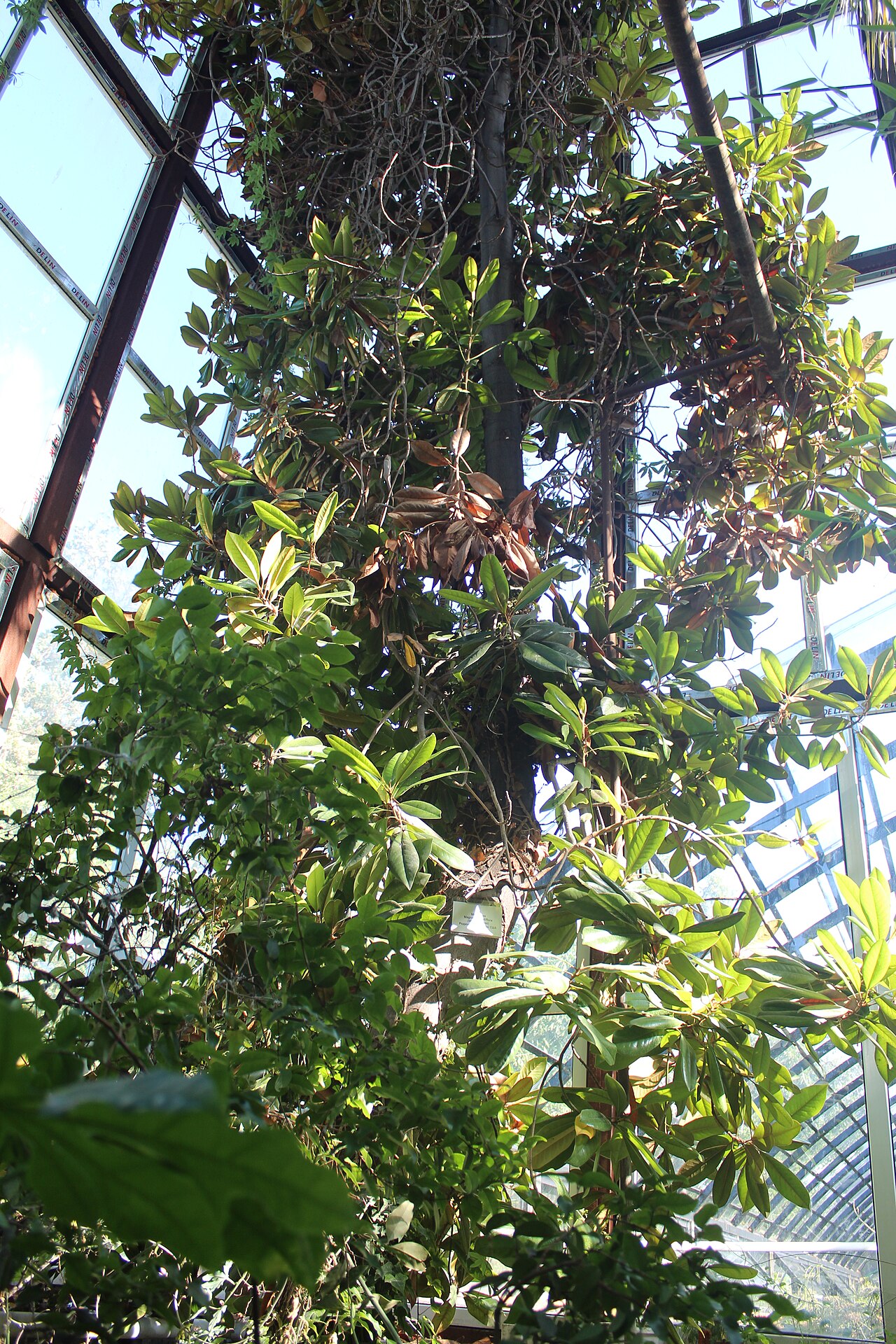
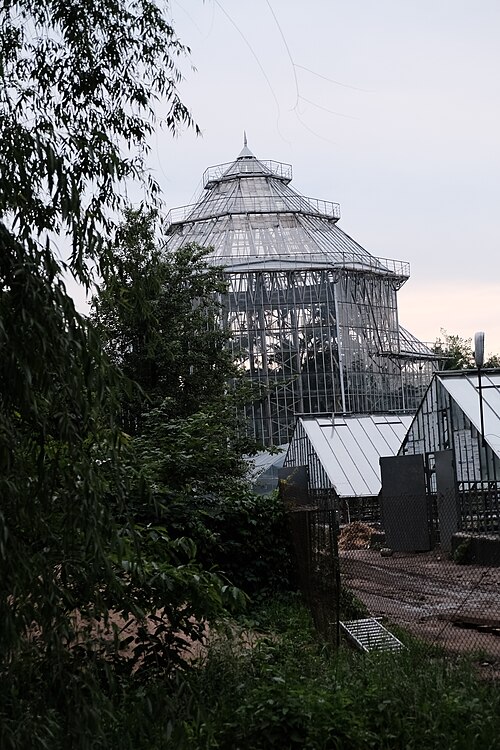
The orangery is a 500 m² glasshouse, judged small for a state institution by the local press, whose roof forms glazed vaults. The greatest height is given to the palm house: a butia palm of about 70 years stands at the entrance, all its foliage gathered against the ceiling, facing a washingtonia in the middle of a small bamboo grove. A large-flowered magnolia and a textile banana also reach the roof. A second volume, nicknamed the 'banana house', shelters sugar cane, and the succulents occupy an upper level that staff call the 'second floor'.
The original structure has aged. In 2018 the laboratory described worn load-bearing beams, gaps sealed every year with whatever came to hand and a central heating system unable to make up for the heat loss; replacing panes meant hiring a crane. The heating had been changed in 2016, then the ceiling and heating were renewed in the major renovation of 2023. With too few pollinating insects under glass, the team pollinates the flowers by brush and hopes to introduce bumblebees, along with predatory mites and parasitic wasps against pests.
Plant collections
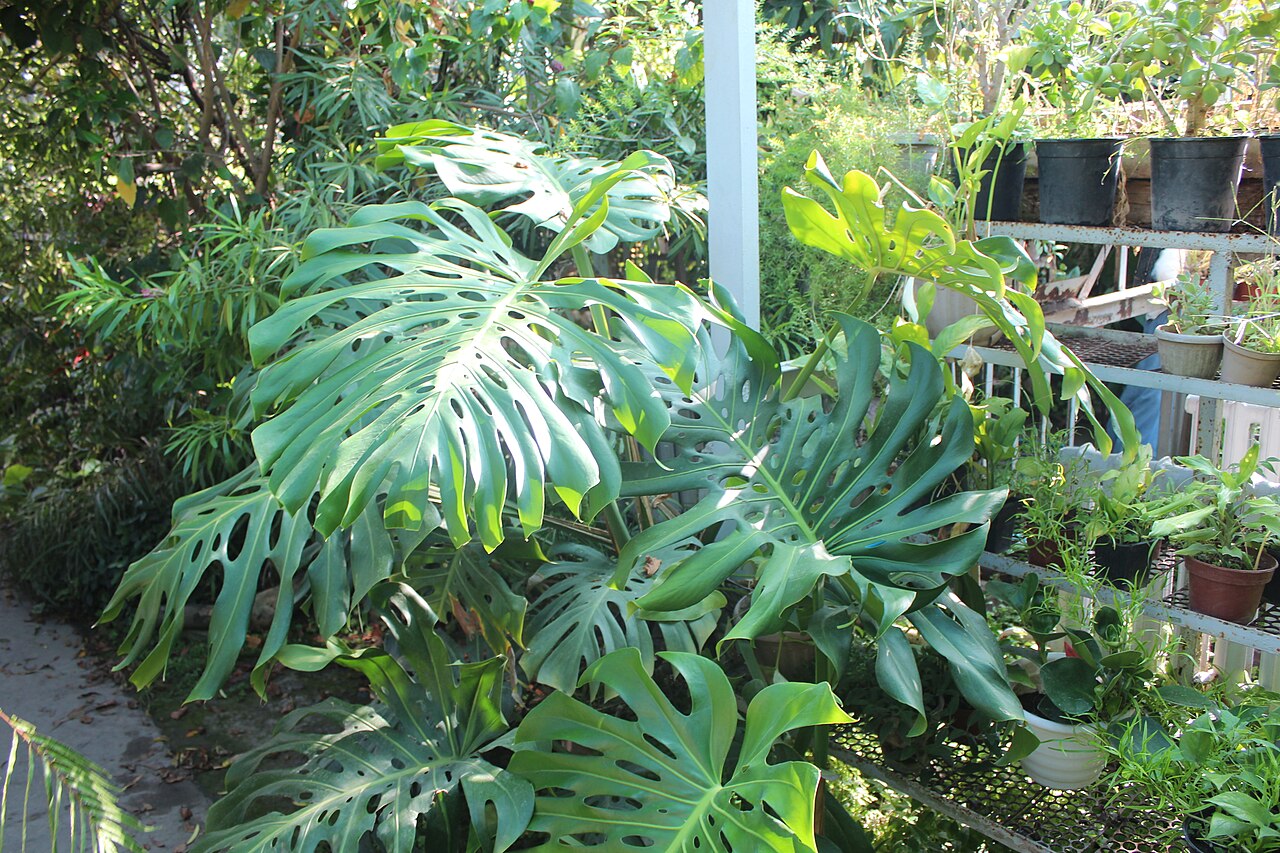
More than 500 species, 550 by a 2017 count, share the house: ornamental asparagus, cacti and succulents, ficus, ferns, hibiscus, monsteras, loquat, feijoa, guava, avocado, araucaria, fuchsias and citrus. A grapefruit, a hybrid of pomelo and orange, scents the entrance in spring, and royal and Nicolai strelitzias open their bird-head flowers. The frosts of 2018 killed monsteras, ficus and banana plants, genera that are once again well represented.
The collection of cacti and succulents, some of them rare, owes much to an 82-year-old volunteer who gave the garden most of her private collection and comes three times a week to tend them. Flowering continues all year round; hand pollination of the fruit trees gives uneven harvests. Outside the glasshouse, the laboratory keeps open-ground collections of ornamental plants, studied for their resistance to heat and drought with a view to greening Bishkek and the regions; the garden as a whole claims more than 3,500 flowering, greenhouse and herbaceous plants.
Visiting
The orangery stands in the garden's ornamental-plant section on Gorky Street, next to the dendrarium-reserve, and not on the large main site on Akhunbaev Street. It is visited on a guided tour booked by telephone with the laboratory; school and student groups come above all in winter, when the house offers a permanent summer. The garden, open Monday to Friday, is explored along its marked paths, the dendrarium only with a guide. A visit combines with the neighbouring dendrarium or, across the city, with the garden's main site and its open-ground collections.
42.86° N, 74.59° E
Greenhouses nearby
Do you have a good photo of this greenhouse? Suggest it for this page →
Sources (8)
- botanica.kg/information/
- botanica.kg/history_all/
- botanica.kg/p1531313020/
- 24.kg/obschestvo/369108_tam_gde_zimyi_nebyivaet_istoriya_tsvetochnoy_oranjerei_vbotaniches
- 24.kg/obschestvo/367097_unichtojenie_ili_vozrojdenie_chto_nasamom_dele_proishodit_zazaboro
- kaktus.media/doc/365085_oranjereia_botanicheskogo_sada._kakyu_krasoty_my_mojem_poteriat_fo
- kaktus.media/doc/369520_iz_za_avarii_na_tec_pogibli_ynikalnye_rasteniia_botsada_bishkeka.h
- sxodim.com/bishkek/place/oranzhereya-v-botanicheskom-sadu
Affiliate links — booking through Verrière helps fund our research, at no extra cost to you.