Limonluk Kasr-ı Hümayunu, Yıldız Palace
Beşiktaş, Istanbul
Entry updated on October 3, 2026
- Year
- 1895
- Architect
- Raimondo D'Aronco
- Style
- Art nouveau, cast-iron frame and coloured glass
- Status
- Open to the public with Yıldız Palace (since July 2024)
Set against the harem wall opposite the Küçük Mâbeyn, Sultan Abdülhamid II's working office, this L-shaped orangery with a cast-iron frame and partly coloured glazing is the work of the Italian architect Raimondo D'Aronco. An archival document of 1895 records two sets of iron orangeries being made for Yıldız at the Imperial Arsenal. A survivor among the many glasshouses the sultan commissioned, many of them since lost, it was one of the buildings opened to the public for the first time on 19 July 2024, when the palace reopened after restoration.
Affiliate links — booking through Verrière helps fund our research, at no extra cost to you.
History
1 min
Abdülhamid II (reigned 1876–1909) moved to Yıldız in 1877 and turned this estate on the heights of Beşiktaş into a private enclave of 500,000 m² within the city, constantly enlarged with new land and buildings, which he seldom left. An amateur carpenter, keen gardener and collector of exotic plants gathered from around the world, he filled its walled courts with orangeries and winter gardens: the Yıldız albums, some 37,000 photographs, show them leaning against walls and façades, standing alone or even perched on roofs. The English landscape style introduced by the Bavarian gardener Christian Sester gave way, according to recent scholarship, to a French influence centred on glasshouses; around 1900 the Frenchman Charles Henry, the palace's last head gardener, replaced the old dry flues with hot-water heating.
The L-shaped orangery facing the Küçük Mâbeyn is the work of Raimondo D'Aronco, the Italian architect also believed to have designed that pavilion; his drawings for it were published by Diana Barillari in 2006. An Ottoman archival document dated 25 May 1895 records two sets of iron orangeries being made for Yıldız at the Imperial Arsenal (Tersâne-i Âmire), and the historian Göksun Akyürek dates the building to that year.
After the sultan's deposition in 1909 the palace was left to decay: the writer Marcelle Tinayre, shown round by Henry, described 2,000 lemon trees rotting in the orangeries, channels choked with roots and rusting ironwork. Restored from 2019 by the Presidency of National Palaces (Milli Saraylar), the palace opened to visitors on 19 July 2024, with the Limonluk among the buildings shown for the first time.
Architecture and engineering
1 min
The orangery forms an L set against the harem wall, opposite the Küçük Mâbeyn, the sultan's working pavilion, which itself carried a winter garden on its roof. It stands on a stone plinth marked by two bands of moulding; above it, a load-bearing cast-iron frame, described by the TDV Encyclopedia of Islam as yellow cast iron, supports a glazed roof and glazed sides, partly in coloured glass. The Presidency of National Palaces counts it among D'Aronco's original works in the art nouveau style.
Part of the metal was produced locally: the 1895 document names the Imperial Arsenal, and the historian Ülkü Altınoluk noted as early as 1988 that parts of the palace orangeries came from the Taşkızak shipyard. Industrial glass, by contrast, was still largely imported, as the Paşabahçe glassworks only opened in 1935. Ottoman records call these buildings by several names, among them limonluk, soba and demir soba ('iron stove'), and old photographs show another Yıldız glasshouse with straw mats hung over its façades to temper the heat.
Plant collections
1 min
The sources consulted do not list the plants displayed since the reopening; the Presidency of National Palaces highlights the Limonluk's plant diversity as a reflection of Abdülhamid II's botanical interests. The history of the Yıldız glasshouses is better documented. The sultan had species brought from distant lands, notably India and Indonesia, the subject of a study published in 2017. In an interview printed in the Revue Horticole in 1912, Charles Henry listed the plants in the glasshouses, at times too numerous and disorderly for his taste, and described four fruit orangeries he had built, 30 to 50 m long, 5 m wide and 3.5 m high, heated by a thermosiphon system. Peach, plum, sour cherry and apricot trees grew there beside strawberries, cucumbers and okra, of which the sultan ate a plate every day. Henry also explained how he cared for newly introduced plants such as palms.
Visiting
1 min
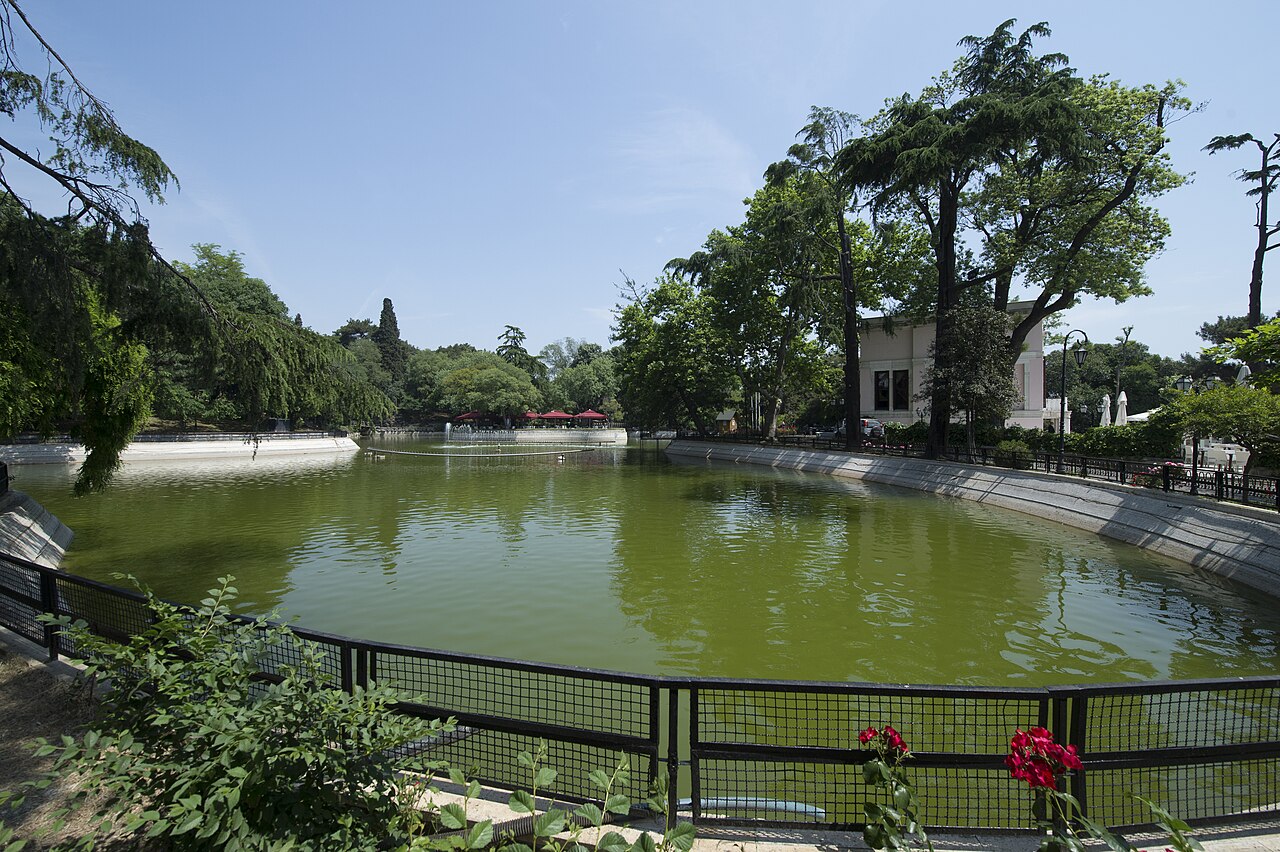
The Limonluk is visited as part of Yıldız Palace, on the heights of Beşiktaş, run by the Presidency of National Palaces. The route opened in 2024 takes in the Büyük and Küçük Mâbeyn, the Çit Kasrı, Abdülhamid II's private library and the garden once known as Hamid's garden, with its waterway shaped like a natural river, a pool 12 m wide, the fountain of Selim III, the Island Pavilion (Ada Köşkü) and the Cihannüma Pavilion looking out over the Bosphorus. In the same district, Dolmabahçe Palace, run by the same institution, has a cafeteria named Limonluk in the garden of its Painting Museum.
41.05° N, 29.01° E
Greenhouses nearby
Do you have a good photo of this greenhouse? Suggest it for this page →
Sources (8)
- millisaraylar.gov.tr/Kurumsal/HaberDetay/85/YILDIZ-SARAYI-KAPILARINI-HALKA-ACIYOR
- x.com/millisaraylar/status/1818611540523667834
- islamansiklopedisi.org.tr/yildiz-sarayi
- dergipark.org.tr/en/pub/iuarts/article/1647930
- aa.com.tr/tr/kultur/yildiz-sarayi-yaklasik-6-yillik-restorasyonun-ardindan-kapilarini-halk
- tr.wikipedia.org/wiki/Y%C4%B1ld%C4%B1z_Saray%C4%B1
- dergipark.org.tr/tr/download/article-file/5891075
- millisaraylar.gov.tr/Hizmetler/17/LIMONLUK-KAFETERYA