Glasshouse Complex, Queen Sirikit Botanic Garden
Mae Rim, Chiang Mai

Sources checked September 2026
- Style
- Complex of twelve themed glasshouses
- Dimensions
- Twelve glasshouses; the largest (rainforest) covers about 1,000 m²
- Status
- Open to the public
Opened in 1993 at Mae Rim, north of Chiang Mai, as the Mae Sa Botanic Garden, Queen Sirikit Botanic Garden is described as Thailand's first botanic garden built to international standards. Its complex of twelve glasshouses is arranged by theme: a tropical rainforest house of about 1,000 m² with a wooden walkway and artificial waterfall, arid plants, orchids and ferns, limestone plants, water plants, bromeliads, and carnivorous or medicinal plants. The garden is run by the Botanical Garden Organization, which carries out breeding programmes for native orchids there.
Affiliate links — booking through Verrière helps fund our research, at no extra cost to you.
History
The botanic garden opened in 1993 in Mae Rim district, north of Chiang Mai, originally as the Mae Sa Botanic Garden. In 1994 it was renamed in honour of Queen Sirikit. It is described as Thailand's first botanic garden built to international standards.
It is run by the Botanical Garden Organization (BGO), a body under Thailand's Ministry of Natural Resources and Environment that also manages botanic gardens in the provinces of Phitsanulok, Rayong, Khon Kaen and Sukhothai. Its work combines ex situ conservation of the Thai flora with research and education, and its breeding programmes for native orchids are among its best-known efforts.
In 2018 the newspaper The Nation described a group of twelve glasshouses, each showing a wide range of rare plants. Two years earlier, in 2016, the garden had opened a canopy walkway built of steel and safety glass.
Architecture and engineering
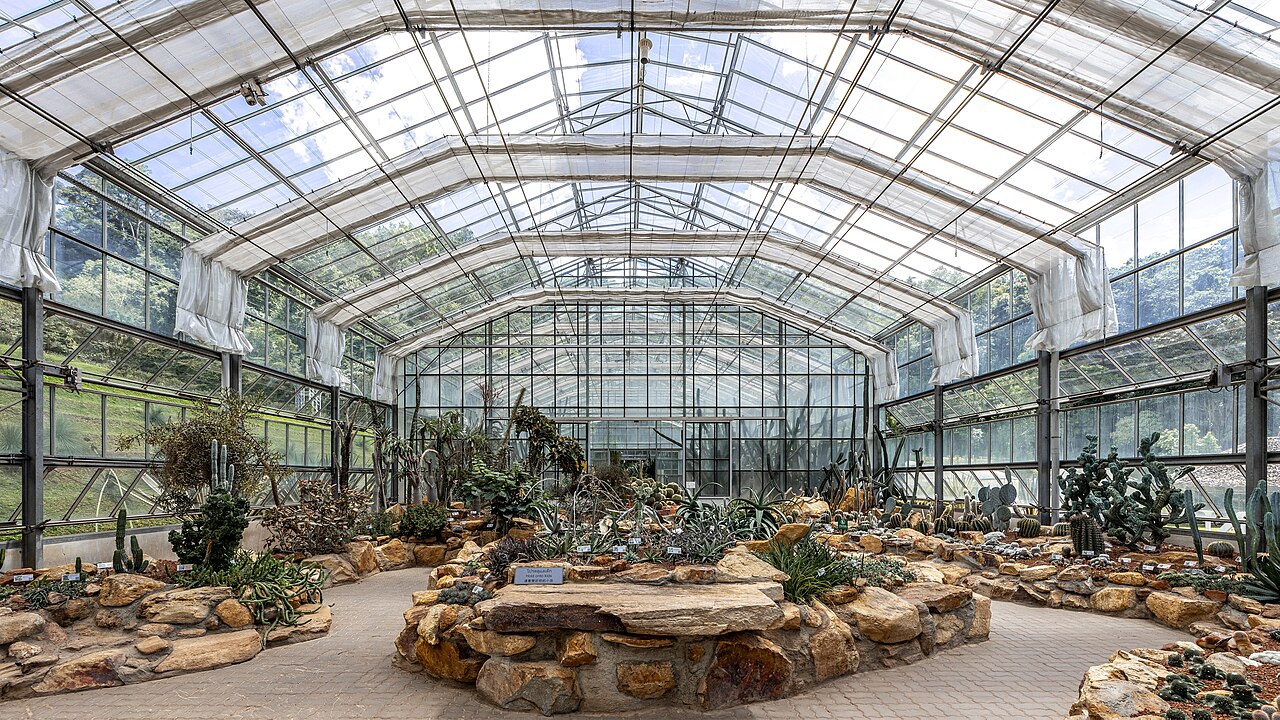
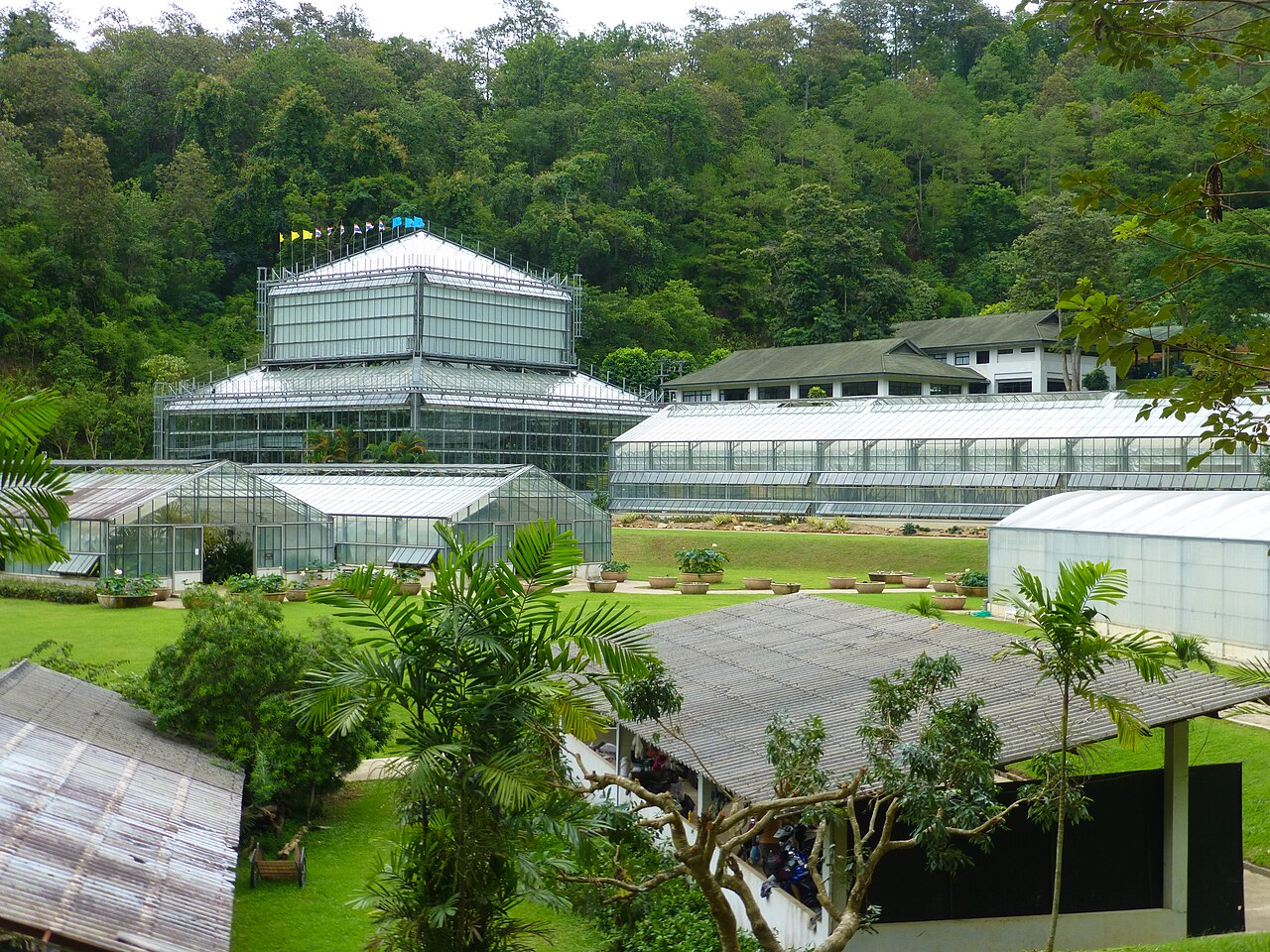
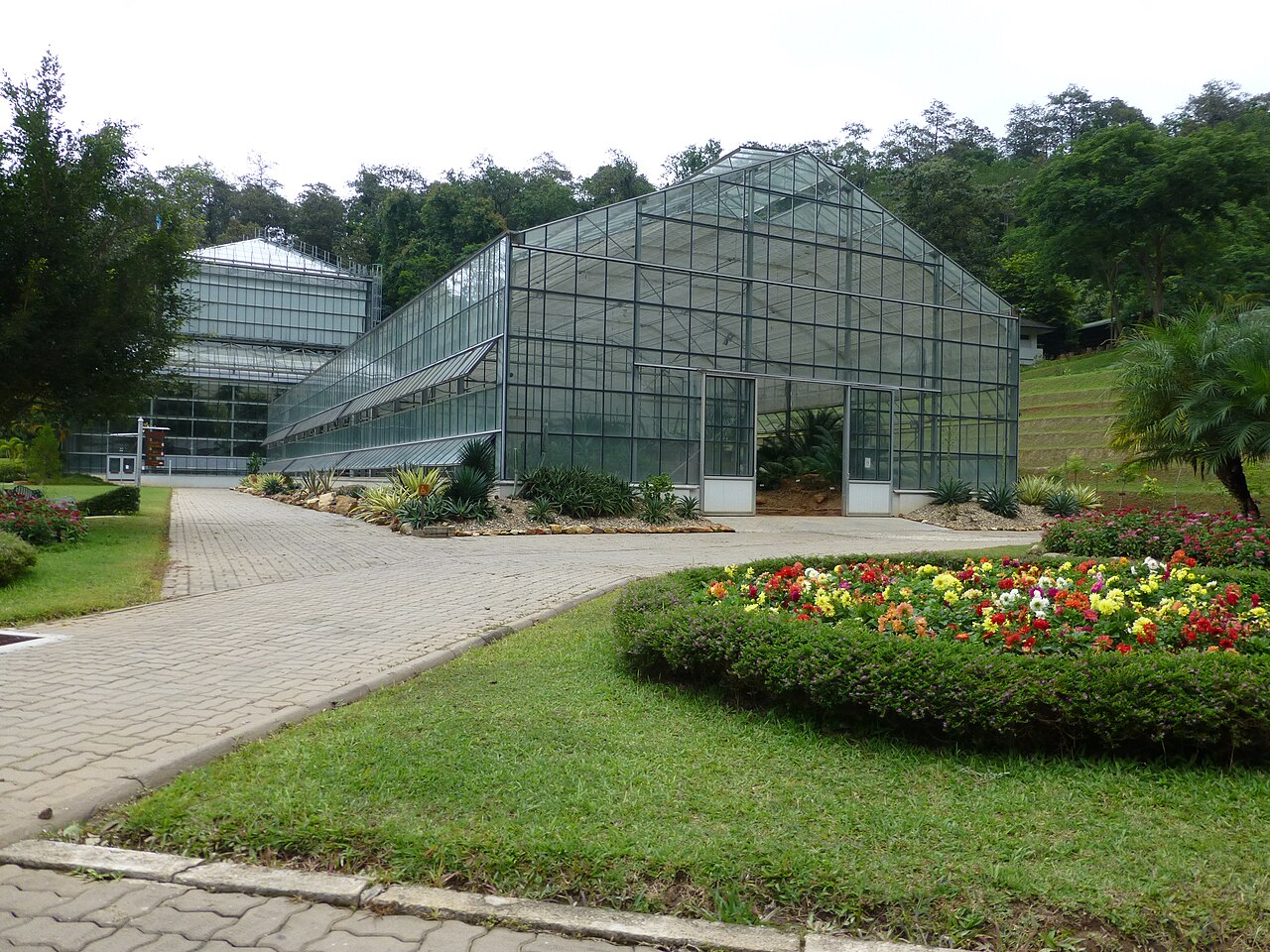
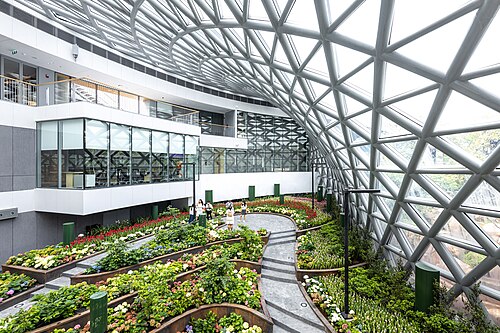
The complex comprises twelve glasshouses, each devoted to a particular habitat or plant group. The largest, the tropical rainforest house, covers about 1,000 m² and is explored along a long wooden walkway that runs beside an artificial waterfall.
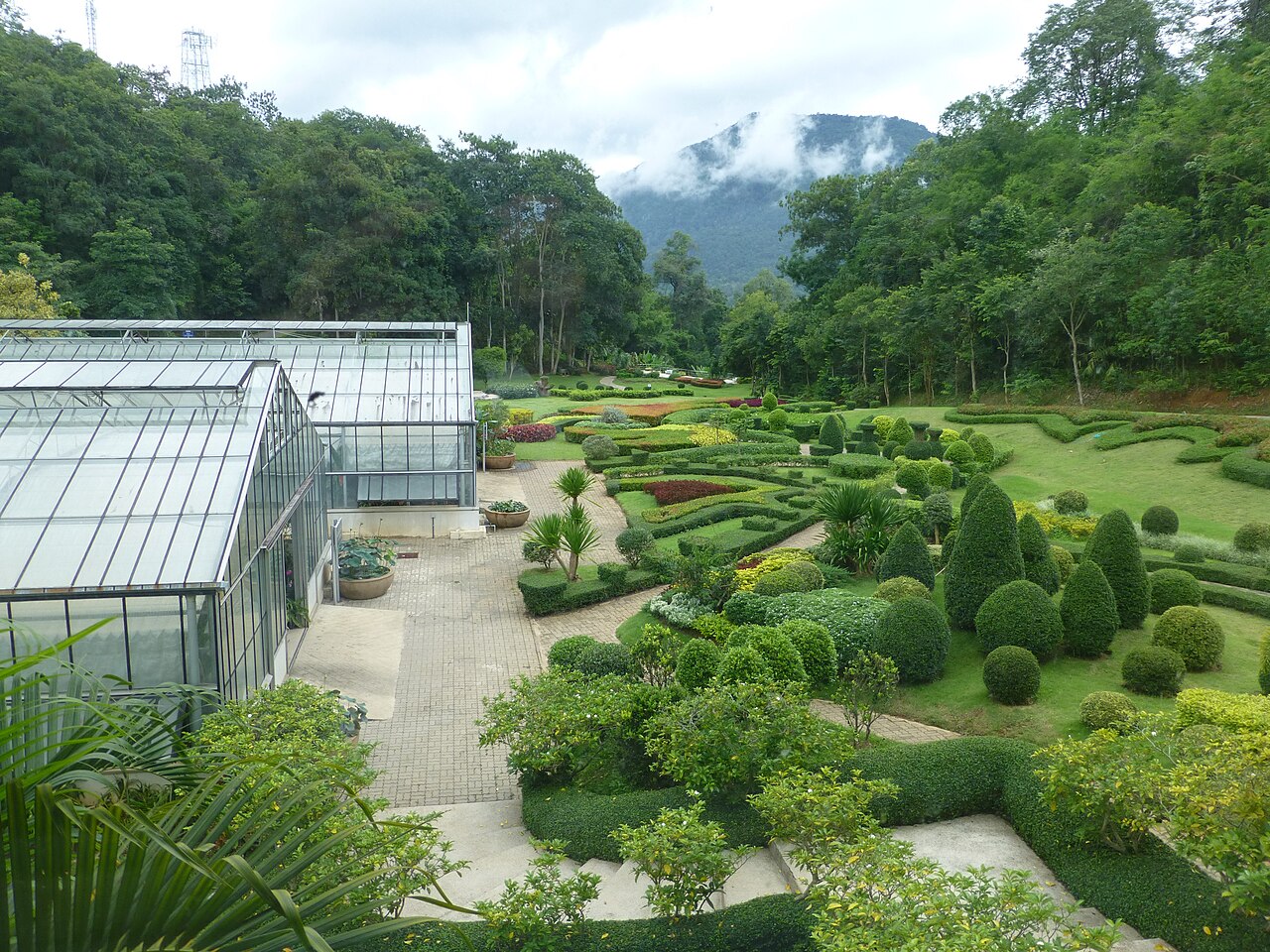
The glasshouses form a cluster east of the garden's Natural Science Museum: tropical rainforest, arid plants, limestone plants, ferns and orchids, water plants, lotus and water lily, bromeliads, carnivorous plants and medicinal plants.
Plant collections
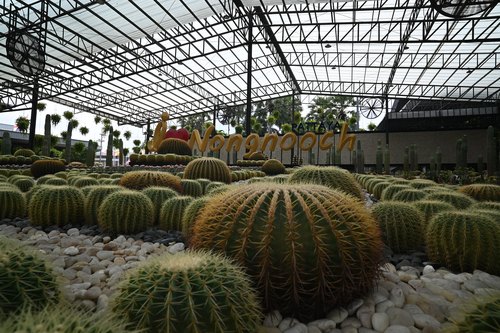
The glasshouses display rare plants, species endemic to Thailand and plants from around the world. The rainforest house brings together palms, bananas and many gingers from Thailand and Southeast Asia. The arid plant house gathers cacti, agaves and succulents from the United States, Mexico, Peru and Brazil alongside African euphorbias and aloes. An orchid and fern house displays epiphytic and terrestrial species, and other houses are given over, according to maps of the site, to limestone plants, water plants, lotus and water lilies, bromeliads, carnivorous plants and medicinal plants. Orchids hold a prominent place: Thailand has some 1,200 species, including Dendrobium and Bulbophyllum under pressure from over-collection and deforestation, and the garden runs breeding programmes for native species.
Visiting
The garden covers 6,500 rai, a little over 1,000 hectares of hilly land, from about 500 metres above sea level by the river in its lower reaches to 1,200 metres at its highest point, with evergreen and dipterocarp forest lower down and pine forest above.
The glasshouses are only part of a visit. The canopy walkway, about 20 metres above the ground and some 500 metres long, lies roughly 400 metres north of the complex, and forest trails, including an easy walk of around 45 minutes, round out the experience. Something is in flower throughout the year.
18.89° N, 98.86° E
More greenhouses — Thailand
Do you have a good photo of this greenhouse? Suggest it for this page →
Affiliate links — booking through Verrière helps fund our research, at no extra cost to you.