Exhibition Greenhouse, Seokmodo Arboretum (석모도수목원 전시온실)
Ganghwa (Samsan-myeon, Seokmodo Island), Incheon
No freely licensed photo of this greenhouse yet. Do you have one? Suggest it for this page →
Sources checked October 2026
- Style
- Glazed exhibition greenhouse, free-standing building
- Dimensions
- 332.40 m² floor area (county record, 2022)
- Status
- Open to the public
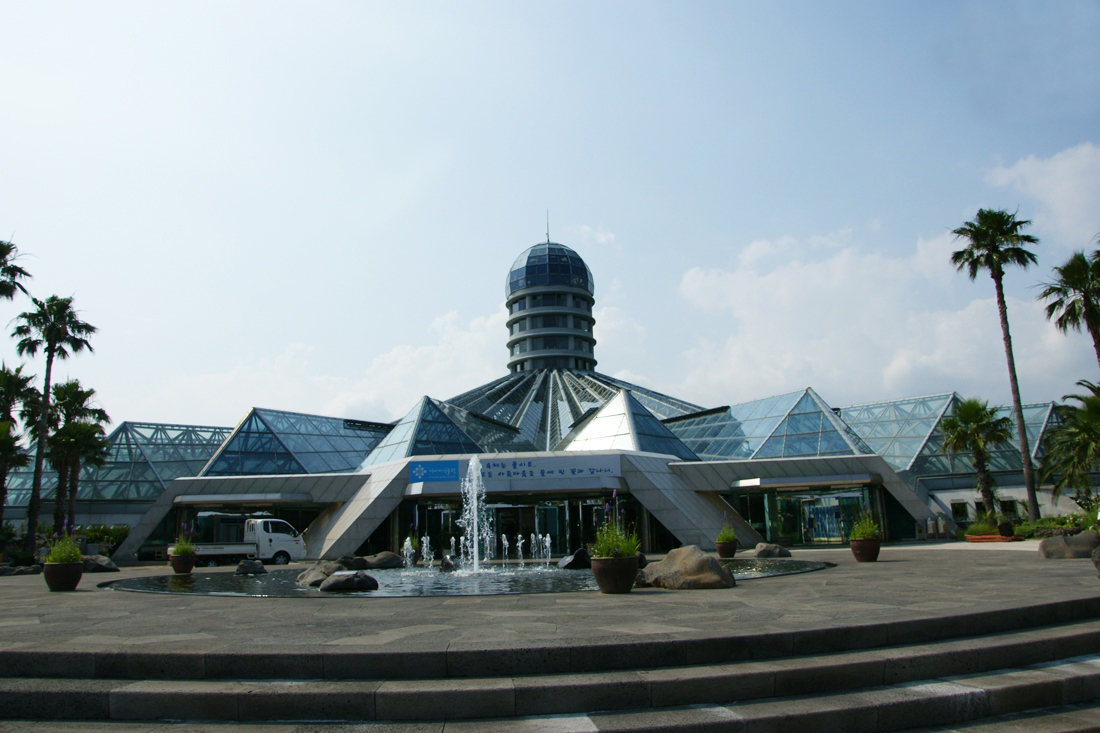
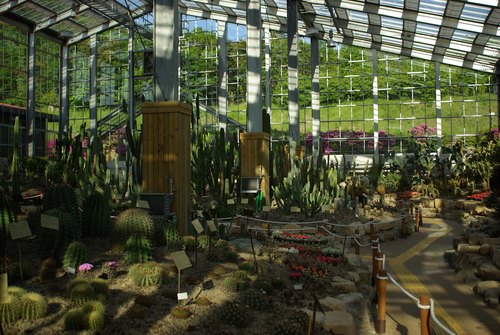
On Seokmodo Island, linked to Ganghwa by a bridge since 2017, the Ganghwa County arboretum is built around a themed garden, an ecological experience centre and an exhibition greenhouse. The county's own record lists the greenhouse as a glazed building of 332.40 m² devoted to displaying ornamental herbaceous plants. A press release of March 2016 already describes the arboretum's greenhouse, replanted for spring, three years before the official opening on 1 May 2019. Visitors find succulents and ornamental plants, and a small pond with aquatic plants and fish.
Affiliate links — booking through Verrière helps fund our research, at no extra cost to you.
History
Seokmodo Arboretum is a facility of Ganghwa County (Incheon), set on Seokmodo Island at the foot of Nakgasan. According to a 2019 article in the daily Kiho Ilbo, construction began in December 2008 and the city of Incheon registered it as a public arboretum in September 2013; the Yonhap agency dates the building of the project from 2013 and puts its cost at 9.6 billion won. Kiho Ilbo gives an area of 52 hectares, Yonhap about 53.9.
The exhibition greenhouse predates the inauguration. A county press release dated 25 March 2016 already describes the arboretum's greenhouse, whose planting had been renewed for spring. The site had been open free of charge while the car park and paths were unfinished; the official opening ceremony took place on 1 May 2019 before about 200 people, and an admission fee was introduced the next day, although tourism pages from 2022 give free entry. The facilities named that day included a rest room, a management building, a 'glass greenhouse' (yuri onsil) and the themed gardens.
A Korea Tourism Organization article written in September 2022 says the ecological experience centre and the greenhouse had been closed for a time because of Covid-19 before reopening.
Architecture and engineering
In the facilities table published by Ganghwa County in August 2022, the greenhouse is a single building of 332.40 m² floor area, assigned to displaying ornamental herbaceous plants (chohwaryu); the 2019 press calls it a glass greenhouse. The same table counts nine buildings with 1,368.09 m² in all, including a 701.05 m² management building that houses the offices and the ecological experience centre, toilets, an electrical store, a ticket kiosk and small reception structures.
The greenhouse stands halfway along the trail, near the ecological experience centre, whose odd look of cut tree trunks is noted in a 2022 report. Inside, according to a 2025 blog, a small pond holds aquatic plants and fish. The same blog finds the greenhouse smaller and less densely planted than expected.
Plant collections
The county's March 2016 release puts the number of kinds of plants shown in the greenhouse at about a hundred. Until then it had held mostly southern evergreens such as camellias and looked sparse and monotonous; it was then refilled with colourful foliage plants. The text highlights the croton, placed at the entrance for its variegated leaves, the agave (yongseolran), said to flower only once in about a hundred years, the stuki (snake plant), and also mentions the baeknyanggeum, a red-berried shrub of the forests of Jeju and the south-western islands.
A 2025 blog describes some twenty varieties of plants and twelve of trees, including a succulent native to Mexico (dotaerang), the South African songyeopguk, the oxalis (sarangcho) and the baeknyanggeum. Outdoors, the twelve themed gardens hold 1,170 species and 146,248 plants according to Yonhap in 2019 (1,176 species and about 140,000 plants in later texts), with the hwangbyeok-namu and jueop-namu trees, which grow in rock crevices, as emblematic species.
Visiting
The greenhouse comes halfway along the arboretum trail, near the ecological experience centre; it is small and quickly seen. According to the Korea Tourism Organization, the thematic observation course takes about half an hour and the walking loop about fifty minutes, roughly 1 h 20 for the whole. The rose tunnel is best in May-June, and the 2016 release notes flowering one to two weeks behind other areas.
A path of about an hour leads to Bomunsa temple; the county also lists Hwagae Garden, Seokmodo Natural Recreation Forest, the island's mineral spa and Minmeoru beach as nearby sights.
37.69° N, 126.33° E
Greenhouses nearby
More greenhouses — South Korea
Do you have a good photo of this greenhouse? Suggest it for this page →
Sources (8)
- ganghwa.go.kr/hwagae/forest/
- kihoilbo.co.kr/news/articleView.html?idxno=805145
- yna.co.kr/view/AKR20190501064800065
- ganghwa.go.kr/open_content/main/bbs/bbsMsgDetail.do?msg_seq=6811&listsz=10&bcd=report&pgno
- ganghwa.go.kr/open_content/main/bbs/bbsMsgFileDown.do?bcd=opendata&msg_seq=5092&fileno=1
- korean.visitkorea.or.kr/detail/rem_detail.do?cotid=4b3ff3ab-3917-4d0a-af78-659a6eb72fd2
- kangdante.tistory.com/2781
- openstreetmap.org/way/1173243934
Affiliate links — booking through Verrière helps fund our research, at no extra cost to you.