Subtropical Botanical Garden Glasshouses, Hallim Park (한림공원 아열대식물원)
Hallim-eup, Jeju City (Jeju Island)

Sources checked October 2026
- Year
- 1985
- Architect
- Japanese engineers invited by the founder (first glasshouse)
- Style
- Themed glasshouses (palms, tropical fruit, foliage, cacti) in a private theme park
- Dimensions
- First glasshouse 695 m² (1985); more than 3,000 species claimed
- Status
- Open to the public (private pay-to-enter park, open all year)
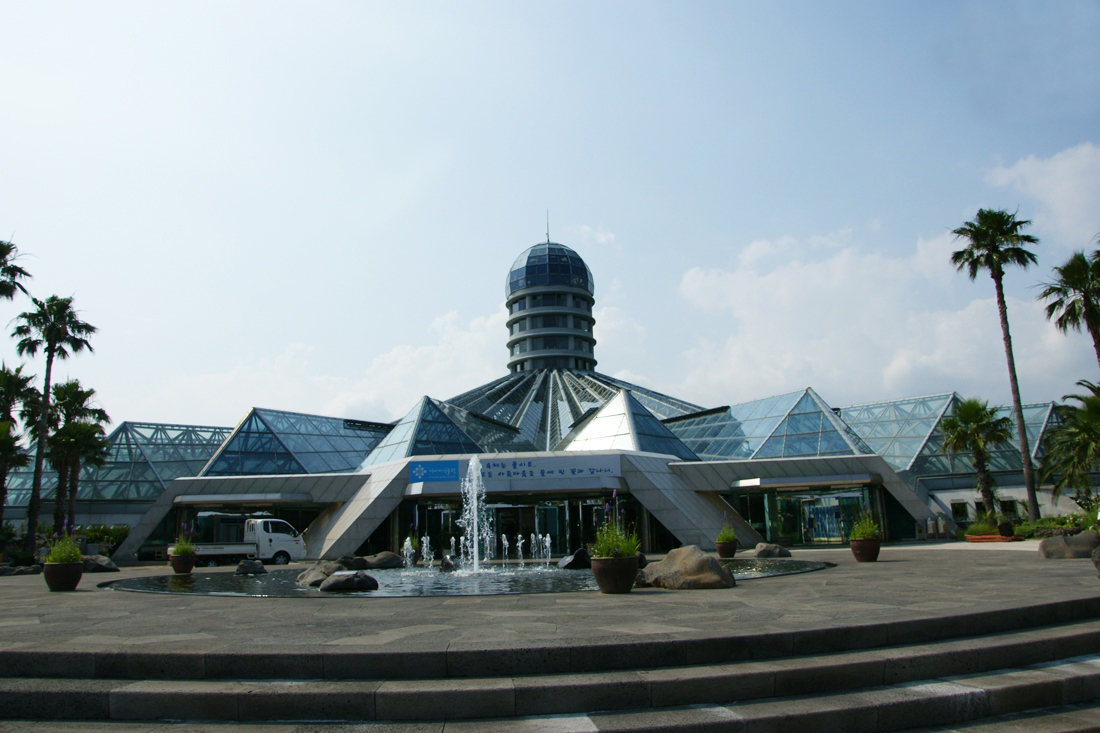
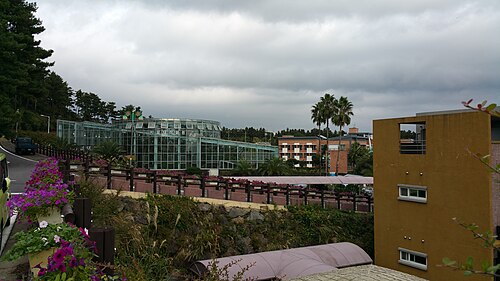
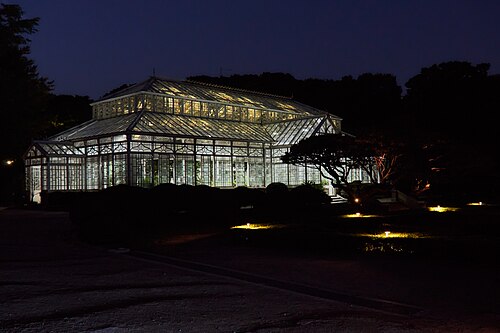
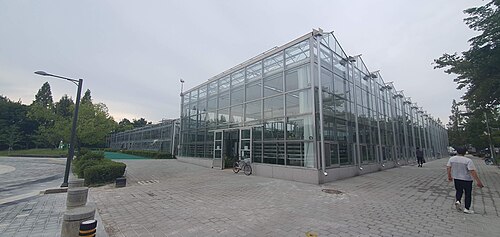
Inside a theme park created in 1971 by Song Bong-gyu on sandy land on Jeju's west coast, the subtropical garden gathers glasshouses where palms, tropical fruit trees, foliage plants and cacti grow. The first, of 695 m², was built in 1985 with Japanese engineers invited by the founder; the local press presents it as the first glasshouse garden on the island. Further houses followed, including a fern house and a cactus house. The official site claims more than 3,000 species collected from around the world.
Affiliate links — booking through Verrière helps fund our research, at no extra cost to you.
History
Hallim Park is the work of one man. Song Bong-gyu, a former member of the Jeju provincial assembly and later chairman of Hallim's development committee, travelled to Japan in June 1970 to study tourist sites, then chose the area of Hyeopjae, Geumneung and Biyangdo, rich in caves and beaches. In 1971 he bought some 300,000 m² of almost bare sand, opened the park on 10 October of that year and planted palms; according to Newsis, seeds of Washington palms, Canary palms and cycads brought from Japan were sown in 1972. Tourist development long lacked a permit, until the 1982 revision of the parks law allowed individuals to create parks: the urban-park permit was issued on 15 September 1982, according to the official history.
In 1985 the founder invited Japanese engineers to build a 695 m² glass greenhouse in the subtropical garden, which Newsis and Wikipedia present as the first on Jeju, four years before Yeomiji opened. A herb garden, a plum garden, topiary, a fern house, a wild-plant garden, a cactus house and a daffodil garden followed. The newspaper Jeju Ilbo noted in 2009 that themed facilities had been added at the rate of one a year since 1987; the park's director told it that royal palms brought from Taiwan twenty years earlier had survived only under glass, which had led him to enlarge the greenhouses. In 2007 the park was recognised as a first-category plant museum (1종 식물박물관), a status that lets it use electricity at an educational tariff, according to the official history.
Architecture and engineering
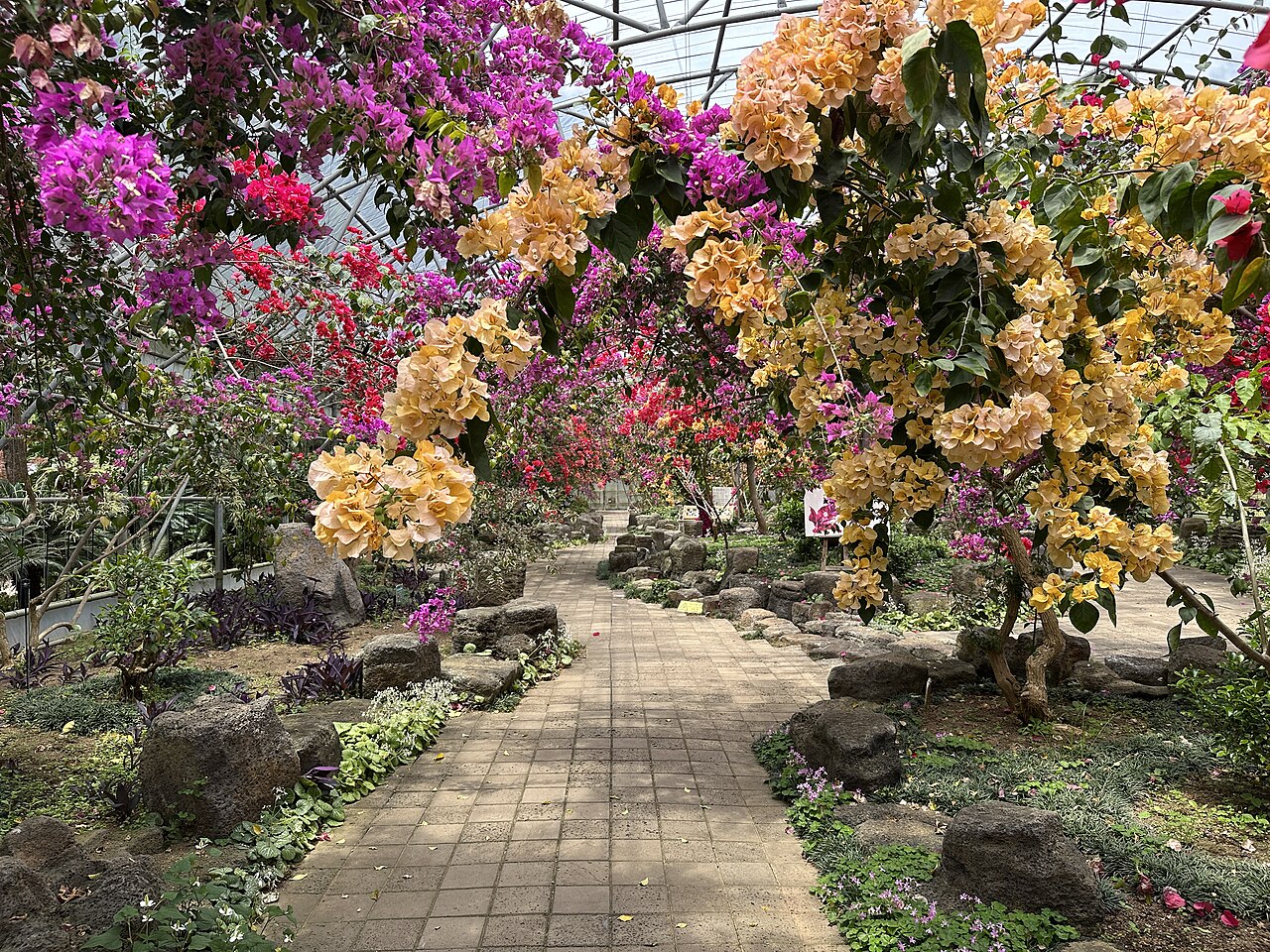
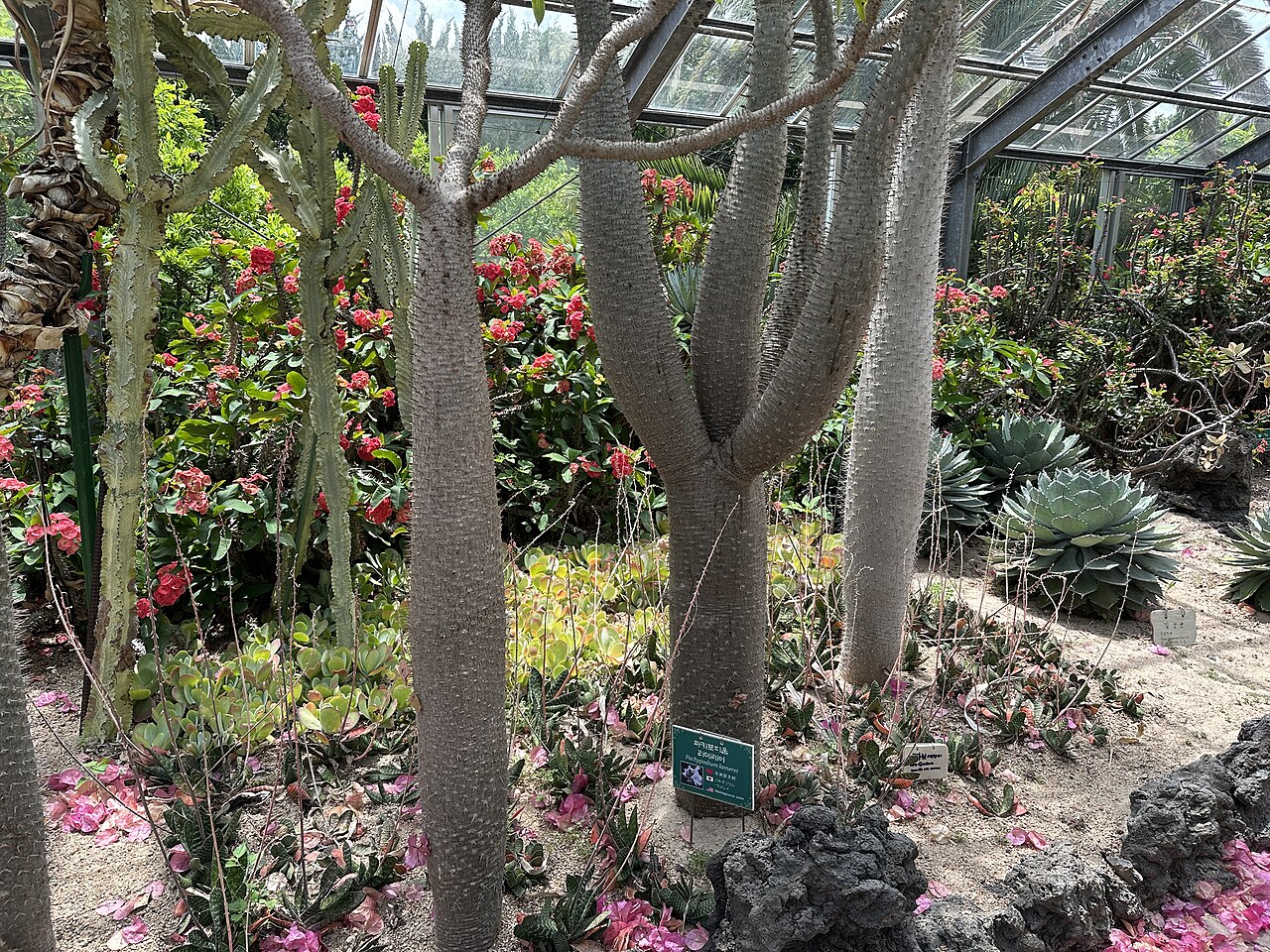
The subtropical garden sits at the entrance of the park: visitors walk through it before entering the palm avenue, according to a visit account of March 2026. The official site speaks of a glass greenhouse for tropical plants (열대식물 유리온실) and distinguishes, within the garden, a palm garden, a tropical-fruit house, a foliage house, a cactus house, a herb garden and an agave garden. The first house, of 695 m², was built in 1985 with Japanese engineers. Another greenhouse stands in the park's water garden: the flower calendar notes bougainvillea blooming there in May, as it does in the subtropical garden house and in the tropical bonsai garden. The reason for these glass volumes appears in the 2009 interview: the royal palms from Taiwan, which would not survive in the open, led the park to extend its greenhouses.
Plant collections
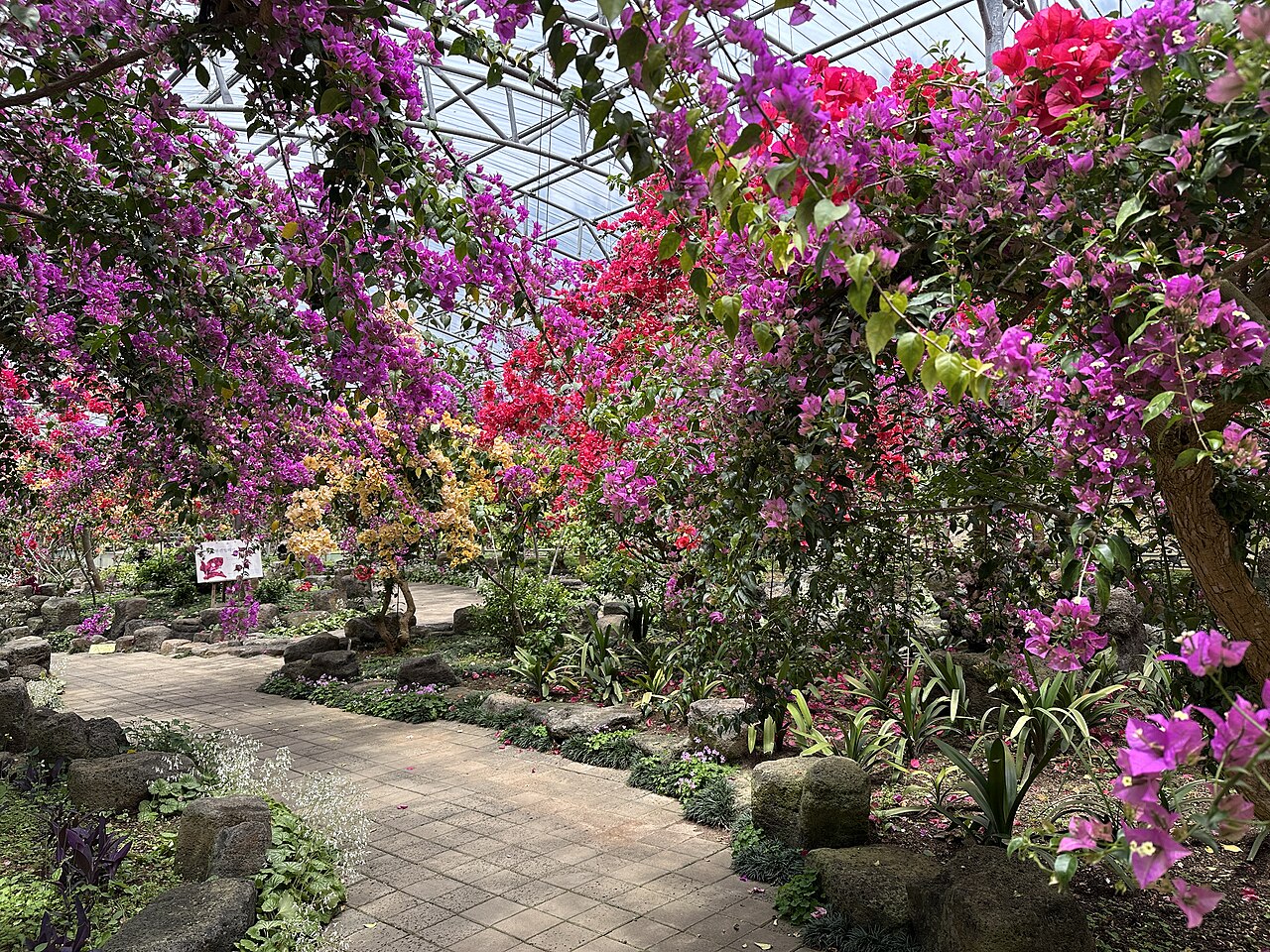
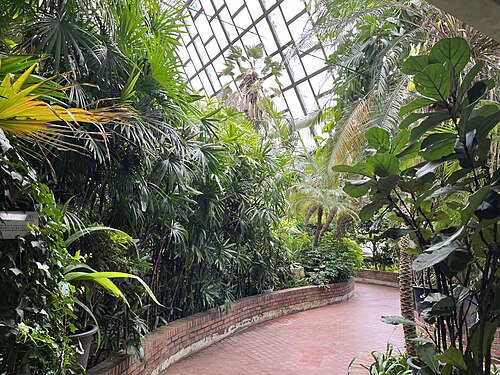
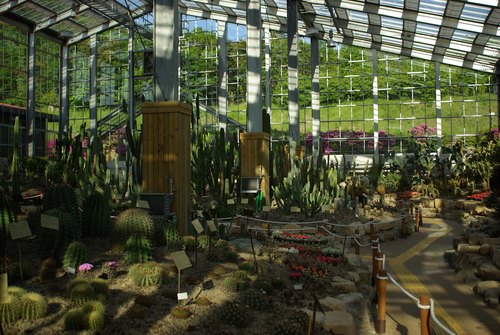
The official site claims more than 3,000 rare species from around the world, spread between a palm garden, a tropical-fruit house, a foliage house, a cactus house, a herb garden and an agave garden; crocodiles and talking parrots are also on show. A visitor describes in March 2026 round barrel-shaped cacti, a paddle cactus, a papaya tree heavy with fruit and a stand of agaves, all seen while crossing the garden; another notes, for a visit in October 2025, large cacti, Hawaiian hibiscus, banana trees and citrus. The park's flower calendar highlights bougainvillea in May, in pink, red, orange, yellow, purple and white. In the 2009 interview the director names, among the rarest trees in the park, royal palms, palms of the genus Syagrus and date palms grown from Middle Eastern seed, which he says exist in Korea only in the park.
Visiting
The subtropical garden opens the route through the park; the official site allows about an hour and a half for the visit, Visit Jeju two to three hours for the whole park. After the glasshouses come the palm avenue, planted in the park's earliest years, the folk village and the lava caves of Hyeopjae and Ssangyong, designated Natural Monument No. 236. The park's flower calendar sets the rhythm of the season: daffodils in January, plum blossom in February, cherry blossom in March, tulips in April, bougainvillea under glass in May, hydrangeas in June, lotus and tropical water lilies in July and August, chrysanthemums in November, camellias in December. The park faces the islet of Biyangdo, close to Hyeopjae and Geumneung beaches, which can be combined with the visit.
33.39° N, 126.24° E
Greenhouses nearby
More greenhouses — South Korea
Do you have a good photo of this greenhouse? Suggest it for this page →
Sources (8)
Affiliate links — booking through Verrière helps fund our research, at no extra cost to you.