Tropical Conservatory, Jerusalem Botanical Gardens
Givat Ram, Jerusalem

Sources checked September 2026
- Year
- 1986 · renovated 2019
- Style
- Modern conservatory with an integrated desert section
- Dimensions
- About 300 tropical species, one of the garden's nine phytogeographic sections
- Status
- Open to the public
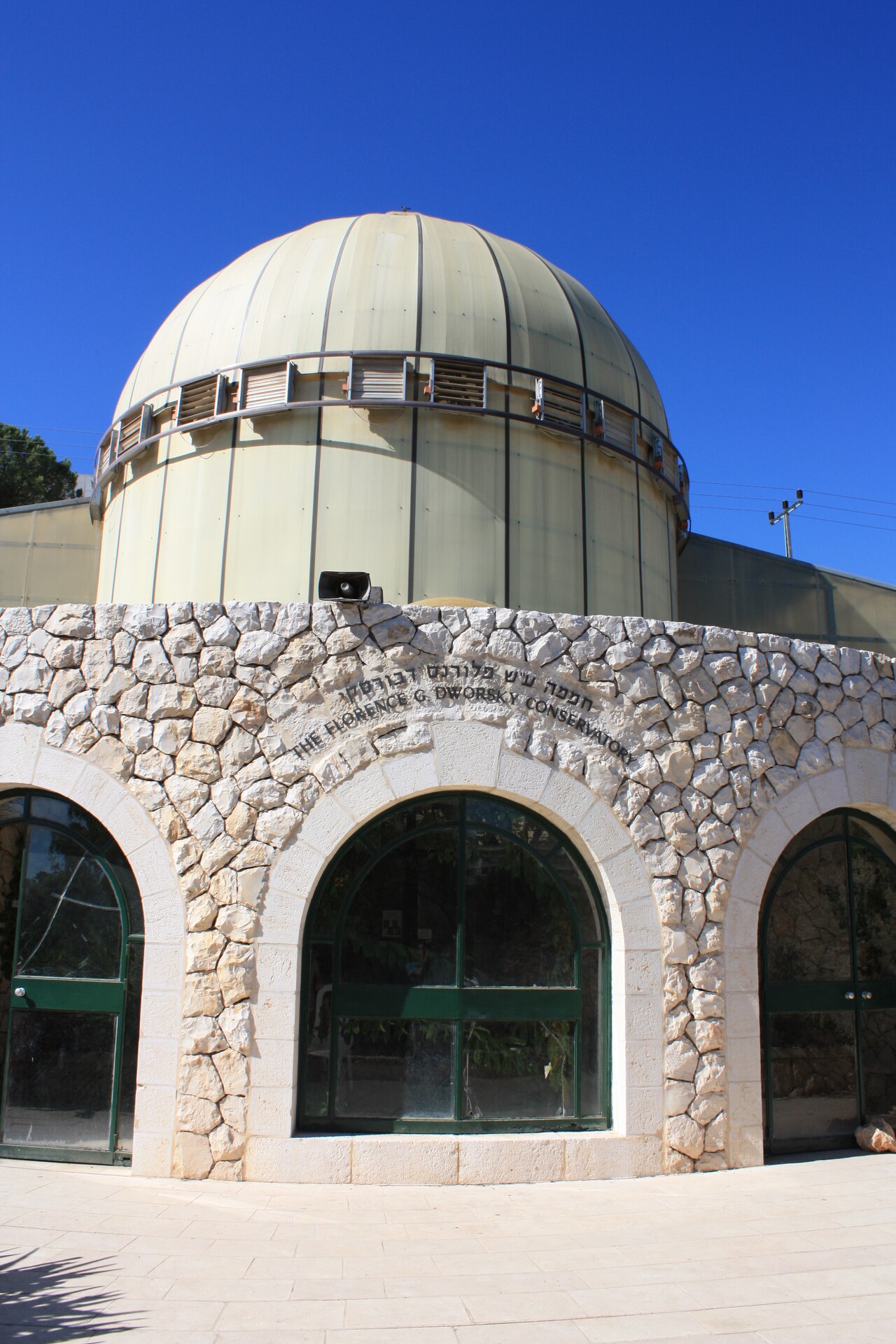
Opened in 1986 within the Jerusalem Botanical Gardens, on the Hebrew University's Givat Ram campus, the garden's tropical conservatory recreates under glass an equatorial climate that the city, perched at 800 meters of altitude, never naturally experiences. Fully renovated, it reopened in autumn 2019 and today houses around 300 species — banana trees, coffee plants, orchids and cacti — arranged around a separate desert section, all tended by a single gardener, according to the garden's management. This greenhouse is just one of the site's nine phytogeographic sections, which together bring together more than 6,400 plant species native to Australia, southern Africa, Europe, North America and the Mediterranean basin.
Affiliate links — booking through Verrière helps fund our research, at no extra cost to you.
History
The story of the Jerusalem Botanical Gardens begins on Mount Scopus, where the Hebrew University bought a plot in 1926 for a national botanic garden. The 1948 war cut off access to Mount Scopus, and the university restarted the project on its new Givat Ram campus: planting began there in 1954, including a collection of conifers, and in 1962 a rocky hill in the south-east of the campus was planted with North American conifers. Michael Avishai, credited in the Israeli press as the gardens' founder, became scientific director.
The present garden, a partnership of the Jerusalem Foundation, the municipality, the Jewish National Fund (KKL), the Hebrew University and the Kaplan family, opened to the public in 1985. The tropical conservatory was among the first projects of this new phase: it dates from 1986, ahead of the South Africa section (1989) and the entrance plaza and visitor centre (1990).
After a renovation, the conservatory reopened in autumn 2019. In early 2020 the Times of Israel reported that it was looked after by a single gardener. In 2023 the gardens announced a major building programme, including a new entrance pavilion by Shlomo Aronson Architects made of interconnected domes, with space for subtropical plants.
Architecture and engineering
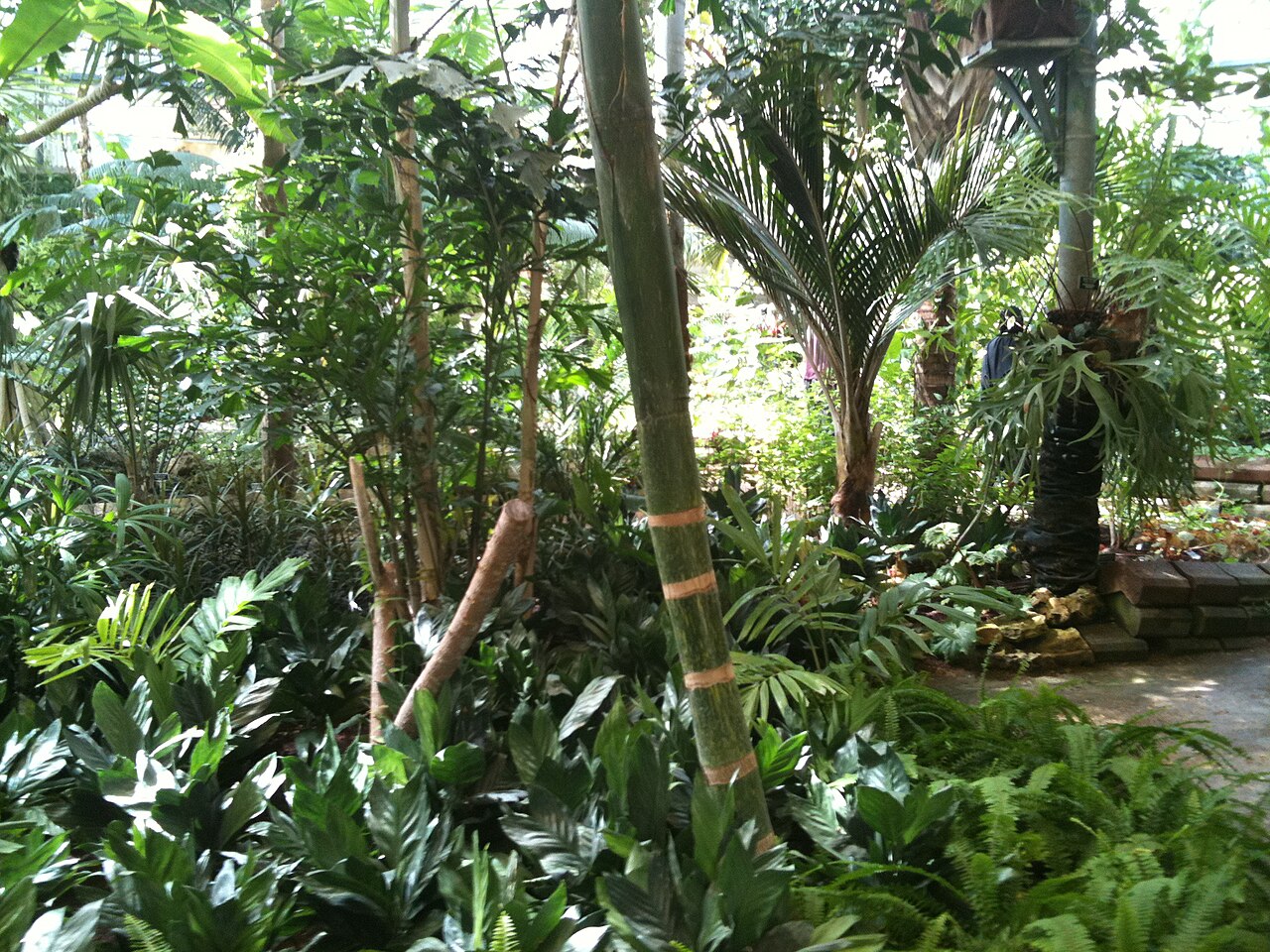
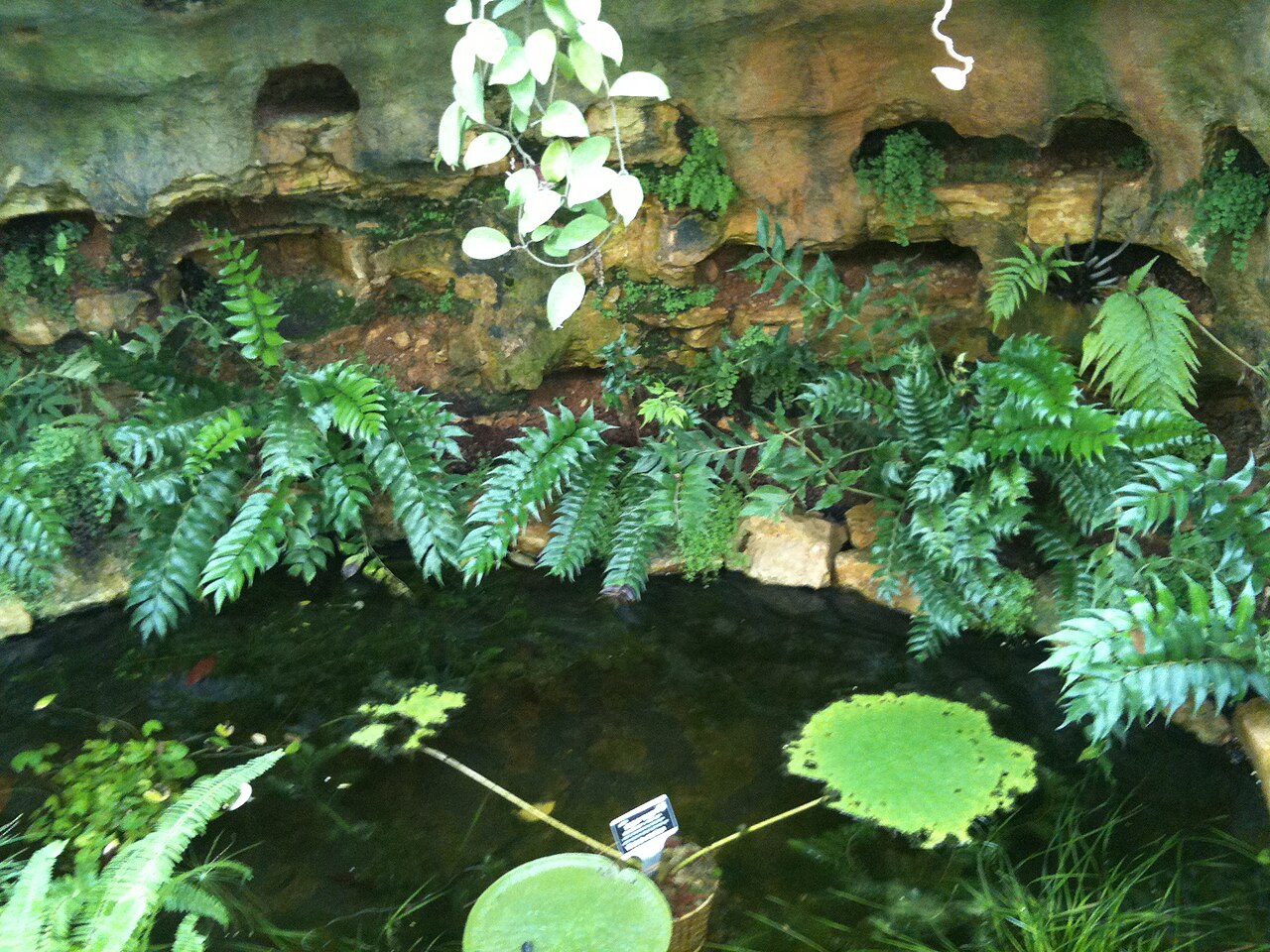
The conservatory brings two climates under one roof. The main area recreates a small, dense and tangled rainforest in which climbers and epiphytes cling to the trees, with a green wall as one of its striking features. A transparent partition separates this space from a desert section displaying plants adapted to drought, so that visitors pass from one habitat to the other in a few steps.
The gardens describe their tropical and desert houses as spaces that each simulate a particular climate, so that plants can be shown in conditions close to their natural habitats.
Plant collections
According to the Times of Israel, the conservatory holds some 300 species, including banana plants, coffee, orchids and, in the desert section, cacti and other dryland plants. The gardens themselves highlight the giant bananas, the epiphytes and the climbers that create its jungle atmosphere.
The conservatory is only a small part of a much larger collection: the gardens cover 15 hectares and hold between 6,000 and more than 7,000 species, arranged in phytogeographic sections (Australia, South Africa, Europe, North America, South-West and Central Asia, the Mediterranean). They also grow several hundred endangered or rare species and maintain a living gene bank of regional flora.
Visiting
The gardens lie on the south-eastern edge of the Hebrew University's Givat Ram campus, in the Nayot neighbourhood. The tropical conservatory takes around twenty minutes and fits into a two- to three-hour walk through the geographic sections, the 500-metre 'Bible Path', planted with most of the species mentioned in the Bible, and the children's discovery trail with its canopy walk. It makes a welcome refuge on cool Jerusalem winter days. The gardens run family activities during festivals, notably at Sukkot.
31.76° N, 35.19° E
Do you have a good photo of this greenhouse? Suggest it for this page →
Affiliate links — booking through Verrière helps fund our research, at no extra cost to you.