Ecology Travel Hall Glasshouse, Ulsan Grand Park (울산대공원 생태여행관)
Ulsan (Nam-gu, Okdong)
No freely licensed photo of this greenhouse yet. Do you have one? Suggest it for this page →
Sources checked October 2026
- Year
- 2006
- Style
- Two-storey hall combining a glazed greenhouse, a butterfly garden and insect rooms, funded by the SK group
- Dimensions
- 2006 plan: about 1,620 m² of floor area (491 pyeong), about 1,335 m² footprint; more than 60 plant species
- Status
- Open to the public (paid entry, closed on Mondays; butterfly garden from spring to autumn)
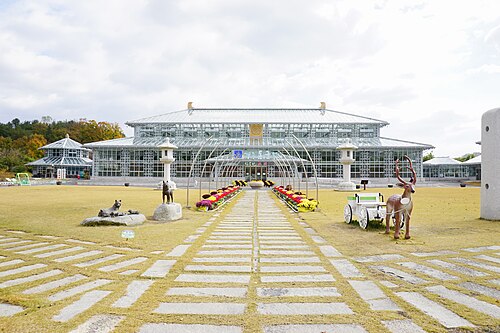
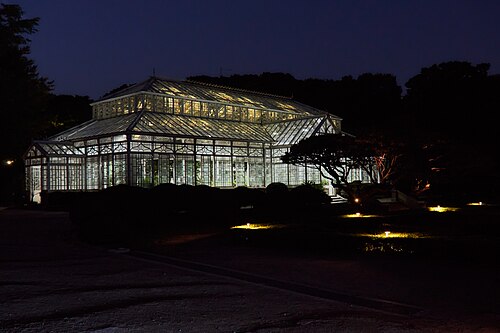
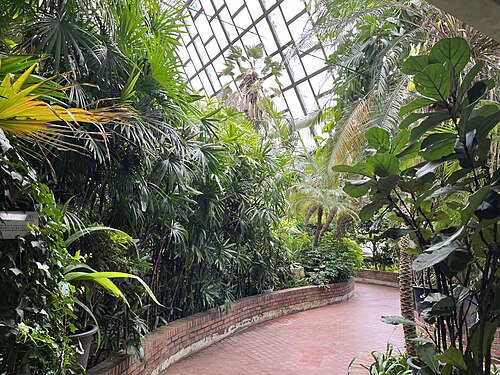
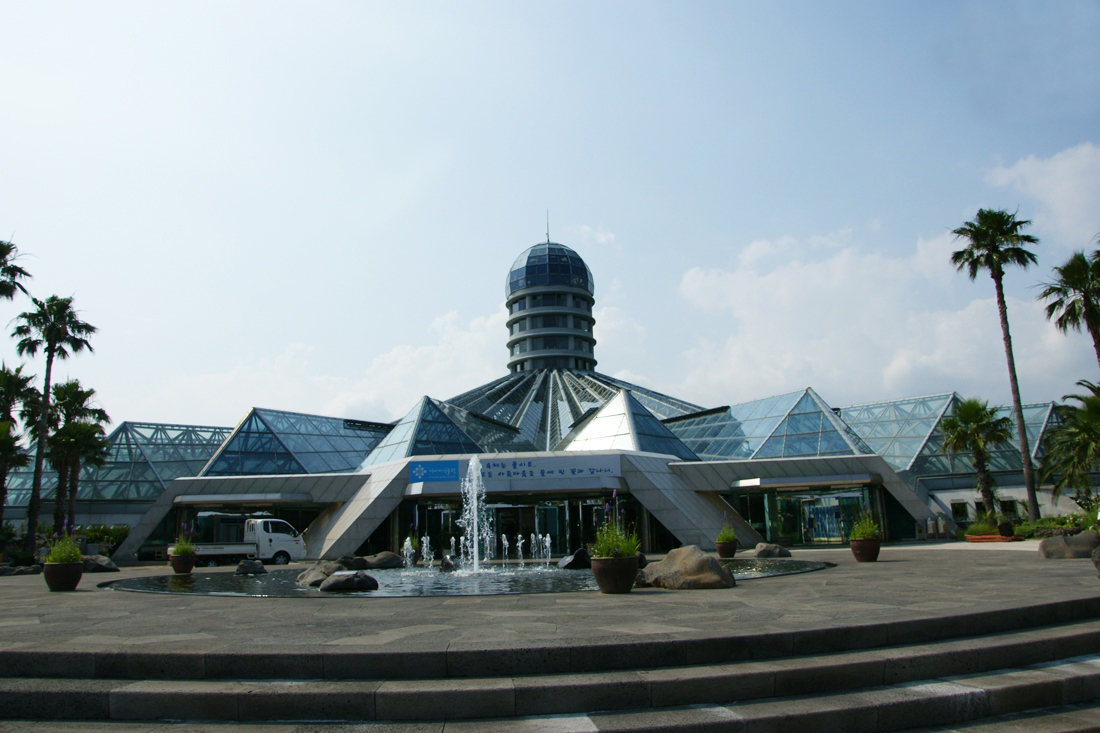
In Ulsan Grand Park, towards the south gate, the Ecology Travel Hall (생태여행관) combines a glazed greenhouse of tropical plants, a butterfly garden, an insect hall and a small reptile room. Announced in early 2006 under the name of "butterfly garden" and entirely funded by the SK group, it was due to open in April 2006 with the second phase of the park. The greenhouse holds more than sixty species of palms, tropical fruit trees and cacti, with fountains, a waterfall and koi. Reopened on 16 June 2020 after a closure, the hall charges admission and is closed on Mondays.
Affiliate links — booking through Verrière helps fund our research, at no extra cost to you.
History
Ulsan launched the project for its large urban park in 1986; in November 1995 the city signed an agreement with the SK group, which invested from 1996 to 2005 to build the facilities before donating them to the municipality. The first phase opened in April 2002, and the park was completed in April 2006. The Ecology Travel Hall belongs to the second phase: a press article of early 2006 announces, for 14 April, the opening of a two-storey "butterfly garden" (나비원) with two auxiliary greenhouses, at a cost of 4.395 billion won paid entirely by SK. The same source plans behind it an insect pavilion of 660 m² on a 1,898 m² plot, with specimens given by an entomologist. A city blog states in 2025 that the hall received at its creation in 2006 a collection of 1,100 butterflies donated by a specialist.
After a period of closure the hall reopened on 16 June 2020: the entrance hall was refurbished, the nursing room enlarged and new species planted in the greenhouse, with Covid-19 health checks at the entrance. In April 2022 the butterfly garden reopened for the season, until the end of October. In March 2024 the body that manages Ulsan's public facilities (울산시설공단) planted eight tropical species, fifteen trees in all, in response to visitors' wishes. 2006 is the announced opening date of the hall, repeated by recent publications.
Architecture and engineering
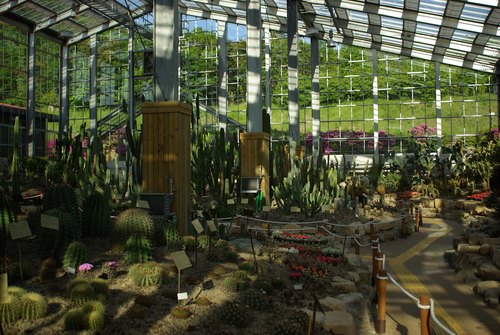
The figures announced for the 2006 project are a floor area of 491 pyeong (about 1,620 m²), a footprint of 404 pyeong (about 1,335 m²) and two storeys above ground: entrance hall, shop and specimen room on the ground floor; an ecology room, a rearing room and a room for displaying the rearings upstairs; two auxiliary greenhouses with a floor area of 98 pyeong (about 325 m²) were to be added. These are project figures, not measurements. The present route, according to the city, runs from the butterfly-specimen room to the greenhouse botanical garden, then to the butterfly garden outdoors, the insect hall and the reptile room. The official page describes the botanical garden on two levels: fountains above, koi below, for 1,471 m³ of water. A blog of the Nam-gu district office titles the planted part a "glass greenhouse"; it describes a cave-like descent towards an evocation of the Bangudae rock art, National Treasure No. 285, in front of a waterfall, and a cactus garden at the end of the route. The butterfly garden is presented in 2025 as a greenhouse structure whose temperature and humidity are regulated automatically, at 28 to 32 °C in July.
Plant collections
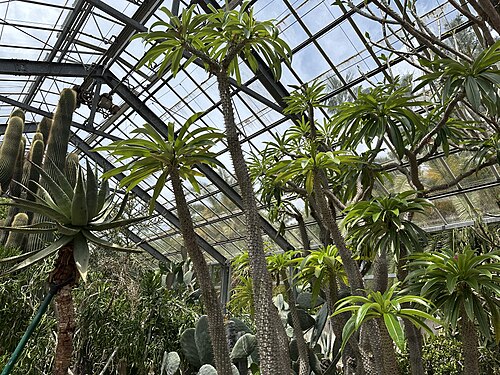
The official page presents the greenhouse as a garden of palms rarely seen in Korea; the 2024 press counts more than sixty species there, among palms, tropical fruit trees and cacti. In March 2024 eight species from tropical rainforest or the southern hemisphere were planted, fifteen trees in all, including durians, macadamias and star fruit. A visit blog of 2022 describes, under the tropical vegetation, a koi pond edged with water plants, purple pentas, panels on carnivorous plants, flower structure or whether plants sleep, and a cactus garden at the end of the greenhouse. The hall also shows more than 300 butterflies in collection, more than 1,500 insect specimens, some twenty species of live insects and reptiles, among them twelve species of reptiles such as the leopard gecko, and, from spring to autumn, live butterflies in the outdoor garden.
Visiting
The Nam-gu district office advises entering by the south gate, the closest to the hall. The route follows a fixed order, from the butterfly room to the reptile room, with a pause in the greenhouse, hot in summer and welcome in winter; the butterfly garden closes in the cold season, when the insects hibernate. The hall combines well with the rose garden, the zoo, the children's play park and the park-golf course that lie by the south gate, according to Wikipedia. The park itself is free to enter; only certain facilities, this hall among them, charge admission.
35.53° N, 129.28° E
Greenhouses nearby
More greenhouses — South Korea
Do you have a good photo of this greenhouse? Suggest it for this page →
Sources (8)
- uic.or.kr/ulsanpark/institution/institution01_5.do
- m.blog.naver.com/ulsan-namgu/222658536763
- blog.naver.com/ulsan_nuri/223935410843
- hkbs.co.kr/news/articleView.html?idxno=77487
- yna.co.kr/view/AKR20200615128400057
- sports.donga.com/region/article/all/20240328/124203316/2
- ko.wikipedia.org/wiki/울산대공원
- gardening.news/news/articleView.html?idxno=22247
Affiliate links — booking through Verrière helps fund our research, at no extra cost to you.