Akita Museum of Art
Akita, Akita Prefecture
Sources checked October 2026
- Year
- 2012 (opened 2013)
- Architect
- Tadao Ando
- Type
- Art museum
- Access
- Open to the public from 10:00 to 18:00, with no fixed closing day (official site, October 2026)
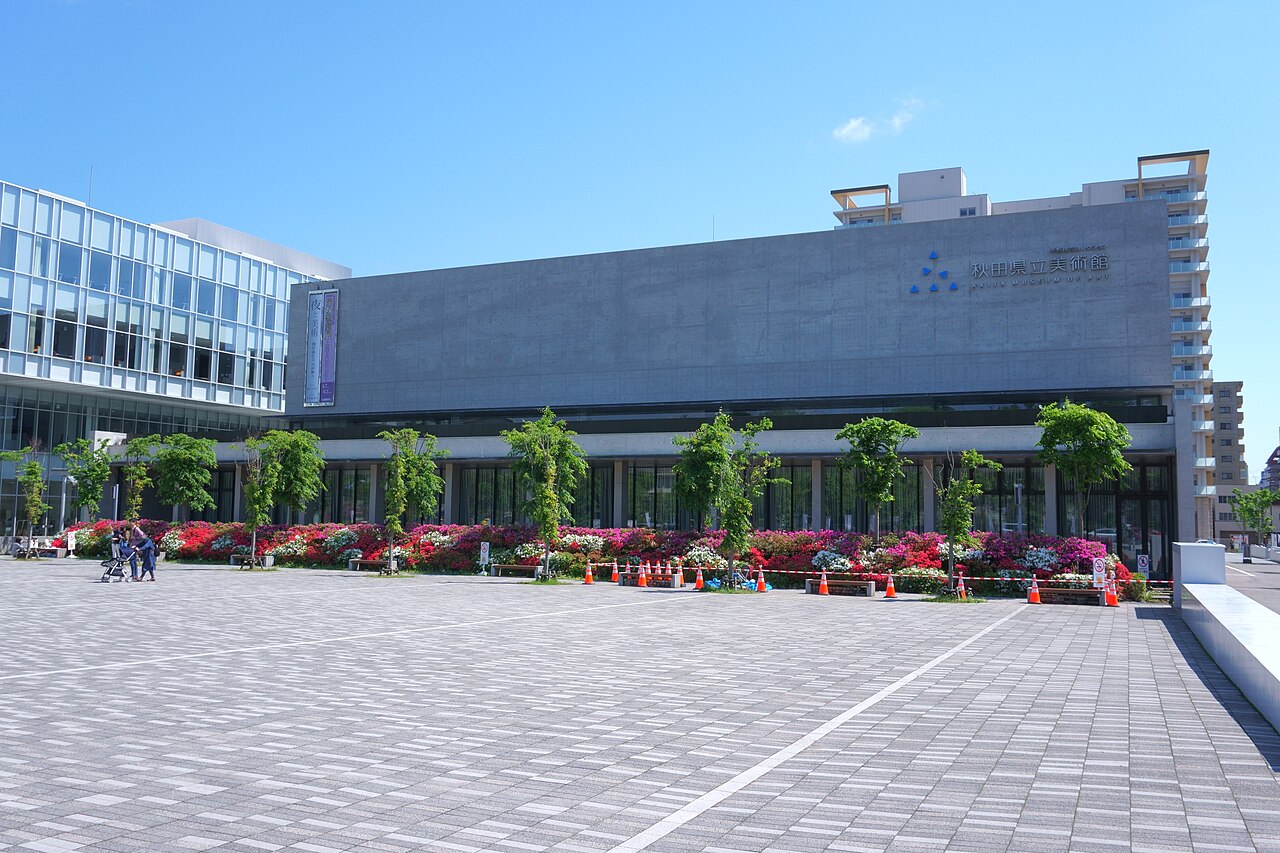
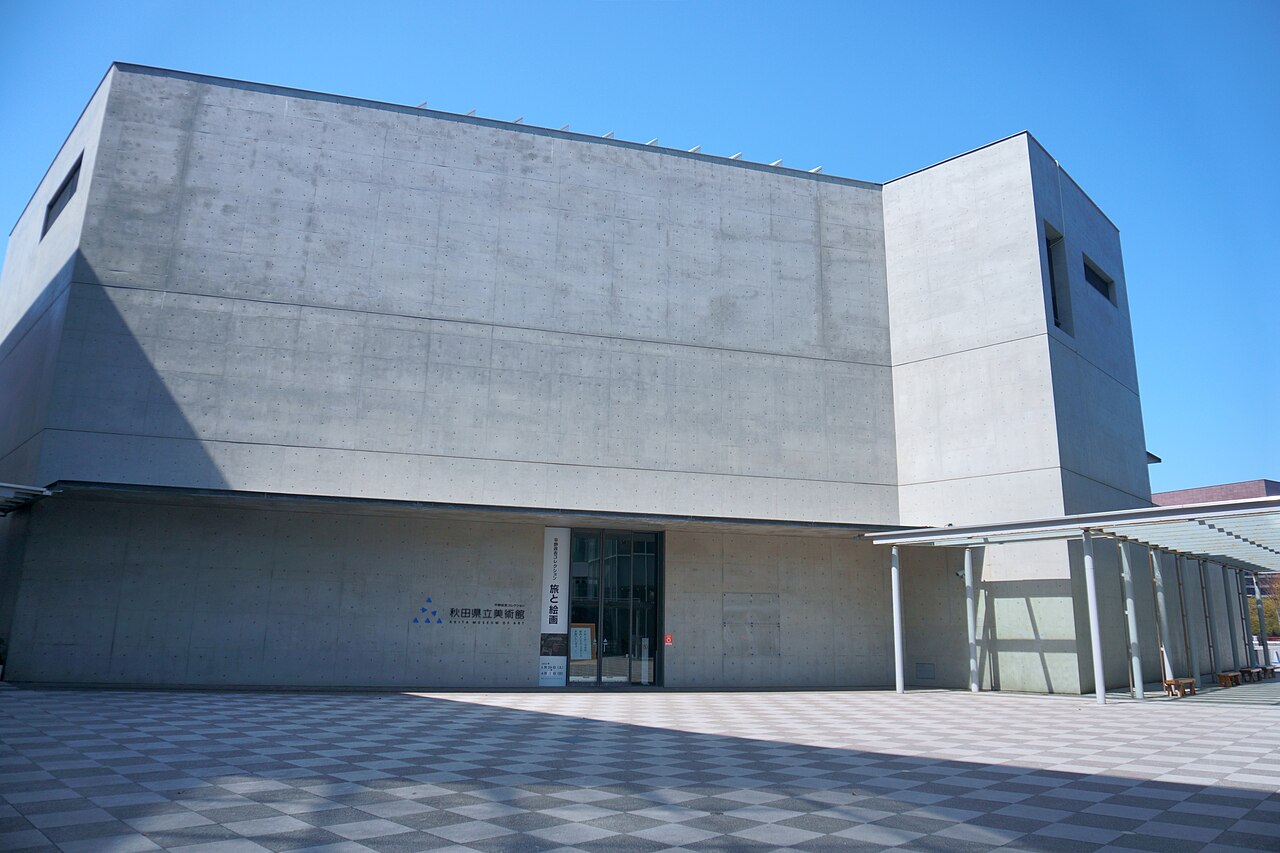
In Akita, facing Senshu Park, Tadao Ando designed a reinforced-concrete museum of three storeys above ground and one below, built on the motif of the triangle in echo of the triangular roof of the old museum. It presents the collections of the Masakichi Hirano Art Foundation, among them a mural by Tsuguharu Foujita (1937) more than twenty metres wide. In the entrance hall a spiral staircase has neither a pillar nor any support from the wall; on the first floor the museum lounge looks out onto a water garden and the park.
Affiliate links — booking through Verrière helps fund our research, at no extra cost to you.
History
The first Akita Prefectural Museum of Art opened on 5 May 1967 in Senshu Park (千秋公園), under a triangular roof. It showed the collection of Masakichi Hirano (平野政吉, 1895-1989), third generation of a family of Akita rice merchants. In 1936, when Madeleine, wife of the painter Tsuguharu Foujita (藤田嗣治), died, Hirano had conceived a museum in her memory, bought many large works by the painter and supported the making of a mural, which Foujita completed in 1937; the war put an end to the museum plan. In 1967 Hirano founded the institution charged with making the works he had gathered open to the public.
In July 2008 a committee was formed to prepare a new museum; its report was submitted in January 2009. The new building, designed by Tadao Ando and built by Shimizu (清水建設), was completed on 29 June 2012. On 21 July 2012 it opened provisionally, with only the building open to the public. The exhibition rooms of the old museum closed on 30 June 2013 and the museum itself on 1 September 2013; the new museum opened on 28 September 2013.
Architecture
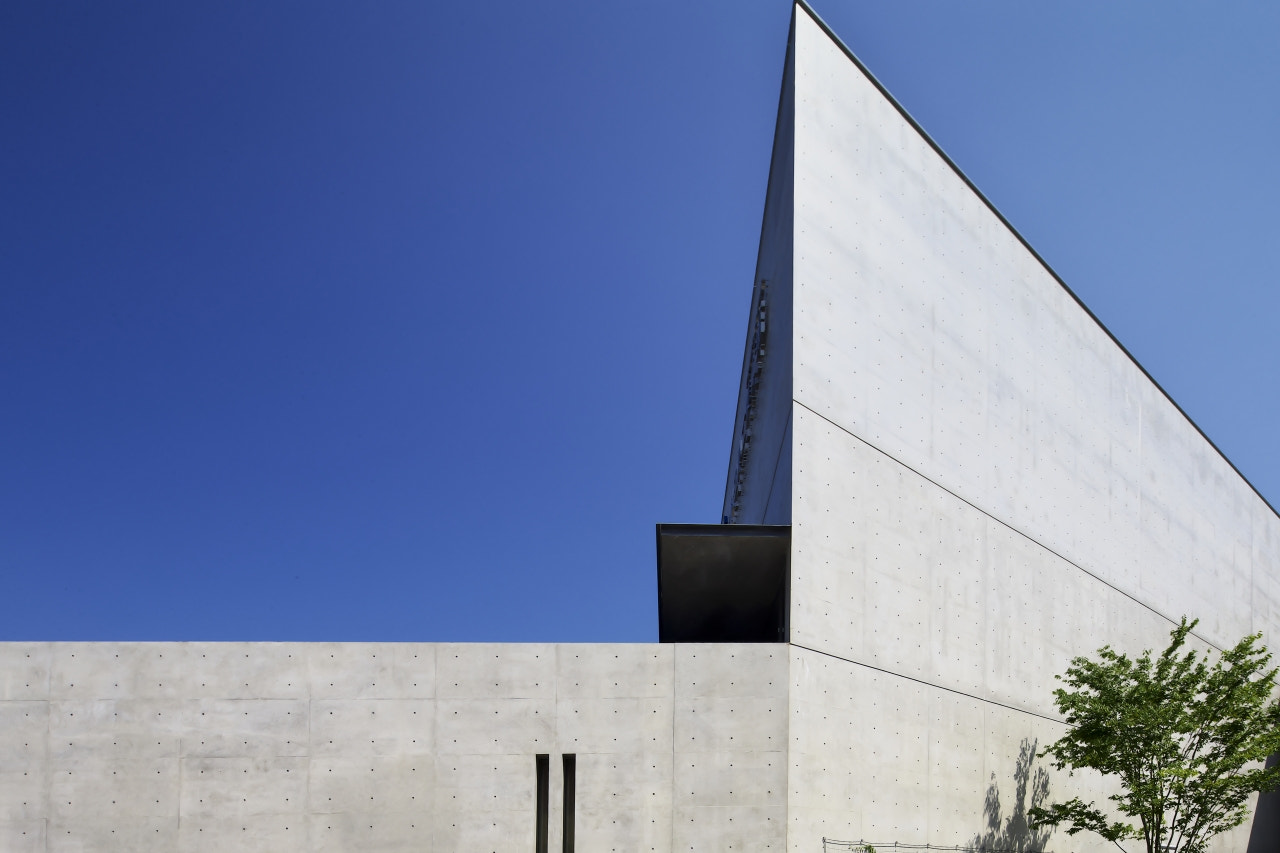
Ando took the triangle as his motif, echoing the triangular roof of the old museum, its greatest distinguishing feature. The building is of reinforced concrete: three storeys above ground and a basement, 1,977 m² of footprint, 3,746.66 m² of floor area and about 19.2 m high at its tallest. The project is by his office, Tadao Ando Architect & Associates.
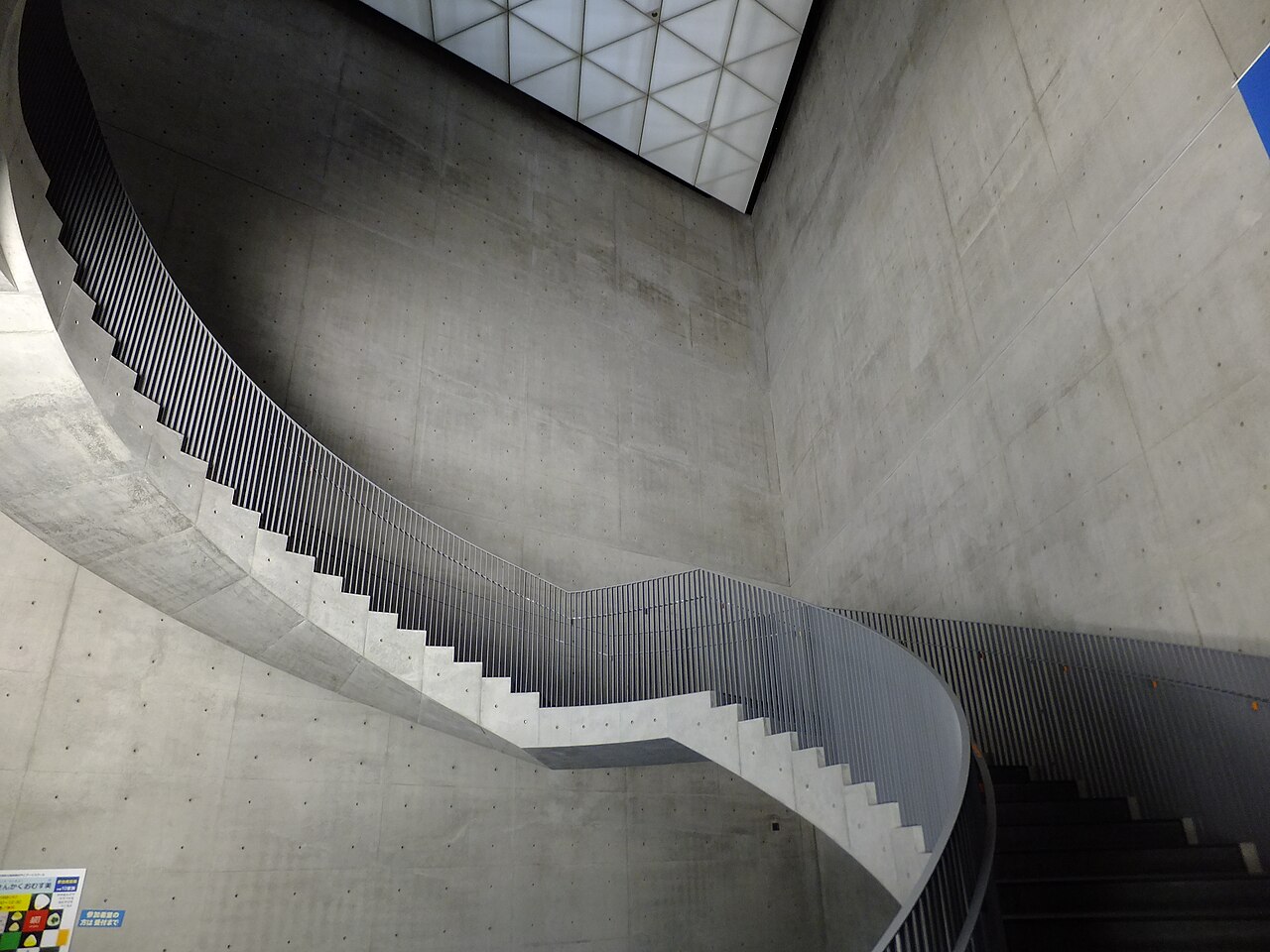
On the ground floor the entrance hall, a large triangular void, links the museum to the city: a triangular ceiling that lets in daylight and a floor of natural granite. Its spiral staircase has neither a pillar nor any support from the wall; it is held by taut wires, of piano wire. The walls are of exposed concrete. Further on, a triangular stairwell receives, under LED lamps, triangles of light.
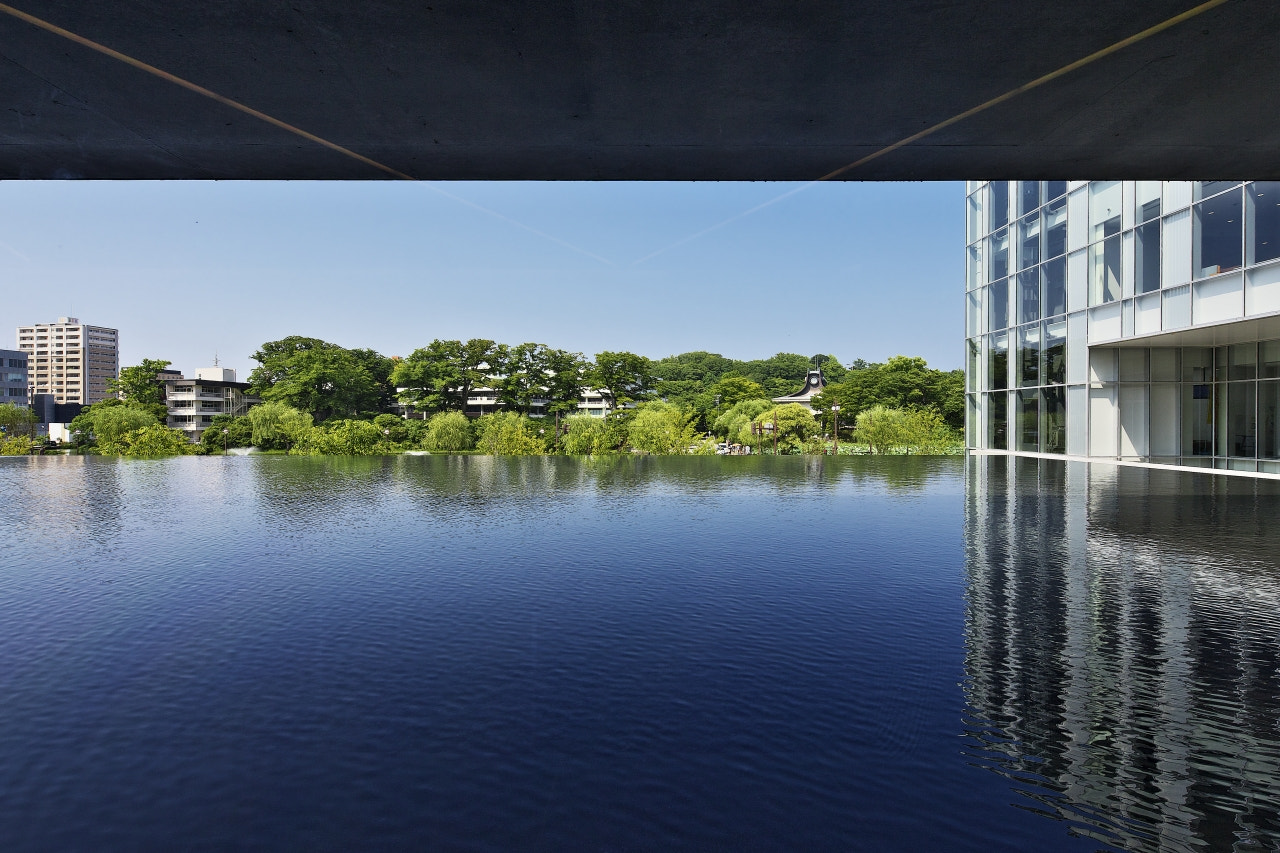
On the first floor the gallery of the great mural is a room whose void rises through two levels; Foujita's mural hangs there. The museum lounge looks at Senshu Park through large windows, beyond a water garden: the park's seasons unfold there like a great mural, and across the water garden the old museum with its triangular roof can be seen. The second floor holds galleries 1 and 2. The ground floor also contains a lecture room, the storage rooms and a gallery for the prefecture's residents, 588 m² and 4.5 m high, renovated in 2018 and hired out for exhibitions by groups as well as by single artists.
Use today
The museum is run by the Masakichi Hirano Art Foundation (公益財団法人平野政吉美術財団). Its core is the body of Foujita's works gathered by Hirano, known as a panorama of the painter's output in the 1930s.
Foujita's great mural (1937) is 3.65 m high and 20.5 m wide; it shows Akita festivals and customs, among them the Kanto Festival (竿燈). Special exhibitions, with their own admission charge, are added to the collections.
On the first floor the lounge lets visitors order coffee and cakes and has art books to leaf through on its sofas. The museum's cafe uses Kawatsura lacquerware (川連漆器), a traditional craft recognised by the state, and the museum also has a shop of Akita crafts.
Visiting
The museum opens from 10:00 to 18:00; tickets are sold until 17:30, and the hours may be extended during the Kanto Festival. There is no fixed closing day ; it may close temporarily for maintenance. The reception is on the ground floor, in the entrance hall, where wheelchairs and pushchairs are lent free of charge.
It is about ten minutes on foot from Akita Station. The museum has no car park of its own; nearby paid car parks must be used.
Photos
39.72° N, 140.12° E
Greenhouses nearby
Sources (13)
- akita-museum-of-art.jp/contents/contents_show.php?contents_id=22
- akita-museum-of-art.jp/contents/contents_show.php?contents_id=24
- akita-museum-of-art.jp/contents/contents_show.php?contents_id=25
- akita-museum-of-art.jp/contents/contents_show.php?contents_id=71
- akita-museum-of-art.jp/contents/contents_show.php?contents_id=74
- akita-museum-of-art.jp/contents/contents_show.php?contents_id=76
- akita-museum-of-art.jp/contents/contents_show.php?contents_id=61
- akita-museum-of-art.jp/contents/contents_show.php?contents_id=75
- akita-museum-of-art.jp/contents/contents_show_all.php?contents_id=64
- akita-museum-of-art.jp/contents/contents_show.php?contents_id=201
- pref.akita.lg.jp/uploads/public/archive_0000001832_00/syoutayo65.pdf
- ja.wikipedia.org/wiki/秋田県立美術館_平野政吉コレクション
- ja.wikipedia.org/wiki/川連漆器
Affiliate links — booking through Verrière helps fund our research, at no extra cost to you.