Bucheon Botanical Garden Glasshouse (부천식물원)
Bucheon (Chunui-dong, Wonmi-gu), Gyeonggi

Sources checked October 2026
- Year
- 2006
- Style
- Municipal glasshouse whose plan is modelled on the peach blossom, the city's emblem
- Dimensions
- Two floors over two basements; 310 species and 9,975 plants
- Status
- Open to the public (closed on Mondays)
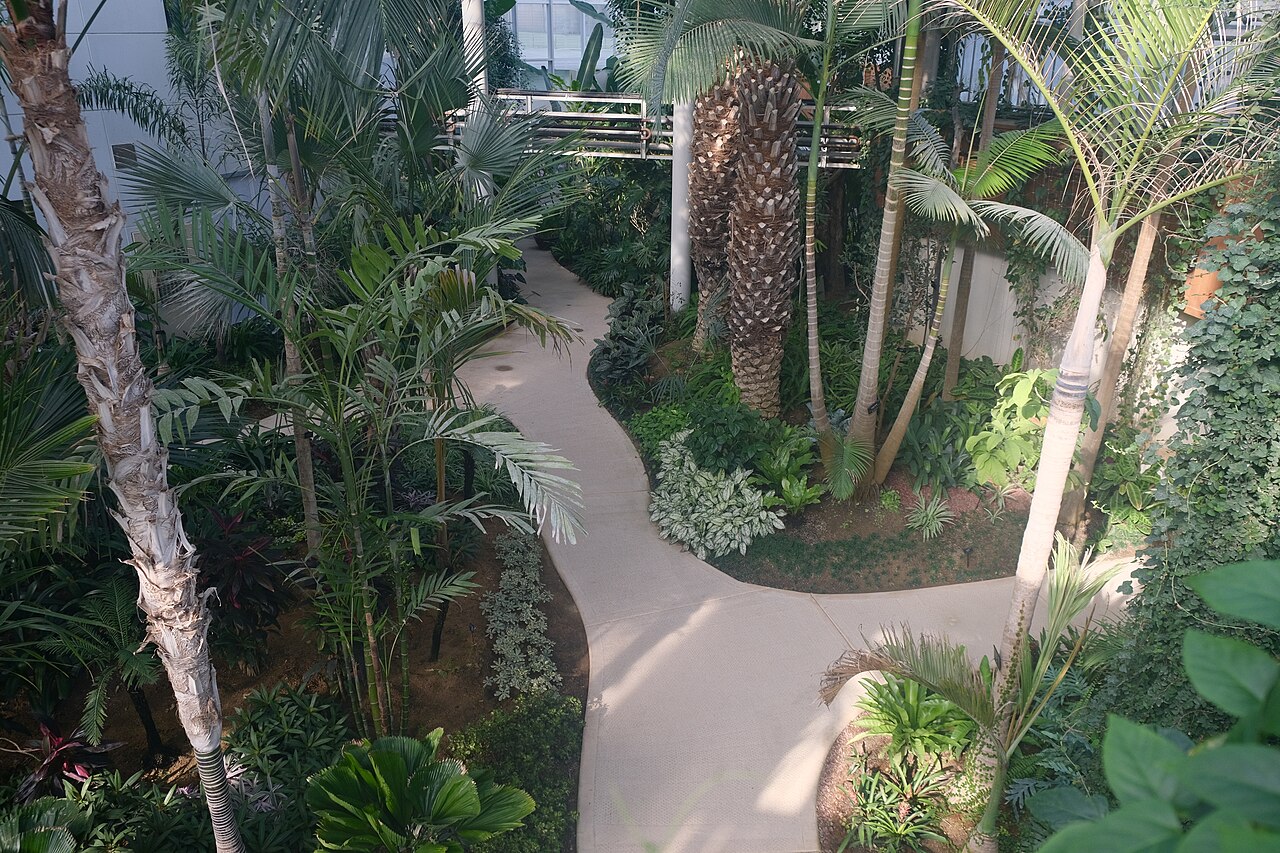
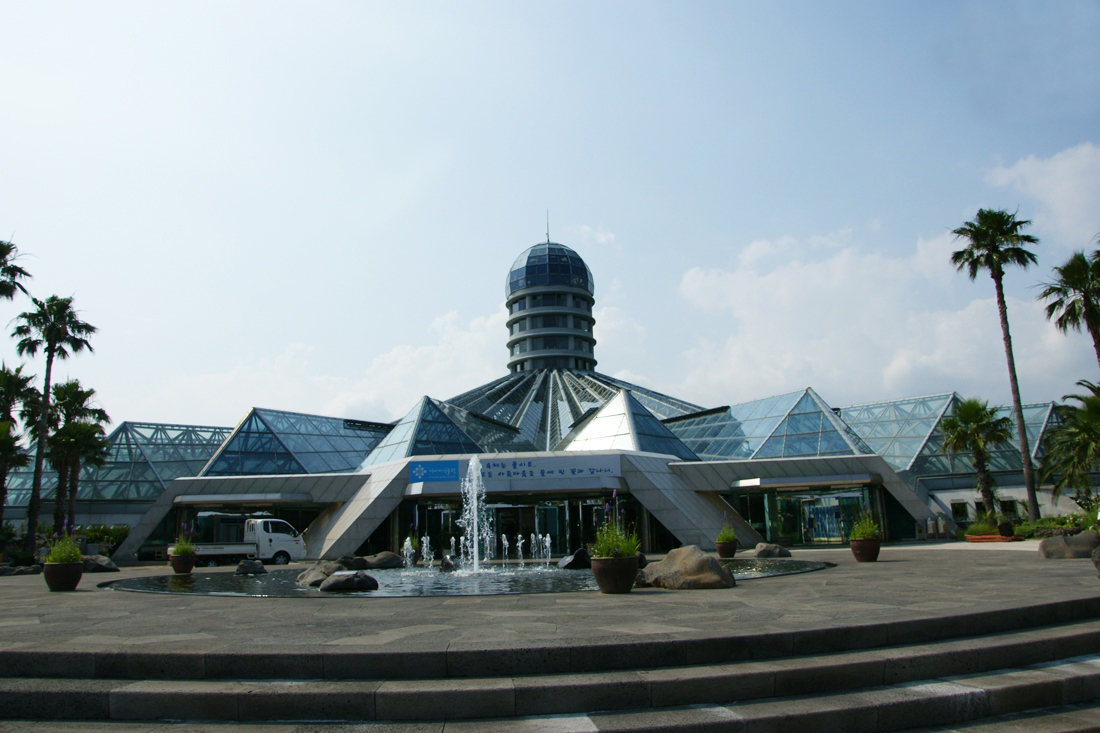
Opened in 2006 in Bucheon Natural Ecology Park, west of Seoul, the municipal botanical garden is a glasshouse whose plan reproduces the peach blossom, the city's symbol. The building has two floors above two basement levels and brings together five themed halls, for curious plants, aquatic plants, subtropical plants, succulents and native species, around a central garden, with two hands-on halls for children. It holds 310 species and close to 10,000 plants, Washington palms among them, and stands beside the Natural Ecology Museum (2000) and the Mureung Dowon Arboretum (2012), near Kkachiul station on the Seoul metro.
Affiliate links — booking through Verrière helps fund our research, at no extra cost to you.
History
Bucheon Natural Ecology Park (부천자연생태공원) grew in stages at 660 Gilju-ro, in the Chunui-dong neighbourhood west of Seoul. The city first opened a Natural Ecology Museum there in 2000. The municipal botanical garden followed in 2006: the Korea Tourism Organization entries republished by ktriptips present it as a municipal botanical garden opened that year, and the Korean recommendation site 여기유 adds that it was built as a glass greenhouse shaped after the peach blossom, Bucheon's emblem.
The complex gained the Mureung Dowon Arboretum (부천무릉도원수목원) in 2012; a hall of old farming tools and a children's discovery garden complete the park, which is run by the city and has its own site, ecopark.bucheon.go.kr.
The site has since taken on an evening life: the tourism organization describes a light festival, Bucheon Luminarae, which turns the surroundings of the botanical garden and the arboretum into a garden of light after dark, with a light tunnel, sculptures and projections. In November 2025 a group photo walk also supplied Wikimedia Commons with a series of pictures of the glasshouse and its halls.
Architecture and engineering
The glasshouse takes its plan from the stylised peach blossom that serves as Bucheon's emblem: Korean sources speak of a glass greenhouse (유리온실) designed on that shape. The building rises two floors above two basement levels.
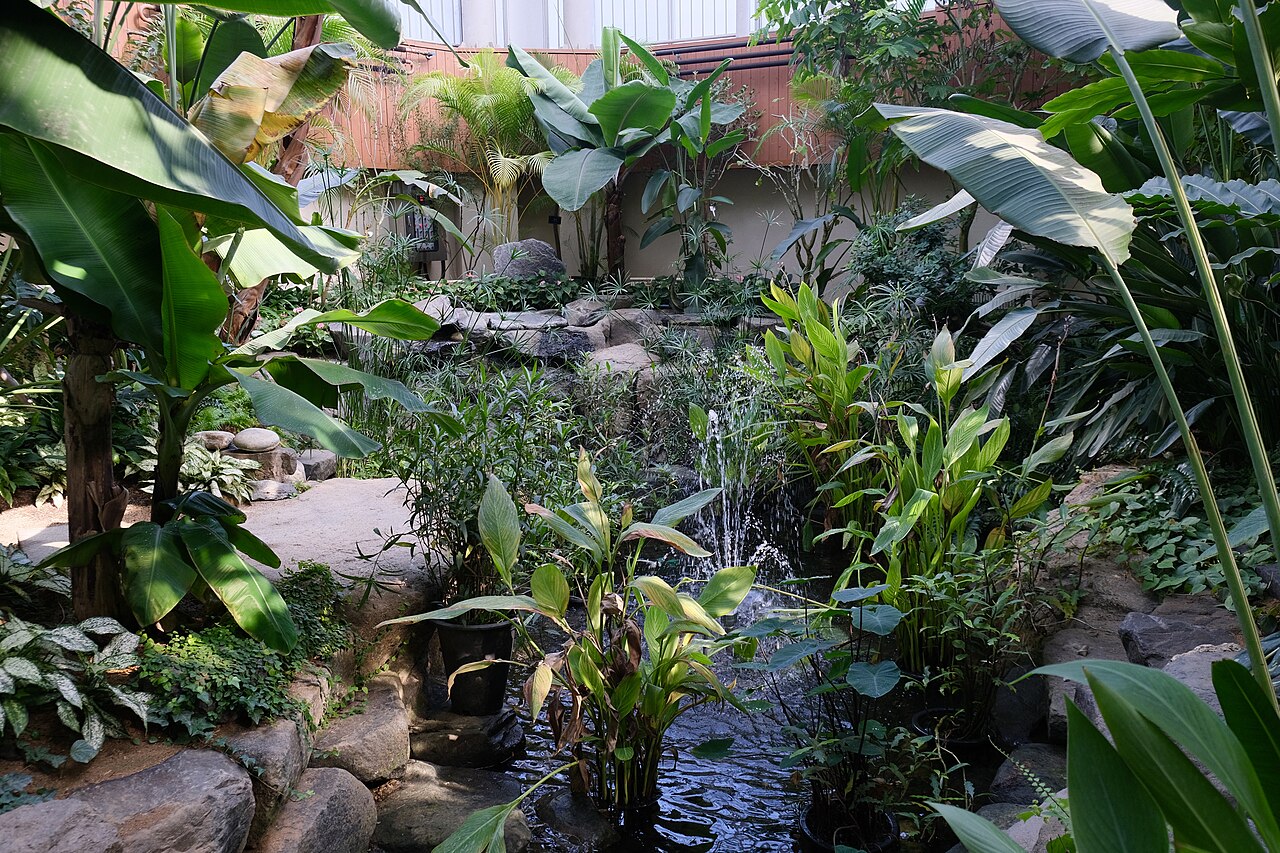
On the ground floor, the plant exhibition hall (식물전시관) gathers the five themed halls, for curious plants, aquatic plants, subtropical plants, succulents and native plants, arranged around a central garden. The upper floor holds the hands-on plant halls (식물체험관), described as popular with families with young children, along with a meeting room and a media learning room.
The petal-shaped outline remains the building's distinguishing feature; it shares its car park with the neighbouring ecology museum.
Plant collections
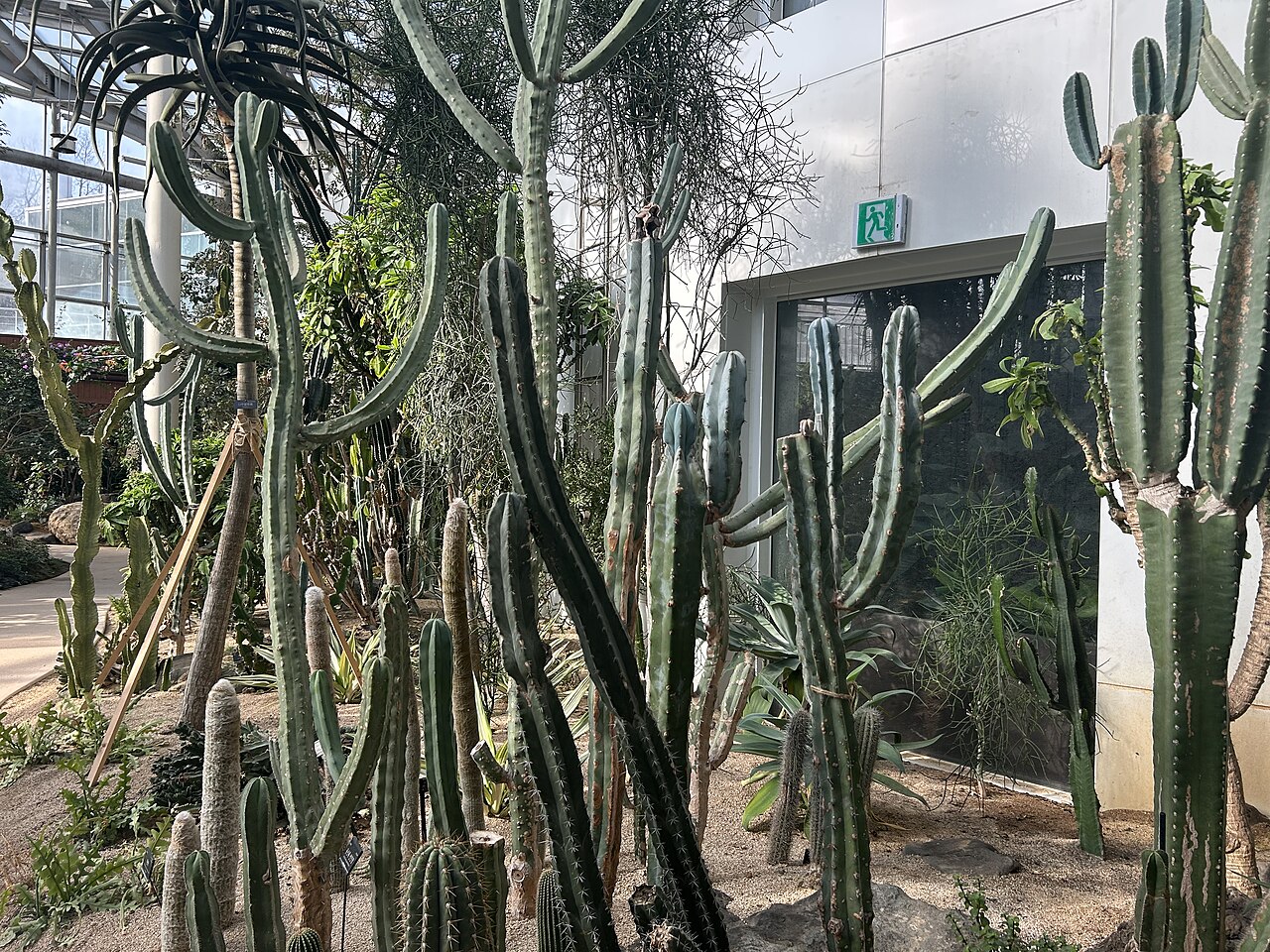
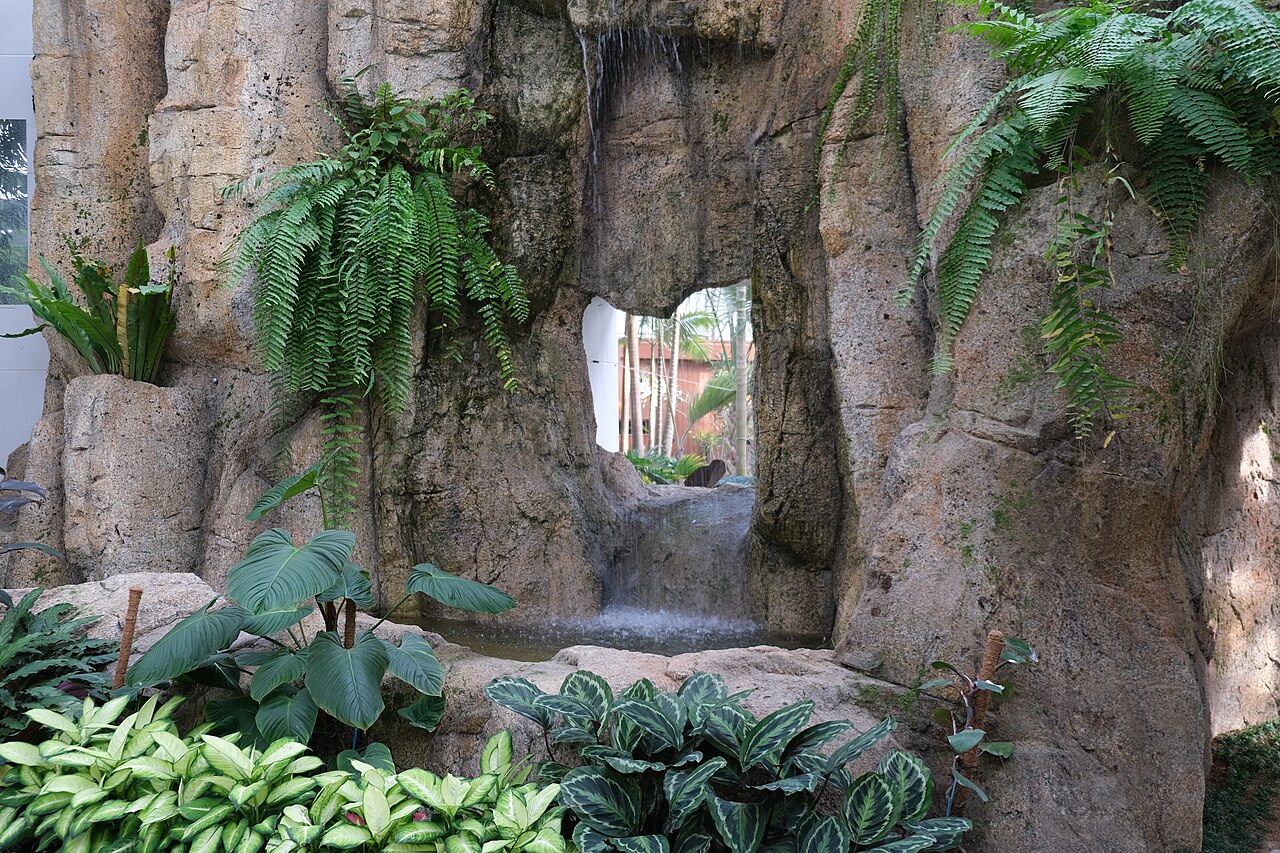
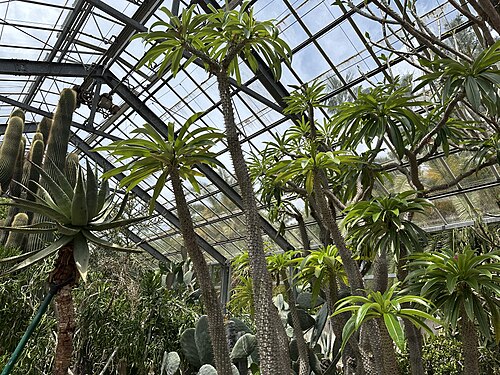
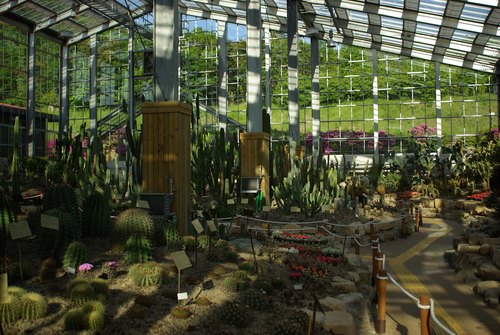
The central garden and the five halls hold 310 species, or 9,975 plants according to the published count. A hall of so-called curious plants (재미있는식물관) opens the route. The aquatic hall includes water cannas; the subtropical hall is planted with palms and rubber figs; the succulent hall gathers fleshy-leaved plants; the native hall favours species from the south of the peninsula that are seldom seen in central Korea. Washington palms (워싱턴 야자수) are reported there.
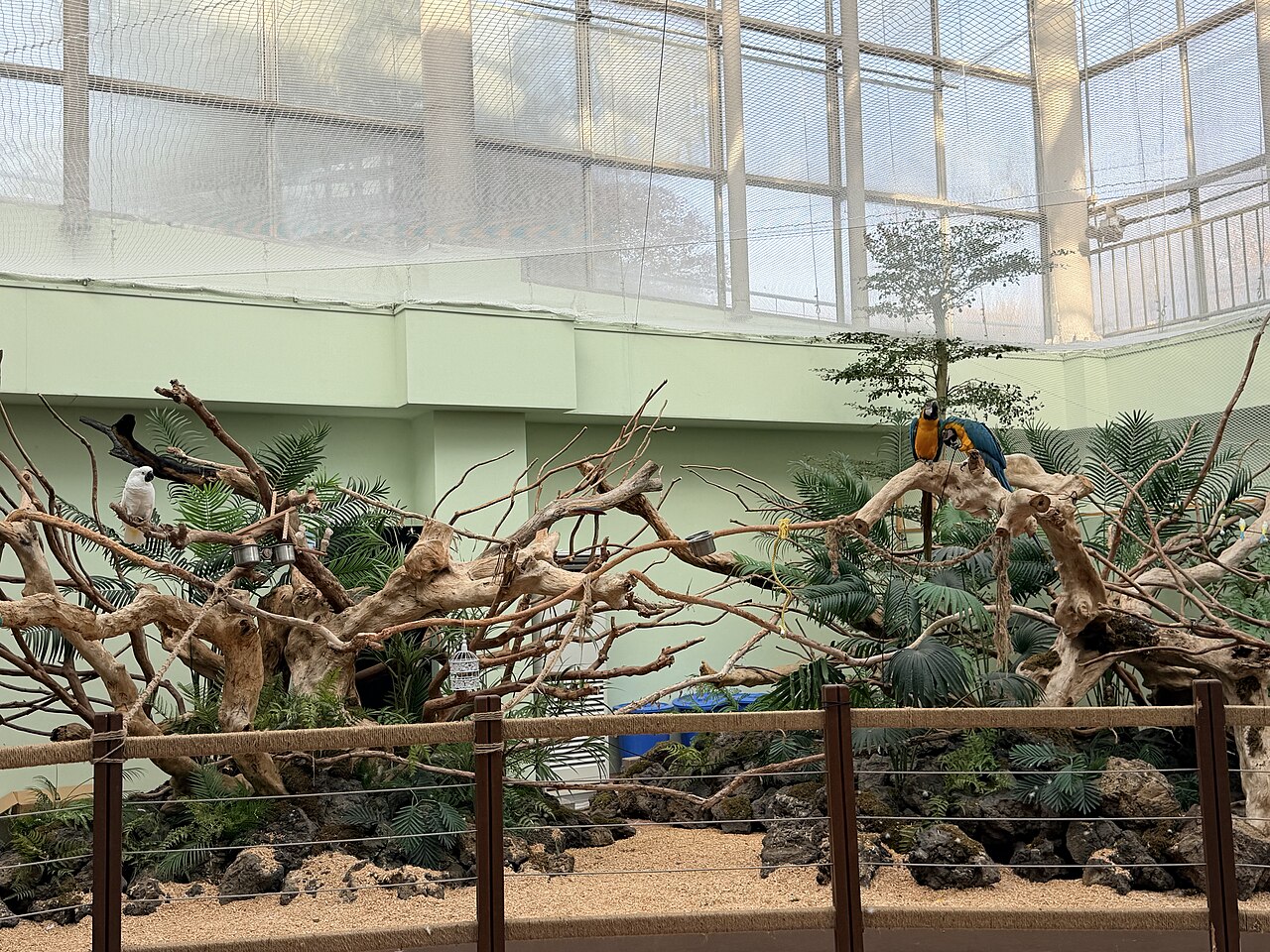
The hands-on halls upstairs are aimed at children and school groups: the park runs ecological experience programmes for each age group, booked through its website. The photographs uploaded to Wikimedia Commons in 2025 show a bird garden and parrots within the botanical garden's grounds.
Visiting
The botanical garden stands some fifty metres from the Natural Ecology Museum and less than 300 m from the Mureung Dowon Arboretum, in the same park, with a shared car park. Exit 1 of Kkachiul station, on line 7 of the Seoul metro, is close by. A visit to the glasshouse combines naturally with the museum and the arboretum; the Bucheon Luminarae light festival, in the evening, gives the place another reading. The garden closes on Mondays (or the following day when Monday is a public holiday), on 1 January and on the days of Seollal and Chuseok. Supia, the city's other glasshouse, is six kilometres to the west in Sangdong Lake Park.
37.51° N, 126.82° E
Greenhouses nearby
More greenhouses — South Korea
Do you have a good photo of this greenhouse? Suggest it for this page →
Affiliate links — booking through Verrière helps fund our research, at no extra cost to you.