Butterfly Hall (나비동) glass greenhouse, Guri Insect Ecology Center (구리시 곤충생태관)
Guri, Gyeonggi
No freely licensed photo of this greenhouse yet. Do you have one? Suggest it for this page →
Sources checked October 2026
- Year
- 2004
- Style
- Educational glass greenhouse for butterflies, heated with recovered waste heat
- Dimensions
- 315 m² glass greenhouse (centre: 1,944.6 m² of floor area)
- Status
- Open to the public (free admission; closed on Mondays)
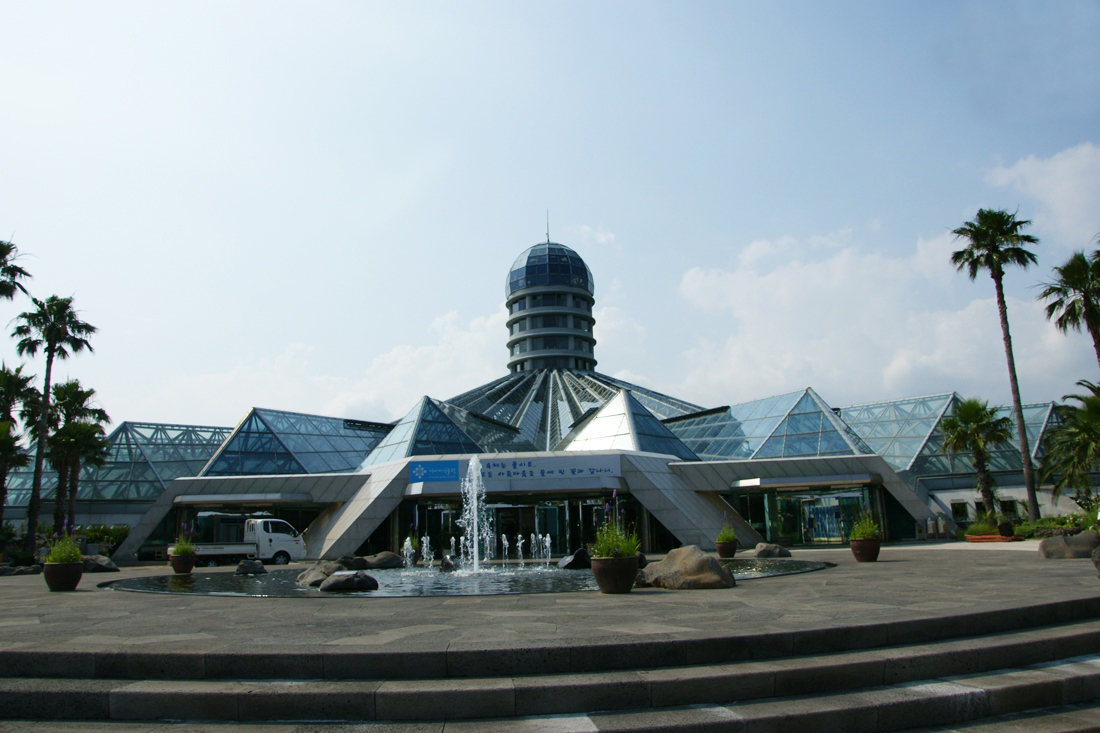
The Butterfly Hall is the 315 m² glass greenhouse of the Guri Insect Ecology Center, set inside the city's sewage treatment plant. According to the city's own fact sheet it opened in December 2004 together with the specimen room and the management building; the glass greenhouse was fully overhauled in 2019 for safety. On average about a hundred live butterflies fly there every day of the year, among host plants, tropical plants and aquatic insects. The greenhouse is heated with waste heat recovered from the neighbouring incineration plant, and admission is free.
Affiliate links — booking through Verrière helps fund our research, at no extra cost to you.
History
The Guri Insect Ecology Center stands on the grounds of the city's sewage treatment plant (구리환경사업소), run by the sewage division. According to the city's own history page, it all begins on 10 February 2001 with an observation building, a butterfly-rearing building and a building for growing their host plants. The Butterfly Hall (나비관), together with the specimen room and the management building, opened on 18 December 2004 with a 315 m² glass greenhouse. A guide published by the Gyeonggi Cultural Foundation instead speaks of an opening in March 2010. The Insect Hall, under a 495 m² plastic-film greenhouse, was added on 24 April 2014.
In 2019 a state-funded programme created a 5,100 m² ecological park and had the glass greenhouse fully refurbished to improve safety. The city took over direct management on 1 July 2020. Notices on the official site then mark the greenhouse's later life: a closure of about a week from 13 December 2021 for repairs, new flooring in the greenhouse in 2022, a closure of the Butterfly Hall and specimen room from 4 July to 18 August 2023, then a heating failure reported on 11 January 2025 and declared repaired on the 17th. In October 2026 the city's site is still announcing exhibitions and educational programmes.
Architecture and engineering
According to the official facility sheet the glass greenhouse of the Butterfly Hall covers 315 m²; the city's English page speaks of a 300 m² glass-covered greenhouse. It is linked to the specimen room, which with the training room and offices takes up 270 m². The whole centre amounts to 1,944.6 m² of floor area, of which 1,082 m² are exhibition space (glass greenhouse, the plastic-film greenhouse of the Insect Hall, specimen, training and management rooms) and 862.6 m² are rearing facilities: a 394 m² host-plant growing greenhouse, 231 m² of potted plants, a 198 m² butterfly egg-laying room and a 39.6 m² constant-temperature rearing room.
The official site stresses two resource savings: heating the greenhouse with waste heat from the neighbouring household-waste incineration plant, and using the sewage plant's treated water for watering, toilets, cleaning and fire-fighting. According to a Gyeonggi guide, the interior includes an emergence table where visitors follow the chrysalises, a caterpillar-observation stand and a feeding spot of artificial flowers where adult butterflies find nectar and minerals.
Plant collections
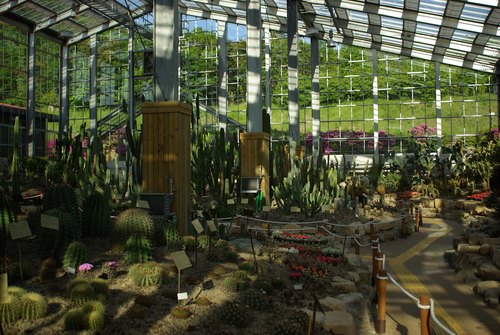
The hall shows about a hundred live butterflies on average every day of the year, according to the city. The Gyeonggi guide adds aquatic insects and tropical plants, and a host plant, hasuo (하수오), grown to feed the caterpillars of one tiger-butterfly species. A Korean travel site also mentions a Venus flytrap. The official sheet speaks of many ornamental plants and, above all, of butterfly host plants grown on site in the rearing greenhouses.
The neighbouring Insect Hall holds some thirty live insect species (36 according to the city), among them rhinoceros beetles, stag beetles and diving beetles, along with tarantulas and freshwater fish. The specimen room keeps 191 butterfly species (952 individuals), 53 moth species (179 individuals) and 86 species of other insects (351 individuals). Temporary exhibitions punctuate the year: in July 2026 a two-week show, held in the specimen room and the hall's passage, was devoted to the kkori-myeongju-nabi butterfly (꼬리명주나비), a species listed as vulnerable on the national red list.
Visiting
The Butterfly Hall opens the route: visitors pass through it before the specimen room, then a lawn where rabbits and hens live, and finally the Insect Hall. The 5,100 m² ecological park extends the outing outdoors. Admission is free, the centre closes on Mondays and school groups book online on weekdays only; monthly educational programmes are offered by registration. A Korean travel site presents it as an indoor outing suited to rainy days.
The centre lies 500 m inside the plant's entrance, and Guri Tower, a 100 m former incinerator chimney turned viewing tower, stands just behind it. The city also offers, by reservation, tours of the sewage plant, the incineration plant and the safety experience centre.
37.59° N, 127.16° E
Greenhouses nearby
More greenhouses — South Korea
Do you have a good photo of this greenhouse? Suggest it for this page →
Sources (8)
- guri.go.kr/eco/contents.do?key=1723
- guri.go.kr/eco/contents.do?key=1724
- guri.go.kr/eco/contents.do?key=1722
- guri.go.kr/eco/contents.do?key=1700
- guri.go.kr/eng/contents.do?key=2719
- guri.go.kr/eco/selectBbsNttView.do?key=1716&bbsNo=361&nttNo=145142
- ggc.ggcf.kr/p/5af56961b969ab10346498fa
- ko.wikipedia.org/wiki/%EA%B5%AC%EB%A6%AC%EC%8B%9C%EA%B3%A4%EC%B6%A9%EC%83%9D%ED%83%9C%EA%B
Affiliate links — booking through Verrière helps fund our research, at no extra cost to you.