Exhibition Glasshouses, Hampyeong Expo Park (함평엑스포공원 다육식물관·자연생태관·수생식물관·아열대농업관)
Hampyeong (Hampyeong-eup)
No freely licensed photo of this greenhouse yet. Do you have one? Suggest it for this page →
Sources checked October 2026
- Year
- 2009–2017
- Style
- Four halls in steel-and-glass houses (Venlo type for the succulents, wide-span for the natural-ecology hall)
- Dimensions
- 7,723 m² in total by the official figures (2,479 + 1,980 + 1,632 + 1,632 m²)
- Status
- Open to the public (park entry free outside festivals; halls closed on Mondays and in January)
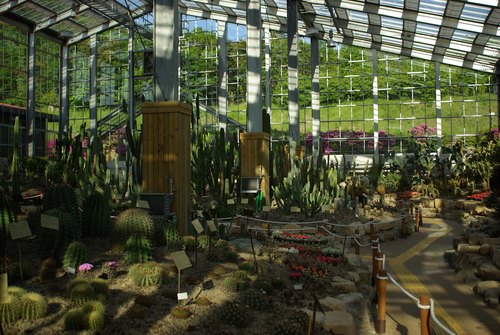
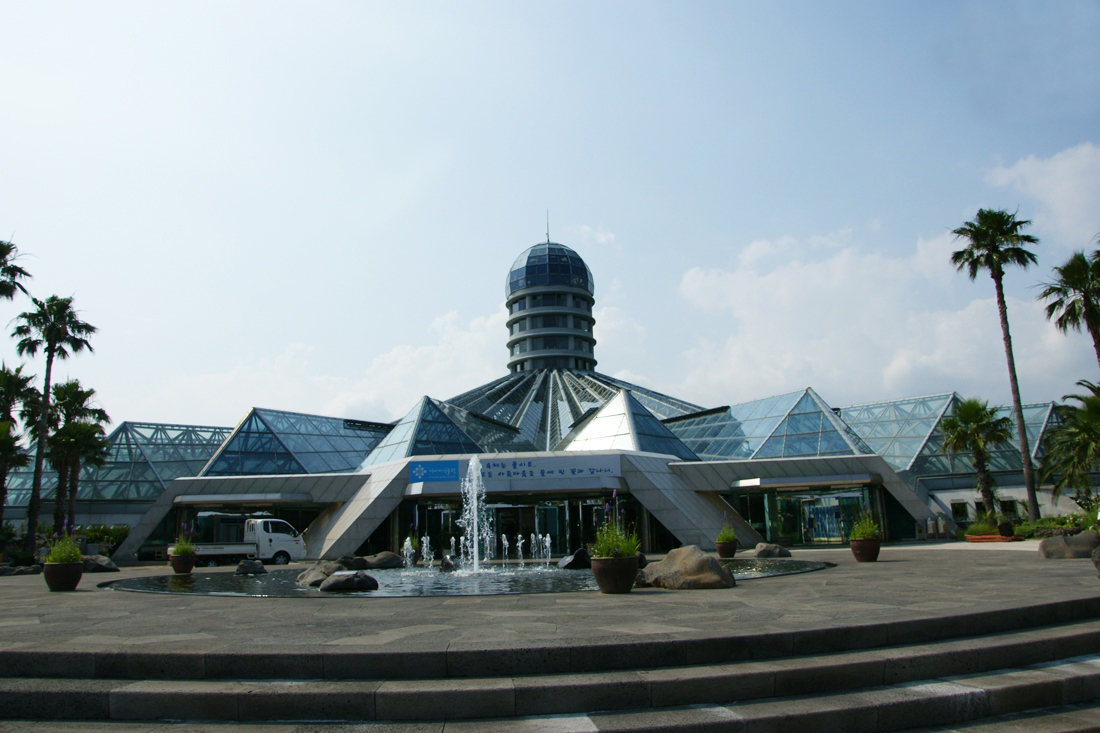
In Hampyeong Expo Park, which hosted the 2008 World Butterfly and Insect Expo, a block of glasshouses holds four permanent halls: succulents, natural ecology, aquatic plants and subtropical agriculture. The succulent hall, opened in April 2009 according to the press with plants imported from the Berlin-Dahlem botanical garden, gained a second glasshouse of 1,155 m² in 2017; it now has two Venlo-type houses, 2,350 taxa and more than 20,600 plants. The other three halls, of 1,632 to 1,980 m², are devoted to Korean wildflowers, subtropical crops and a humid jungle.
Affiliate links — booking through Verrière helps fund our research, at no extra cost to you.
History
Hampyeong Expo Park extends the county's butterfly festival, held since 1999, and the World Butterfly and Insect Expo of 18 April to 1 June 2008. The official chronology places the opening of the park in June 2009; the succulent hall, for its part, opened as early as April 2009 according to the press. Its first building, of 1,324 m², showed rare succulents imported directly from the Berlin-Dahlem botanical garden: 2,108 taxa and 9,106 plants at the outset.
With trees reaching the ceiling, branches had to be cut back every year. From April 2017 the county committed 800 million won to build, beside the first hall, a second glass greenhouse of 1,155 m² and 8 m in height, and redistributed the plants according to their needs. The renovated hall opened with the 2017 chrysanthemum festival; the opening ceremony took place on 20 October. The complex now has two greenhouses totalling 2,479 m², with 2,350 taxa and more than 20,600 plants, which the official site calls the largest cactus and succulent exhibition in the country. The three other glass halls, for natural ecology, subtropical agriculture and aquatic plants, are presented by the official site as part of the same complex.
Architecture and engineering
The four permanent halls form a block of glasshouses near the north gate, known as the Bull Gate, and the first car park, according to the park's official plan, where they are numbered in this order: succulents, natural ecology, subtropical agriculture, aquatic plants. According to the official pages, the succulent hall comprises two Venlo-type steel-and-glass houses (2,479 m²); the natural-ecology hall, a wide-span steel-and-glass house of 1,980 m²; the aquatic-plant hall, a steel-and-glass house of 1,632 m²; the subtropical-agriculture hall, a hall of 1,632 m² (500 pyeong). These areas add up to 7,723 m². The second succulent house, added in 2017, is 8 m high. In the aquatic-plant hall the climate is hot and humid, conceived as a jungle, with a waterfall and a carp pond; in the subtropical-agriculture hall a planted tunnel lets crops hang above the visitors.
Plant collections
The succulent hall gathers 2,350 taxa and more than 20,600 plants; a visit blog of October 2025 notes that one of the two houses is devoted to succulents and the other to cacti, and mentions blue agaves, a baobab and a Little Prince themed setting. The natural-ecology hall plants mainly twenty wild Korean species, 800 plants in all, among moss, rocks and old trunks; at the 2025 festival an installation there paired moth orchids (호접란) and 박쥐란 (staghorn ferns, literally 'bat orchids'), with a bat-wing look, echoing Hampyeong's two emblems, the butterfly and the golden bat. The subtropical-agriculture hall holds 35 cultivated species for 300 plants, including banana, papaya and dragon fruit. The aquatic-plant hall, laid out as a hot, humid jungle, receives visitors at the entrance with tillandsias draped like a tunnel, a waterfall and koi.
Visiting
The halls can be visited in any weather; they close on Mondays and in January. Allow half a day with the rest of the park, longer for the two succulent houses. The season follows the festivals: the butterfly festival in spring, the chrysanthemum festival in autumn (24 October to 9 November in 2025), lights in winter and a water-play area in summer. Nearby the park offers the hall of memories of bygone days (추억공작소: twenty rooms and more than a thousand objects), the golden-bat pavilion, the butterfly and insect hall with specimens and virtual reality, and a 6 km path to the river wetlands and the Hwayang neighbourhood park.
35.06° N, 126.52° E
Greenhouses nearby
More greenhouses — South Korea
Do you have a good photo of this greenhouse? Suggest it for this page →
Sources (9)
- hampyeong.go.kr/expopark/contentsView.do?pageId=expopark23
- hampyeong.go.kr/expopark/contentsView.do?pageId=expopark24
- hampyeong.go.kr/expopark/contentsView.do?pageId=expopark46
- hampyeong.go.kr/expopark/contentsView.do?pageId=expopark43
- hampyeong.go.kr/expopark/contentsView.do?pageId=expopark9
- asiae.co.kr/article/2017102410010847854
- access.visitkorea.or.kr/ms/detail.do?cotId=205ff609-e85c-426e-8452-32850e8f332c
- blog.naver.com/loveimpact97/224038991485
- ko.wikipedia.org/wiki/%EB%B0%95%EC%A5%90%EB%9E%80
Affiliate links — booking through Verrière helps fund our research, at no extra cost to you.