Perennial Plant Garden (다년생식물원), Sunchang Fermentation Theme Park
Sunchang, North Jeolla
No freely licensed photo of this greenhouse yet. Do you have one? Suggest it for this page →
Sources checked October 2026
- Year
- 2022
- Style
- Two-storey glasshouse with an integrated café
- Dimensions
- 997 m² of floor area on two levels
- Status
- Open to the public, free entry; closed on Mondays
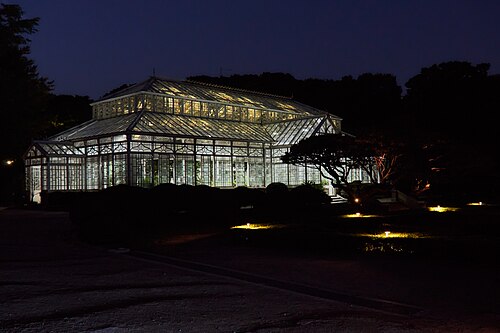
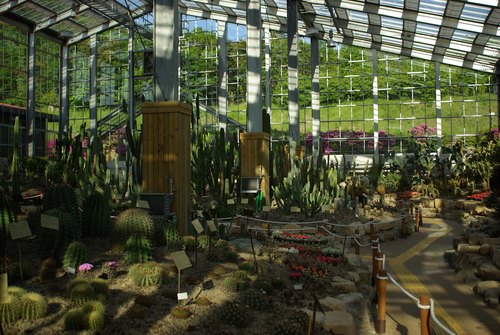
Inside the Sunchang Fermentation Theme Park, which is devoted to fermented sauces (gochujang, doenjang, soy sauce) and micro-organisms, the Perennial Plant Garden (다년생식물원) occupies a two-storey glass greenhouse whose floor area reaches 997 m² according to the county's official blog. Opened on 3 June 2022 together with other facilities of the park, it combines a tropical zone and a Mediterranean zone: baobab, banana plants, palms, cacti, bougainvillea and a small pond of aquatic plants. Entry is free and a café operates in the building.
Affiliate links — booking through Verrière helps fund our research, at no extra cost to you.
History
The Perennial Plant Garden belongs to the Sunchang Fermentation Theme Park (순창발효테마파크), which grew out of an "investment-leading district" (투자선도지구) programme run by Sunchang County around the traditional gochujang folk village. According to the news agency The Fact (3 June 2022), the programme combines the sauce industry, the fermented-sauce industry, the micro-organism industry and cultural tourism; the county mayor, quoted by the agency, says the project began in 2018. The park's official site gives March 2021 as its opening date.
The greenhouse was inaugurated on 3 June 2022 with the Microbe Museum and a play-and-science centre: the county announced three buildings and five facilities opening that day, before about 300 guests. The press release presents it as a resting space planted with about fifty subtropical species, among them pandanus, the Taiwan rubber tree (대만고무나무) and bougainvillea, together with dried-flower decorations. A blog published in May 2023 notes that some areas were still under construction at the time of the visit. In August 2026 the county's official blog describes it as a free indoor garden open to everyone.
The name, literally "perennial plant garden", says nothing about the content: it is a house of tropical and Mediterranean plants.
Architecture and engineering
The place is described as a glass greenhouse (유리온실). The county's official blog of July 2024 gives a floor area (연면적) of 997 m² over two storeys; a blog of May 2023 speaks of a greenhouse "two storeys high", and the official blog of 2026 mentions a high glass ceiling beneath which the vegetation grows dense.
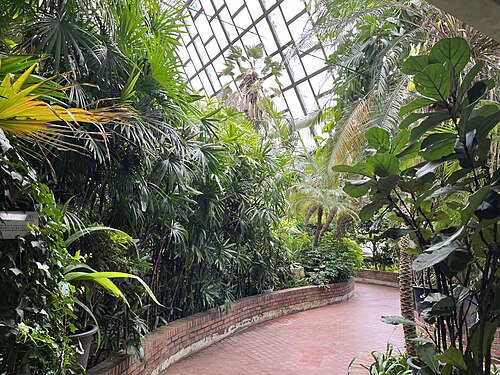
The visit takes place at ground level; the official blog of 2026 finds the route well arranged for a slow stroll. Near the entrance the plants form a green tunnel, and in the middle of the house a small pond holds water lilies and other aquatic plants. Panels give each plant's name, origin, growing conditions and particularities. The 2024 blog describes two zones, one tropical and one Mediterranean.
A dried-flower café, Monghwawon (몽화원), spreads over two levels; its upper floor overlooks the greenhouse and is linked to it by a lift, according to the same blog. The blog adds that the interior is very warm in summer but relatively low in humidity, the house being kept for plants that need heat. The park's official site states that the greenhouse operates together with the café, presented as a cultural resting space.
Plant collections
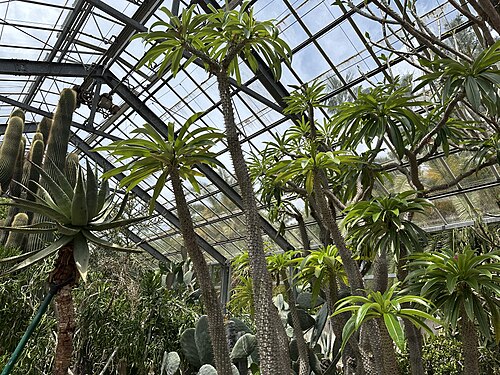
The county's press releases and blogs cite about fifty subtropical species; the park's official site gives about thirty. Named plants include the baobab, the banana (with a flowering banana with a red stalk highlighted in 2024), the mango, the olive, the papaya and palms, notably the one the 2026 blog calls 중동야자 ("Middle Eastern palm"). The June 2022 list adds pandanus (판다누스), the Taiwan rubber tree and bougainvillea.
Visitors between 2023 and 2026 also report cacti of very varied shapes, neoregelias (네오레겔리아), Boston fern, the spider lily (거미백합) and a tunnel of long-bearded tillandsias. The central pond holds water lilies. The Mediterranean zone is mentioned.
Visiting
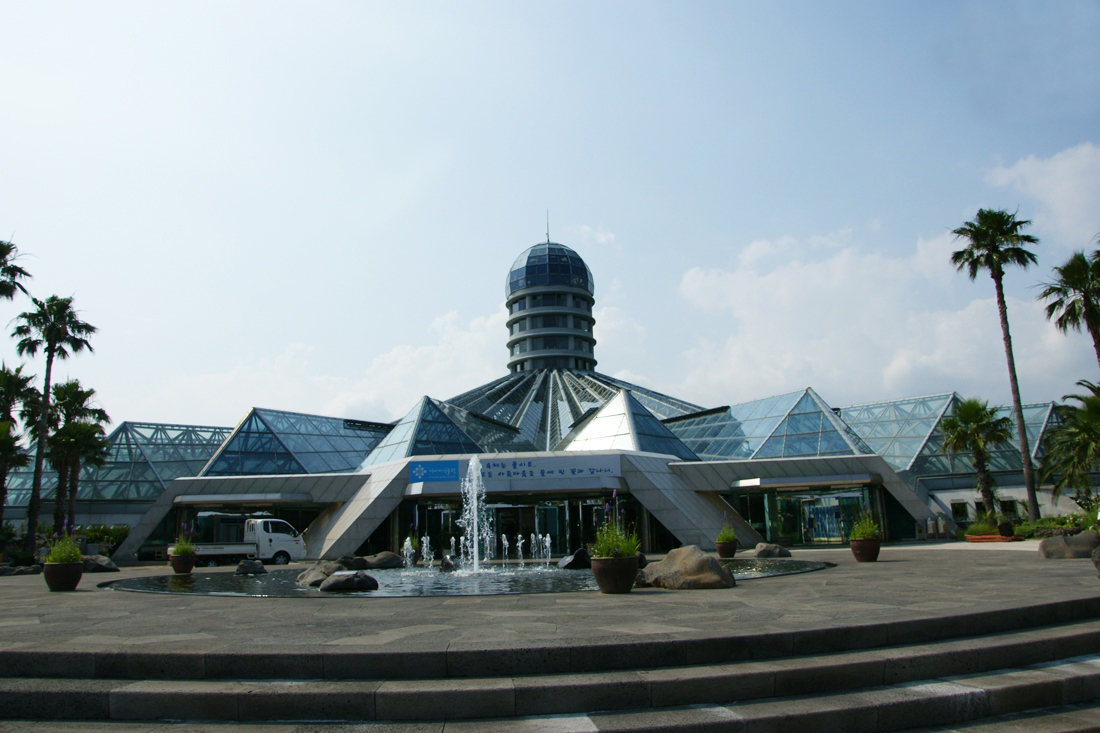
The greenhouse faces the Millennium Plaza (천년광장) and its fountain; the official blog advises turning left at the entrance. Access is free, unlike several other pavilions in the park. Blogs recommend it as a covered refuge in hot or cold weather, the heat inside being more marked in summer.
The visit combines with the Microbe Museum and the Food Science Hall of the same park, then with the neighbouring gochujang folk village. The café was temporarily closed on the day of the visit described in August 2026, so it is worth checking beforehand.
35.37° N, 127.11° E
More greenhouses — South Korea
Do you have a good photo of this greenhouse? Suggest it for this page →
Affiliate links — booking through Verrière helps fund our research, at no extra cost to you.