Tropical greenhouse of the Jardin des Papillons, Hunawihr
Hunawihr (Haut-Rhin), Grand Est

Sources checked October 2026
- Year
- 1988 (founding of the garden)
- Style
- Heated tropical greenhouse, barrel-vaulted gable and glazed walls on a frame, stone base
- Dimensions
- About 1,000 m² according to the press (cadastral footprint of about 800 m² on OpenStreetMap)
- Status
- Open to the public from April to early November (2026 season: 1 April-1 November); closed in winter, reopening announced for 1 April 2027
Between Ribeauvillé and Riquewihr, on the Alsace wine route, the Jardin des Papillons of Hunawihr is visited inside a tropical greenhouse of about 1,000 m² where hundreds of exotic butterflies from Africa, Asia and the Americas fly free among orchids, hibiscus and other flowering plants. Founded in 1988 by a horticulturist, the garden is a private business with no subsidy; it closes every winter, when the insects lack light and warmth. A Wikimedia Commons photograph shows a barrel-vaulted glazed gable, decorated with a butterfly made of coloured panels, standing on a stone base.
Affiliate links — booking through Verrière helps fund our research, at no extra cost to you.
History
The Jardin des Papillons has existed since 1988. The regional daily DNA (March 2024) and the Made in Alsace website (April 2026) credit its creation to a trained horticulturist, who founded it with his wife and for whom there are no butterflies without flowers. The official website presents the place as the result of several years of research and states that it is a private business with no subsidy, living on admissions and by-products. The present greenhouse already appears in the 2010 cadastre imported into OpenStreetMap, where it is named “Serre tropicale”.
The garden's rhythm follows the light. According to an article on the official website from January 2023, the greenhouse temperature falls to about 10 to 15 °C in winter, whereas the exotic butterflies need 22 to 25 °C; heating through the whole cold season would cost too much, so the garden closes in November and reopens in spring (1 April in 2026; closure announced for the evening of 1 November, reopening on 1 April 2027). The remaining chrysalises enter diapause, the plants are pruned, the heaters replaced and the paintwork redone. Since 2015 a transparent colony of leaf-cutter ants has completed the route, and a transparent beehive is mentioned in 2026.
Architecture and engineering
The tropical greenhouse is a single building of irregular plan: the digitised cadastre imported into OpenStreetMap gives it a footprint of about 800 m², while Made in Alsace (2026) speaks of a 1,000 m² greenhouse. On the Wikimedia Commons photographs (one of them from July 2017), the entrance front combines a glazed red frame, a stone base and, above it, a large barrel-vaulted gable with transparent panels on a frame, part of which forms a butterfly in coloured panels; other multi-pitched glazed roofs extend to the right and behind the entrance. The garden also mentions “the net that covers the greenhouse”, without saying what it is for; the stems of a creeping fig risk damaging it as they grow through it.
Inside, DNA recorded 26 °C and 80 % humidity at the opening of the 2024 season, whereas the garden says its butterflies need 22 to 25 °C. A pond, benches and heaters (replaced during the winter break) are mentioned. The transparent panels look like glass in the photographs.
Plant collections
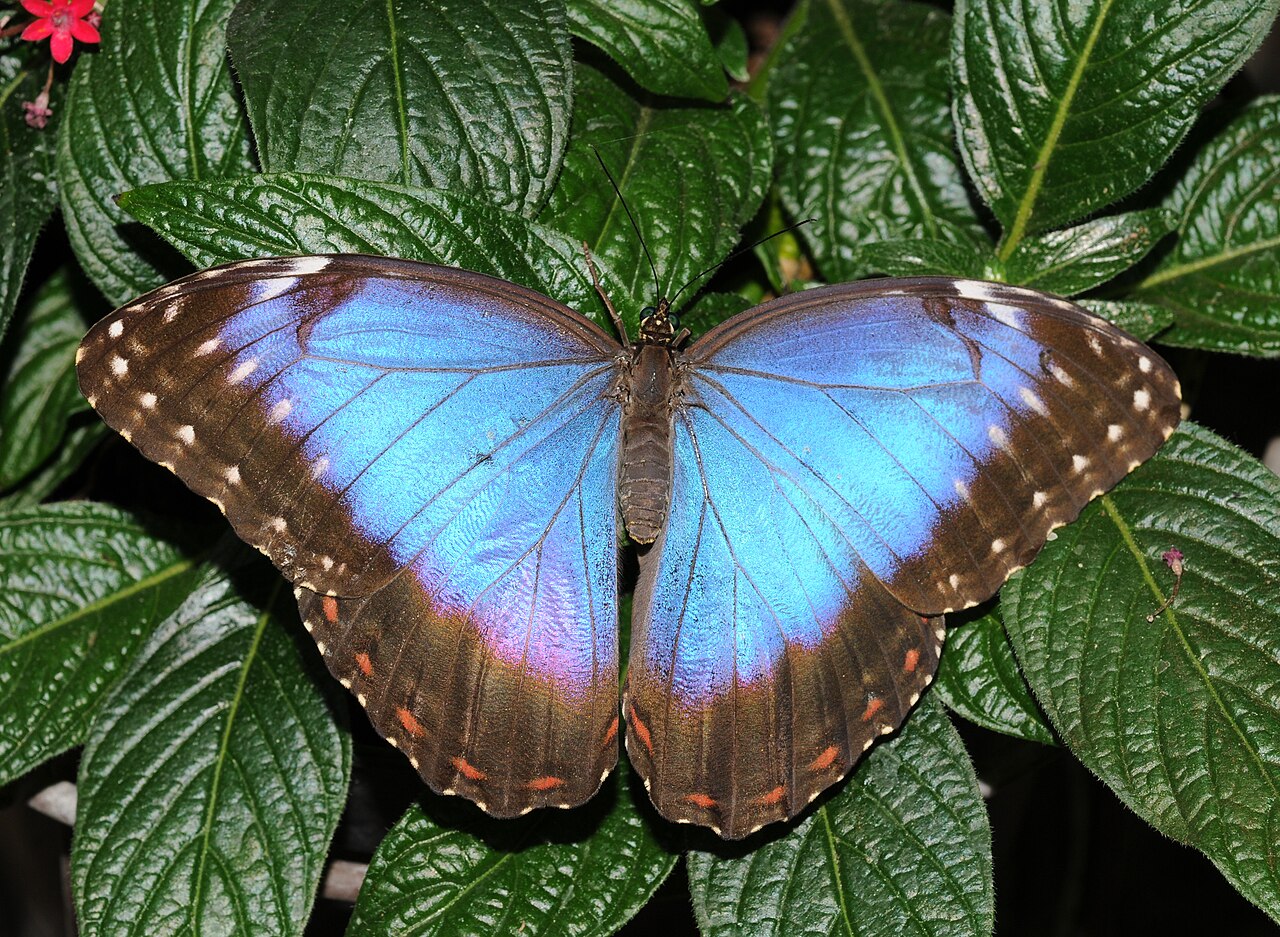
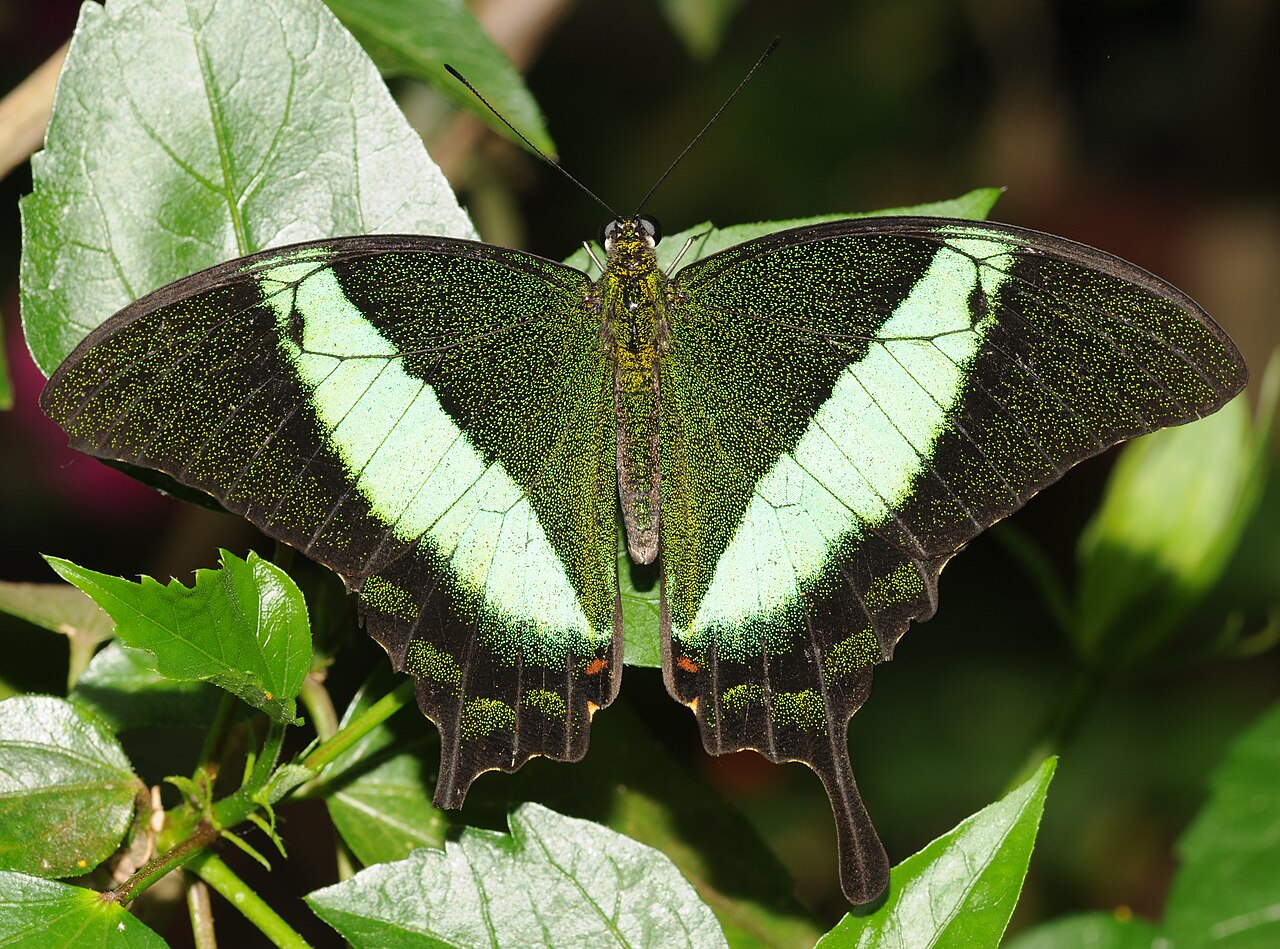
The official website announces about 200 butterfly species over the season, from Africa, Asia and the Americas, three continents whose climates allow them to be brought together under one roof. DNA counts 250 shown over the months, with about 500 individuals present each day, renewed by two shipments of chrysalises a week (500 to 1,000 individuals). The newspaper names Papilio demoleus, Hamadryas februa, Caligo atreus, Morpho peleides and Danaus plexippus; Commons photographs taken on site add Idea leuconoe, Papilio cresphontes, Papilio palinurus and Heliconius charithonia, among others, and Made in Alsace tells of a visit from a blue morpho.
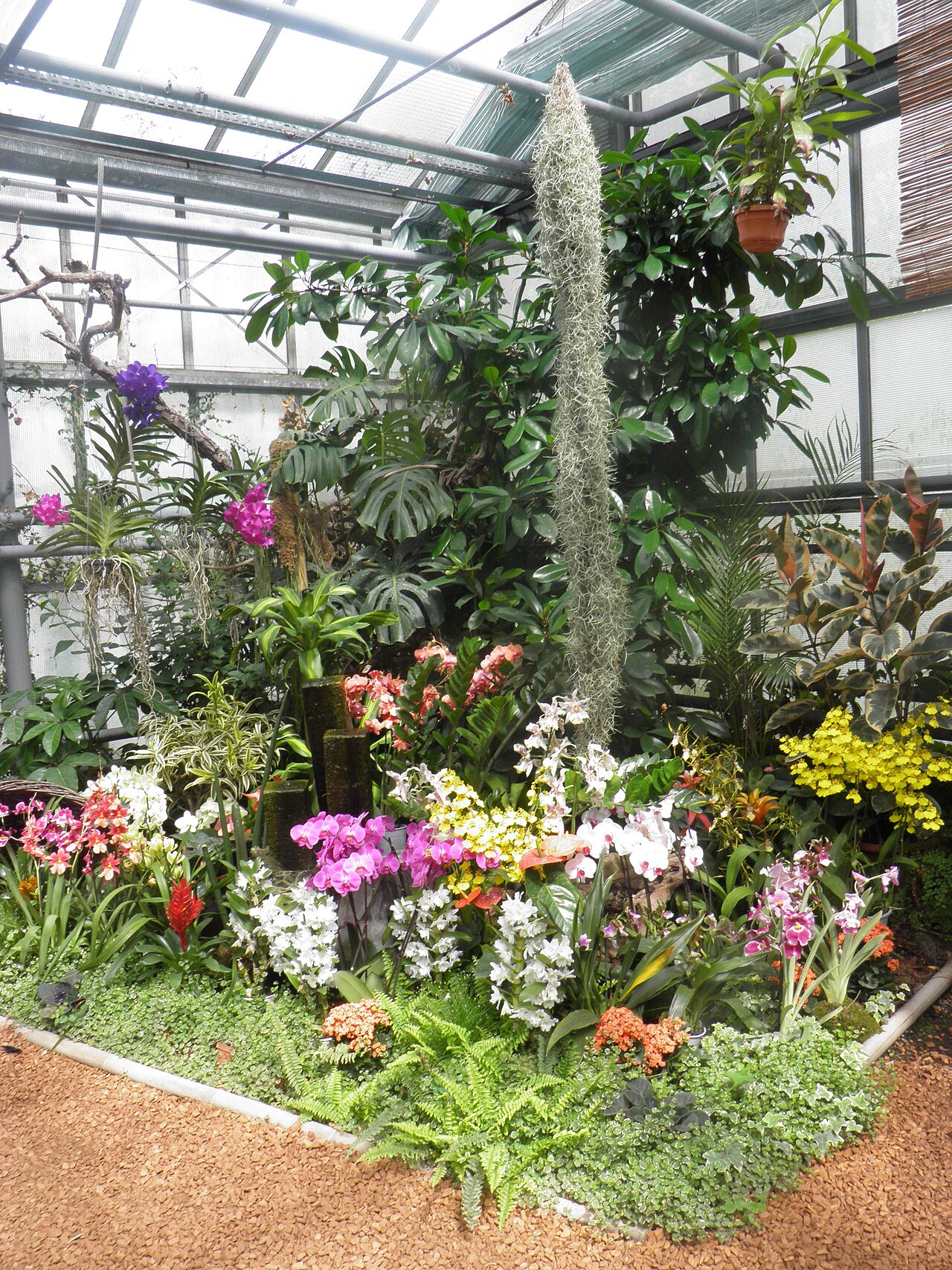
As for plants, the photographs in the garden's Commons category name orchids (Brassia, Vanda, Phalaenopsis, an orchid display), hibiscus, kalanchoes, mandevillas and pentas, as well as a Venus flytrap. An article by the garden also cites cannas, lantanas, mandevillas and geraniums, brought into the greenhouse for the winter, and a creeping fig. The visit also presents a colony of leaf-cutter ants and a transparent beehive.
Visiting
The garden stands on the Route de Ribeauvillé, on the Alsace wine route, between Ribeauvillé and Riquewihr. The official website indicates a visit of at least one hour; as the greenhouse is hot and humid, the garden advises light clothing and arriving in the morning, when the butterflies are very active and the greenhouse calmer. Emergences, 50 to 80 a day according to a 2022 article produced with the garden, take place between 10 am and 3 pm.
Outside, the park offers a garden with picnic tables and, according to the same article, two spaces under marquees (awareness of the decline of insects, a painting exhibition). The neighbouring NaturOparC, a reintroduction centre for storks and otters, combines easily into a full day. The season runs from April to early November.
48.18° N, 7.32° E
Greenhouses nearby
More greenhouses — France
Do you have a good photo of this greenhouse? Suggest it for this page →
Sources (10)
- jardinsdespapillons.fr/
- jardinsdespapillons.fr/visite/
- jardinsdespapillons.fr/tarifs-horaires/
- jardinsdespapillons.fr/2023/01/17/que-se-passe-t-il-au-jardin-des-papillons-lors-de-la-fer
- jardinsdespapillons.fr/2026/05/05/sortie-scolaire-alsace/
- dna.fr/culture-loisirs/2024/03/29/de-la-chrysalide-au-papillon-un-univers-tout-en-subtilit
- madeinalsace.com/hunawihr-le-jour-ou-un-morpho-bleu-a-change-mes-vacances/
- unefilleenalsace.com/jardin-des-papillons-hunawihr/
- commons.wikimedia.org/wiki/File:Hunawihr,Parc_des_papillons,_serre_tropicale_.jpg
- openstreetmap.org/way/79620321
Affiliate links — booking through Verrière helps fund our research, at no extra cost to you.