Greenhouses of the Jardin du Luxembourg (Senate greenhouses)
Paris 6th arrondissement, Île-de-France
Entry updated on October 5, 2026
- Year
- 1796 (greenhouses on the site); 1999 (orchid, begonia and croton house)
- Style
- Complex of collection greenhouses, including an orchid house divided into seven climate 'chapels'
- Dimensions
- 3,600 m² (whole greenhouse complex)
- Status
- Open to the public during European Heritage Days (September)
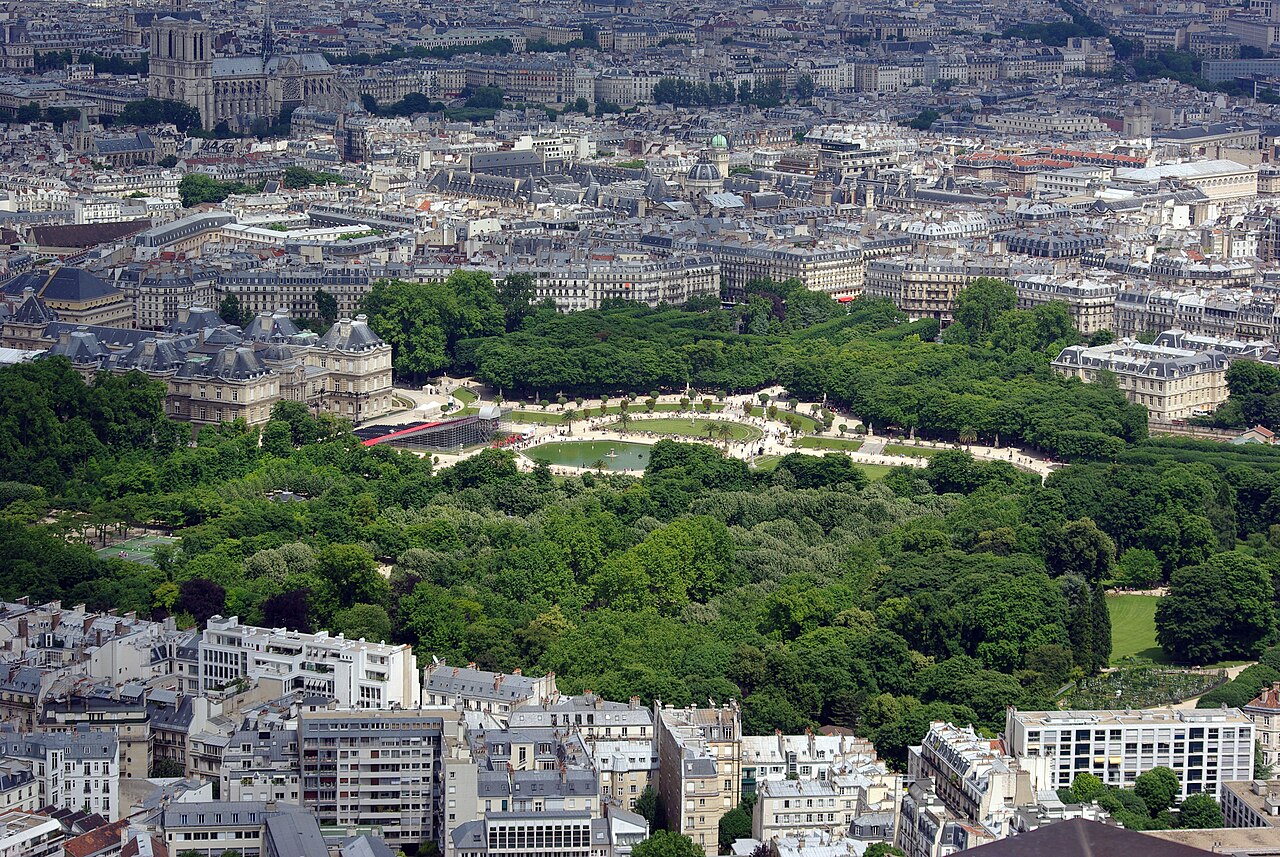
Adjoining the Hôtel de Vendôme, the greenhouses of the Jardin du Luxembourg stand on a spot that has had greenhouses ever since the former Carthusian lands were joined to the garden in 1796. Run by the Senate since 1879, they cover 3,600 m² and hold an orchid collection begun in 1838 at the Paris Faculty of Medicine and taken in by the Senate in 1859. A house opened in 1999 shelters orchids, begonias and crotons; the orchid house is divided into seven 'chapels' with different climates. The public can enter only on Heritage Days.
Affiliate links — booking through Verrière helps fund our research, at no extra cost to you.
History
1 min
The story of the Luxembourg greenhouses begins with the enlargement of the garden: in 1796, shortly after the Revolution, the lands of the former Carthusian estate were joined to the Jardin du Luxembourg, and greenhouses have occupied this spot beside the Hôtel de Vendôme ever since.
The orchid collection that now makes the place famous began elsewhere. In 1838 a consignment of plants sent by the physician of the Emperor of Brazil reached the Paris Faculty of Medicine. When the Faculty's botanical garden was abolished in 1859, the Senate agreed to take the collection into the Luxembourg greenhouses. The greenhouses have been administered and managed by the Senate since 1879.
In the 1860s the site also gained an orangery, which was soon put to other uses. The orchid collection has won prizes several times at national and international horticultural shows. At the end of the twentieth century part of the nineteenth-century greenhouses gave way to a new house, opened in 1999, for orchids, begonias and crotons.
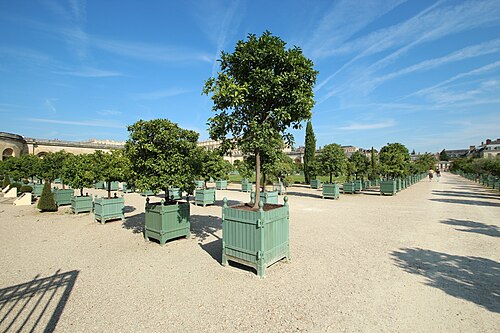
This complex should not be confused with the garden's large orangery, built in 1839 by the architect Alphonse de Gisors to shelter tubbed plants during the cold season. The greenhouses themselves open to the public only once a year, for European Heritage Days.
Architecture and engineering
1 min
The Luxembourg greenhouses form a 3,600 m² complex adjoining the Hôtel de Vendôme. According to Wikipedia it has three parts: a house devoted to ferns, another to flowering pot plants, with regulated temperature and drip irrigation, and a third, opened in 1999, which shelters orchids, begonias and crotons in place of older greenhouses dating from the nineteenth century.
The centrepiece is the orchid house, which the Senate describes as made up of seven 'chapels': each one reproduces the climate of the regions the plants inside come from, so that orchids with different needs can be grown side by side.
The complex also includes an orangery built in the 1860s and soon converted to other uses. It is distinct from the large orangery built in 1839 by Alphonse de Gisors, which shelters the garden's tubbed plants in winter and serves as a temporary exhibition space in summer. The sources consulted describe neither the structure nor the materials of the greenhouses themselves, and do not name their designers.
Plant collections
1 min
Founded in 1838, the orchid collection now numbers, according to the Senate, more than 10,000 pots belonging to 150 genera, or more than 1,350 species, hybrids and cultivars of tropical orchids; Wikipedia, for its part, gives a figure of more than 400 species. It has won prizes several times at national and international horticultural shows.
The greenhouses also shelter ferns, begonias, crotons and flowering plants grown in pots.
Gisors's large orangery keeps 180 tubbed plants, among them citrus trees, Canary Island date palms, oleanders and pomegranates; some of the bitter orange trees are estimated to be 250 to 300 years old. The garden also maintains a conservation orchard of old fruit-tree varieties, mainly apples and pears.
Visiting
1 min
The Senate greenhouses open to the public only once a year, during European Heritage Days in September. The rest of the year, the Jardin du Luxembourg offers other ways to approach this horticultural heritage.
Gisors's orangery hosts temporary exhibitions in summer, and the Pavillon Davioud, built in 1867 by Gabriel Davioud as the buffet of the Pépinière, houses horticulture classes, lectures and summer exhibitions. The conservation orchard, opposite the Lycée Montaigne on the rue Auguste-Comte side, shows old varieties of apples and pears. A September visit to the greenhouses therefore combines naturally with a walk through the garden, from the orangery to the orchard.
48.84° N, 2.34° E
Greenhouses nearby
More greenhouses — France
Do you have a good photo of this greenhouse? Suggest it for this page →