Grandes Serres du Jardin des Plantes
Paris, Île-de-France

Sources checked September 2026
- Year
- 1834–1836
- Architect
- Charles Rohault de Fleury
- Style
- Cast iron and glass (1834-1836), Art Deco winter garden (1937)
- Dimensions
- Four public glasshouses; 750 m² winter garden, 20 × 12 m pavilions
- Status
- Open to the public
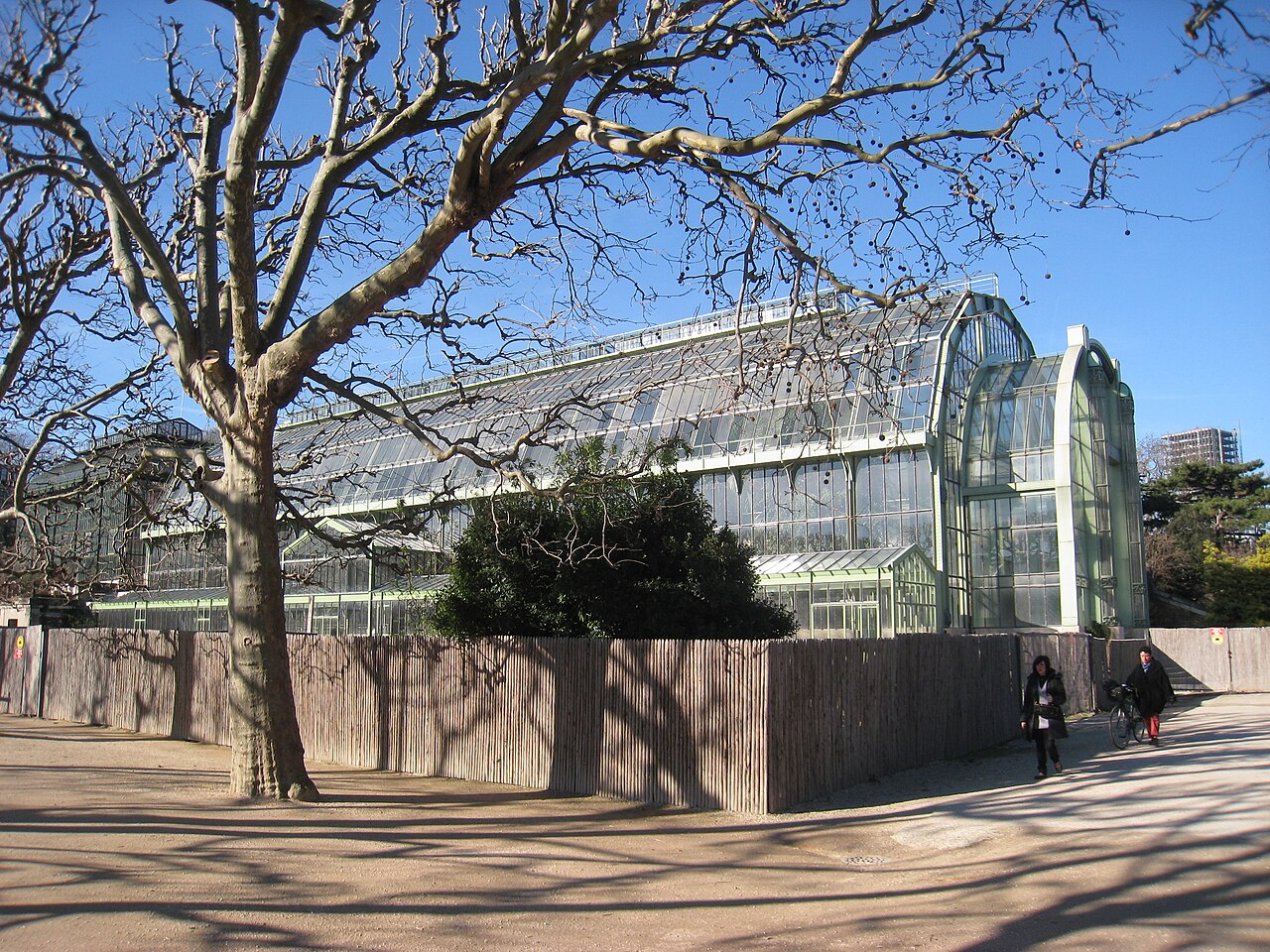
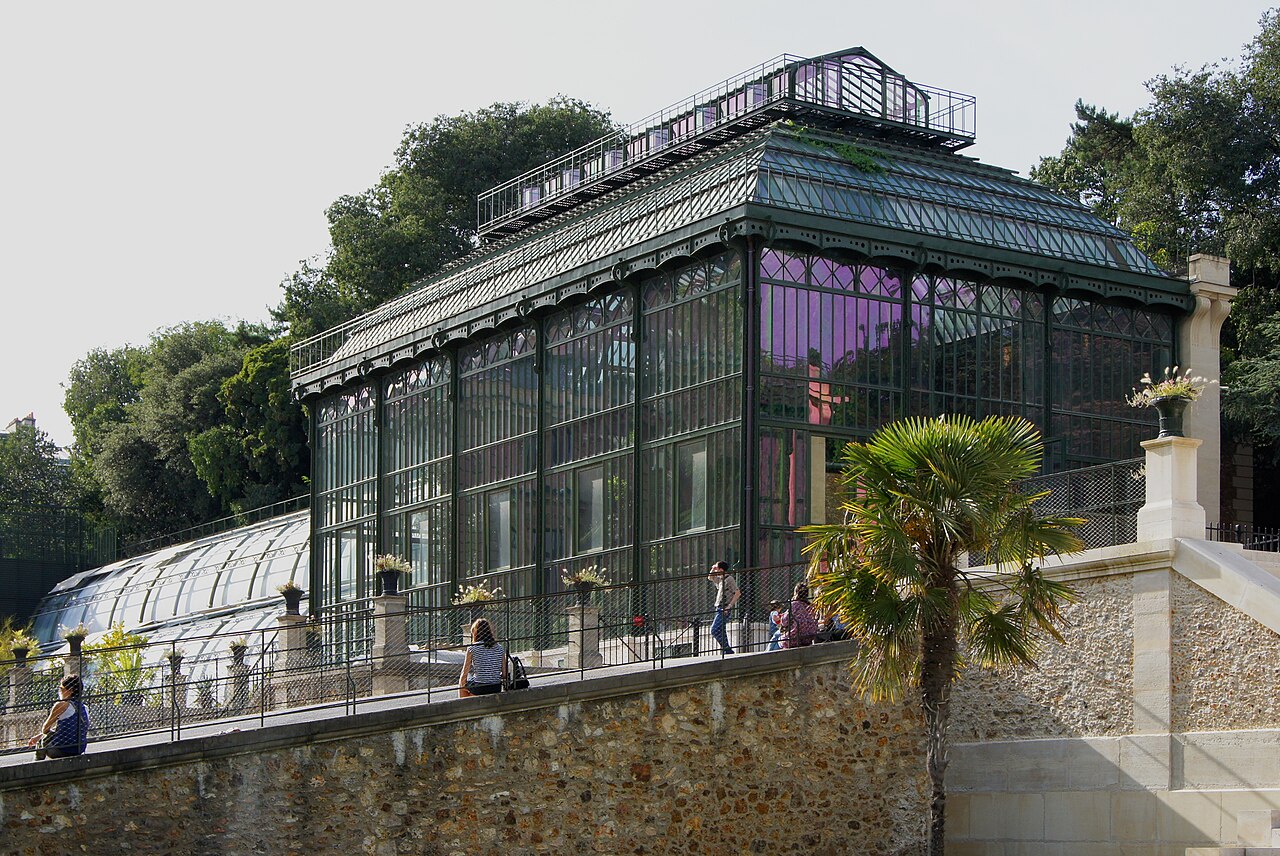
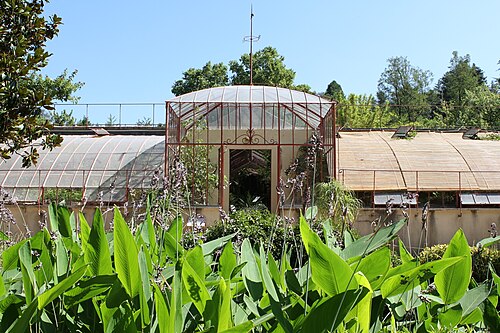
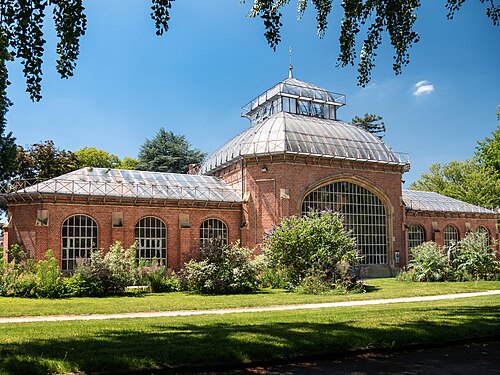
At the Jardin des Plantes, the Grandes Serres bring together four buildings listed as historic monuments and renovated between 2005 and 2010. The two cast-iron and glass pavilions designed by Charles Rohault de Fleury in 1834-1836, counted among the beginnings of French metal architecture, now hold the flora of New Caledonia and the story of plant evolution. René Berger's Art Deco winter garden, opened in 1937, shelters a tropical rainforest around a 15-metre rock, and the Deserts and Arid Environments glasshouse, opened in 2010, replaces the colonial glasshouses destroyed by the 1999 storm.
Affiliate links — booking through Verrière helps fund our research, at no extra cost to you.
Practical info
- Tickets
- Full price €9, reduced €7 (including ages 3 to 25 with proof), Tribu pass (2 adults + 2 young people aged 3 to 25) €28. Free under 3. Booking on the online ticket office only; no combined ticket with the other sites.
- Opening hours
- Open daily except Tuesday: 10am–5pm (hours valid until 28 February 2027). Last entry one hour before closing. Partial or full closure possible in bad weather or extreme heat.
- Getting there
- 57 rue Cuvier, 75005 Paris. Metro line 5 (Gare d'Austerlitz), 7 (Censier-Daubenton), 10 (Jussieu or Gare d'Austerlitz); RER C Gare d'Austerlitz; buses 24, 57, 61, 63, 67, 89, 91; Batobus, Jardin des Plantes stop.
Frequently asked questions
Is there a combined ticket with the other sites in the Garden?
No: each site (galleries, Grandes Serres, Ménagerie) has its own ticket. With a full-price ticket under 3 months old from another Muséum site, the reduced rate applies at the Grandes Serres.
Who can enter for free?
Among others children under 3, Pass Annuel Muséum holders, disabled visitors and their companion, job seekers and recipients of social minimum benefits, with proof.
Do the Jardin des Plantes paths cost anything?
No, the paths and gardens are free to enter. A ticket is required for the Grandes Serres, the galleries and the Ménagerie.
History
The Jardin des Plantes glasshouses succeed the orangeries of the Royal Garden of Medicinal Plants, founded in 1626. In 1714, after the Peace of Utrecht, the burgomaster of Amsterdam presented Louis XIV with a Coffea arabica plant, and Antoine de Jussieu had the garden's first hothouse built for it; the coffee plants multiplied there before being shipped to Martinique in 1721. Sébastien Vaillant had two more hothouses built in 1714 and 1717, and Buffon another in 1788.
The present buildings begin with Charles Rohault de Fleury, who designed two cast-iron and glass pavilions, the "Mexican" and "Australian" houses, together with curved glasshouses, between 1834 and 1836. Jules André added a winter garden opened in 1889; demolished in 1932-1934, it gave way to René Berger's large glasshouse, opened in 1937, while "colonial glasshouses" went up in the 1930s.
The siege of Paris in 1870 and both world wars cut off fuel to the glasshouses, killing many rare specimens, among them Sophora toromiro brought back from the Pacific in 1936 by Alfred Métraux. The buildings were listed as historic monuments on 24 March 1993. Paul Chemetov rebuilt the curved glasshouses in 1995-1997, and the storm of December 1999 destroyed the colonial houses. From 2005 to 2010 an eight-million-euro project replaced or restored 1,300 m² of glazing and created the Deserts and Arid Environments glasshouse; the complex reopened in 2010 under its present names. Henri Rousseau's "The Snake Charmer" (1907) is linked to these glasshouses.
Architecture and engineering
Rohault de Fleury's two pavilions, each 20 by 12 metres, mark the beginnings of French metal architecture, some fifteen years before Baltard's Halles. Cast iron reduced the internal supports and multiplied the glazed surfaces, and steam heating maintained the warmth needed by tropical plants, then grown in pots and planters.
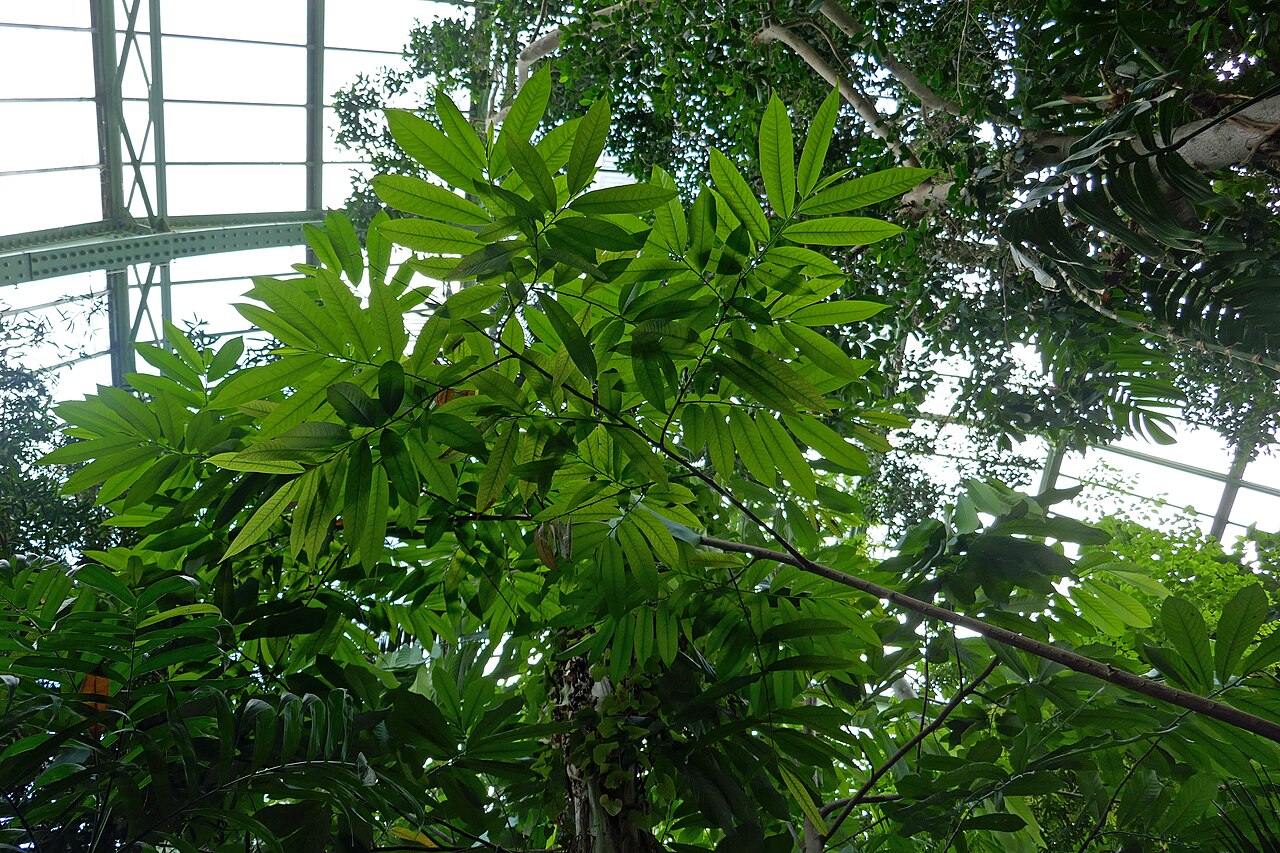
Jules André's winter garden broke new ground by planting directly in the soil. Its successor, René Berger's glasshouse, covers 750 m²: visitors enter through an Art Deco peristyle whose cylindrical iron-and-glass columns light up, and a 15-metre artificial rock, from which a waterfall feeds a stream, gives a panorama over the vegetation. Adjoining it, the long gallery of the Deserts and Arid Environments glasshouse replaced the wood-and-glass colonial houses in 2010. The curved glasshouses rebuilt by Chemetov are reserved for the gardeners.
The 2005-2010 renovation aimed to restore the buildings' original appearance while modernising how they work. The tropical rainforest house is kept at around 22 °C, and in heatwaves or bad weather the complex may close partly or entirely.
Plant collections
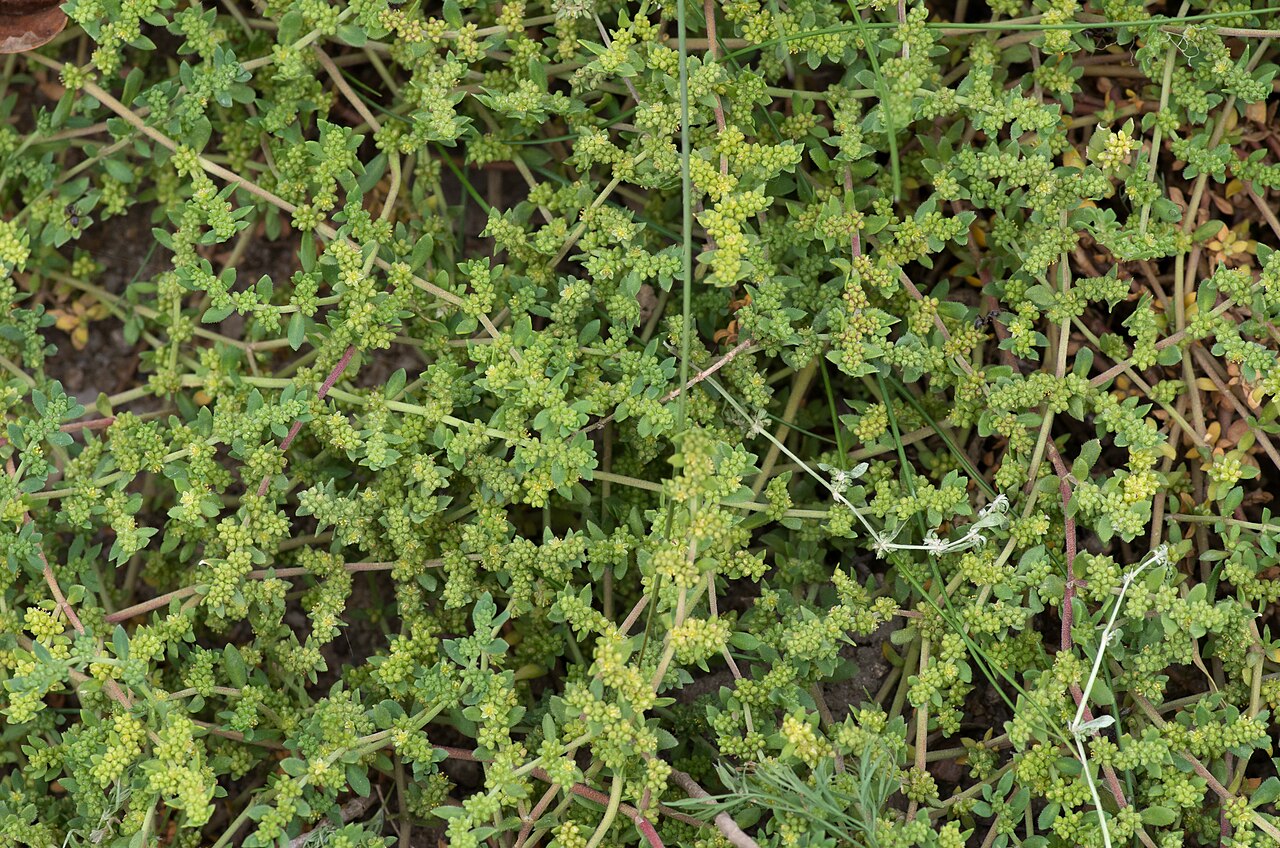
Each glasshouse has a theme. The tropical rainforest house gathers more than 600 plants from Africa, the Americas and South-East Asia, among them cacao, coffee, avocado, banana, pepper and vanilla, as well as Ficus lutea, Chamaedorea geonomiformis, the tree fern Cyathea intermedia and a coconut palm nicknamed "Maeva". The Deserts and Arid Environments house shows plants from the United States, Mexico, the Andes, southern Africa, Madagascar, the Arabian Peninsula, Australia and a few islands, with their answers to drought: living stones, water-storing cacti, globe-shaped silhouettes.
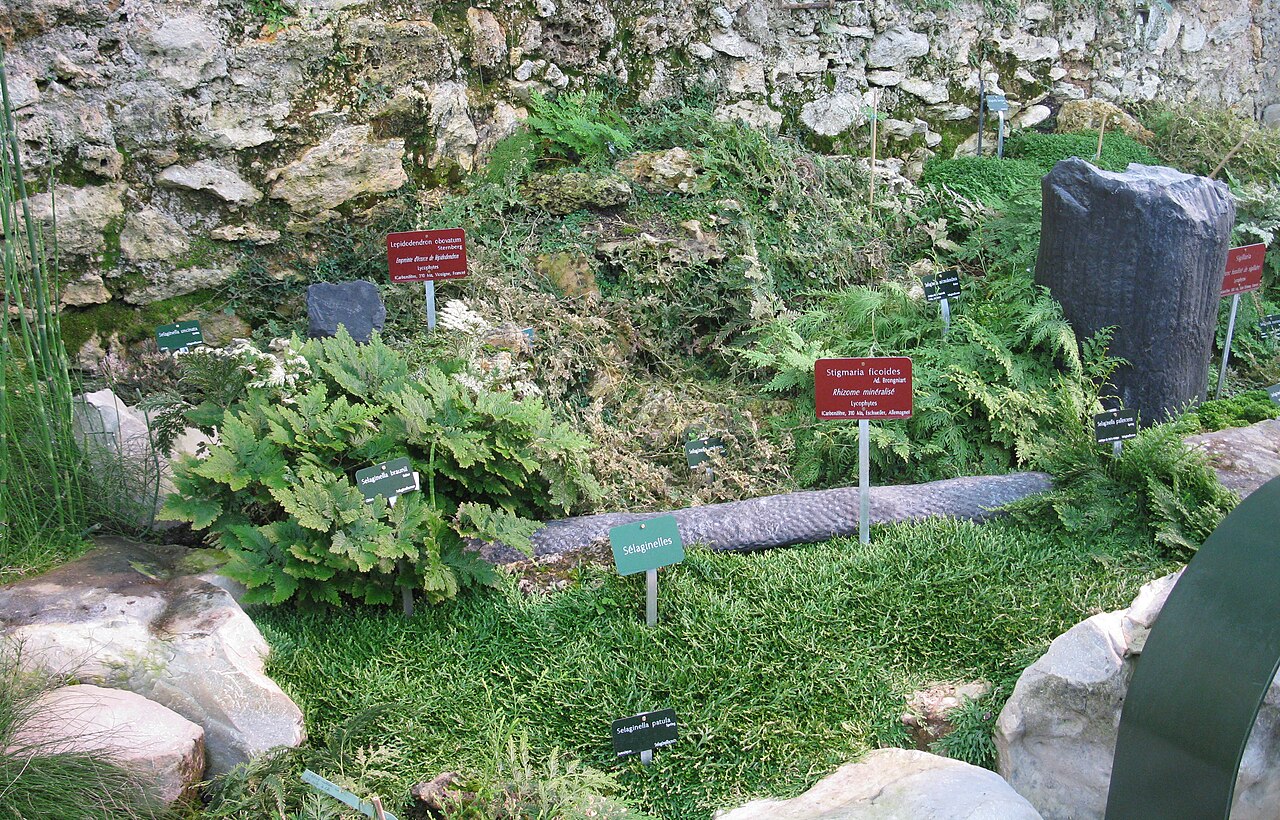
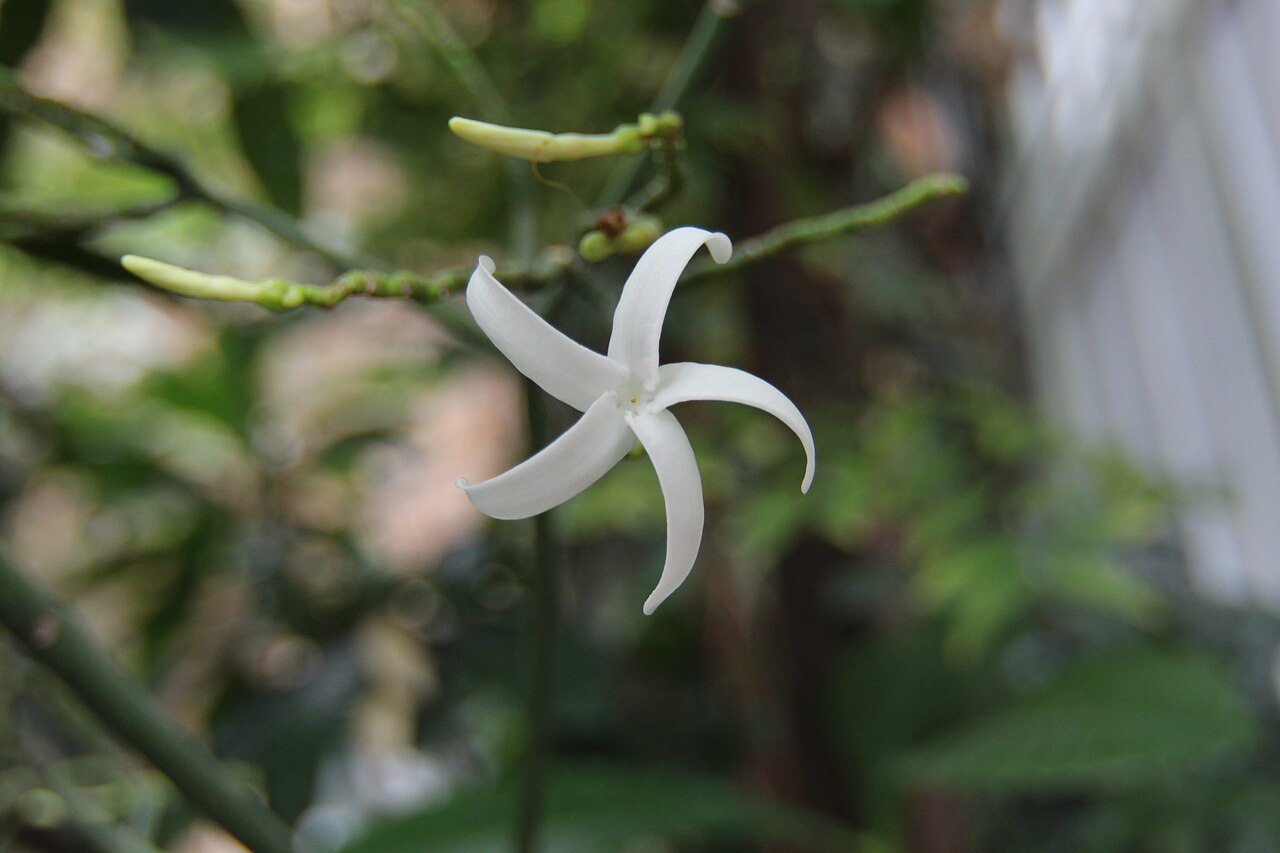
The former Mexican house, which became the New Caledonia glasshouse in 2010, presents a flora that is 76 per cent endemic through five habitats (rainforest, dry forest, mining scrub, savanna and mangrove), including the niaouli and Arthroclianthus. The former Australian house, renamed the History of Plants glasshouse, traces at least 430 million years of evolution by setting fossils and reconstructions beside living representatives of ancient lineages, ferns, conifers and horsetails.
Visiting
The Grandes Serres stand in the Jardin des Plantes in the 5th arrondissement, served among others by the Gare d'Austerlitz. A single ticket, booked online, covers all four glasshouses, visited in sequence from the rainforest through the deserts and New Caledonia to the history of plants; climbing the rock in the large glasshouse gives a panorama over the vegetation.
In autumn 2026 a broken lift has made the glasshouses temporarily inaccessible to wheelchair users. A recent full-price ticket qualifies for a reduced rate at the other sites of the Jardin des Plantes, the Musée de l'Homme and the Paris Zoological Park, an easy way to extend the day across the rest of the Muséum.
48.84° N, 2.36° E
Greenhouses nearby
Architecture nearby
More greenhouses — France
Do you have a good photo of this greenhouse? Suggest it for this page →
Affiliate links — booking through Verrière helps fund our research, at no extra cost to you.