Four Seasons Hall (glasshouse), Hwaseong Uri Flower Botanical Garden (화성시 우리꽃식물원 사계절관)
Hwaseong (Paltan-myeon), Gyeonggi

Sources checked October 2026
- Year
- 2010
- Style
- Glasshouse under a hanok (traditional Korean) roof
- Dimensions
- ≈2,900 m² floor area (2,883 m² in 2010), one basement and 2 floors
- Status
- Open to the public; garden-wide renovation planned
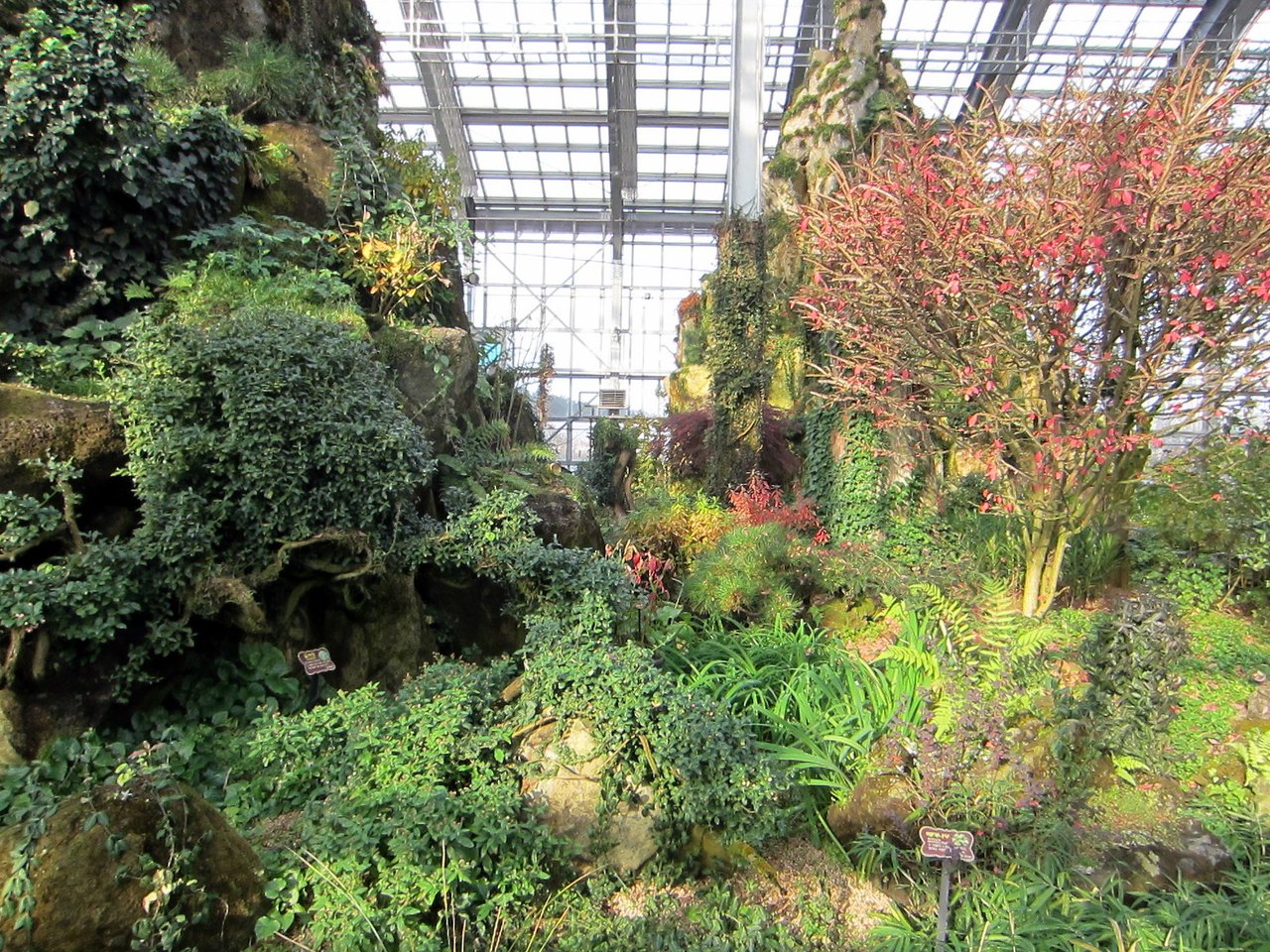
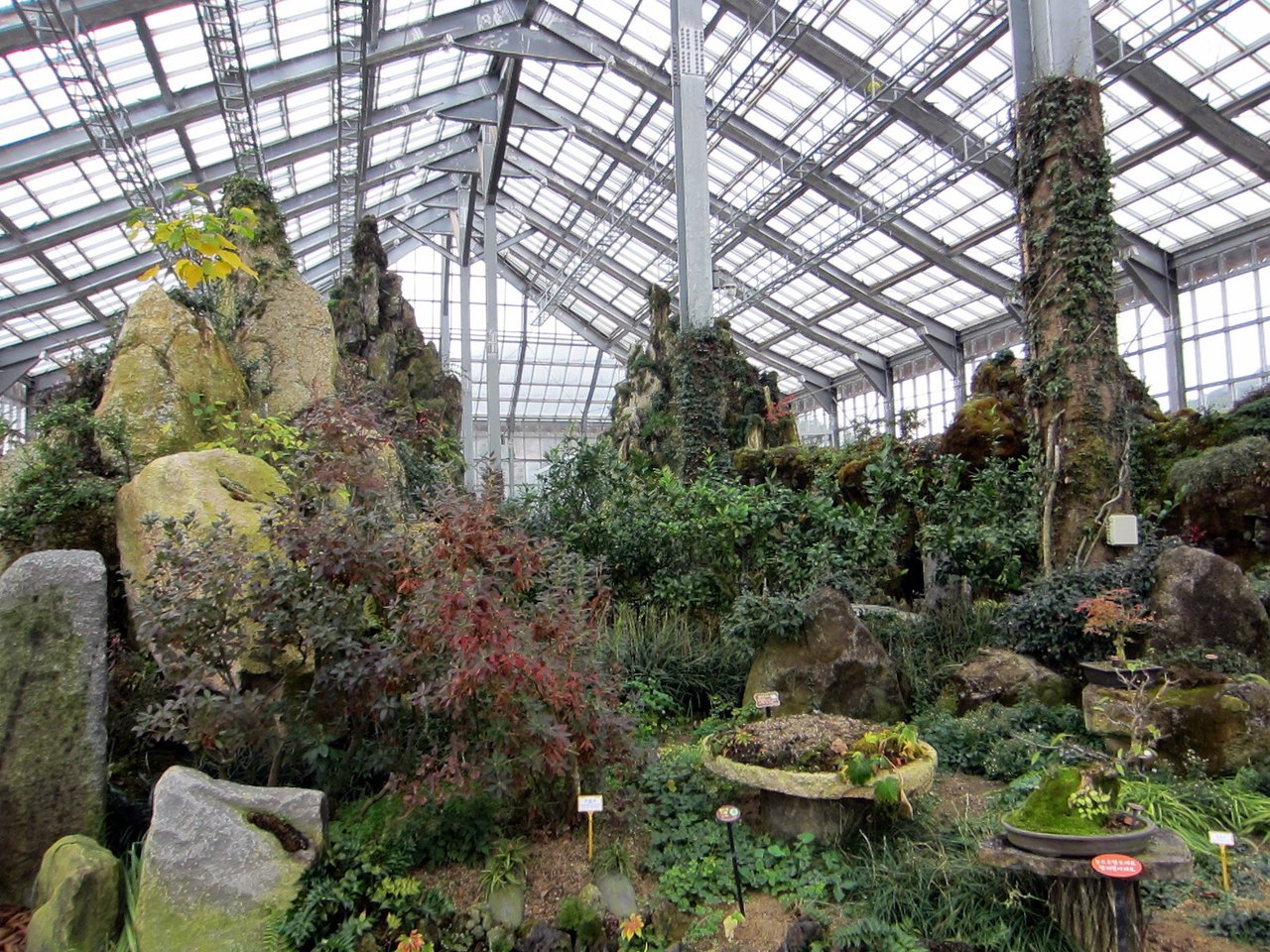
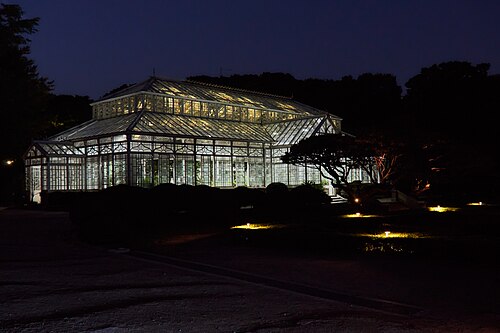
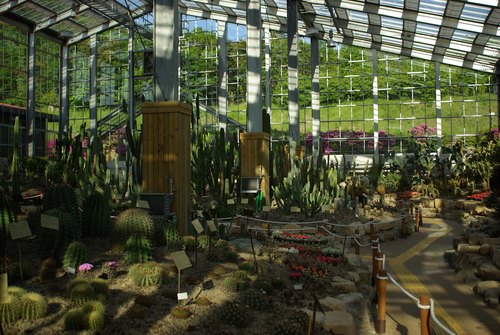
The glasshouse of the Uri Flower Botanical Garden, inaugurated on 5 May 2010 in Hwaseong, is built in the style of traditional Korean hanoks. At opening the press called it the Baekdudaegan Hall and presented it as the largest glass greenhouse in the country; the official site now speaks of the Four Seasons Hall. It has a basement and two floors above ground, for about 2,900 m² of floor space. Five of Korea's great mountains are reproduced in miniature, and around 300 species, including Korean warm-temperate plants, are on show. A renovation of the whole garden is being prepared.
Affiliate links — booking through Verrière helps fund our research, at no extra cost to you.
History
The Uri Flower Botanical Garden ("our flowers") was created by the city of Hwaseong, in the township of Paltan. The groundbreaking ceremony took place on 24 October 2006, a municipal ordinance on its establishment and operation was enacted on 7 January 2010, and the garden opened on 5 May 2010. It was registered as a public arboretum on 24 May 2011. In 2020 it signed an agreement with the Baekdudaegan National Arboretum and was then designated a forest biological resources management institution.
At opening, the Seoul press presented the greenhouse as the largest glass greenhouse in the country: a basement and two floors, 2,883 m² of floor space, a hanok style, and five great mountains (Baekdu, Halla, Jiri, Seorak, Taebaek) reproduced in miniature and planted with 192 native species according to height. It was then called the Baekdudaegan Hall.
In July 2024 the city launched a design competition to renovate the management building, the Four Seasons greenhouse and the outdoor spaces, with completion targeted for December 2026. In April 2026 the project, now a renovation and expansion of the grounds (from 113,069 to 153,755 m²), was still at the competition stage.
Architecture and engineering
The city describes the greenhouse as a glasshouse built in the traditional hanok architectural style: under the hanok roof, straight and curved lines answer one another. It has a basement and two floors above ground, with 2,883 m² of floor space in 2010 and about 2,900 m² according to the current tourism page. Three wheelchair lifts serve the site, one of which serves the greenhouse's second floor.
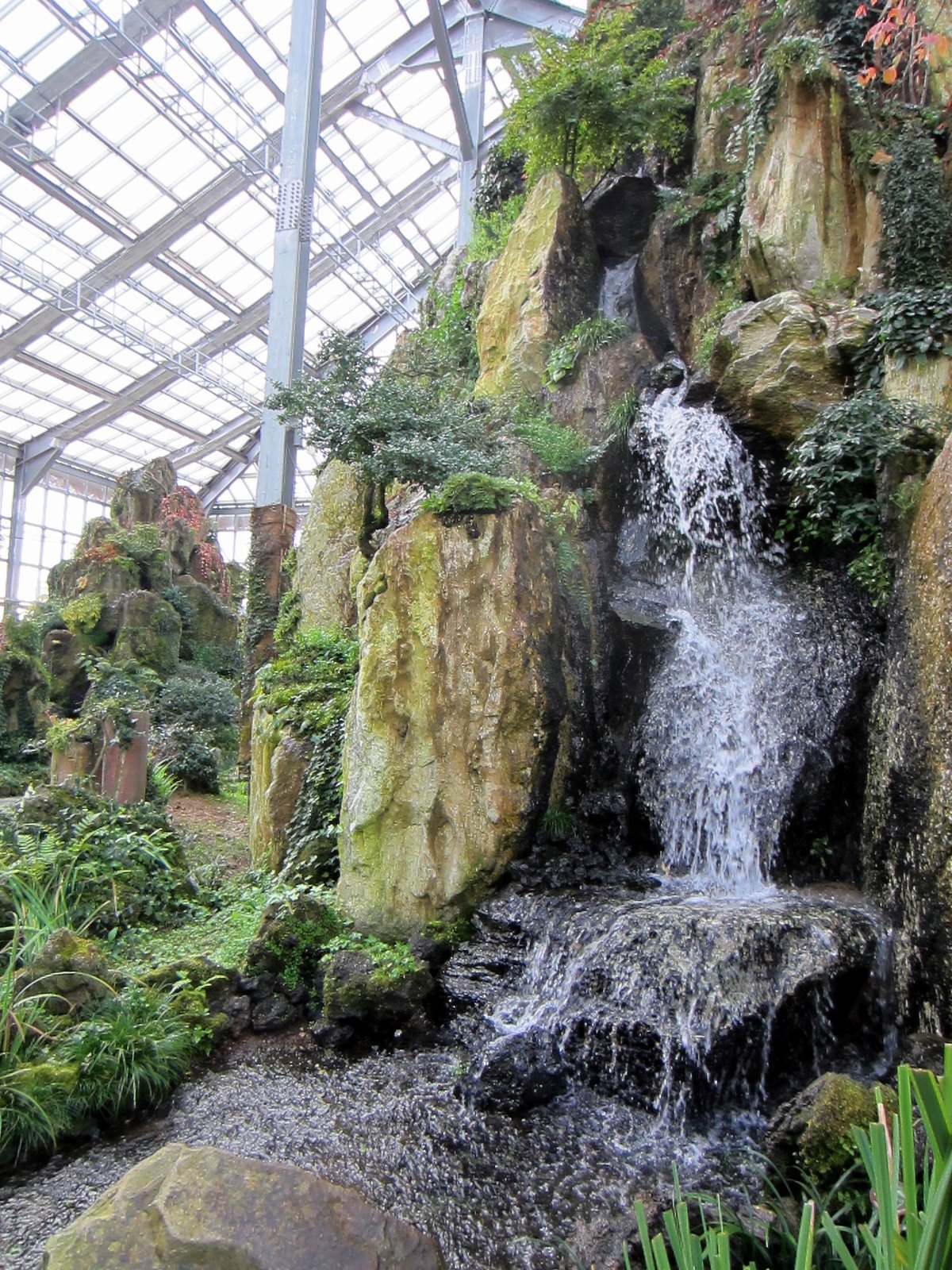
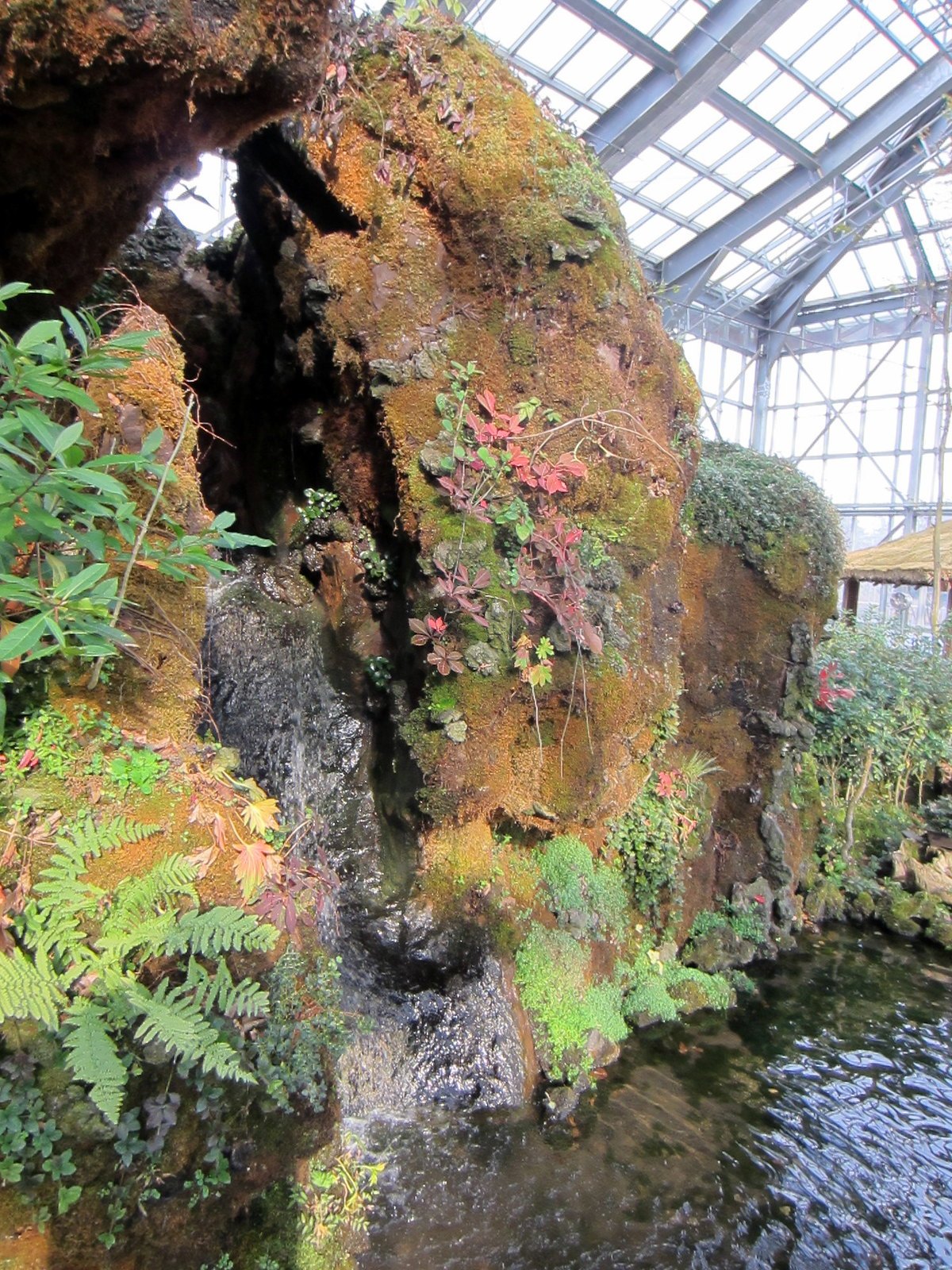
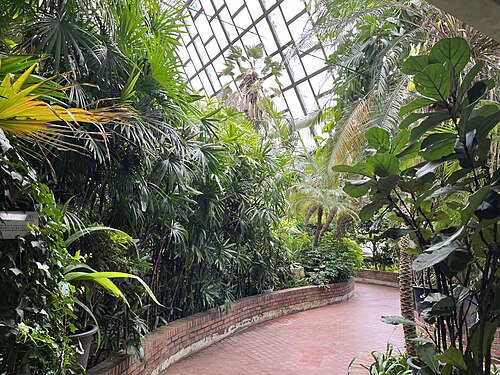
The interior is organised around five miniature mountains, Baekdu, Halla, Jiri, Seorak and Taebaek, whose plants are arranged by height so that plant ecology can be observed by altitude. The official garden plan numbers 23 points and puts the greenhouse sixth, right after the fountain plaza.
Plant collections
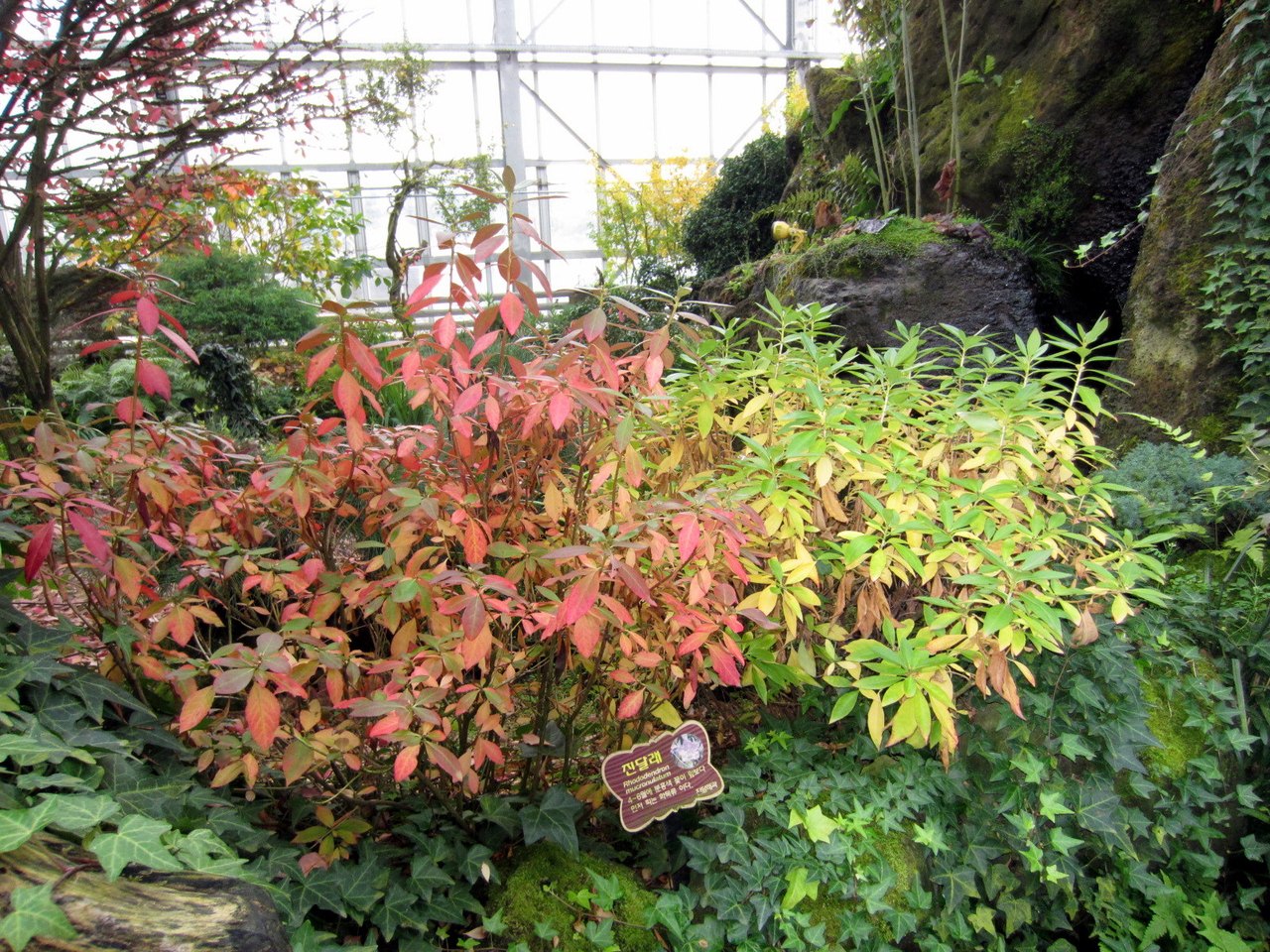
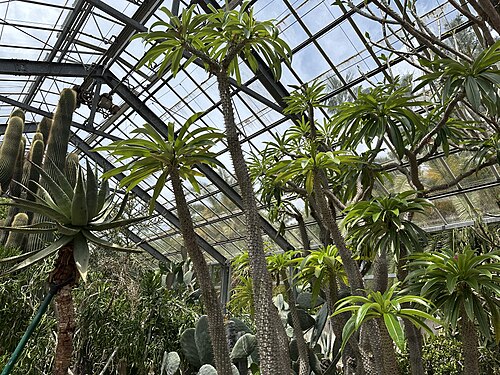
The official site announces about 300 species in the greenhouse, including Korean warm-temperate plants (난대식물). Visitors see the Wollemi pine (Wollemia nobilis), a conifer discovered in 1994 in a national park near Sydney and nicknamed a living fossil, two fragrant osmanthus trees, the silver (은목서) and the golden (금목서), ferns including a tree fern (나무고사리), a hibiscus native to the Jeju coast (황근, Hibiscus hamabo) and a root of bakdal-namu (박달나무) with a legend of granted wishes attached to it.
The garden as a whole advertises, depending on the page, 1,100 or 1,200 Korean species. The greenhouse also serves as an exhibition hall: in spring 2024 the city staged the special exhibition "BLOOMING JOURNEY" there, which ran until 19 May.
Visiting
The official plan puts the greenhouse right after the fountain plaza, among the garden's points of interest: the interactive exhibition hall, ecological pond, wildflower garden, play forest, ginkgo avenue, medicinal-plant garden and Deunggosan hill. A path behind the garden joins the Deunggosan hiking trail, whose loop takes about 30 minutes according to the Korea Tourism Organization, and the hill carries a viewing platform. According to the city's tourism page, the plants come from southern Korea, so the greenhouse stays mild in winter.
A renovation is announced for the garden and the greenhouse: the official page reports no closure at the time of consultation, but it is wise to check the works schedule before travelling. The Korea Tourism Organization lists a step-free entrance, a lift, a wheelchair lift, an accessible restroom and reserved parking.
37.12° N, 126.88° E
Greenhouses nearby
More greenhouses — South Korea
Do you have a good photo of this greenhouse? Suggest it for this page →
Sources (9)
- botanic.hscity.go.kr/botanic/our/history.jsp
- botanic.hscity.go.kr/botanic/thema/season.jsp
- botanic.hscity.go.kr/botanic/intro/guide.jsp
- tour.hscity.go.kr/NEW/1tour/nature14.jsp
- access.visitkorea.or.kr/ms/detail.do?cotId=d3ed5b27-6019-40f8-980b-c68969ed543a
- m.go.seoul.co.kr/news/2010/04/21/20100421024021
- metroseoul.co.kr/article/20240710500058
- kyeonggi.com/article/20260415580170
- wikidata.org/wiki/Q11326699
Affiliate links — booking through Verrière helps fund our research, at no extra cost to you.