Waterdrop Greenhouse, Mulhyanggi Arboretum (물향기수목원 물방울온실)
Osan (Sucheong-dong), Gyeonggi

Entry updated on October 5, 2026
- Style
- Waterdrop-shaped glasshouse
- Status
- Open to the public
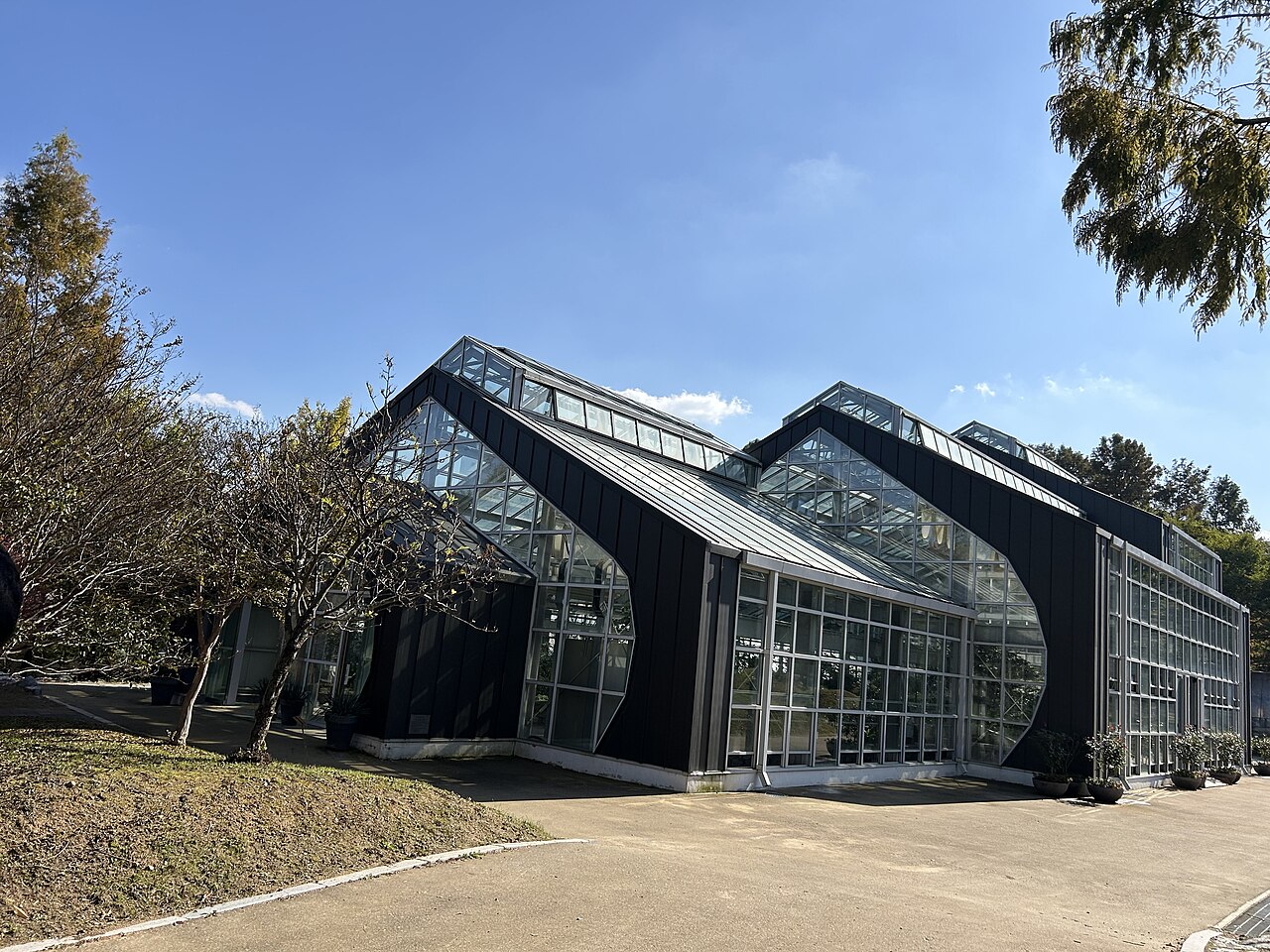
Gyeonggi Province built the Mulhyanggi Arboretum in Osan between 2000 and 2005 around the theme of water, trees and people meeting, and opened it in May 2006. Its Mulbangul Greenhouse takes its name and form from a drop of water. The glass house is conceived as a Southeast Asian subtropical rainforest and holds 337 tropical plant species, seen from timber decks and a raised walkway. A second glasshouse, for warm-temperate plants and ferns, concentrates mainly on species native to Jeju Island.
Affiliate links — booking through Verrière helps fund our research, at no extra cost to you.
History
1 min
Mulhyanggi Arboretum, whose name means 'scent of water', is a Gyeonggi Province project. It was built between 2000 and 2005 around the theme of 'the meeting of water, trees and people' and opened to the public on 4 May 2006. It is run by the Gyeonggi Forest Environment Research Institute.
The waterdrop greenhouse is listed, together with the forest exhibition hall, the warm-temperate and fern house and the visitor centre, among the arboretum's main buildings; the sources consulted give it no separate construction date and name no architect.
Published figures have changed over time and vary between sources: 34 or 35 hectares, 19 themed gardens according to Wikipedia and a 2020 article but 25 on the current official page, and anything from 1,600 to about 2,015 plant species. In 2020 an accessibility survey by the outlet Social Focus noted that the forest exhibition hall was being remodelled and that 400 million won had been set aside to make the wetland garden usable by wheelchair users.
Architecture and engineering
1 min
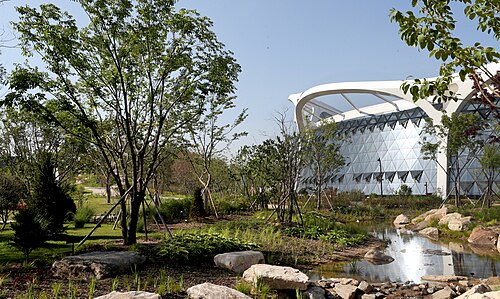
The main greenhouse is a glass volume shaped like a drop of water. Inside, it is designed to evoke a Southeast Asian subtropical rainforest.
Visitors move along timber decks and an elevated walkway, which let them look at the vegetation from more than one level. The main paths have no changes of level; only a rest area is reached by steps. The 2020 survey did observe that tall railings and closely spaced wooden slats blocked the view for people in wheelchairs.
The second glasshouse, for warm-temperate plants and ferns, runs on below the bonsai garden and was rated as reasonably accessible. The sources consulted publish neither the floor area, nor the height, nor the structural system of either house.
Plant collections
1 min
The waterdrop greenhouse holds 337 species of tropical plants, described as rare, set out as a humid subtropical forest of Southeast Asia.
The warm-temperate and fern house is devoted mainly to species native to Jeju Island.
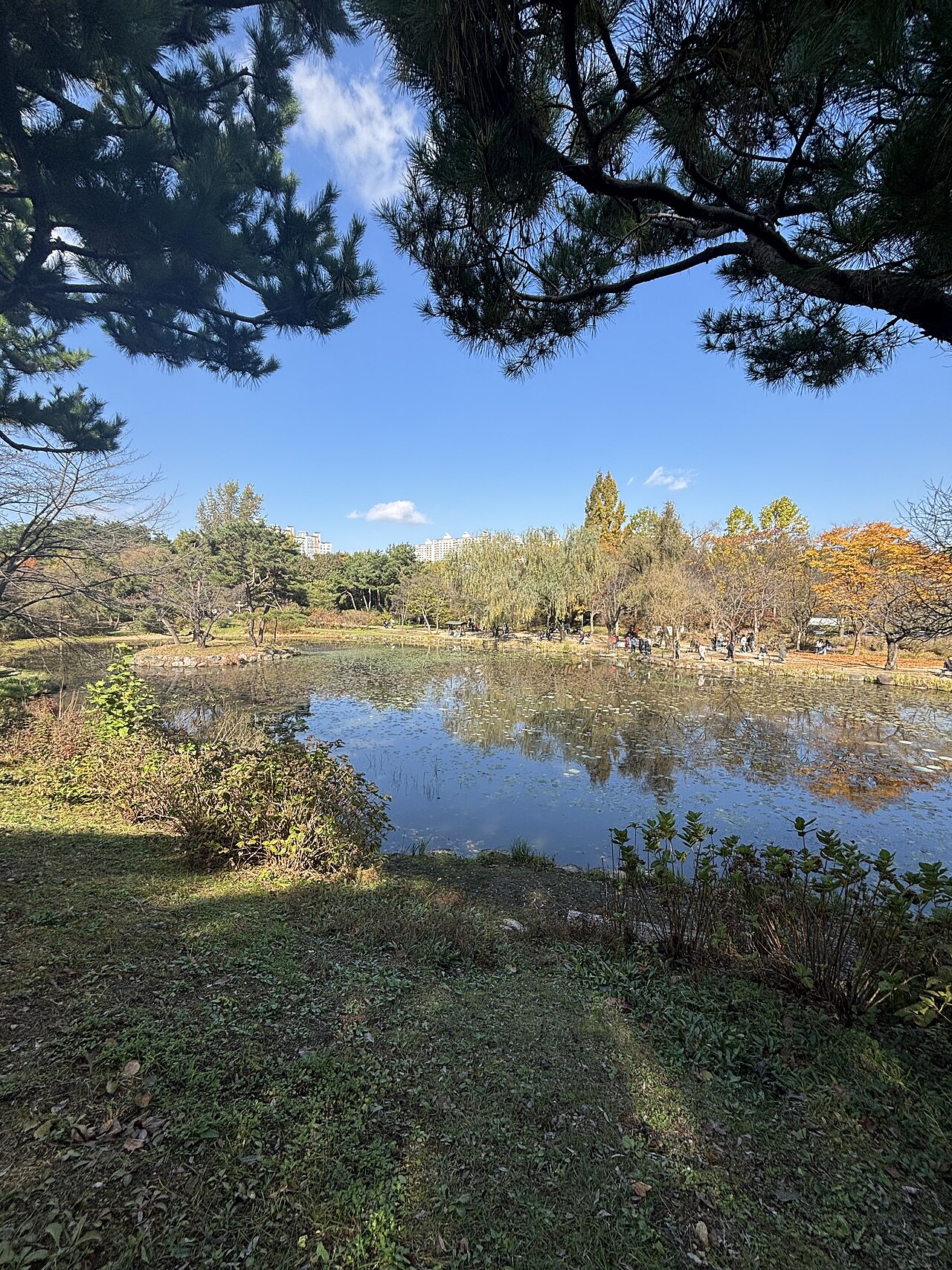
Outdoors, the official page lists 25 themed gardens and about 2,015 species, among them the prickly water lily (가시연꽃) and misun-namu (미선나무). The gardens include a wetland garden, an aquatic plant garden, a shade garden, collections of Korean pine and maples, a fruit-tree garden, a garden of native plants from central Korea and a bonsai garden.
Visiting
1 min
The arboretum is in Sucheong-dong, Osan, about five minutes' walk from Osan University Station on subway Line 1. The waterdrop greenhouse and the fern house can be seen in half an hour, but half a day is needed to take in the themed gardens as well.
In winter the two glasshouses are the heart of a visit, offering warmth and greenery; from spring to autumn the wetland and aquatic plant gardens take over outdoors. The arboretum's forest exhibition hall rounds off the trip.
37.17° N, 127.06° E
Greenhouses nearby
More greenhouses — South Korea
Do you have a good photo of this greenhouse? Suggest it for this page →