Pazo de Lourizán Greenhouse (Invernadoiro de Lourizán)
Pontevedra, Galicia
Entry updated on October 5, 2026
- Year
- 1900 (rebuilt in 1953)
- Style
- Art nouveau wrought iron and glass, barrel-vaulted
- Dimensions
- Central nave up to 7 m high
- Status
- Gardens open to the public; greenhouse to be restored under the pazo's rehabilitation project
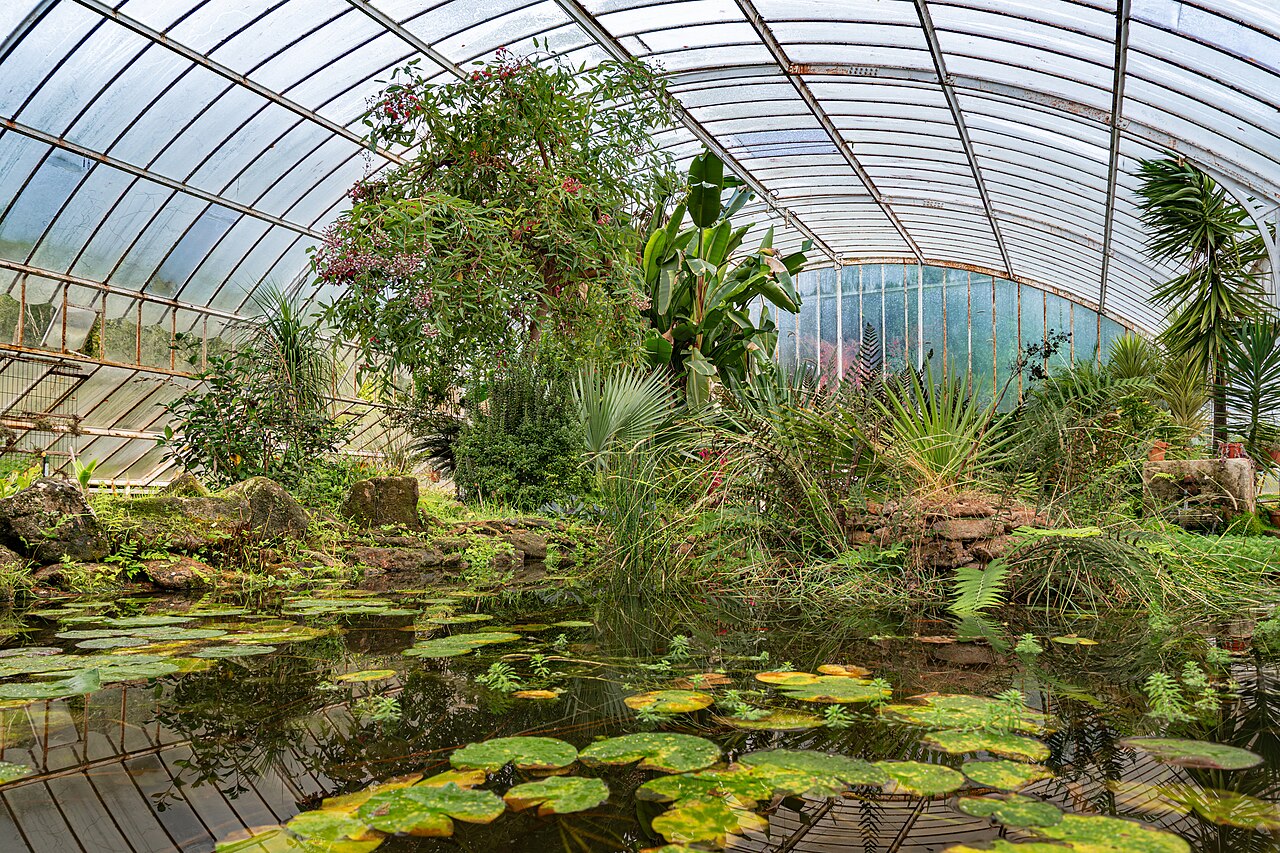
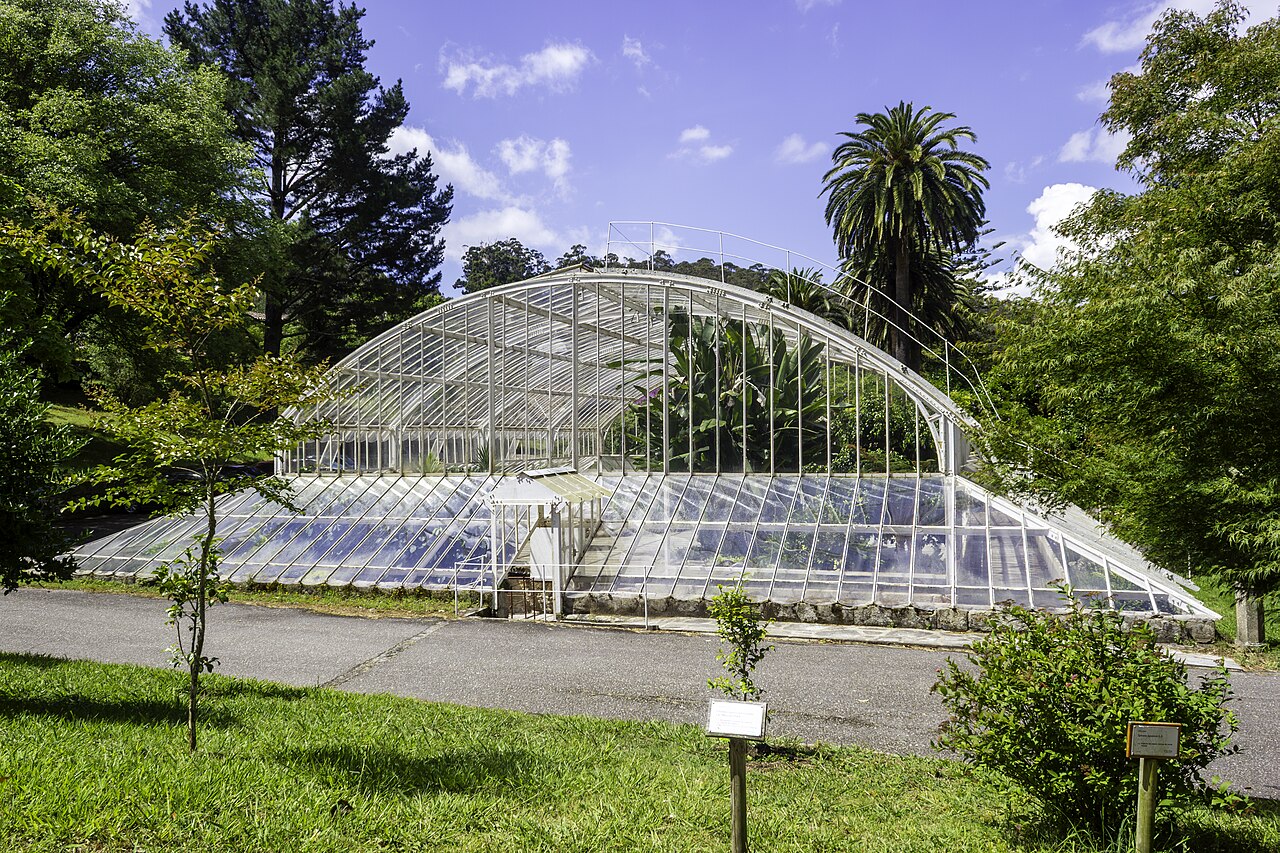
At the heart of the 54-hectare Lourizán estate on the edge of Pontevedra, this iron-and-glass greenhouse, dated 1900, goes back to the years when the politician Eugenio Montero Ríos, owner since 1879, was laying out the gardens. Its central nave, roofed by a barrel vault rising to 7 m, was flanked by lower galleries set aside for smaller plants. Rebuilt in 1953, it is singled out by the 2025 decree declaring the pazo a Bien de Interés Cultural. The estate's rehabilitation project plans to restore it as an exhibition space.
Affiliate links — booking through Verrière helps fund our research, at no extra cost to you.
History
1 min
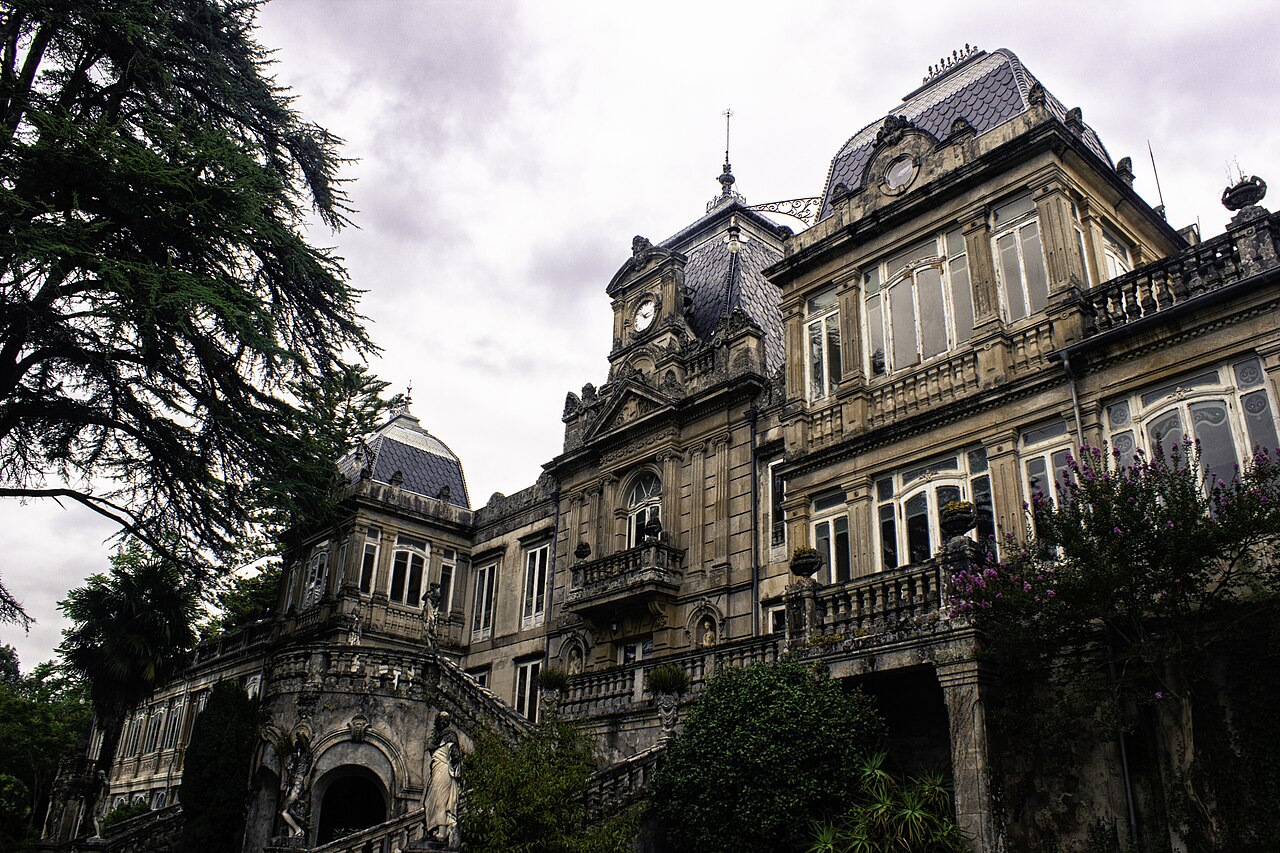
The Lourizán estate, beside the road from Pontevedra to Marín, was bought on 16 May 1879 for 85,000 pesetas by the Galician politician Eugenio Montero Ríos. Its gardens were laid out during his ownership, even before the rebuilding of the pazo, which the architect Jenaro de la Fuente carried out between September 1909 and 1912 and which turned it into a stately residence. The greenhouse belongs to this period: the Spanish Wikipedia dates it to 1900, the Rías Baixas tourist office to the early twentieth century. According to both sources, the pazo's salons hosted discussions of the 1898 Treaty of Paris, which sealed Spain's loss of Cuba, Puerto Rico, the Philippines and Guam.
In 1943 the Diputación (provincial council) of Pontevedra bought the estate, which became a forestry research centre. Ten years later, in 1953, the greenhouse was rebuilt because of its poor condition, with significant changes to its design. The site, which now houses the Forestry Archive of Galicia, became the property of the Xunta de Galicia in 2023, according to the tourist office.
On 14 April 2025 a Xunta decree declared the pazo a Bien de Interés Cultural (Site of Cultural Interest). An ideas competition, won unanimously in November 2024 by the team of Carme Pinós and Carles Enrich with the project 'Xard1n 2.0', prepared a rehabilitation estimated at 17.3 million euros, announced in 2025 for completion in late 2026 or early 2027. Under it, the greenhouse is to become an exhibition space, with minimal intervention.
Architecture and engineering
1 min
The listing decree counts the Lourizán greenhouse among the most remarkable examples of its kind in Galicia, for its breadth and the lightness of its structure. Rectangular in plan, it is organised around a central space covered by an iron-and-glass barrel vault that reaches 7 m in height. On either side, lower galleries held smaller plants. The Rías Baixas tourist office describes it as an art nouveau greenhouse of glass and wrought iron, and the south-west front keeps a wrought-iron pergola, also noted in the decree.
The 1953 rebuilding altered this layout, notably by filling in the central floor area and removing the side glass partitions. The sources consulted name neither an architect nor a builder; the decree simply relates the building to the European greenhouses of its time. The rehabilitation project chosen in 2024 announces a minimal intervention, respectful of its heritage value, to turn it into an exhibition venue.
Plant collections
1 min
The sources consulted describe no collection currently grown under the glass, whose restoration is still to come: Lourizán's botanical reputation rests above all on the grounds around it. The estate's 54 hectares or so combine garden, farmland and arboretum, with nearly 2,000 specimens of many species according to the tourist office, and the 2025 decree ranks its woodland among the most important in Europe. It includes a Japanese camellia 20.5 m tall and rimus, conifers native to New Zealand.
The pleasure garden laid out in Montero Ríos's time brings together several picturesque features, among them the Echegaray grotto and waterfall, ponds and the Fountain of Mirrors (Fonte dos Espellos), along with an eighteenth-century hórreo (raised granary) and a fifteenth-century dovecote. The rehabilitation project plans to keep the Botanical Garden of Galicia on the estate and to create a forest germplasm conservation centre there.
Visiting
1 min
The estate lies at kilometre 3.5 of the Pontevedra-Marín road, in the parish of Santo André de Lourizán. Its gardens are open to the public and can be reached on foot or by car; the greenhouse stands within the grounds. Allow one to two hours to take in the arboretum, the ponds and the Echegaray grotto as well. Late winter and spring, the camellia season, are the most rewarding times to come.
The announced rehabilitation works may restrict access to parts of the estate, so it is worth checking before setting out. The visit extends easily into the historic centre of Pontevedra, a few kilometres away.
42.41° N, 8.66° W
Greenhouses nearby

More greenhouses — Spain
Do you have a good photo of this greenhouse? Suggest it for this page →
Sources (5)
- turismoriasbaixas.com/index.php/es/search/pazo-de-lourizan
- xunta.gal/dog/Publicados/2025/20250430/AnuncioG0766-220425-0001_gl.html
- es.wikipedia.org/wiki/Pazo_de_Louriz%C3%A1n
- eldebate.com/espana/galicia/20250213/xunta-destina-17-millones-rehabilitacion-pazo-louriza
- xunta.gal/es/notas-de-prensa/-/nova/006924/ute-pinos-enrich-gana-concurso-ideas-para-rehab