Greenhouses of the Botanical Garden of the Bulgarian Academy of Sciences (Botanicheska gradina na BAN)
Sofia (foot of Vitosha)

Sources checked October 2026
- Style
- Complex of tropical and subtropical collection greenhouses
- Dimensions
- 12 greenhouses, 2,200 m² in total (according to the garden)
- Status
- Open to the public (garden closed on Mondays); open days in January for the azalea bloom
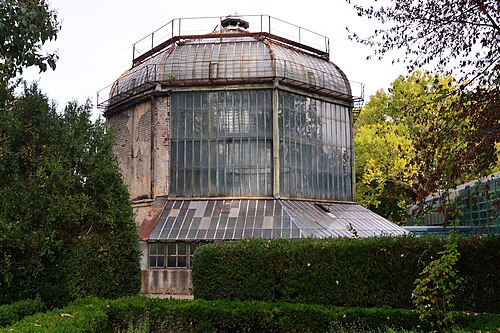
At the foot of Vitosha, the Botanical Garden of the Bulgarian Academy of Sciences, settled on its present site between 1965 and 1969, keeps its tropical and subtropical collection in twelve greenhouses totalling 2,200 m². It counts about 3,000 taxa from 156 families, including more than 80 old species (cycads, palms, strelitzias, orchids) inherited from the royal garden, as well as azaleas, camellias and many food and aromatic plants. According to the Academy, the greenhouses are the most visited part of the garden.
Affiliate links — booking through Verrière helps fund our research, at no extra cost to you.
History
The Botanical Garden of the Bulgarian Academy of Sciences descends from the princely garden founded in 1882, one of Sofia's first public gardens, whose organisation as a botanical garden began around 1890. In the early 20th century it stood in the centre of the capital, between the present Tsar Osvoboditel, Levski and Bulgaria boulevards, attached to the Royal Natural Science Museums and Institutes financed by the royal family. Its rock and alpine plant collections, linked to two royal gardeners, J. Kellerer and V. Shacht, were then among the richest in the world. Radio Bulgaria also recalls the greenhouses of Tsar Ferdinand, assembled to decorate the royal palace: more than 80 species of that collection, including azaleas and orchids, have survived, and some plants of the garden were saved from the war and the bombing of Sofia.
In 1947 the garden passed to the Academy of Sciences and the Institute of Botany. The construction of the Monument to the Soviet Army forced it to move twice: urgently to the Hladilnika area in 1960-1962, then, from 1965 to 1969, to its present site at the foot of Vitosha (1968 according to Radio Bulgaria, the 1980s according to the Bulgarian Wikipedia). It became an autonomous unit of the Academy in 1993; its territory was reduced in 1995, which, together with long planning delays and financial difficulties, explains why it was never completely built out. It opened to visitors in 1998.
Architecture and engineering
The garden's website counts twelve greenhouses totalling 2,200 m², a little over 180 m² each on average, whereas Radio Bulgaria, in January 2026, speaks of five tropical greenhouses; the two figures are not explained.
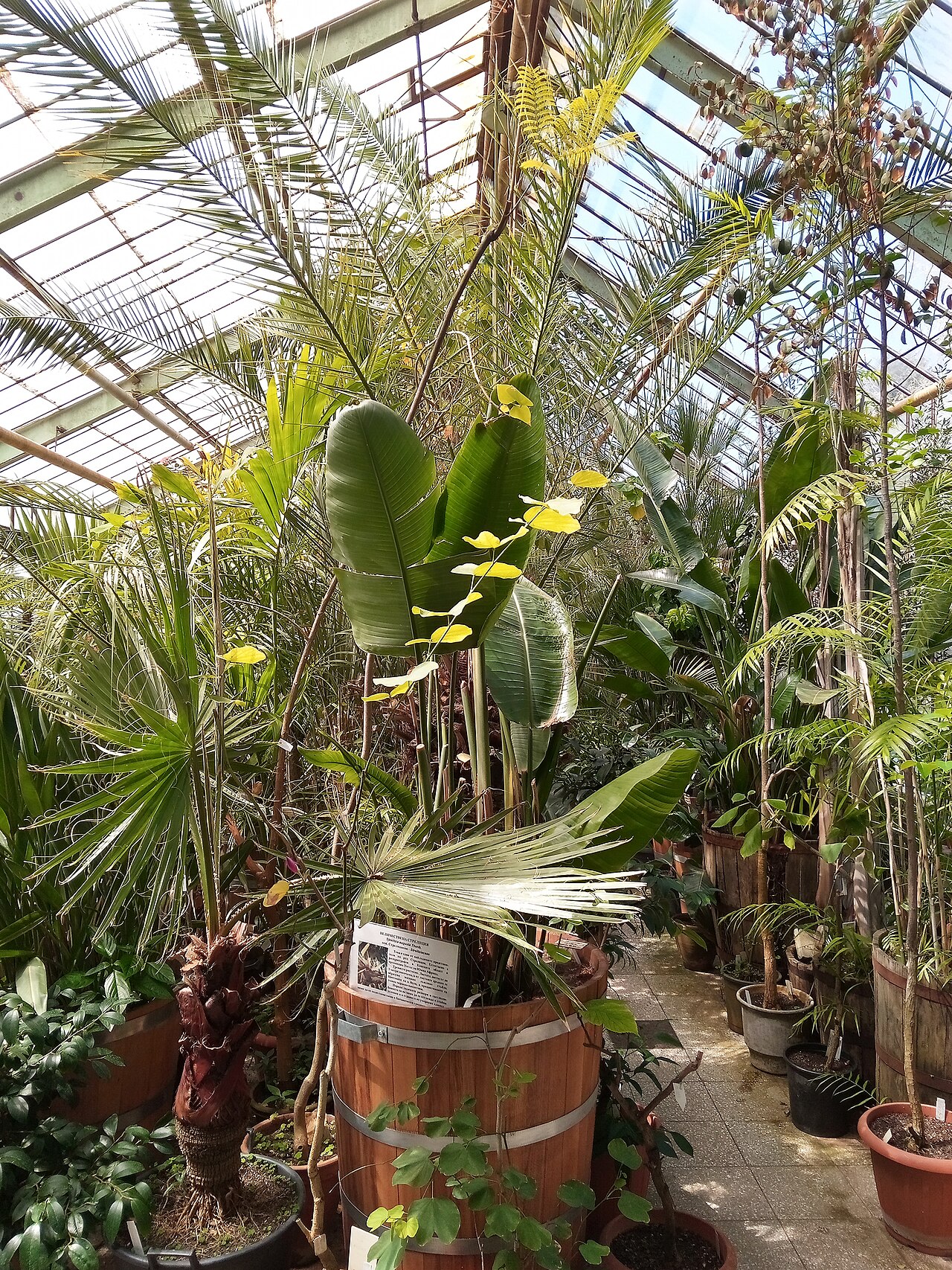
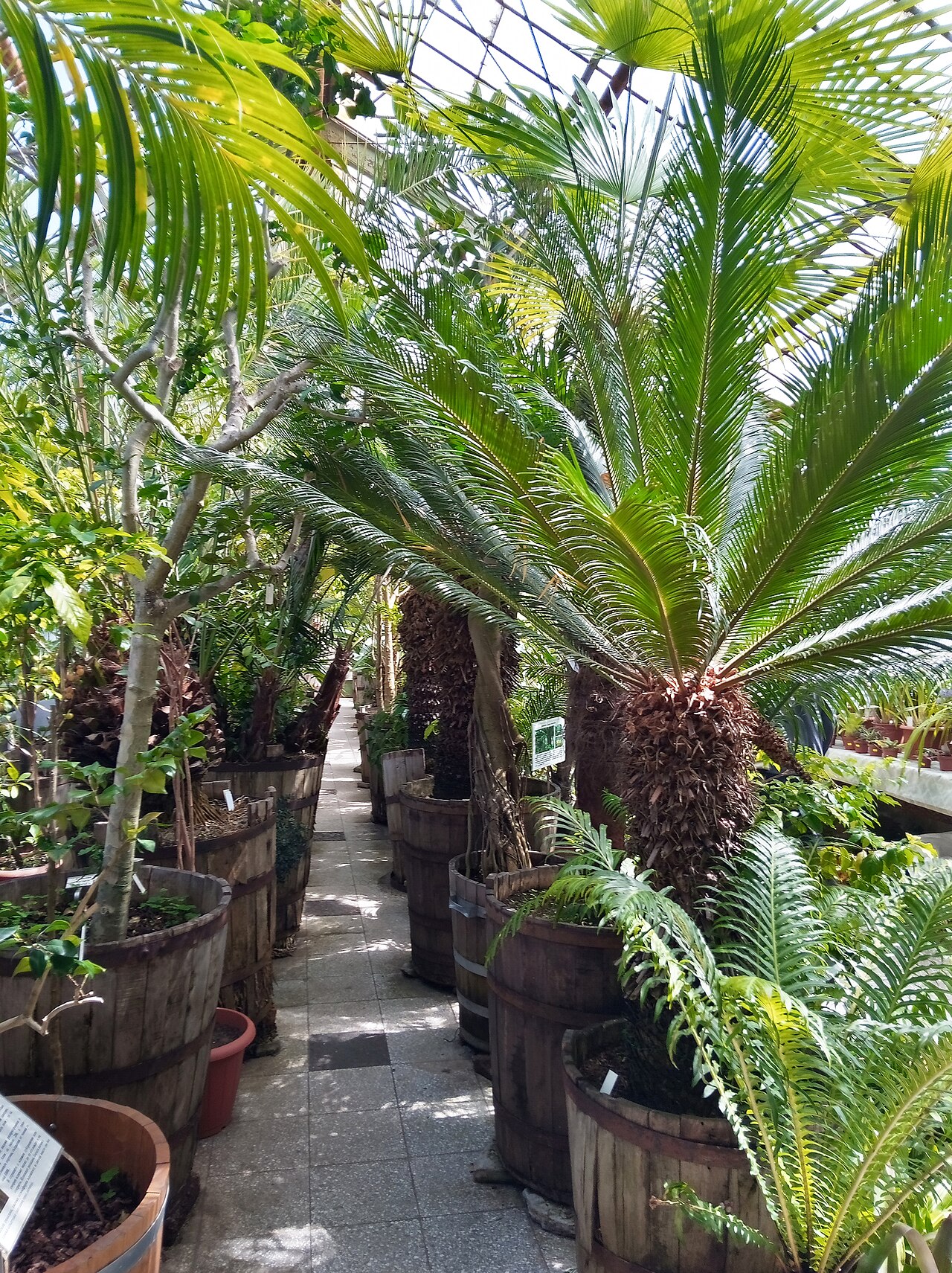
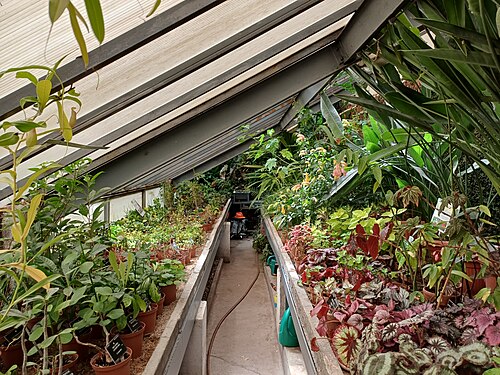
A caudiciform-plant enthusiasts' website, whose author visited the garden in 2018, describes a glass-covered complex divided into several houses, arranged by family in the old-school manner, with among others a large house with ponds, a cactus house and carnivorous plants; most plants are in pots, even the big ones. These buildings stand in a garden that, by the Academy's own admission, remains unfinished. The garden also organises guided talks for visitors inside the greenhouses.
Plant collections
The tropical and subtropical collection brings together about 3,000 taxa, some 2,300 species and more than 600 cultivars and forms, from 156 families, representing 0.7% of the world's higher plant diversity. More than 80 old species, some inherited from the royal garden, include mature cycads, palms and strelitzias, as well as about thirty orchid species (vandas, slipper orchids). The most numerous groups are succulents, orchids, aroids, gesneriads and begonias.
There are also food plants (banana, citrus, date palm, olive, cassava, avocado, loquat, coffee), aromatic plants (myrtle, bay laurel, black pepper, cinnamon, vanilla, lemongrass), medicinal plants (rauvolfia, camphor tree, catharanthus) and useful plants (jojoba, sisal, bamboo, papyrus). In winter, Radio Bulgaria reports more than a hundred different azaleas, including two venerable specimens from Tsar Ferdinand's collection, and orchids that flower mainly from February to March.
Visiting
The garden lies at the foot of Vitosha, between the Dragalevtsi and Boyana districts; car access is only from the Ring Road, and a bus stop bears the garden's name. It is closed on Mondays and on some public holidays.
Winter is the season of the greenhouses: open days were held in January 2026 for the azaleas and rhododendrons from China and Japan, and the orchids follow in February-March. In spring the upper part of the garden, with its Asian shrubs, is the most attractive; summer belongs to the roses. According to Radio Bulgaria, the garden also sells about 500 species of houseplants.
42.64° N, 23.30° E
Greenhouses nearby
More greenhouses — Bulgaria
All greenhouses — Bulgaria →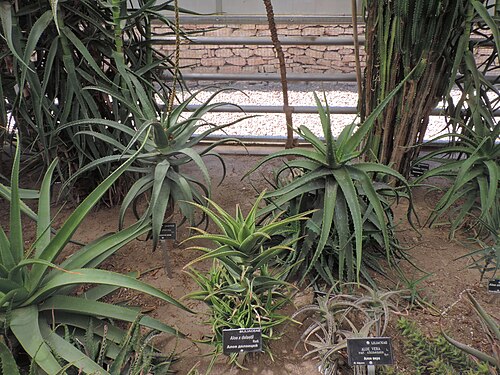
Do you have a good photo of this greenhouse? Suggest it for this page →
Sources (8)
- garden-bas.org/bg/Tropicheski-i-substropicheski.c153
- garden-bas.org/bg/Istoricheski-belezhki.c145
- garden-bas.org/bg/Mestopolozhenie.c146
- bas.bg/?page_id=24427&lang=en
- bnrnews.bg/radiobulgaria/post/419355/v-zeleniya-oazis-na-zimna-sofiya-botanicheskata-gradi
- bnrnews.bg/radiobulgaria/post/418310/tropicheskata-oranzheriya-na-botanicheskata-gradina-n
- bg.wikipedia.org/wiki/%D0%91%D0%BE%D1%82%D0%B0%D0%BD%D0%B8%D1%87%D0%B5%D1%81%D0%BA%D0%B0_%
- bihrmann.com/caudiciforms/bota/Sofia.asp
Affiliate links — booking through Verrière helps fund our research, at no extra cost to you.