Greenhouses of the Sofia University Botanical Garden (Universitetska botanicheska gradina)
Sofia (city centre, ul. Moskovska 49)

Sources checked October 2026
- Year
- Garden founded 1892
- Style
- Six themed greenhouses of different heights
- Dimensions
- About 500 m² of greenhouses in a 5,000 m² garden
- Status
- Open to the public (closed on Mondays and Tuesdays)
In central Sofia, close to the university, the botanical garden of St Kliment Ohridski University covers 5,000 m² and combines a park, a rose garden and six greenhouses of different heights, about 500 m² of greenhouses according to a 2012 municipal page. The plants are grouped by their needs: a tall central house for palms, cycads, araucarias and lianas, a humid-tropics house (orchids, bromeliads, ferns), a dry-tropics house, a Mediterranean house, a house of large cacti and euphorbias, and the "Пеперударник" (butterfly) house shown on the garden plan. The garden was founded in 1892.
Affiliate links — booking through Verrière helps fund our research, at no extra cost to you.
History
The Sofia University Botanical Garden says it was founded in 1892, four years after the university itself, on the initiative of Stefan Georgiev (1859-1900), the first Bulgarian professor of botany. On inauguration day an English oak was planted and Tsar Ferdinand I placed a gold coin among its roots; according to a 2024 article by a member of the garden's staff the tree is now more than 130 years old and still stands at the centre of the park. The Sofia garden is one of the university's three gardens, alongside Balchik, created in 1955 as a branch, and the Varna Ecopark, created in 1977.
A page on the municipal portal iSofia (2012) tells the beginnings differently and in more detail: in 1889 a Swiss-born municipal gardener, Daniel Neff, fenced and planted the area around the Doctors' Monument; in 1892 his son Karl Neff, also a landscape builder, created a botanical garden for the university's botany teaching on the initiative of Stefan Georgiev; around 1896 a second garden was set up on land ceded by the municipality on condition that it be open to the public; in 1936, for lack of money to maintain two gardens, the university returned the one with the Doctors' Monument to the city and kept only the garden in the courtyard of the First Men's High School, developed as a nursery and flower shop. The garden itself claims continuity since 1892.
The greenhouses are in service and maintained: the garden announced that the greenhouses would close to visitors at 4 p.m. on 3 October 2026 for maintenance work.
Architecture and engineering
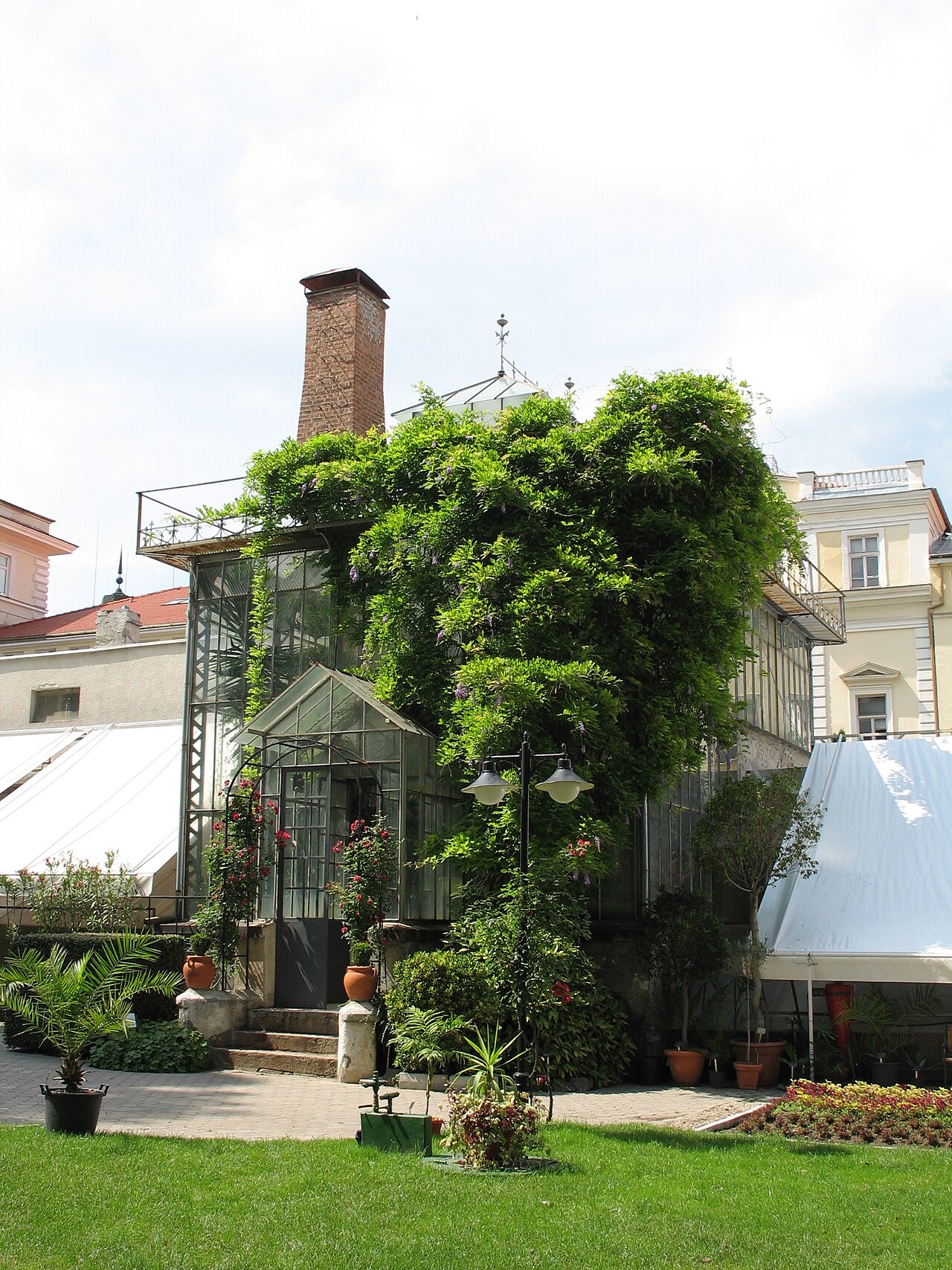
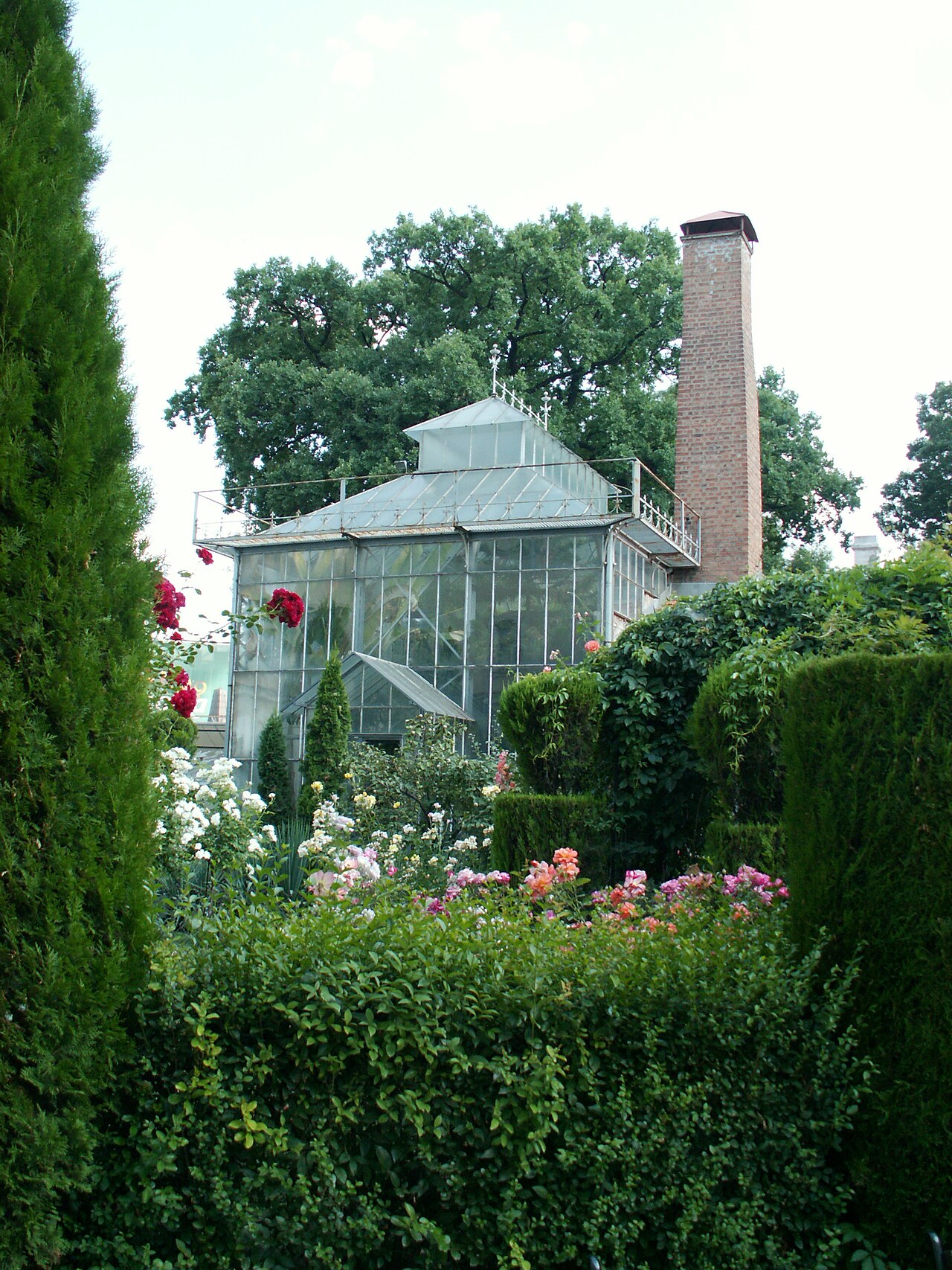
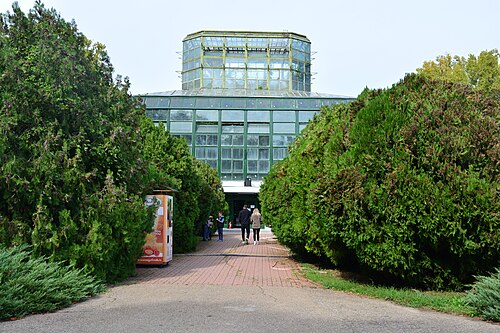
The group has six greenhouses "of different heights", in which the collections are arranged by the ecological needs of the plants: humid tropical regions, dry tropical regions and deserts, subtropical climate. The plan published in the 2024 article lists them one by one: the tall central house, "Humid Tropics", "Dry Tropics", "Mediterranean", a house of large cacti and euphorbias, and the "Пеперударник" (butterfly house). A municipal page of 2012 puts the greenhouse area at 500 m² in a 5,000 m² garden; a tourism website speaks of "glasshouses".
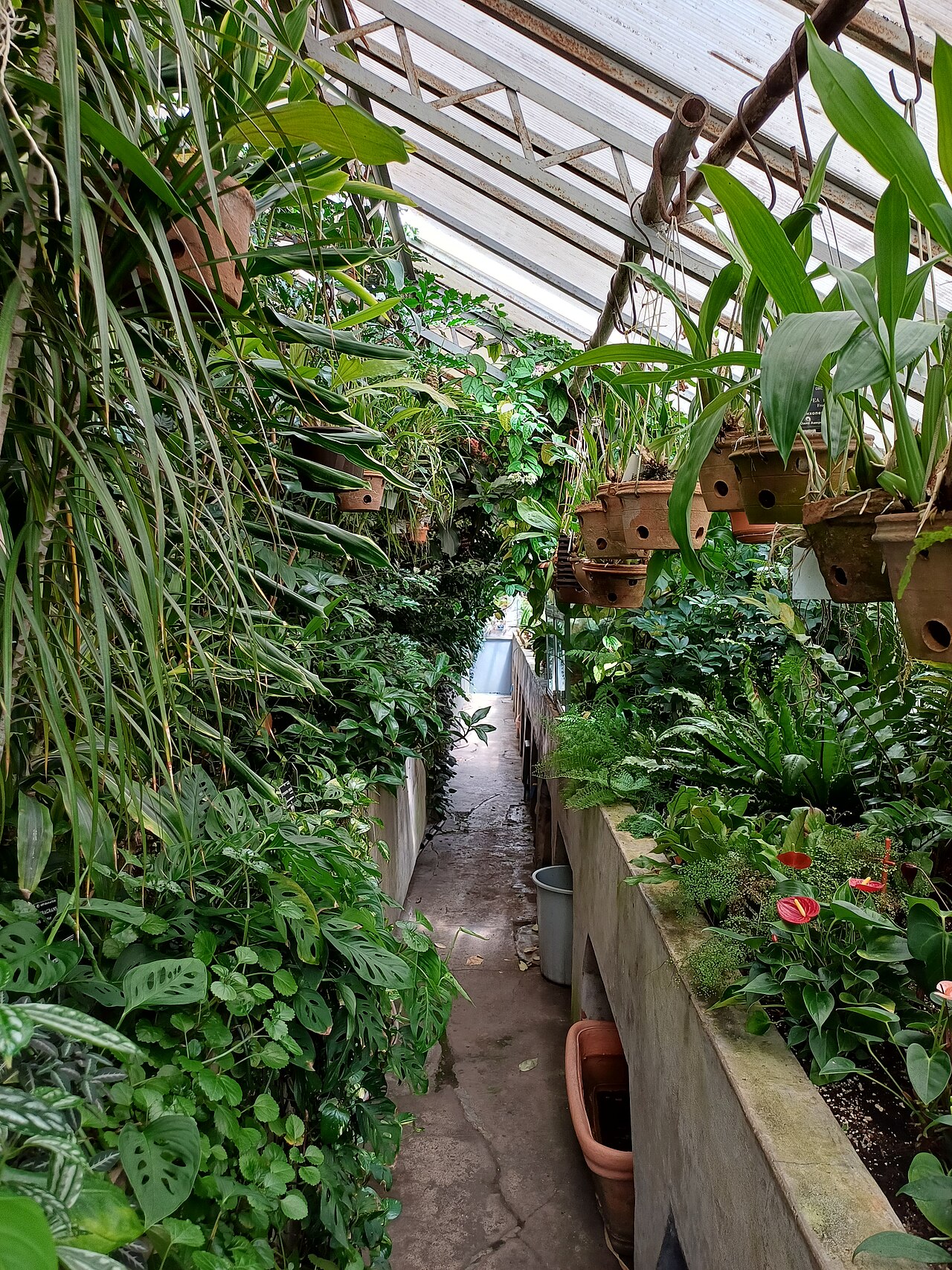
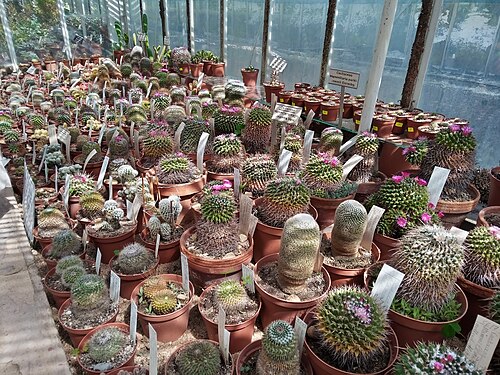
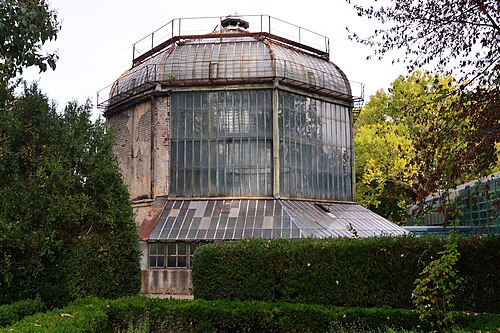
Photographs published on Wikimedia Commons show the houses: one presents a tall house with glass walls, a metal frame, a lantern roof and a brick chimney against it; another, taken inside a lower house, shows a roof of translucent panels on metal rafters.
Plant collections
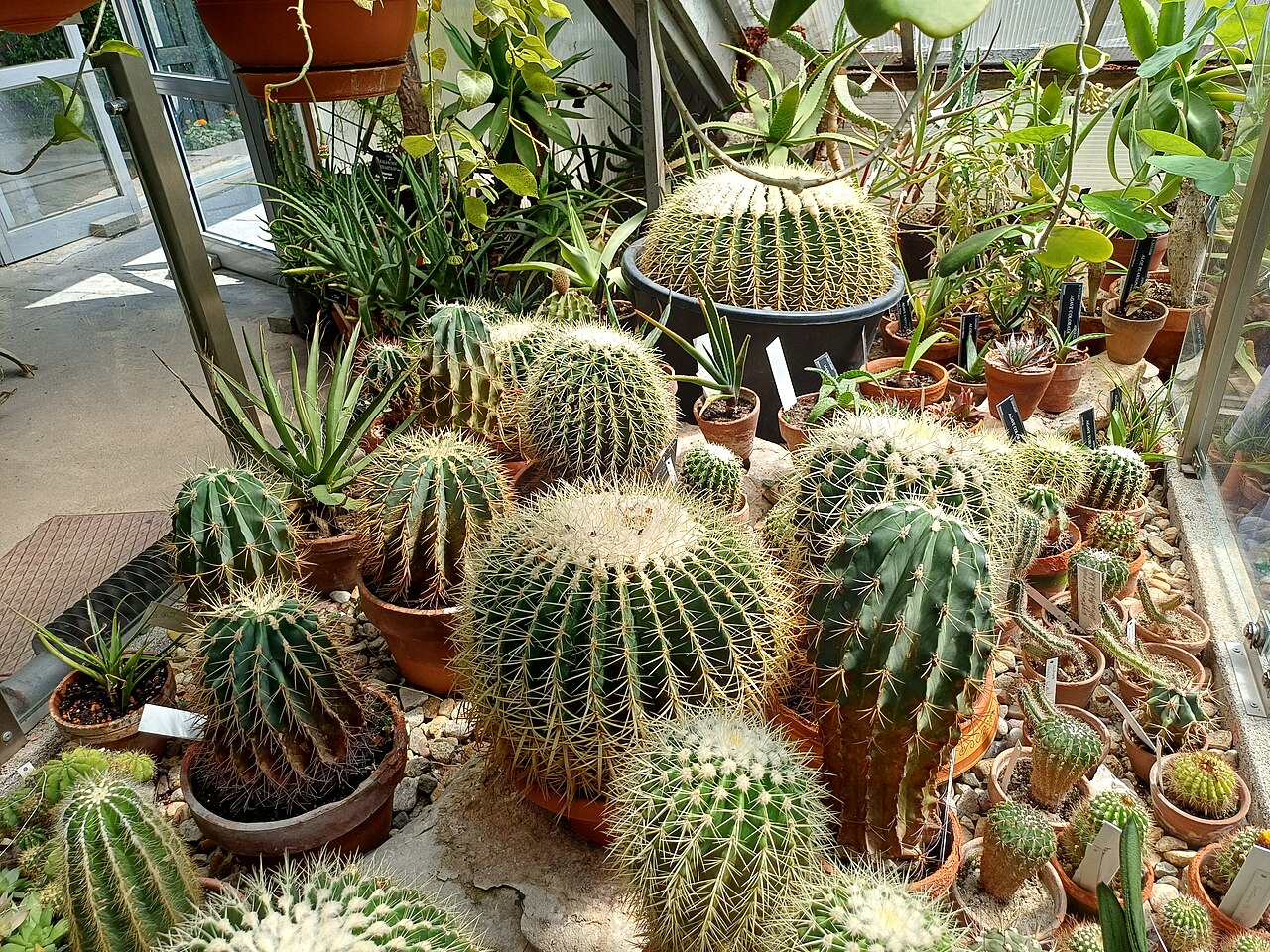
The tall central house holds gymnosperms, palms and tropical lianas: two araucarias, Araucaria heterophylla (Norfolk Island) and Araucaria bidwillii (Queensland), cycads of the genera Cycas, Zamia and Dioon, a large Livistona chinensis, and Strelitzia nicolai, Strelitzia reginae, Monstera deliciosa and Musa mannii. The humid-tropics house shelters epiphytes: orchids, bromeliads and ferns, including the staghorn fern Platycerium bifurcatum, Cattleya labiata and Stanhopea tigrina. The succulent house gathers more than 300 species of cacti and cactus-like euphorbias, with large specimens of Cereus repandus, Opuntia ficus-indica and the tree euphorbia Euphorbia abyssinica.
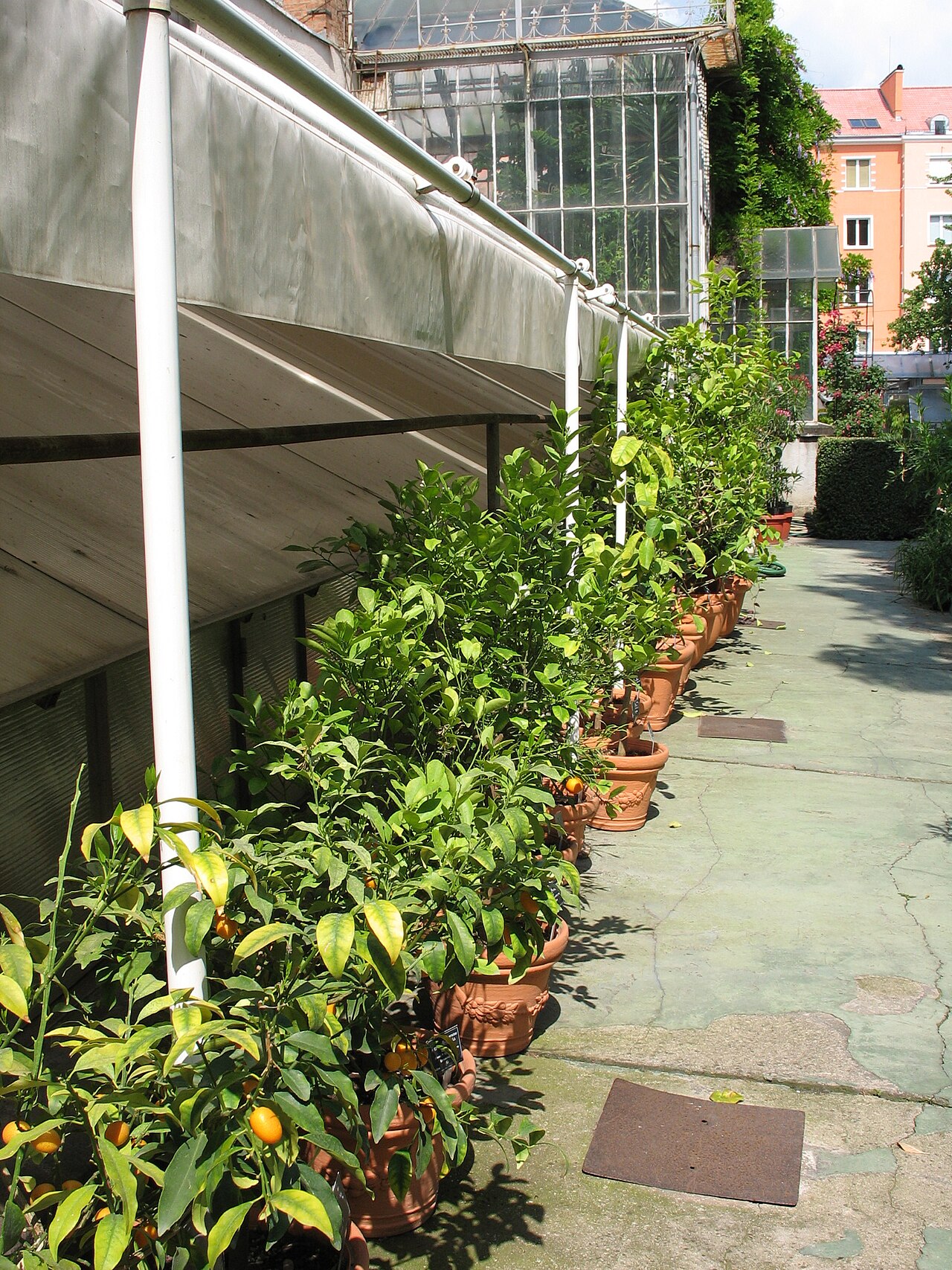
The garden's website also mentions aroids, bulbous plants and a Mediterranean garden (citrus, olive, myrtle, bay laurel), and points to the orchid Dendrochilum glumaceum in the tropical greenhouse. Overall figures differ: more than 1,500 species in the 2024 article, about 2,500 on VisitBulgaria.
Visiting
The greenhouses are visited together with the garden, in the middle of Sofia on Moskovska Street, close to the university. The garden covers only 5,000 m², so a tour of the greenhouses, the park paths and the rose garden (more than forty rose varieties according to its website) makes a short visit. Educational guided tours continue into the greenhouses, in Bulgarian or English. The garden also hosts events, concerts and fashion shows, according to its services page. Before coming it is worth checking the garden's news: the greenhouses, for example, closed early on 3 October 2026 for maintenance.
42.70° N, 23.33° E
Greenhouses nearby
More greenhouses — Bulgaria
All greenhouses — Bulgaria →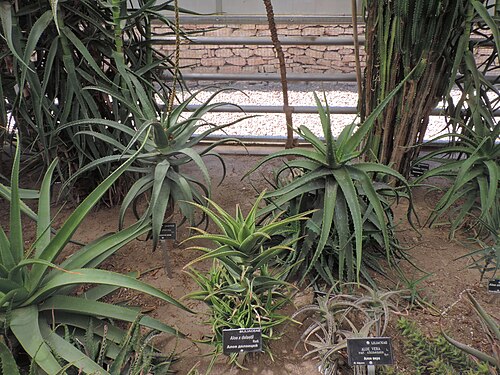
Do you have a good photo of this greenhouse? Suggest it for this page →
Sources (7)
- ubg-bg.com/en-info-ubg-sofia.html
- ubg-bg.com/en-services-ubg-sofia.html
- ubg-bg.com/news.html
- journals.azbuki.bg/science/rolyata-na-universitetskata-botaniceska-gradina-sofiya-za-popul
- isofia.bg/%D0%BC%D0%B5%D1%81%D1%82%D0%B0/178/%D1%83%D0%BD%D0%B8%D0%B2%D0%B5%D1%80%D1%81%D0
- visitbulgaria.com/university-botanical-garden-in-sofia/
- commons.wikimedia.org/wiki/Category:Sofia_University_botanical_greenhouse,_Sofia
Affiliate links — booking through Verrière helps fund our research, at no extra cost to you.