Sera Veche, Dimitrie Brândză Botanical Garden
Bucharest

Sources checked September 2026
- Year
- 1889–1891
- Architect
- Louis Fuchs
- Style
- Metal and glass, modelled on the glasshouses of the Liège botanical garden
- Dimensions
- About 760 m²
- Status
- Only the central pavilion, rehabilitated in 2011, is open to the public
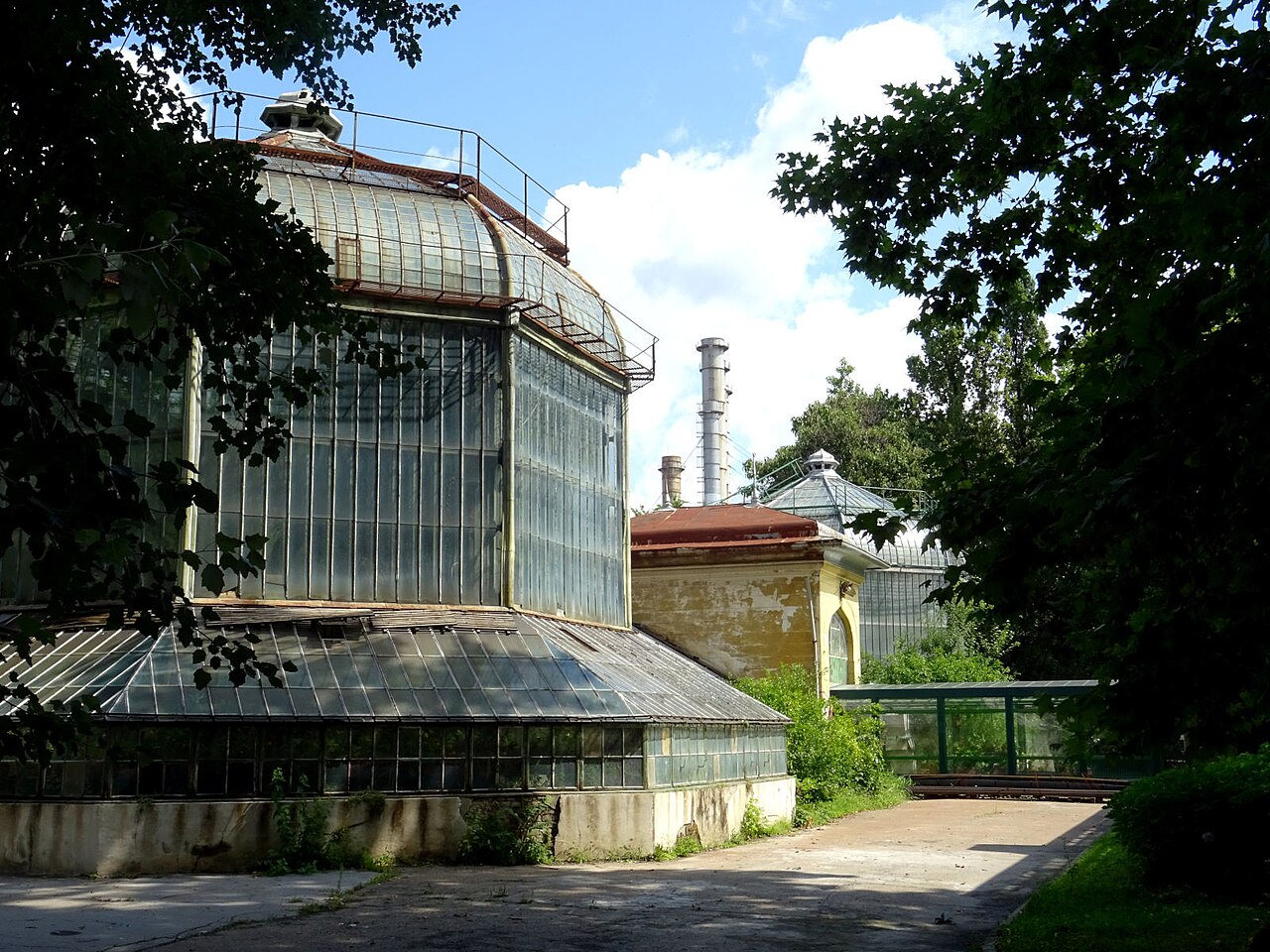
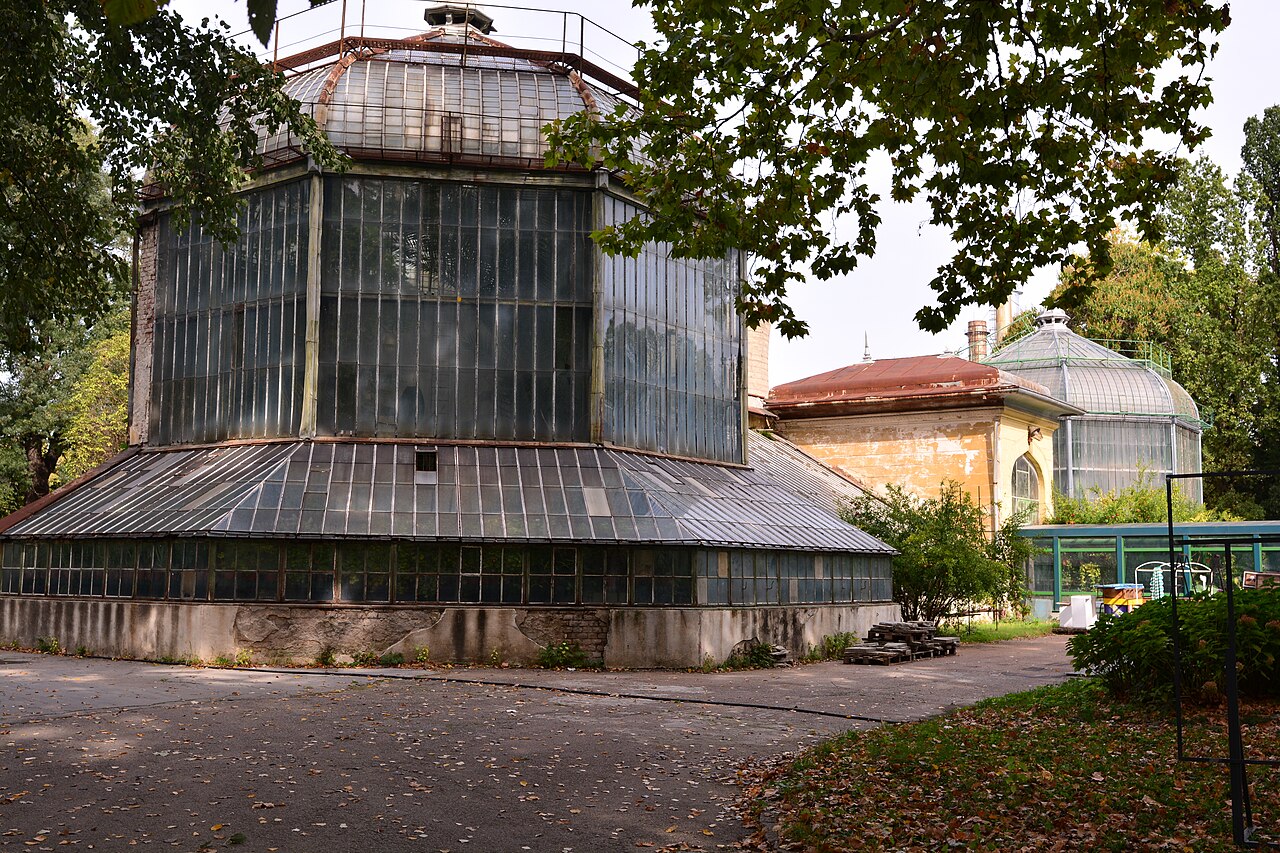
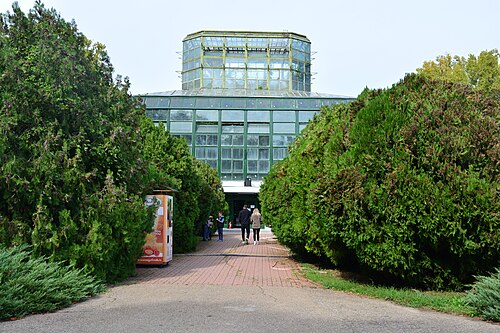
Built between 1889 and 1891 under the direction of the landscape architect Louis Fuchs, the Sera Veche ("old greenhouse") of the University of Bucharest Botanical Garden covers about 760 m² and follows the model of the glasshouses of the Liège botanical garden. Until 1976 its compartments displayed tropical, Mediterranean, succulent and bromeliad collections. Stripped of every pane by the bombing of 4 April 1944 and later closed to the public for thirty-five years, it reopened in November 2011 with its central pavilion rehabilitated, home to a Podocarpus neriifolius more than 120 years old; the rest of the building still awaits restoration.
Affiliate links — booking through Verrière helps fund our research, at no extra cost to you.
History
Bucharest Botanical Garden was founded in 1860 alongside the Faculty of Medicine and Pharmacy, on the initiative of Dr Carol Davila, by a decree of Prince Alexandru Ioan Cuza signed on 5 November; it then covered 7 hectares on the left side of the Cotroceni road. Moved in 1874 to the grounds of the Vasile Șuțu palace opposite the university, it joined the university under Dimitrie Brândză, who in 1884, through Decree No. 659 of 28 February, obtained a new site and funding. The programme included the first glasshouses, modelled on those of the Liège botanical garden.
The greenhouse was built between 1889 and 1891 under the direction of Louis Fuchs, thanks, according to B365, to his friendship with Brândză. It came through the First World War, when fuel shortages hurt the collections and Mackensen's troops camped in the garden for two years. On 4 April 1944 an Allied raid dropped 96 bombs on the garden according to the university (94 according to B365); four fell close to the greenhouse, shattering every pane and destroying the water pipes. The botanist Aurelian Vlădescu was killed trying to save the herbarium.
Used as an exhibition house until 1976, it was then superseded by the new complex of 1973-1976 and kept only for cultivation. Works carried out in 2008-2014 with public funds, the Swiss contribution and Alpha Bank rehabilitated the central pavilion and the heating substation, and the pavilion reopened in November 2011, the greenhouse's 120th anniversary. In 2022 the garden's management was still seeking funds for the rest of the building.
Architecture and engineering
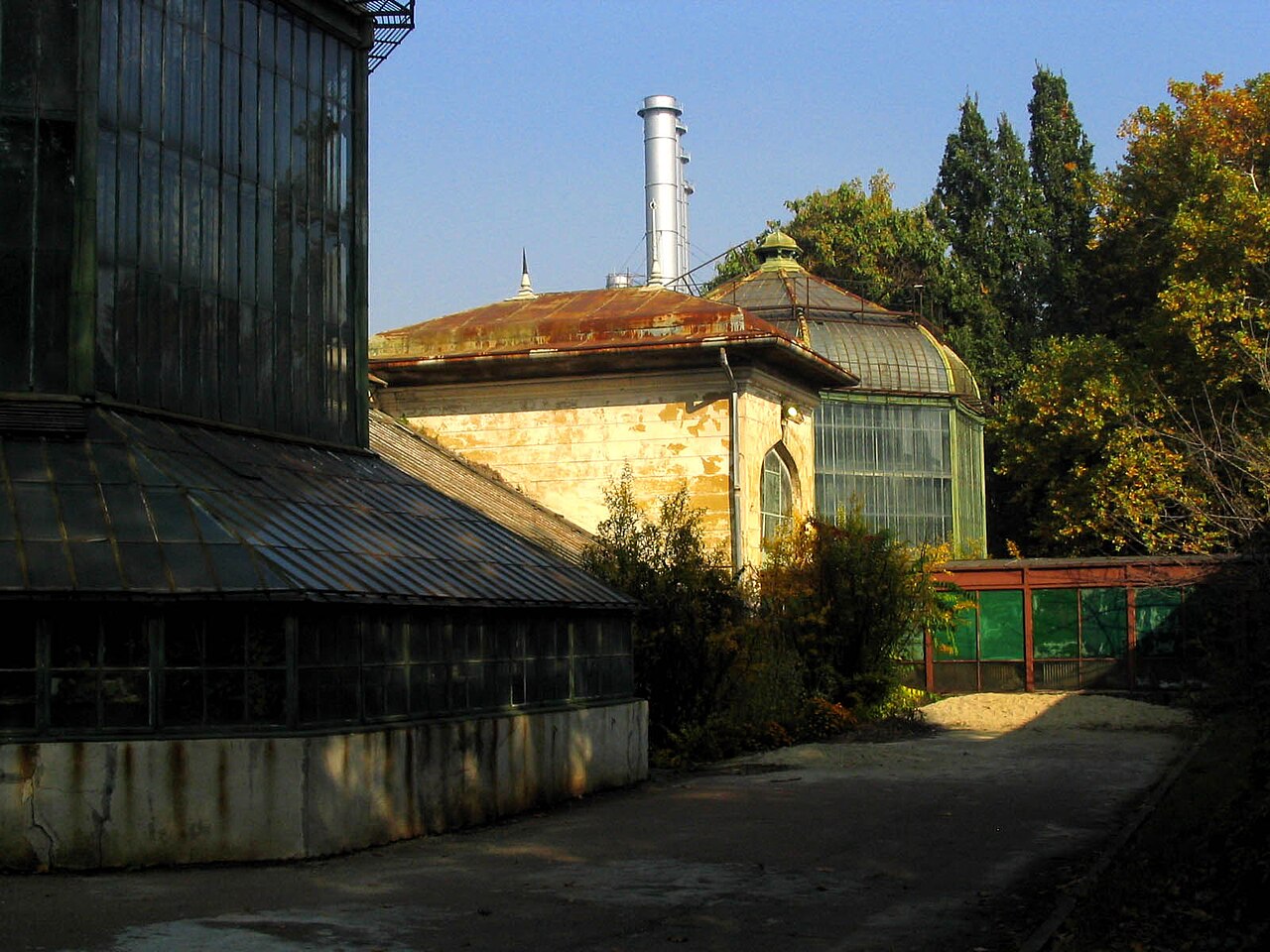
The Sera Veche covers about 760 m². The university describes an artistic marriage of metal and glass, which B365 classes as Victorian, and an architecture close to that of the Liège glasshouses. According to B365, the latter were completely destroyed by Second World War bombing, which would make the Bucharest greenhouse the only survivor of the model; the garden's director calls it the oldest greenhouse still standing in the city.
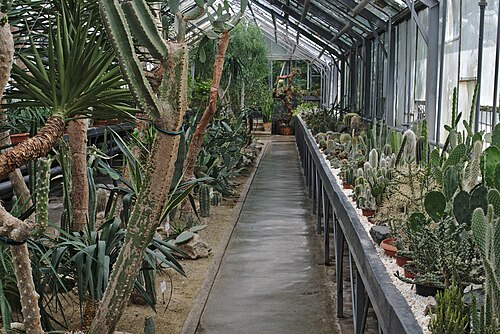
The building is divided into compartments designed for different collections and climates: tropical and subtropical plants, Mediterranean flora, succulents, bromeliads and a propagation house. Only the central pavilion, together with the heating substation, has been rehabilitated; the other compartments serve to maintain the collections, propagate plants for the exhibition glasshouses and supply teaching and research material. A feasibility study and technical design have been prepared for the next phase. Because the garden is a listed historic ensemble, any major intervention needs the approval of the Ministry of Culture; in the meantime only broken panes have been replaced and small repairs carried out.
Plant collections
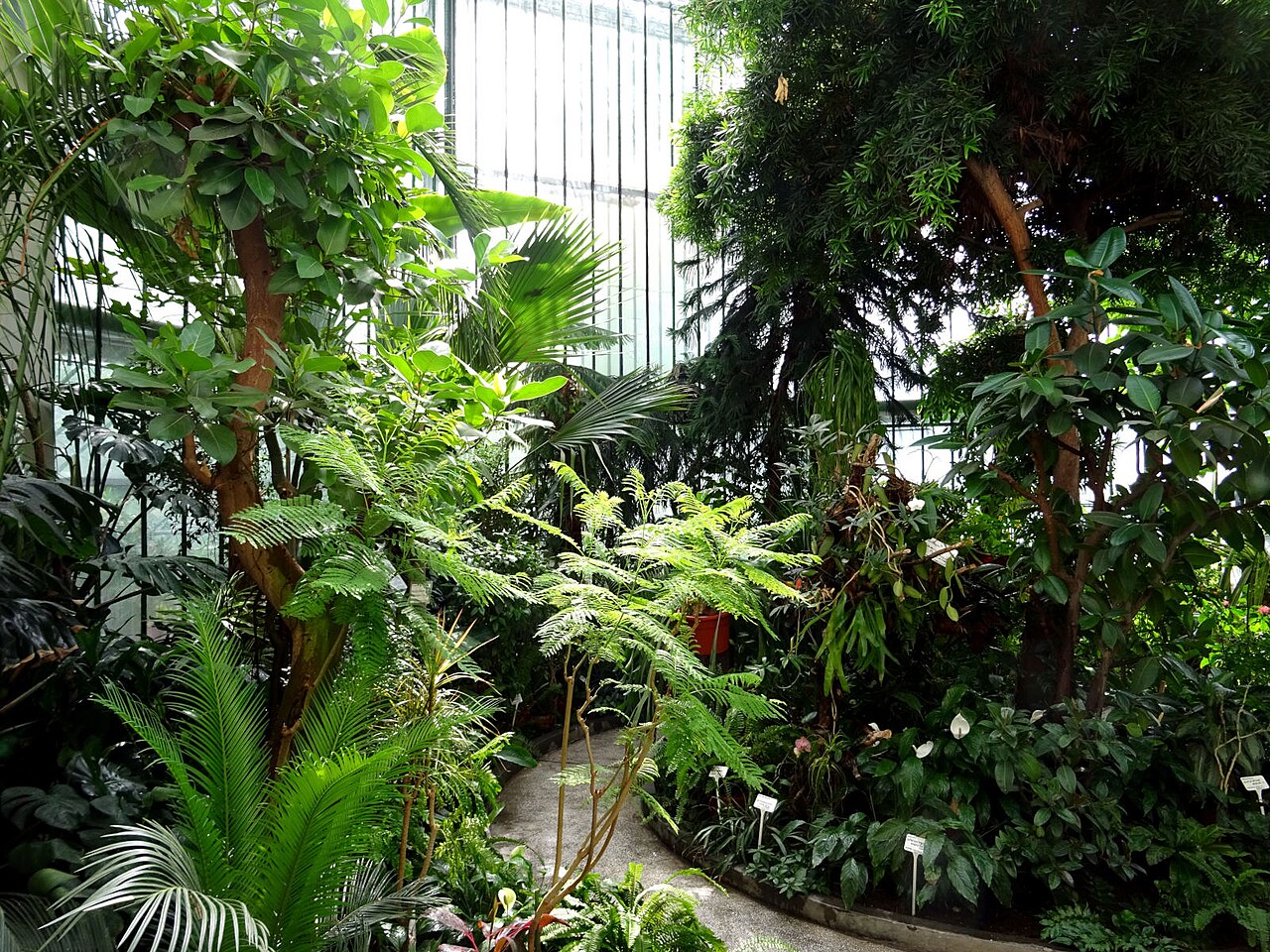
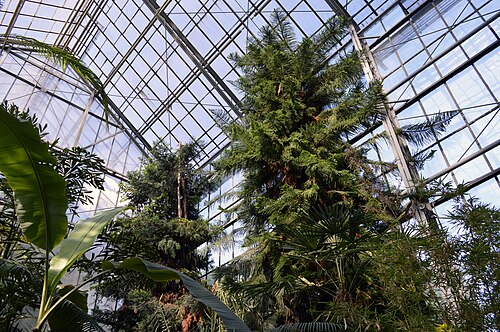
The restored pavilion was conceived as a fragment of tropical forest in the middle of Bucharest, doubling as living teaching material for biology students. At its reopening it held about a hundred species; the list published in 2012 includes figs (Ficus benghalensis, Ficus religiosa, Ficus pumila), palms (Cocos nucifera, Arenga pinnata, Phoenix dactylifera, Rhapis excelsa, Dypsis lutescens), Cycas revoluta, a banana, Strelitzia reginae, Monstera deliciosa and several philodendrons, anthuriums, the orchid Cymbidium aloifolium, Passiflora edulis, Ceiba speciosa, Jacaranda mimosifolia, Dracaena draco and ferns such as Adiantum raddianum and Blechnum gibbum.
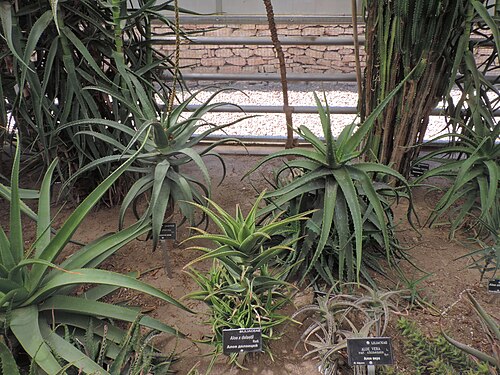
The centrepiece, in the middle of the pavilion, is a Podocarpus neriifolius, a broad-leaved conifer of Asian origin more than 120 years old that visitors could already see in the early twentieth century, surrounded by other centenarian plants. The records burned in 1944. Palms and orchids once grew there, and yuccas lined the greenhouse (from a few photographs).
Visiting
The Sera Veche stands in the Dimitrie Brândză Botanical Garden of the University of Bucharest, on the Cotroceni road. Only its central pavilion can be visited, on a more limited schedule than the garden; the short visit combines with the neighbouring exhibition glasshouses (1973-1976), more than 2,500 m² devoted to exotic plants, and with the new botanical museum, opened in 1978 and arranged on ecological lines.
In the park, the Italian garden designed in 1935 by Octav Doicescu keeps an avenue of chestnuts planted around 1900, and the restaurant by the same architect has been consolidated and restored.
44.44° N, 26.06° E
Greenhouses nearby
More greenhouses — Romania
Do you have a good photo of this greenhouse? Suggest it for this page →
Sources (5)
- gradina-botanica.unibuc.ro/organizare/sera-veche
- gradina-botanica.unibuc.ro/despre-noi/istoric
- b365.ro/in-bucuresti-avem-o-sera-unica-in-lume-in-care-prospera-plante-trecute-de-suta-de-
- greatnews.ro/sera-tropicala-de-la-gradina-botanica-din-bucuresti-lista-completa-a-plantelo
- openstreetmap.org/way/23557199
Affiliate links — booking through Verrière helps fund our research, at no extra cost to you.