Orangery of the Ogiński Estate Museum (Оранжерея музея-усадьбы М. К. Огинского)
Zalesye (Залесье), Smarhon District, Hrodna Region

Sources checked October 2026
- Year
- 19th century; restored in 2015
- Architect
- Palace: designed by M. Schulz, completed by J. Poussier
- Style
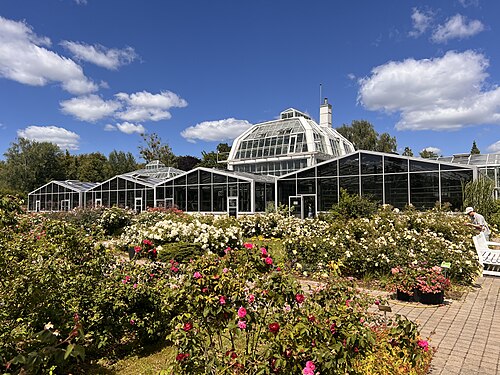
- Neoclassical orangery attached to a palace: an arcaded gallery with large arched windows and a wing with sloping glazed bays
- Status
- Open to the public with the visit of the estate museum, closed on Mondays
At the estate museum of composer Michał Kleofas Ogiński in Zalesye, two orangeries adjoin the neoclassical palace built from 1802: an arcaded gallery with large arched windows and, at right angles to it, a wing whose sunny side was fully glazed. In the 20th century the estate changed use (a primary school occupied the orangery premises during the war); its restoration was completed in September 2015 and the orangery was brought back to life. More than 200 species grow there today, including citrus, olive and fig; one hall hosts temporary exhibitions and another a café.
Affiliate links — booking through Verrière helps fund our research, at no extra cost to you.
History
Zalesye appears on maps of Belarus at the end of the 15th century as a small private farm and passed to the Ogiński family in the 18th century. In 1802 Michał Kleofas Ogiński (1765-1833), back from exile, received the estate from his uncle Franciszek Ksawery and decided to build a neoclassical palace beside the old timber house. The design was by Michał Schulz, a professor at Vilnius University, and was taken over by the provincial architect Joseph Poussier.
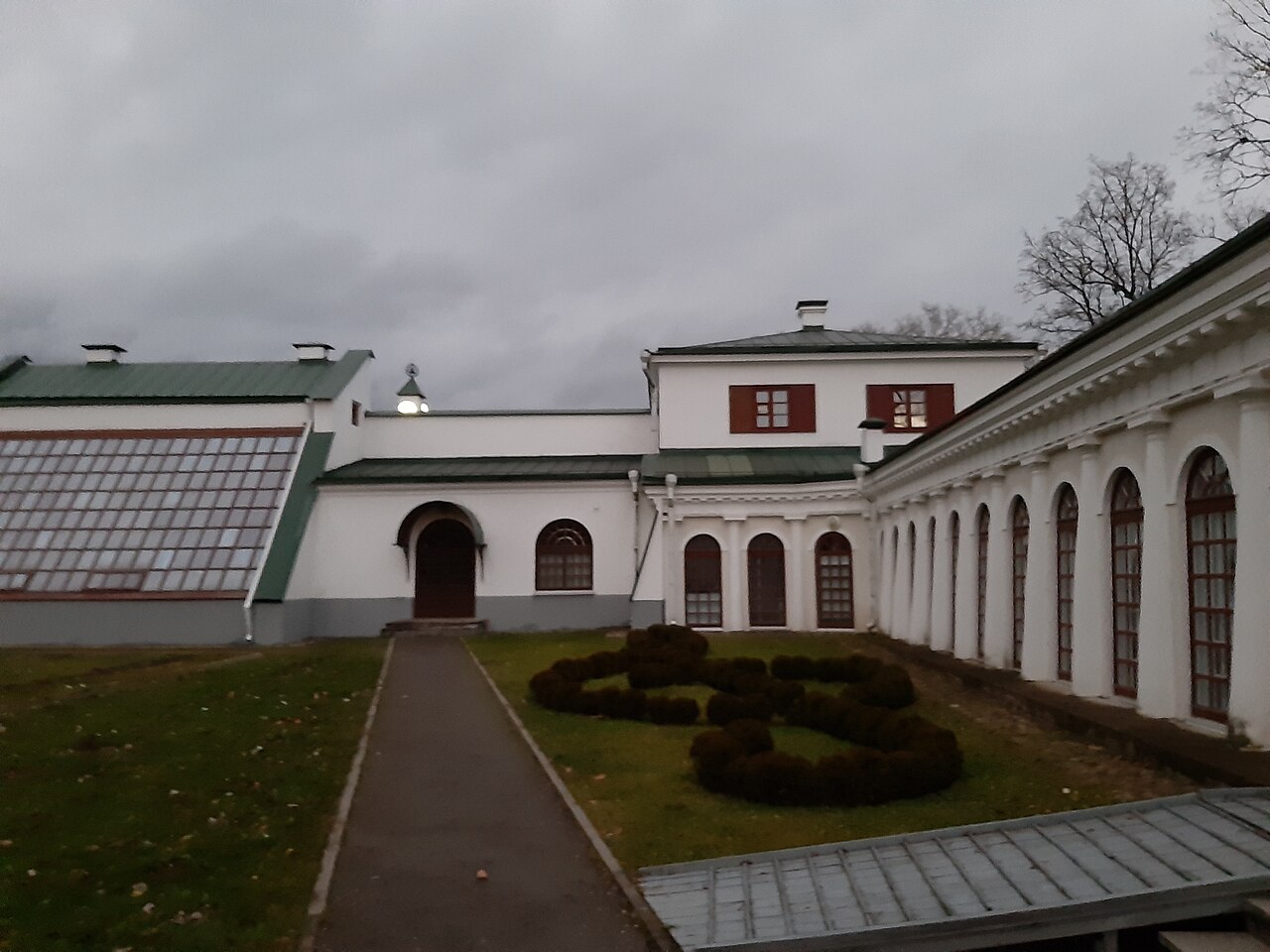
At Ogiński's wish an orangery in the form of an arcade with large arched windows was attached to the palace; a second, known as the "American" one, was added at right angles to it, glazed along its whole sunny side. Together with the palace they enclose a small courtyard planted with fruit trees. The composer wrote to his steward that his orangery could do honour to Saint Petersburg; it then held about 500 species.
Ogiński left Zalesye for good in 1822 and the estate declined. The First World War destroyed the 18th-century baroque ensemble; in the Second, the palace housed a German staff and the orangery premises a primary school. After the war the place served, among other uses, as a retirement home. Handed to the Ministry of Culture in 1996, it was restored from 2011: the palace officially opened in September 2014, and the park and outbuildings were finished by 25 September 2015, the composer's 250th anniversary. The orangery was brought back to life at that point.
Architecture and engineering
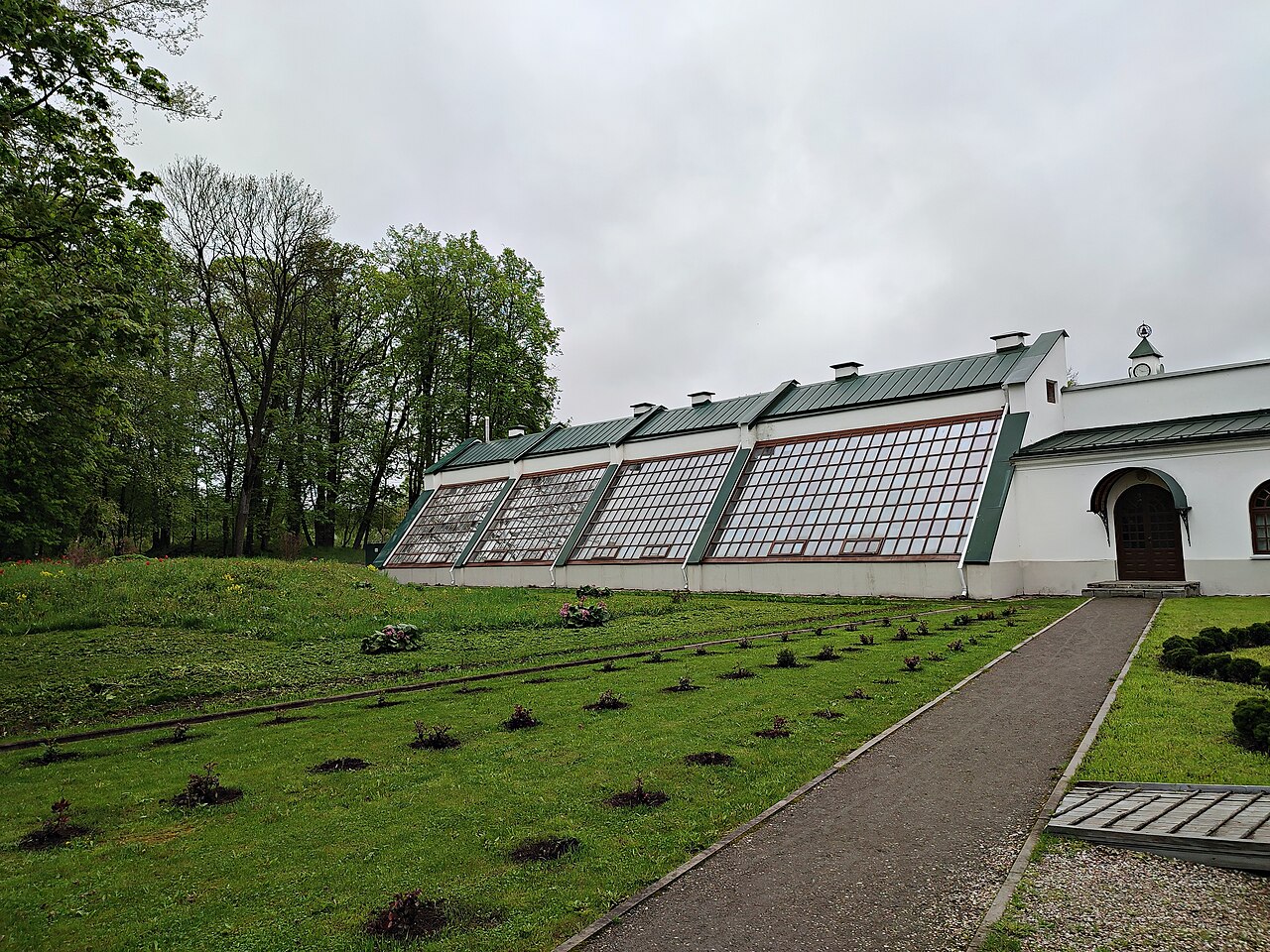
Ogiński's palace is an L-shaped stone building of one or two storeys; according to Russian Wikipedia its secondary wing stretches almost 60 m once the orangery gallery was completed, while other pages give 160 by 50 m for the whole or 160 m for the orangery wing. According to Belarusian Wikipedia, the facade of the first orangery is divided by half-columns and tall arched windows; the second, at right angles, has continuous sloping windows on one of its facades, and a heritage website says it was entirely glazed on the sunny side.
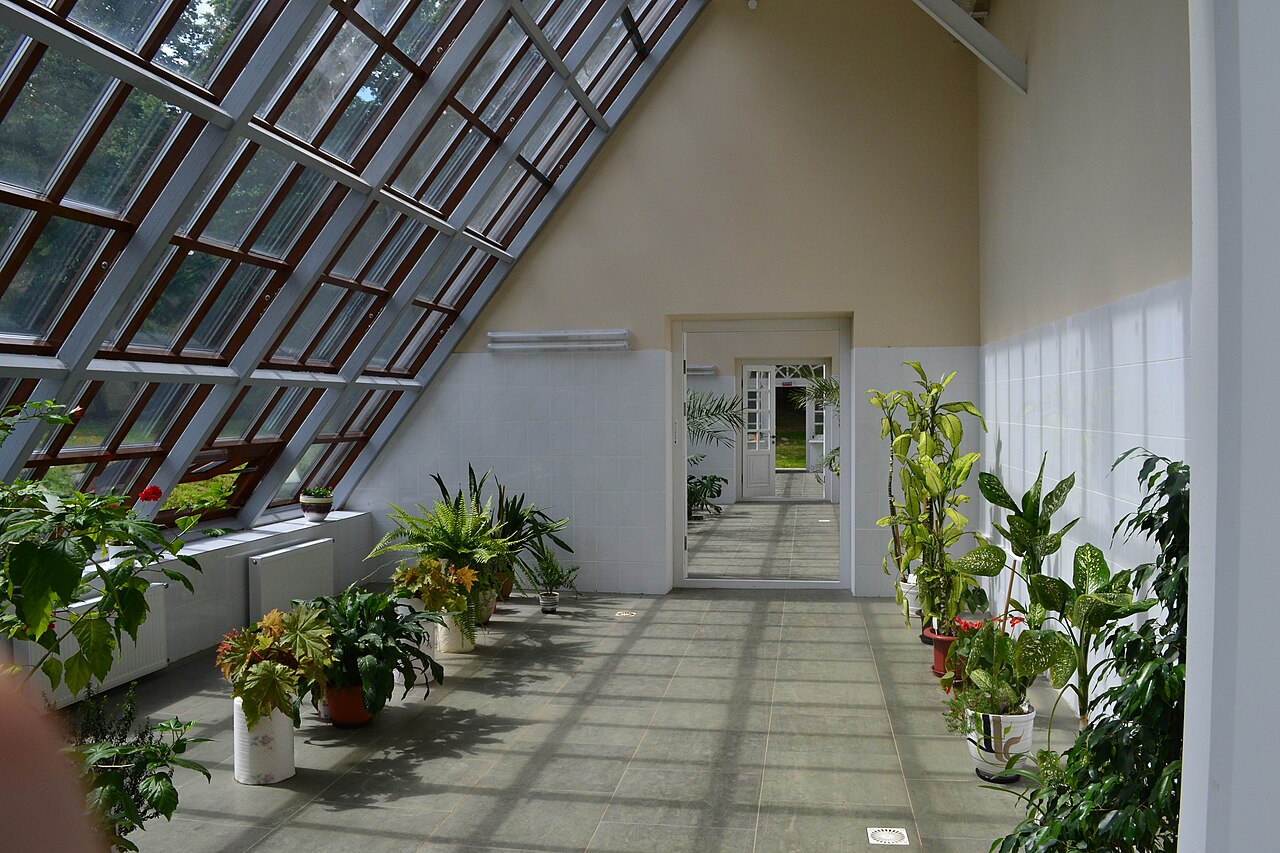
A 2022 photograph on Wikimedia Commons shows a long wing whose sunny side is a series of sloping glazed bays with timber frames, separated by green sheet-metal gables and fitted with opening vents at the foot of the slope. On the museum's own photograph, potted citrus trees grow under a sloping glass roof. The OpenStreetMap outline, single-storey with a green gabled sheet-metal roof, covers about 550 m².
Photographs from 2011, taken before the restoration, show a long hall with two rows of white columns and tall arched windows on the lake side. A timber fence on brick piers once linked the orangery to the neighbouring mill; it has not survived and is being rebuilt, according to the Belarusian page.
Plant collections
In Ogiński's time the orangery held about 500 species. The composer, who had new varieties sent from abroad, grew more than 70 kinds of dahlia there, according to a heritage website; Polish Wikipedia also mentions rare southern plants, among them apricot and fig trees.
Today, according to the museum's page, more than 200 species grow there. Sponsorship from the company Minskkhlebprom paid for orange and mandarin trees; a village family gave a thirty-year-old palm and a coffee tree. An olive tree and pineapples have settled in, peaches and apricots fruit as they did in the past, and a first harvest of figs has been picked. The photograph on the official site shows potted citrus trees in flower and fruit over a tiled floor. The page also announces that tuberoses will soon fill the halls.
According to the national tourism agency's 2018 guide, the orangery has no permanent exhibition apart from its plants. The hall titled "Orangery. Temporary exhibitions" pairs them with artists' works and shows the exotic flora that grew on the estate in the 19th century.
Visiting
The orangery is part of the visit to the Zalesye estate museum, about twelve kilometres from Smorgon. The palace has thirteen exhibition rooms on the ground floor, two of them "Orangery" halls: one devoted to temporary exhibitions, the other to a café set in the composer's former summer dining room. Visits are guided, in Russian or Belarusian.
The national tourism agency's guide speaks of a full day: English-style landscape park, water mill, 1815 chapel, the "Temple of Amelia" pavilion, memorial stones. The ruins of Krevo Castle (14th century), about thirty kilometres away according to strada.by, round off the excursion.
54.42° N, 26.52° E
Greenhouses nearby
Do you have a good photo of this greenhouse? Suggest it for this page →
Sources (8)
- oginskizalesse.by/ru/vtoraya-zhizn-oranzherei
- oginskizalesse.by/ru/nasha-ekspoziciya
- oginskizalesse.by/ru/posetitelyam
- izvezda.by/ru/modern_belarus-ru/getElement/7092/
- ru.belarus.travel/news/pochemu-stoit-pobyvat-v-usadbe-oginskogo-v-zalese
- ru.wikipedia.org/wiki/%D0%97%D0%B0%D0%BB%D0%B5%D1%81%D1%8C%D0%B5_(%D1%83%D1%81%D0%B0%D0%B4
- be.wikipedia.org/wiki/%D0%9F%D0%B0%D0%BB%D0%B0%D1%86%D0%B0%D0%B2%D0%B0-%D0%BF%D0%B0%D1%80%
- pl.wikipedia.org/wiki/Pa%C5%82ac_Og%C5%84skich_w_Zalesiu
Affiliate links — booking through Verrière helps fund our research, at no extra cost to you.