Liberty Greenhouse of Villa Negrotto Cambiaso Park
Arenzano, Liguria

Sources checked October 2026
- Year
- 1931
- Architect
- Lamberto Cusani
- Style
- Liberty (Italian art nouveau), iron and glass
- Status
- Open with the municipal park (free access); exhibition greenhouse, no permanent collection documented
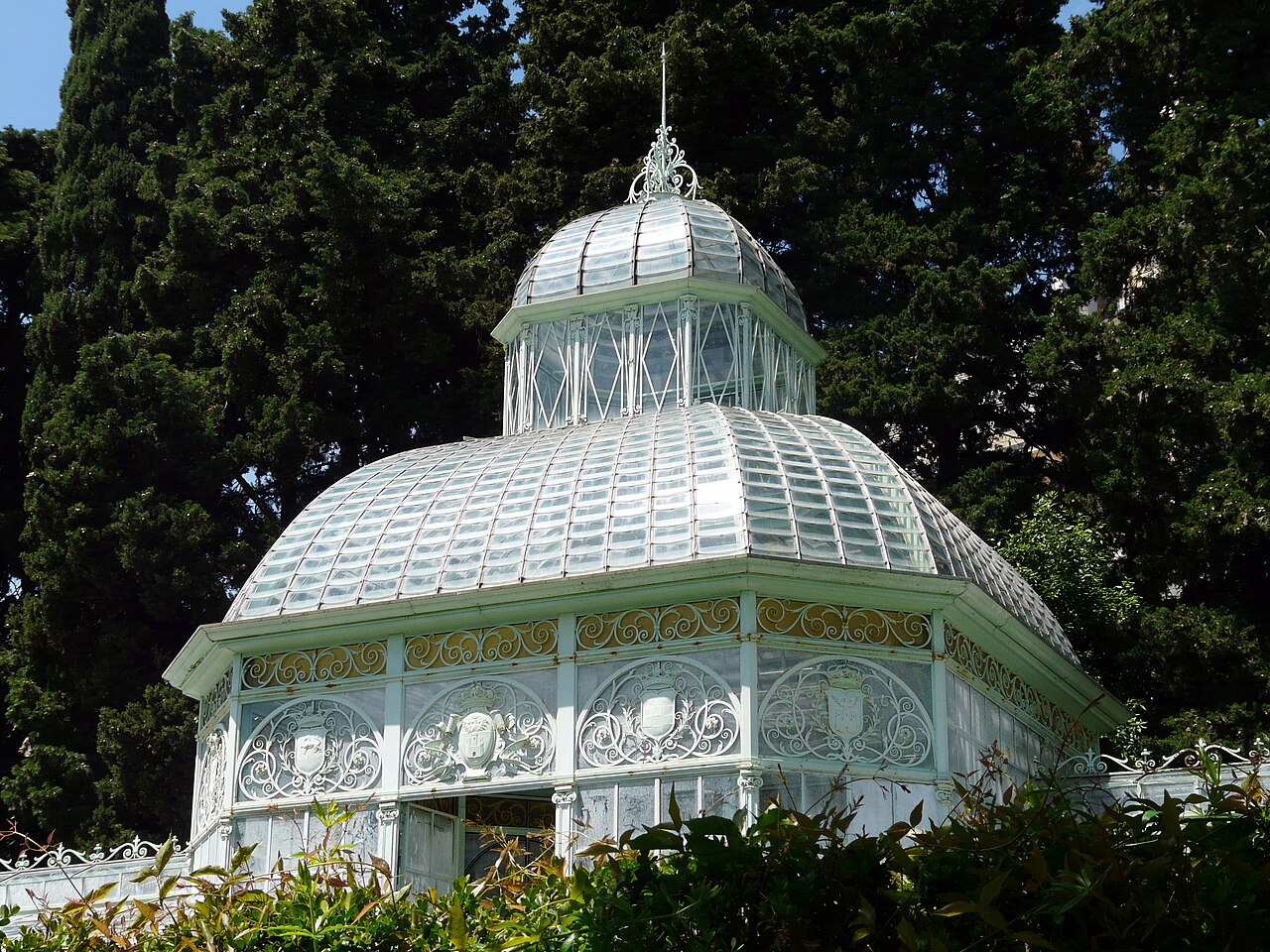
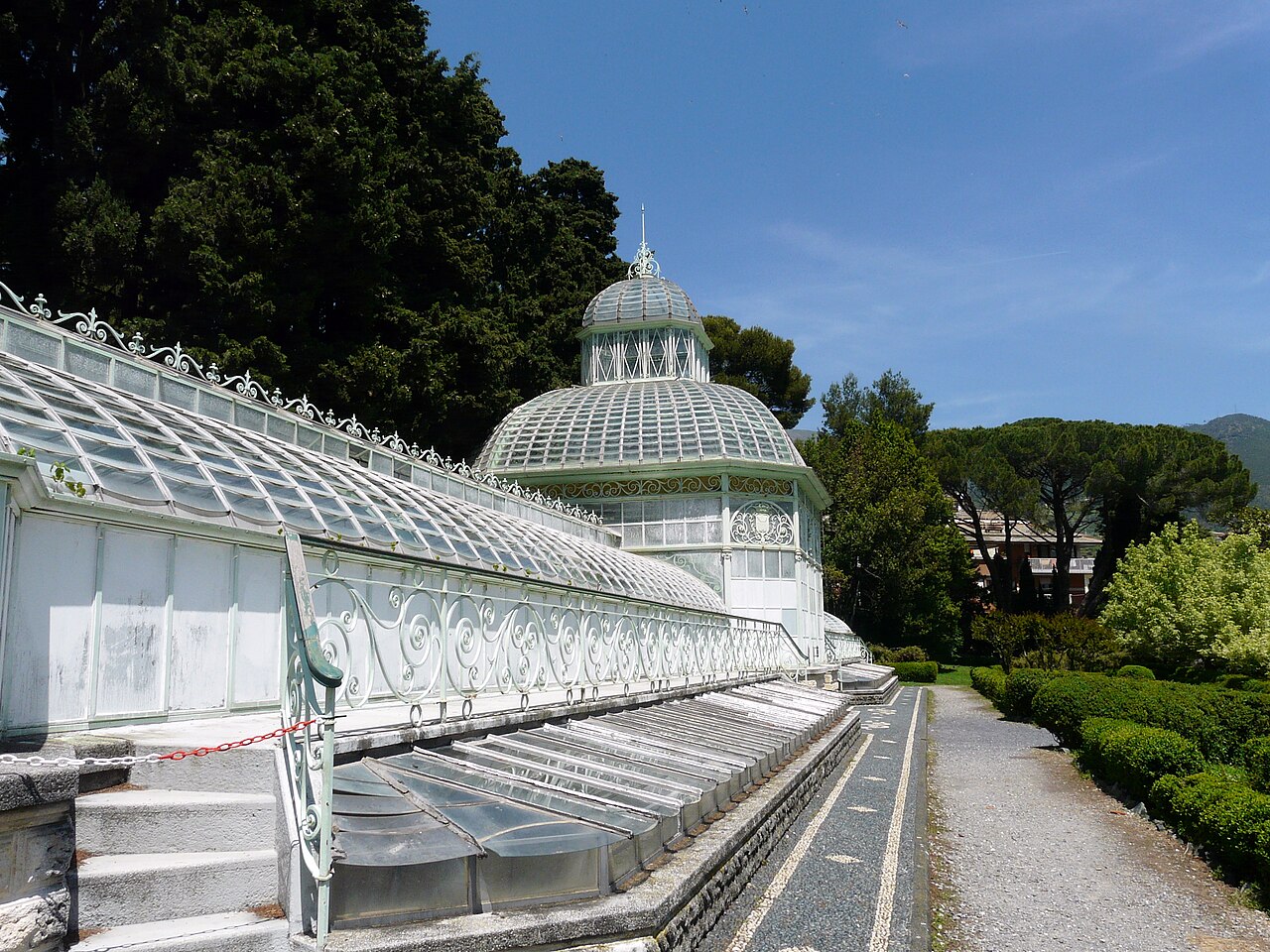
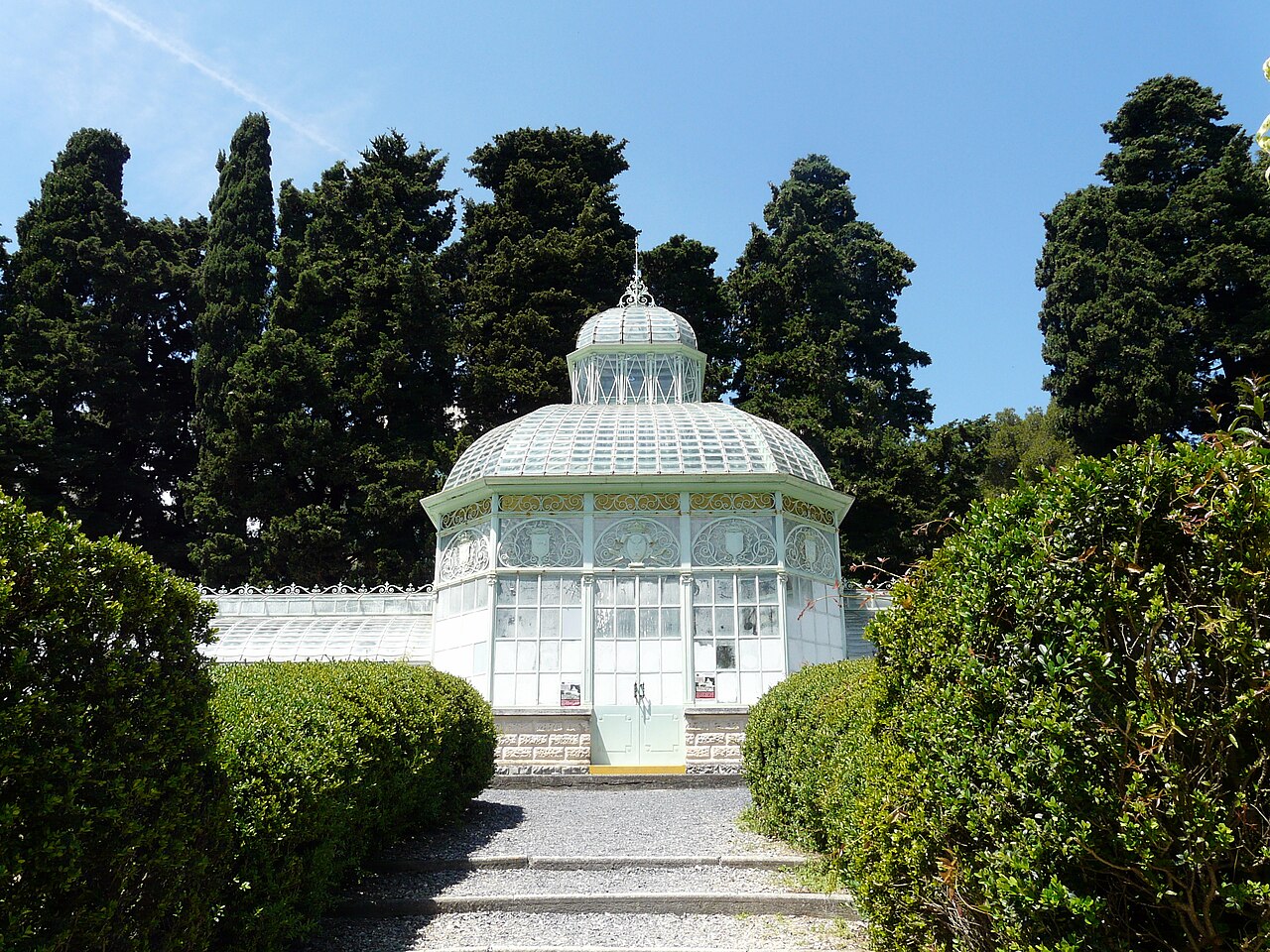
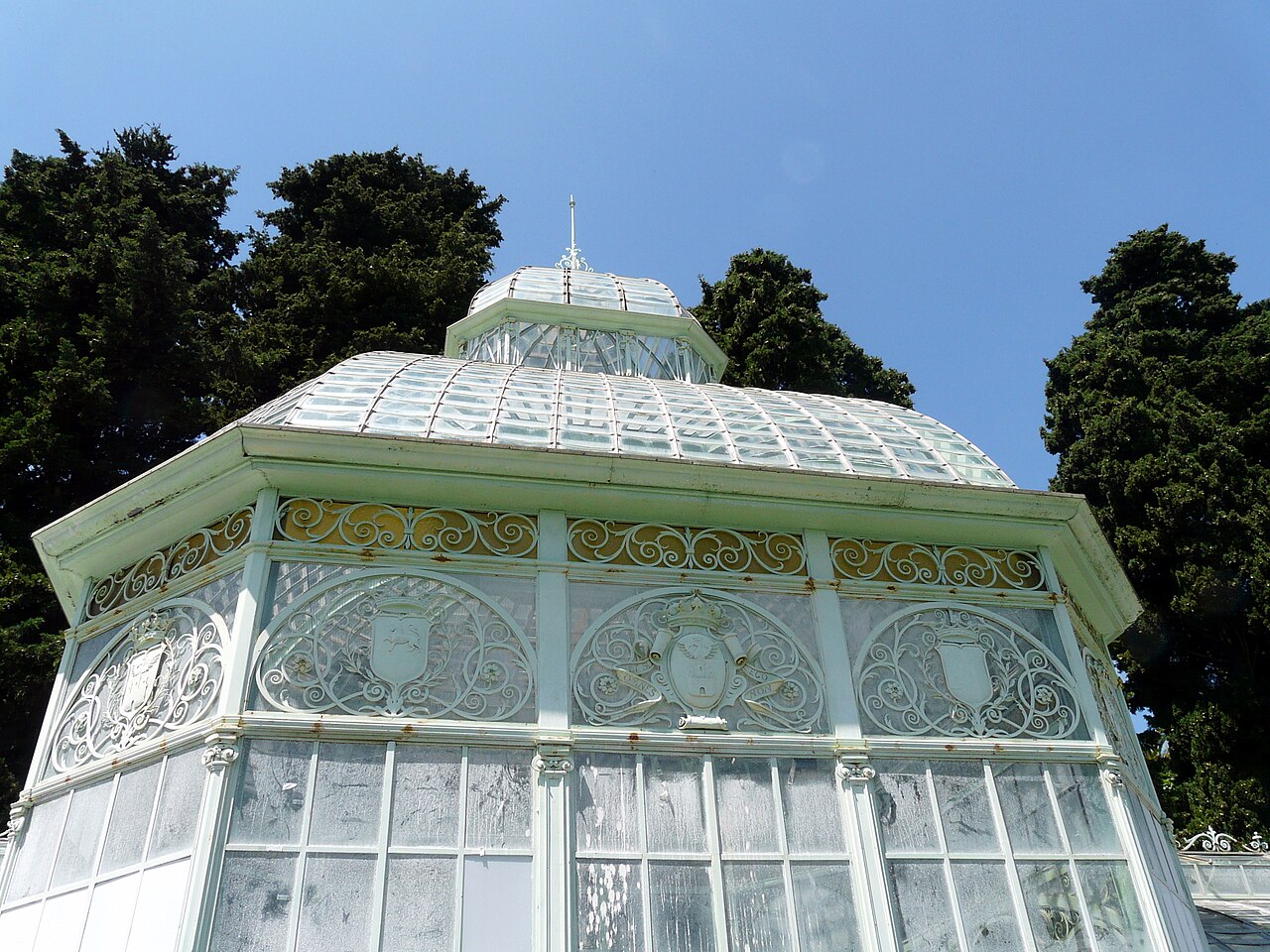
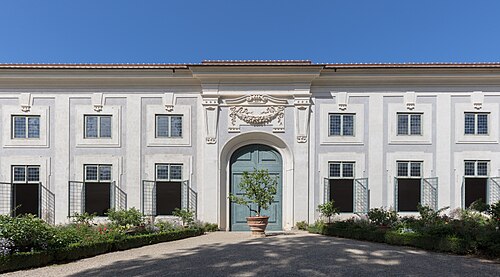
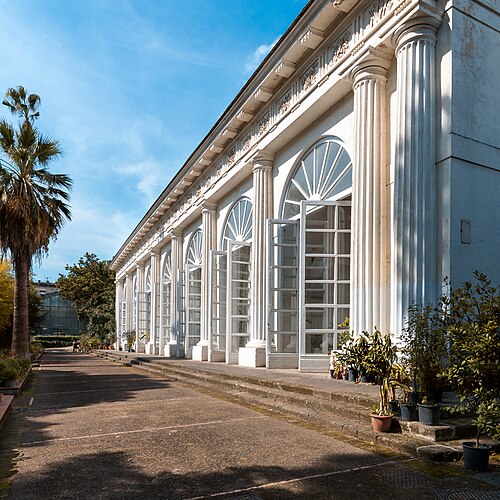
North of Arenzano's castle-like villa, now the town hall, the marchesa Matilda Negrotto Cambiaso had a large Liberty-style greenhouse built in 1931 to a design by the architect Lamberto Cusani: a taller central pavilion flanked by two symmetrical wings, in iron and glass, decorated with geometric motifs, tendrils and cornucopias. Owned by the municipality, it can be visited freely with the English-style park laid out in 1880 by Rovelli, and each late April it hosts the FlorArte show, which pairs works by artists with floral displays.
Affiliate links — booking through Verrière helps fund our research, at no extra cost to you.
History
The estate goes back to 1558, when the marchese Tobia Pallavicino acquired the land and built, beside a square medieval tower, a villa that served both as a summer residence and as a farm. In 1825 the engineer Ippolito Cremona laid out two roads and various structures on the property. The turning point came in 1880, when Luisa Sauli Pallavicino entrusted the architect Rovelli (Luigi according to Wikipedia and Italian Botanical Heritage, Giuseppe according to the APGI–Touring Club garden card) with remodelling the villa and creating a park. The 16th-century house took on the look of a crenellated castle, its tower raised by 26 metres, while the English-style park was planted with rare trees and furnished with basins, streams and grottoes.
The greenhouse belongs to a later campaign. In 1931 the marchesa Matilda Negrotto Cambiaso, who owned the estate in the 20th century and gave it her name, commissioned the architect Lamberto Cusani to build a large greenhouse in the area north of the villa; the APGI–Touring Club card confirms that the central greenhouse was completed that same year. Cusani, an admirer of 19th-century architecture and English gardens, designed it in the Liberty style, taking as his models the iron-and-glass conservatories built in France and England during the previous century.
The estate now belongs to the municipality of Arenzano: the villa, restored in the 2000s under the architect Arcangelo Mazzella, houses the town hall, and the park is public. The greenhouse, described as preserved in its original state and very well kept, hosts the FlorArte show organised by the municipality every year.
Architecture and engineering
Cusani designed a three-part building: a taller central pavilion flanked by two lower, symmetrical wings, a composition inherited from the great conservatories of the 19th century. The frame is iron and the walls glass, as the Il Turista guide specifies; the Italian Wikipedia stresses that the architect took the iron-and-glass greenhouses of France and England as his models, a deliberately historicist choice for a building of 1931.
The decoration, by contrast, belongs to the Liberty style, Italy's version of art nouveau: the structure is enriched with geometric elements, tendrils and cornucopias. A film-location directory describes it instead as art deco, which places the building neatly at the junction of the two movements. The greenhouse stands in the part of the park north of the castle-like villa, whose crenellated tower and gallery of painted coats of arms provide the counterpoint. The APGI–Touring Club card calls it the park's "central greenhouse", and the municipality now refers to it as the Serra Monumentale.
Plant collections
The greenhouse now works as an exhibition space. Every year at the end of April the municipality stages FlorArte there, bringing together works by local artists and floral arrangements; in 2025 the Serra Monumentale housed a painting exhibition set within a backdrop of plants, foliage and flowers composed by a gardener, while nurseries and growers held a market in the park.
The plant heritage lies above all in the English-style park around the greenhouse. The Italian Wikipedia lists rare species there, including Cupressus lusitanica, Thuja plicata, Erythrina crista-galli, Pittosporum tenuifolium and Cephalotaxus harringtonia, together with magnolias, camphor trees, plane trees and palms; Italian Botanical Heritage adds bald cypresses and Cryptomeria. A monumental cedar of Lebanon, listed among Liguria's monumental trees, stands near the circular basin in the southern part. In spring the camellias and the 'Old Blush' roses known as the Marchesa's come into bloom. A colony of peacocks and the terrapins in the basins by the entrance complete the picture.
Visiting
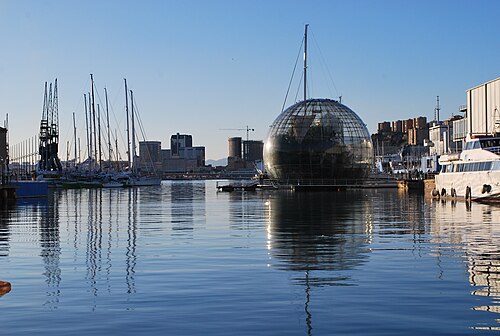
The municipal park, free to enter all year round, has three entrances: Piazza Rodocanachi to the west, reached through the medieval-looking borgo, Piazza Allende to the east and Via Sauli Pallavicino to the north. The greenhouse lies in the northern part of the park, behind the villa that serves as town hall; from there the walk leads down to the cascading basins, the grotto, the small lake in the south-east and the cedar of Lebanon. Late April, during FlorArte, is when the interior of the greenhouse can be seen at its liveliest; spring also brings the camellias and roses. Arenzano, a seaside resort at the gates of the Beigua regional park, lies some twenty kilometres west of Genoa, whose Hanbury botanical garden greenhouses and Renzo Piano's Biosfera round off the day naturally.
44.40° N, 8.68° E
Greenhouses nearby
More greenhouses — Italy
Do you have a good photo of this greenhouse? Suggest it for this page →
Sources (8)
- apgi.it/wp-content/plugins/custom_garden/ajax/get_pdf_client.php?id=2382
- it.wikipedia.org/wiki/Villa_Negrotto_Cambiaso
- luoghi.italianbotanicalheritage.com/en/?p=29898
- ilturista.info/guide/arenzano-citta-santuario-mare-spiagge/
- touringclub.it/destinazioni/arenzano/vedere/250737-villa-negrotto-cambiaso
- mentelocale.it/genova/77580-florarte-arenzano-2025-mostra-mercato-di-piante-e-fiori-mostre
- cultura.gov.it/evento/villa-negrotto-cambiaso-ad-arenzano-fioriture-nel-parco
- wikidata.org/wiki/Special:EntityData/Q4012786.json
Affiliate links — booking through Verrière helps fund our research, at no extra cost to you.