Nineteenth-Century Greenhouses of the Orto Botanico of Padua (Serre ottocentesche)
Padua, Veneto

Entry updated on October 5, 2026
- Year
- 1808-1814
- Architect
- Antonio Noale, following guidelines by Alessandro Barca
- Style
- Gothic-arched cast-iron, glass and stone greenhouses
- Status
- Open to the public (restored in 2019)
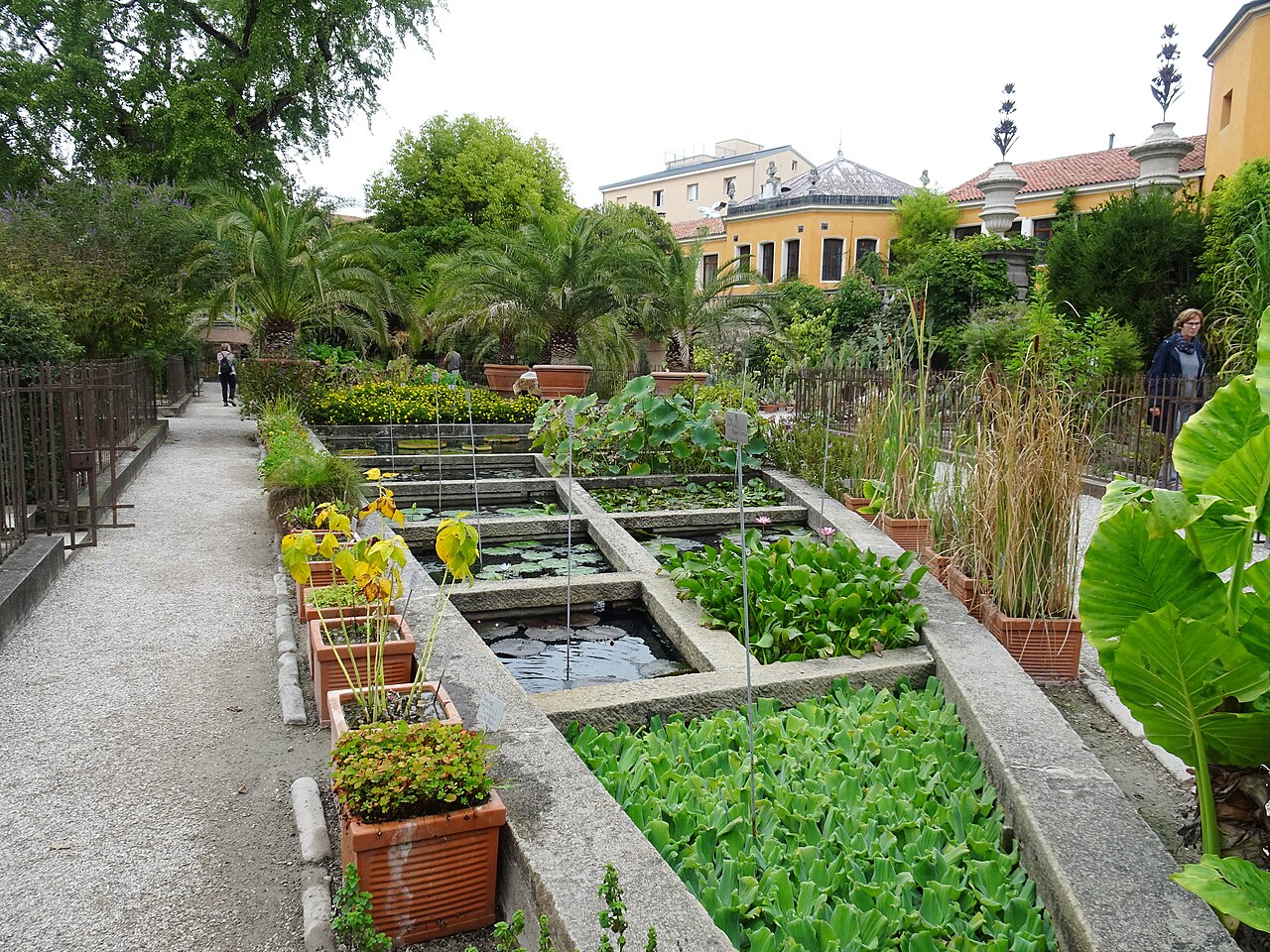
To the right of the prefect's house in the botanical garden that the University of Padua founded in 1545, a UNESCO World Heritage site since 1997, stands a row of nineteenth-century greenhouses. Designed in 1804 by architect Antonio Noale on guidelines from the chemist Alessandro Barca and built between 1808 and 1814, as French rule gave way to Austrian, they pair pointed arches with cast-iron pillars decorated with plant motifs. Restored between 2016 and 2019, they now hold a lush Liberty greenhouse and a collection of carnivorous plants.
Affiliate links — booking through Verrière helps fund our research, at no extra cost to you.
History
1 min
The botanical garden of Padua was created in 1545 by decree of the Venetian Republic as a garden of medicinal plants serving university teaching. Still on its original ground, it was added to the UNESCO World Heritage List in 1997.
Early in the nineteenth century the garden acquired buildings to acclimatise and shelter delicate plants. The scheme dates from 1804: the architect Antonio Noale directed the work following guidelines from Alessandro Barca, a chemist who headed the university's school of architecture. Building started in 1808, during French rule, and was finished under the Habsburg administration; the garden's official website dates the construction to 1808-1814. Over the following decades the greenhouses were altered to keep pace with new needs and technical progress.
In the twenty-first century the University of Padua undertook their rehabilitation as part of a wider programme to restore and enlarge the garden. Design work ran from 2016 to 2018 in two lots, one for the greenhouse building itself and one for the window frames and upkeep of the exposed structures. Completed in 2019, the conservation work returned the greenhouses to their original appearance while fitting them for new uses.
Architecture and engineering
1 min
The greenhouses stretch out to the right of the prefect's house; the first, at the western end, lies just past the garden's north gate. The range consists of three large rooms separated by smaller intermediate ones, generously glazed on a French-inspired model.
The so-called Liberty greenhouse keeps its graceful pointed arches and cast-iron pillars adorned with plant motifs, set on slender stone supports. Beneath the terracotta floor, old ducts once carried warm air; the first greenhouse still has its original paving.
The restoration set out to preserve these historic features, from the underfloor ducts to the cast-iron structures, which were treated and consolidated, while adding the services the building needed and removing barriers to access. The building was then divided by function: rooms at the rear are used by staff for labelling and cleaning seeds, while the rooms along the main front became greenhouses open to visitors.
Plant collections
1 min
The first greenhouse displays a rich collection of carnivorous plants from many origins, all sharing a need for marshy, acidic, nitrogen-poor habitats. They photosynthesise like other plants but supplement their mineral intake by trapping and digesting insects and small animals. The official website mentions Venus flytraps, sundews, Sarracenia and Proboscidea louisianica among them.
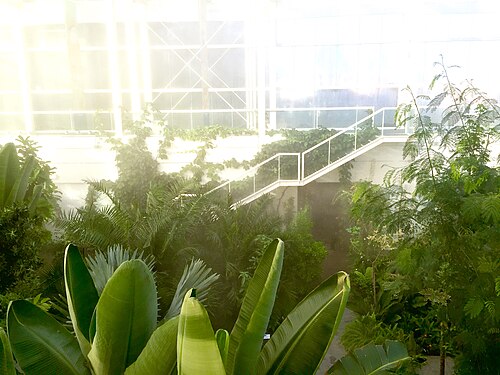
The Liberty greenhouse is given over to lush green foliage. In winter the third of the nineteenth-century greenhouses takes in the succulent collection, which in the warmer months returns to a reconstructed desert setting near the prefect's house. The garden as a whole holds around 3,500 species from across the world.
Visiting
1 min
The greenhouses stand in the historic part of the garden near the north gate, close to the octagonal glasshouse that protects Goethe's palm, planted in 1585 and regarded as the garden's oldest plant. Visits can be self-guided, with an audio guide, or on a guided tour.
A visit to the greenhouses and the adjoining Renaissance garden can continue to the Giardino della Biodiversità, the large contemporary glasshouses opened in 2014 within the same grounds, to which the nineteenth-century range makes a striking counterpoint. The great square of Prato della Valle is a few minutes' walk away.
45.40° N, 11.88° E
Greenhouses nearby
More greenhouses — Italy
Do you have a good photo of this greenhouse? Suggest it for this page →