Lord & Burnham Greenhouses, Blithewold
Bristol, Rhode Island

Sources checked October 2026
- Year
- 1901
- Architect
- Lord & Burnham
- Style
- Estate greenhouses of iron, cypress and glass, restored with modern materials
- Dimensions
- Complex originally more than twice its present size; planned palm house 35 ft (about 10.7 m) high
- Status
- Open to visitors with the estate; Rose and Palm House under construction, opening announced for spring 2027
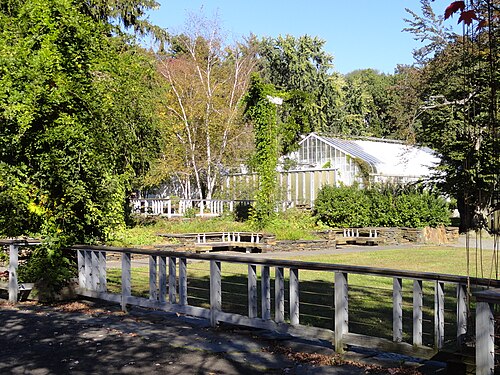
Ordered in 1901 by Bessie Van Wickle McKee for her botanical collection, Blithewold's Lord & Burnham greenhouse complex in Bristol lost three of its buildings in the 1930s, among them the palm house and the rose house. The surviving houses were restored in 2005 with modern materials, then joined in 2014-2015 by a new double-glazed plant house. In 2026 the Rose and Palm House is being rebuilt to the historic configuration, on an aluminium and steel frame, with the opening announced for the spring.
Affiliate links — booking through Verrière helps fund our research, at no extra cost to you.
History
Blithewold is the summer estate the Van Wickle family laid out in Bristol from 1895, the year the land was bought. According to the estate's website, Bessie Van Wickle McKee ordered the Lord & Burnham greenhouses in 1901 to enlarge her botanical collection; the Cultural Landscape Foundation dates a Lord & Burnham greenhouse to the same year. According to local press, the complex included two vineries, a work room, a propagating house, a plant house, a rose house and a palm house, a tall curved glass structure that stood out on the estate.
In the 1930s the family, short of money, had the palm house, the rose house and a third building dismantled, and their parts were sold. The director of horticulture reckons the complex stood whole for only about thirty years. When Marjorie Van Wickle Lyon died in 1976 the estate passed by bequest to the Heritage Trust of Rhode Island; it was listed on the National Register of Historic Places on 27 June 1980.
Before restoration, the surviving greenhouses were described on the estate's blog in 2008 as a wreck of rusted iron, century-old cypress and broken glass. Heritage Greenhouse Builders restored them in 2005, and a new plant house was added in 2014, a work the estate's site dates to 2015. In 2026 the rebuilding of the Rose and Palm House, named the Kim Sutton Rose and Palm House by the board on 18 May, is funded by a donation campaign and a gala held on 18 September; after the gala the estate announced that construction was under way and that opening was expected in the spring.
Architecture and engineering
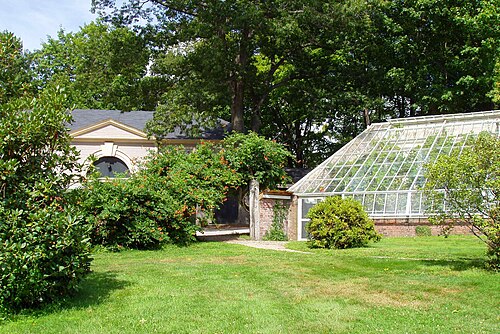
The original houses relied on iron, century-old cypress and glass; before 2005, according to the estate's blog, plastic film stapled to the glazing bars partly held them together. The restoration used modern materials but kept several elements: the south gable end in restored cypress, the iron finials cleaned and put back, the vent cranks retained as decoration. Radiant heating serves every house, with a safe walkway, sturdy benches, automatic vents and fans. The 2014 plant house has a radiant heated floor and double-glazed glass.
The Rose and Palm House follows the historic configuration, whose concrete foundations survive. It is built on aluminium and steel frames, with red brick knee walls to match the existing buildings. The palm house, 35 ft (about 10.7 m) high, will have curved framing and curved glazing, laminated, tempered and coated so that no extra shading is needed. The director of horticulture says no palm house of this kind has been built in the United States in more than forty years.
Plant collections
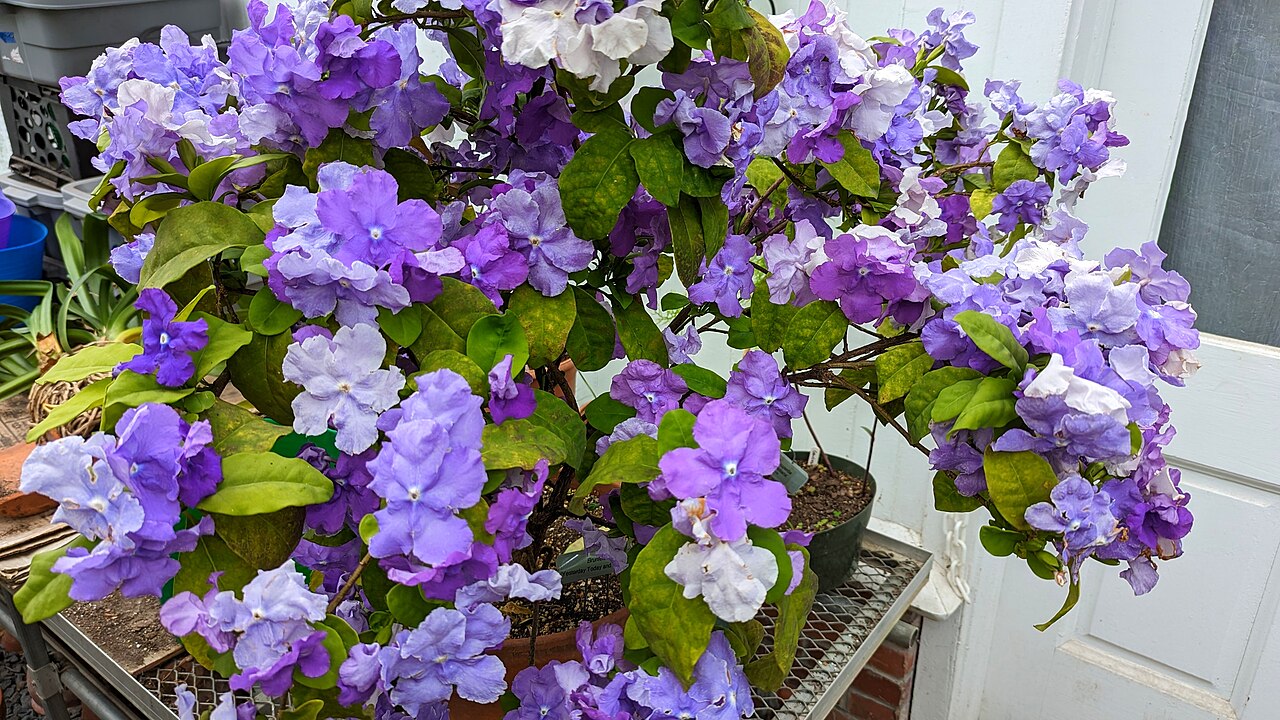
The complex holds, in the estate's words, a mix of tropical plants and less hardy varieties of familiar garden mainstays. In late winter the team starts seeds and cuttings there for the gardens outside, and in summer the container collection peaks. Estate articles mention potted exotics, salvias, begonias and ferns (2016), then citrus, sweet olive and eucalyptus (2014). In December, during Christmas at Blithewold, the greenhouse shows camellias (Camellia japonica), flowering maples (Abutilon), fuchsias and Farfugium japonicum.
The night-blooming cereus is Blithewold's signature plant, and the future palm house is meant to give it a new home, along with palms and large exotic or temperate specimens. More room should also let the existing collection grow closer to its full size.
Visiting
According to the Cultural Landscape Foundation, the curving gravel entrance drive passes the stables and the greenhouse, which the grounds map marks with the letter E. The complex is on the route of the guided group tours, which last about an hour and a half for house and gardens. The December greenhouse, during Christmas at Blithewold, is included with general admission, and the estate presents it as a winter visit. The surroundings of the Rose and Palm House site may change until it opens, announced for the spring, so checking with the estate is wise. The manor, the ten gardens, the bamboo grove and the summerhouse fit into the same visit.
41.66° N, 71.27° W
Greenhouses nearby
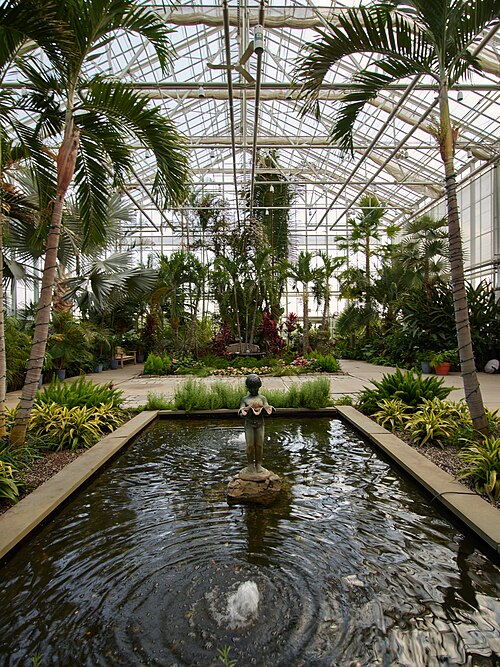
More greenhouses — United States
Do you have a good photo of this greenhouse? Suggest it for this page →
Sources (8)
- blithewold.org/about/gardens/
- blithewold.org/hours/
- blithewold.org/holiday-hothouse/
- blithewold.org/outside-in/
- blithewold.org/finishing-touches-and-new-beginnings/
- blithewold.org/greenhouse-thanksgiving/
- eastbayri.com/stories/art-in-glass-and-metal,140018
- tclf.org/landscapes/blithewold-mansion-gardens-arboretum
Affiliate links — booking through Verrière helps fund our research, at no extra cost to you.