Linnean House, Missouri Botanical Garden
St. Louis, Missouri
Sources checked September 2026
- Year
- 1882
- Architect
- George I. Barnett
- Style
- Victorian Italianate orangery
- Status
- In operation
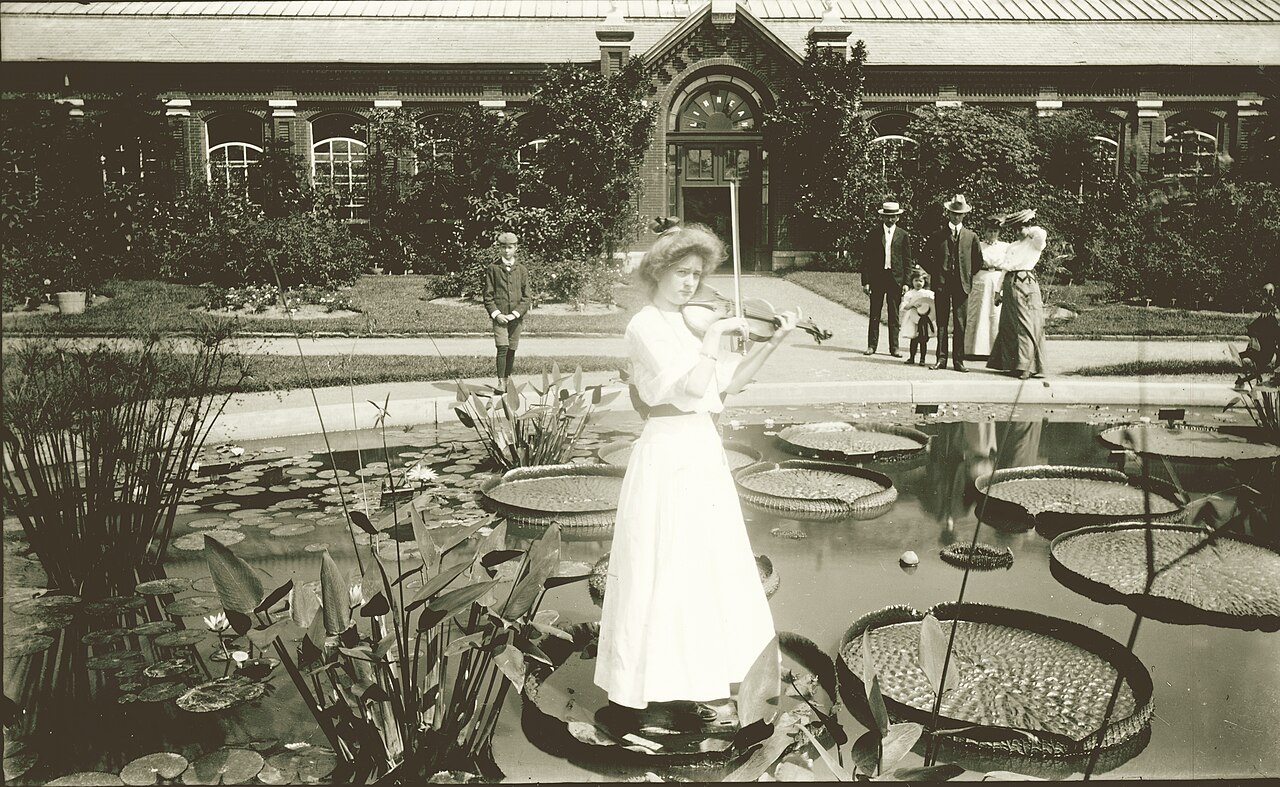
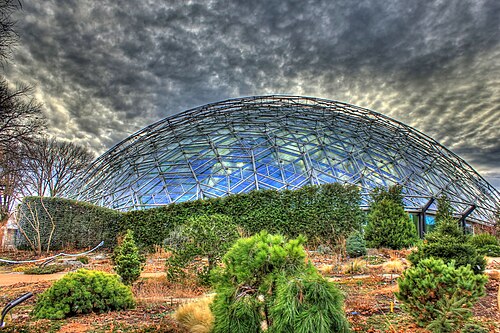
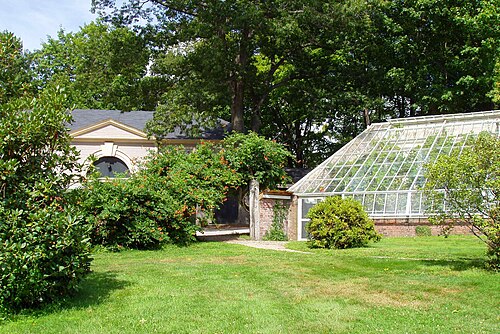
Designed in 1882 by architect George I. Barnett as the personal orangery of the garden's founder, Henry Shaw, the Linnean House is considered the oldest continuously operating greenhouse west of the Mississippi River. In the late 1930s it was converted to house mainly a collection of camellias, which it still holds today. Its classical stone facade, pierced by large glazed bays, contrasts with the modernity of the nearby Climatron, the same botanical garden's iconic geodesic dome. It illustrates the architectural continuity of the Missouri Botanical Garden, spanning 19th-century historic greenhouses and 20th-century futuristic structures.
Affiliate links — booking through Verrière helps fund our research, at no extra cost to you.
History
The Missouri Botanical Garden was founded in St. Louis by Henry Shaw, a British immigrant who had settled in the city in 1819; construction began in 1855 and the garden opened in 1859, soon known locally as "Shaw's Garden." In 1882 Shaw added an orangery designed by the architect George I. Barnett, who around the same time designed two other glasshouses, the Palm House and the Plant House, in nearby Tower Grove Park. The building was named after Carl Linnaeus, the Swedish naturalist who established binomial nomenclature, and in 1883 marble busts of Linnaeus, Thomas Nuttall and Asa Gray were set on its facade, the first sculptures in the garden's collection.
Originally intended to overwinter citrus and other frost-tender plants, the orangery later became a place to show exotic species as exploration brought new plants within reach. Shaw died in 1889. Camellias arrived in the twentieth century: the garden dates its camellia collection to the 1920s.
It is the only greenhouse in the garden surviving from Shaw's lifetime, and the institution describes it as the oldest continuously operating display greenhouse in the United States. The garden was listed on the National Register of Historic Places in 1971 and designated a National Historic Landmark in 1976. More recently the interior was refitted as part of the Gateway to the Garden campaign, which also created the Jack C. Taylor Visitor Center.
Architecture and engineering
The Linnean House is a late-Victorian orangery: a brick building with generous glazing, its main front facing south to catch the winter light. That southern facade carries the three marble busts of Linnaeus, Nuttall and Gray, in place since 1883, which give the pavilion its scholarly air.
The interior refit carried out under the Gateway to the Garden campaign added trellises along the north wall for climbing plants, botanical wall panels modelled on Victorian ironwork and depicting historically significant species, custom-built Wardian cases and new display cases. The cases set objects from the plant-collecting world of 1882 alongside material from the garden's present-day expeditions, a nod to the orangery's original role as a shelter for plants brought from afar.
Plant collections
The house is best known for its camellias, native to subtropical Asia. The collection highlights species connected with the garden's conservation work, and flowering peaks from winter into early spring, when little else is in bloom outdoors.
Around this core the plantings include tropical fruit trees, palms, cycads, ferns, succulents and cacti. Climbers cover the north-wall trellises, and the Wardian cases recall how living plants travelled in the nineteenth century.
Visiting
The Linnean House is one of the Missouri Botanical Garden's display conservatories, alongside the Climatron, the garden's signature geodesic dome. The best time to come is late winter and early spring, when the camellias are in flower while the outdoor gardens are still dormant. The house itself takes little time to see and fits easily into a wider visit to the Climatron and the rest of the garden, founded in 1859 and now a National Historic Landmark. The busts on the south facade are worth a pause before going in.
38.62° N, 90.26° W
Greenhouses nearby
Architecture nearby
More greenhouses — United States
Do you have a good photo of this greenhouse? Suggest it for this page →
Sources (5)
- missouribotanicalgarden.org/gardens-gardening/our-garden/gardens-conservatories/conservato
- missouribotanicalgarden.org/gardens-gardening/our-garden/gardens-conservatories/conservato
- missouribotanicalgarden.org/about/who-we-are/our-history
- en.wikipedia.org/wiki/Missouri_Botanical_Garden
- openstreetmap.org/way/126752356
Affiliate links — booking through Verrière helps fund our research, at no extra cost to you.