United States Botanic Garden
Washington, D.C.

Sources checked September 2026
- Year
- Garden 1820 · greenhouse 1933
- Architect
- Lord & Burnham
- Style
- Glass and steel
- Dimensions
- Relocated in 1933 near the Capitol
- Status
- Open to the public
The oldest continuously operating botanical garden in the United States traces its origins to the collections brought back by the Wilkes Expedition to the Pacific in 1838. The current conservatory, built by the Lord & Burnham workshop, was relocated in 1933 just southwest of the Capitol, where it holds a symbolic place in Washington's institutional landscape. A complete renovation completed in 2001 made it accessible and sustainable.
Affiliate links — booking through Verrière helps fund our research, at no extra cost to you.
History
The idea of a national botanic garden dates back to 1816, when the Columbian Institute for the Promotion of Arts and Sciences, a learned society in Washington, proposed a place to collect, grow and distribute plants. Congress granted it land west of the Capitol in 1820, but the venture faltered and ceased operating in 1837, once the Institute stopped meeting.
The garden's real beginning came in 1842 with the return of the United States Exploring Expedition to the South Seas, led by Charles Wilkes since 1838. The expedition brought back a large number of living plants, many carried in Wardian cases, and these became the first permanent collection. Kept at first in a greenhouse behind the Old Patent Office Building, they moved in 1850 into a Victorian conservatory built in front of the Capitol, where the Capitol Reflecting Pool now lies; the garden has operated continuously ever since. That building was enlarged in 1867 with a central dome and two wings.
In 1933 the garden left the Mall for its present site on Independence Avenue, where a new conservatory was built under the Architect of the Capitol, which has administered the institution since 1934. The building closed on 1 September 1997 and reopened on 11 December 2001 after a full renovation. The three-acre National Garden outside was completed in 2006, and the limestone facade and roof were restored between 2017 and 2019.
Architecture and engineering
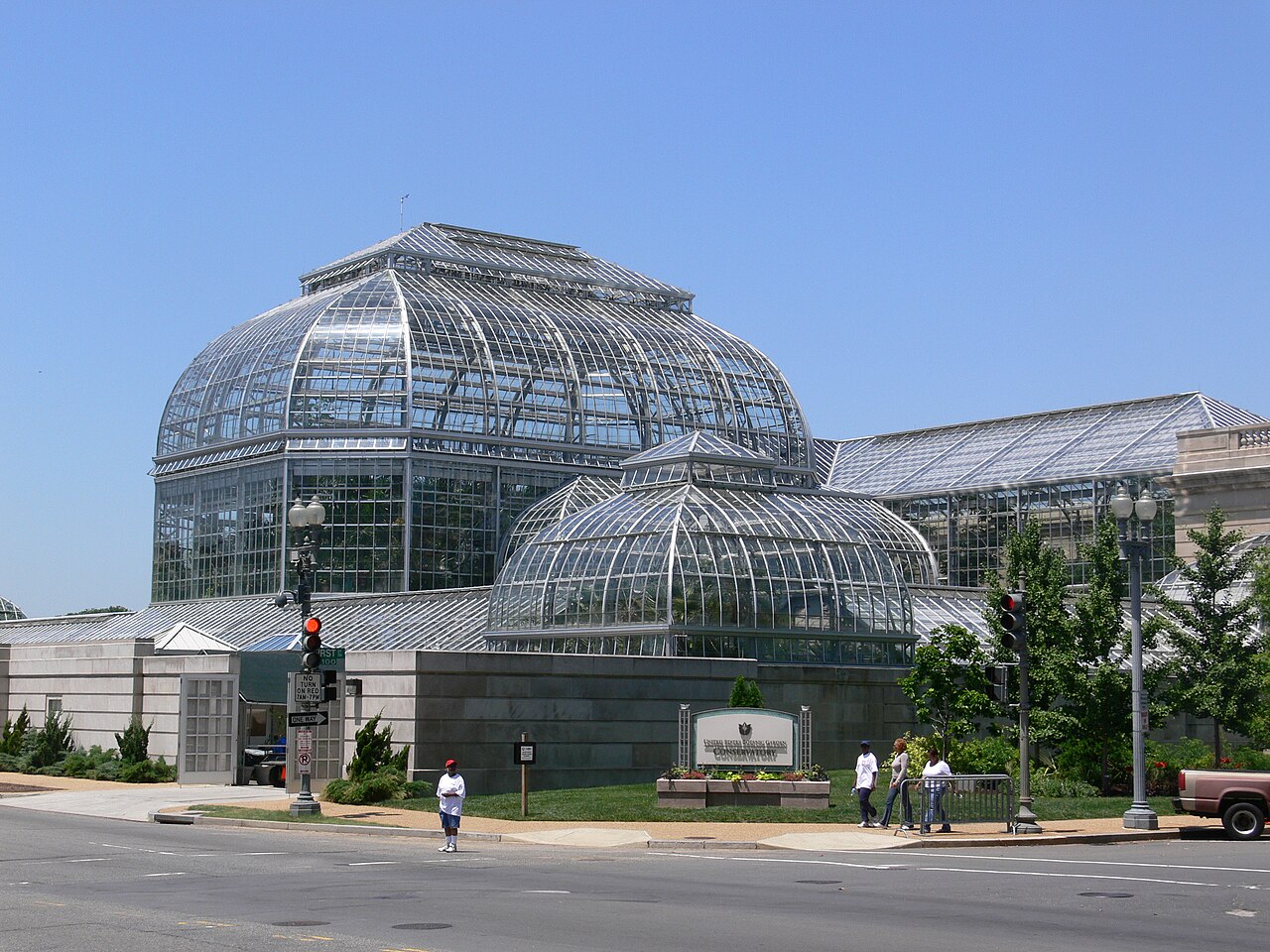
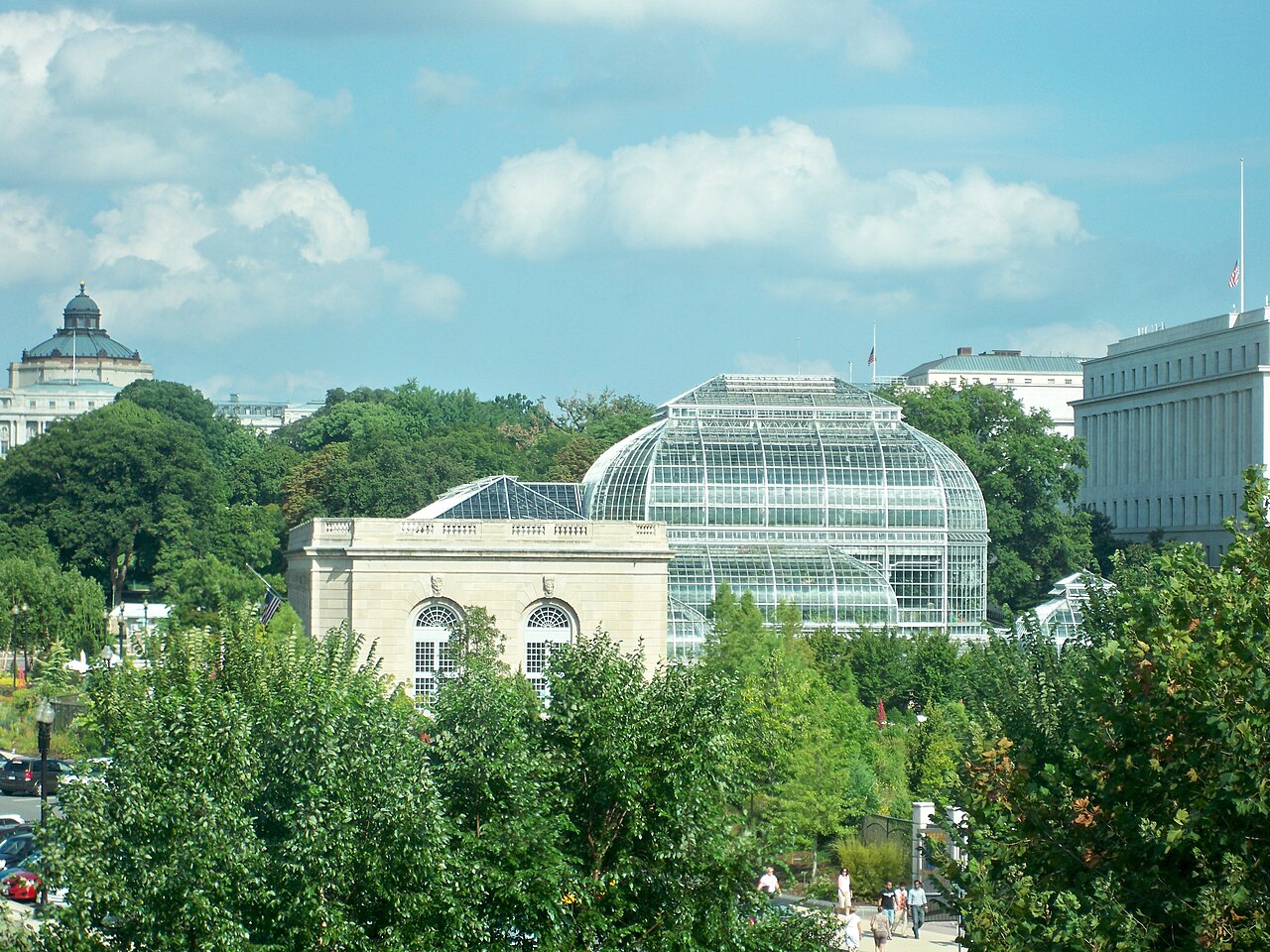
The 1933 Conservatory is a Lord & Burnham greenhouse, the work of America's leading glasshouse builder, joined to a limestone-fronted building that gives it a monumental presence in keeping with the official architecture around it. The glazed sections are carried on an aluminium frame.
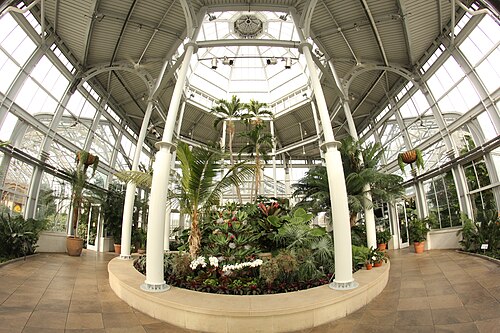
The complex provides roughly 28,944 square feet (about 2,700 m²) of growing space across two courtyard gardens and ten rooms under glass. Its centrepiece is the Tropics room, crowned by a dome 93 feet (about 28 m) high and circled by a mezzanine from which visitors look down into the canopy.
The renovation completed in 2001 replaced the aluminium framework, glazing, floors and every building system while keeping the architectural character intact. Automated controls now track the weather and adjust temperature, humidity and shading room by room. Work in 2017–2019 addressed the deteriorating limestone facade and the roof, which had begun to let water in.
Plant collections
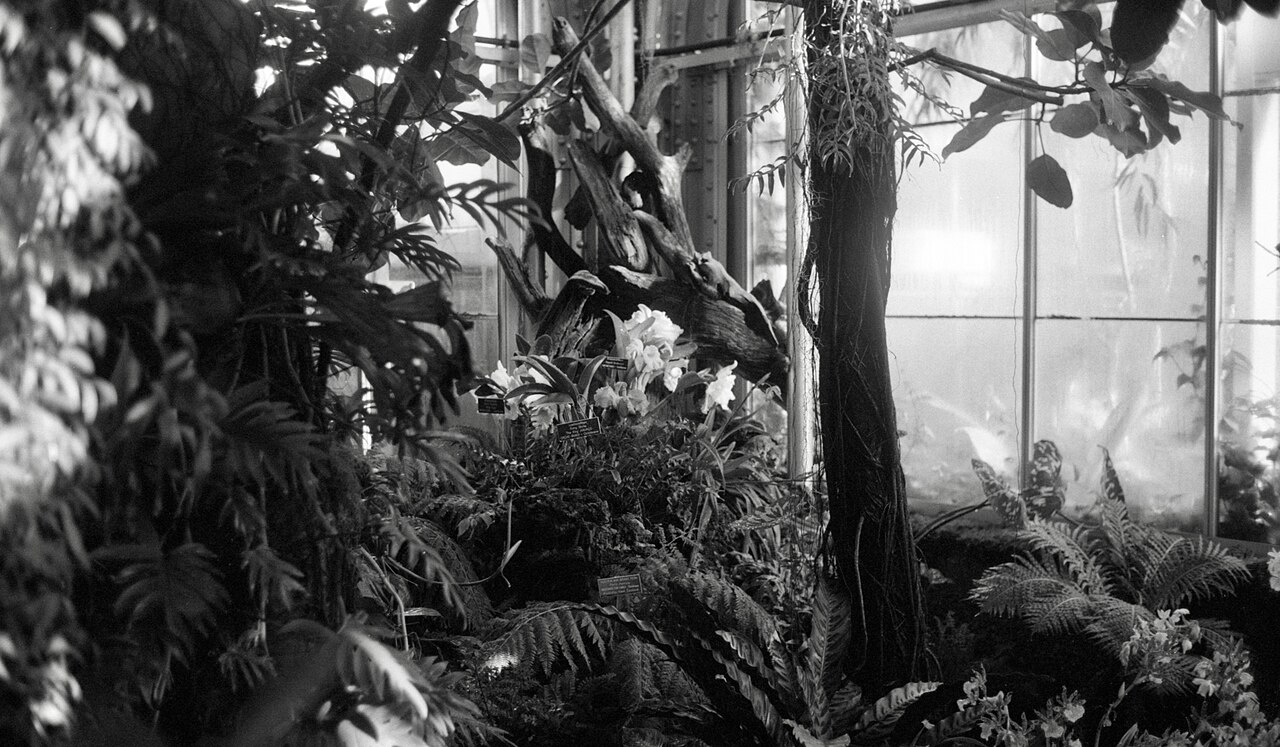
The garden maintains more than 9,500 accessions, about 44,000 plants, some of them grown at a production facility opened in 1993 in Anacostia. The Conservatory rooms are arranged by habitat and by use: the Garden Court shows economic and ethnobotanical plants that supply fibre, food and cosmetics; the Tropics recreate a rainforest; World Deserts gathers cacti and succulents; and further rooms cover Hawaiian flora, medicinal plants, the world's five Mediterranean-climate regions, and rare and endangered species.
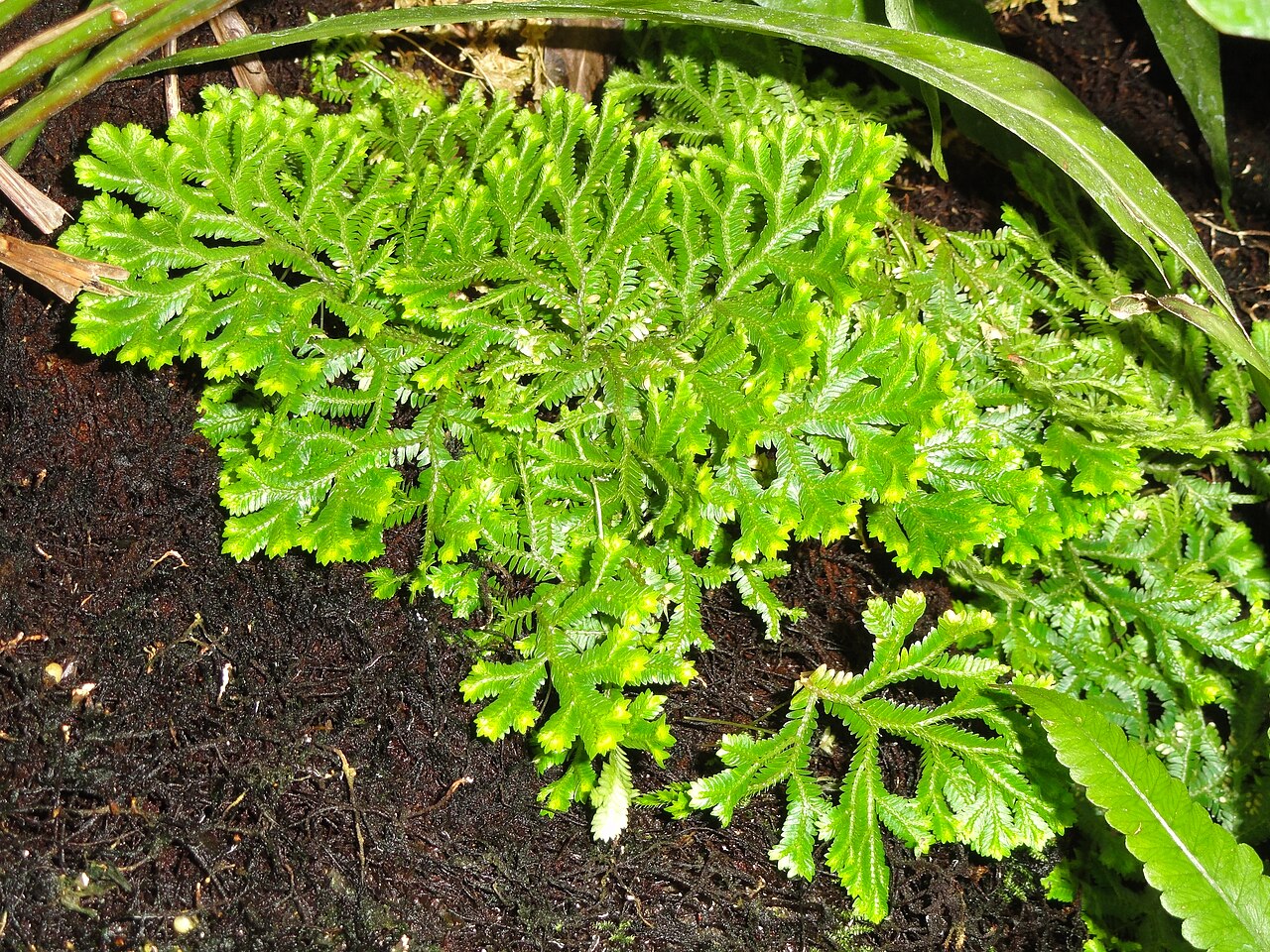
The orchid collection numbers around 3,000 specimens, several hundred of them on display at any time. Four plants still in the collection are believed to be linked to the Wilkes Expedition, among them a vessel fern and cycads, living reminders of how the institution began.
Visiting
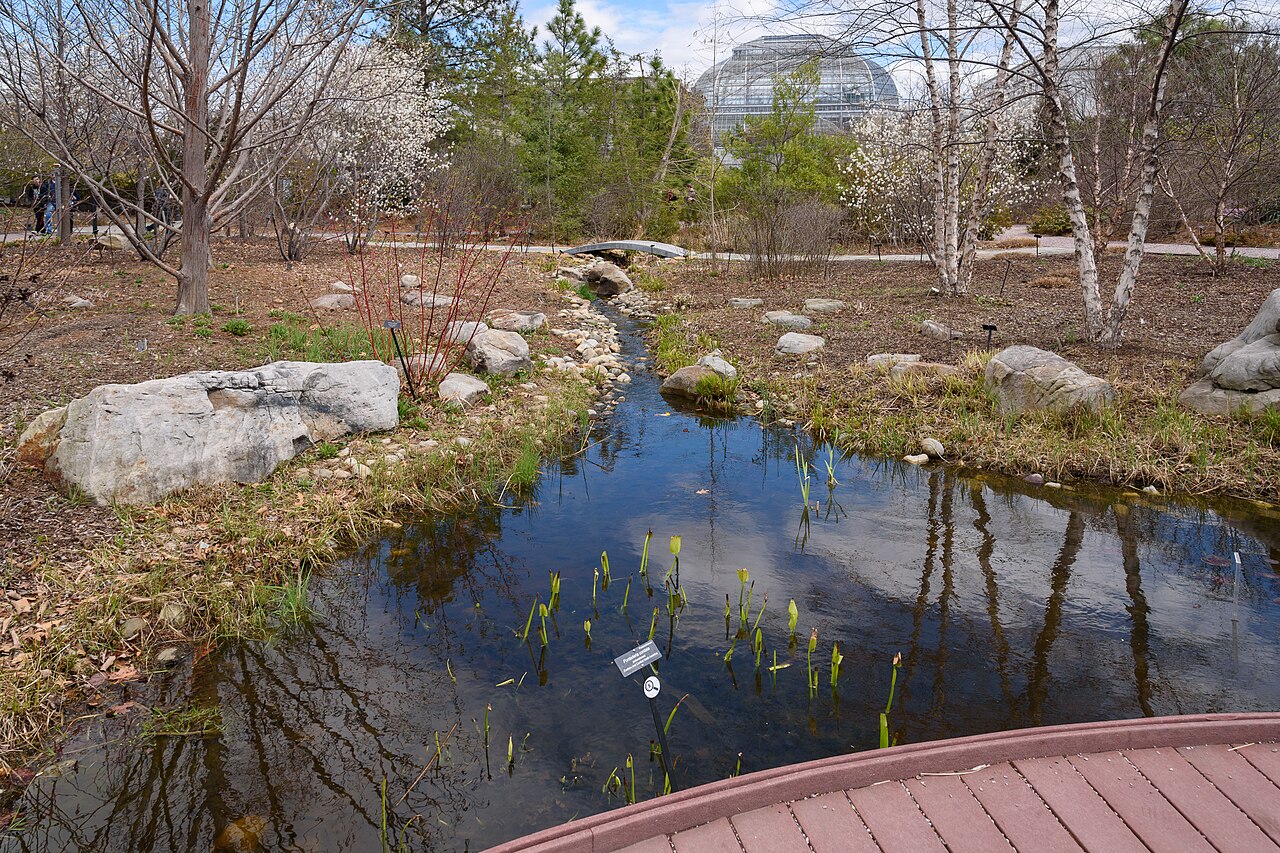
The Conservatory stands at the foot of the Capitol, at the southeast end of the National Mall, which makes it an easy stop alongside the Capitol itself or the museums nearby. Admission is free and no ticket is required. An hour to an hour and a half is enough to walk through the ten rooms, including the mezzanine walk in the Tropics dome. Outdoors, the visit continues in the National Garden on the building's west side and in Bartholdi Park across Independence Avenue, laid out around the monumental fountain by the sculptor of the Statue of Liberty.
38.89° N, 77.01° W
Greenhouses nearby
Architecture nearby
More greenhouses — United States
Do you have a good photo of this greenhouse? Suggest it for this page →
Affiliate links — booking through Verrière helps fund our research, at no extra cost to you.