Global Flora Conservatory (Margaret C. Ferguson Greenhouses, Wellesley College)
Wellesley, Massachusetts

Entry updated on October 5, 2026
- Year
- 2019
- Architect
- Kennedy & Violich Architecture
- Style
- Contemporary low-energy conservatory with an ETFE cushion roof
- Dimensions
- About 560 m² (6,000 sq ft)
- Status
- Open to the public, free admission
Wellesley College has kept plants under glass since 1925, when greenhouses designed by the botanist Margaret C. Ferguson were completed on its campus. Their successor, Global Flora, was designed by Kennedy & Violich Architecture with the climate engineers Transsolar and completed in 2019. Roofed with ETFE cushions, it gathers dry, temperate and humid biomes that support one another through passive exchanges of air and heat, and it is designed for net-zero energy and water. More than 1,000 plant varieties grow inside, among them a camellia given by the college's founder, and admission is free.
Affiliate links — booking through Verrière helps fund our research, at no extra cost to you.
History
1 min
The greenhouses at Wellesley College grew out of the botanical interests of its founder, Henry Durant, who kept a plant collection of his own and opened it to students. In 1920 the trustees set aside 22 acres of the campus as a botanic garden, and the greenhouses were completed in 1925. They were designed by Margaret C. Ferguson, a member of the botany faculty for several decades who in 1930 became the first woman to preside over the Botanical Society of America; the complex still bears her name. She wanted a department committed to rigorous science that would also be a centre of interest for everyone.
By 2010 the range held about 7,490 square feet under glass, divided into houses for desert, tropical and warm-temperate plants, begonias, aquatic plants and cryptogams, along with propagation and research houses reserved for students and faculty. It served teaching across the curriculum, from the sciences to book arts.
The present conservatory, Global Flora, was conceived as a sustainable successor and won a bronze LafargeHolcim Award for North America in 2017. According to the Wikipedia article on the gardens, the original greenhouses were demolished in 2018 to make way for it, whereas Transsolar describes the historic structures as transformed into a hub for research and teaching. Global Flora was completed in 2019 (2020 in Transsolar's project sheet); once the neighbouring Science Center works ended in 2021 it reopened first to the college community, and the college announced its reopening to the general public for November 2022.
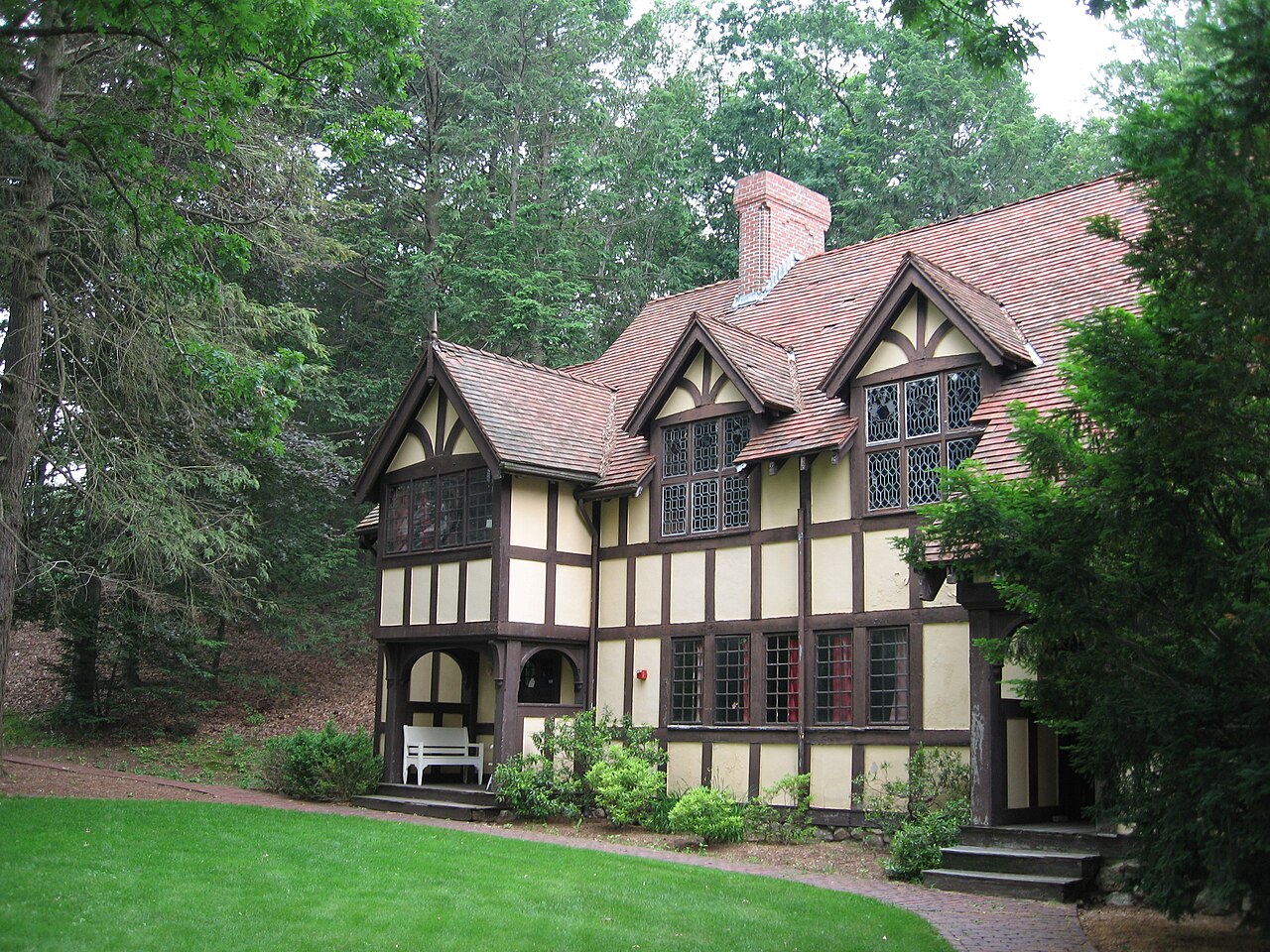

Architecture and engineering
1 min
Global Flora was designed by Kennedy & Violich Architecture, with Transsolar for climate engineering, Andropogon for landscape architecture and Buro Happold among the engineering partners. It covers about 6,000 square feet (560 m²) and stands against the northeast side of the Science Center. Rather than glass, the roof is made of ETFE cushions: the Holcim Foundation notes that they weigh roughly three percent of an equivalent area of insulated glass, and Transsolar adds that the foil transmits ultraviolet light and costs less.
The building is organised as three biomes, dry, temperate and humid, which support one another through passive exchanges of air and heat. Motor-controlled sashes on the south façade and along the ridge provide natural ventilation, the mass of the north wall stores heat, ceiling fans keep the air moving, movable internal blinds provide shade, and the conservatory is connected to the campus heating network. Rainwater management is part of a net-zero water strategy, and an interactive platform displays real-time data on air, water, soil and energy. Inside, reused campus masonry and stone and regional timber were chosen to keep embodied energy low.
Plant collections
1 min
Global Flora holds more than 1,000 plant varieties, arranged by climate across its dry, temperate and humid biomes, with an emphasis on the diversity of plant form. Its senior resident is the Durant Camellia, one of four camellias Henry Durant gave the college from his personal collection. Two of them burned in the College Hall fire of 1914 and the third was removed from the greenhouses at some unknown date; the survivor was at least 130 years old in 2010. Its variegated red flowers owe their pattern to a virus, so that no two blooms are quite alike. It now occupies a seasonal pavilion within the complex.
The earlier greenhouses were already said to hold the most diverse collection of plants under glass in the Boston area, around 600 species in 2010, among them Darwin's orchid from Madagascar, caudiciform plants and species used around the world for food and medicine.
Visiting
1 min
Global Flora stands on the Wellesley College campus, against the northeast side of the Science Center, and forms part of the Wellesley College Botanic Gardens. Admission is free, and student-led guided tours run regularly during open hours; groups can book visits. As the conservatory is compact, an hour is usually enough to walk through its three biomes. Winter suits a visit particularly well, when the humid biome contrasts with the New England cold. The outdoor botanic gardens and the college's Davis Museum, on the same campus, complete the outing.
42.29° N, 71.30° W
Greenhouses nearby
More greenhouses — United States
Do you have a good photo of this greenhouse? Suggest it for this page →
Sources (6)
- wellesley.edu/about-us/offices-departments/wellesley-college-botanic-gardens
- holcimfoundation.org/projects/global-flora
- transsolar.com/projects/wellesley-global-flora-greenhauses-ferguson
- en.wikipedia.org/wiki/Wellesley_College_Botanic_Gardens
- www1.wellesley.edu/sites/default/files/assets/departments/wcbg/files/Ferguson%20Greenhouse
- wellesley.edu/news/cultivating-community-in-the-botanic-gardens