Invernáculo of the Carlos Thays Botanical Garden
Buenos Aires

Sources checked September 2026
- Year
- Exhibited in 1889 · installed in 1897
- Architect
- French foundry
- Style
- Art Nouveau, iron and glass
- Dimensions
- 35 × 8 m
- Status
- Open to the public
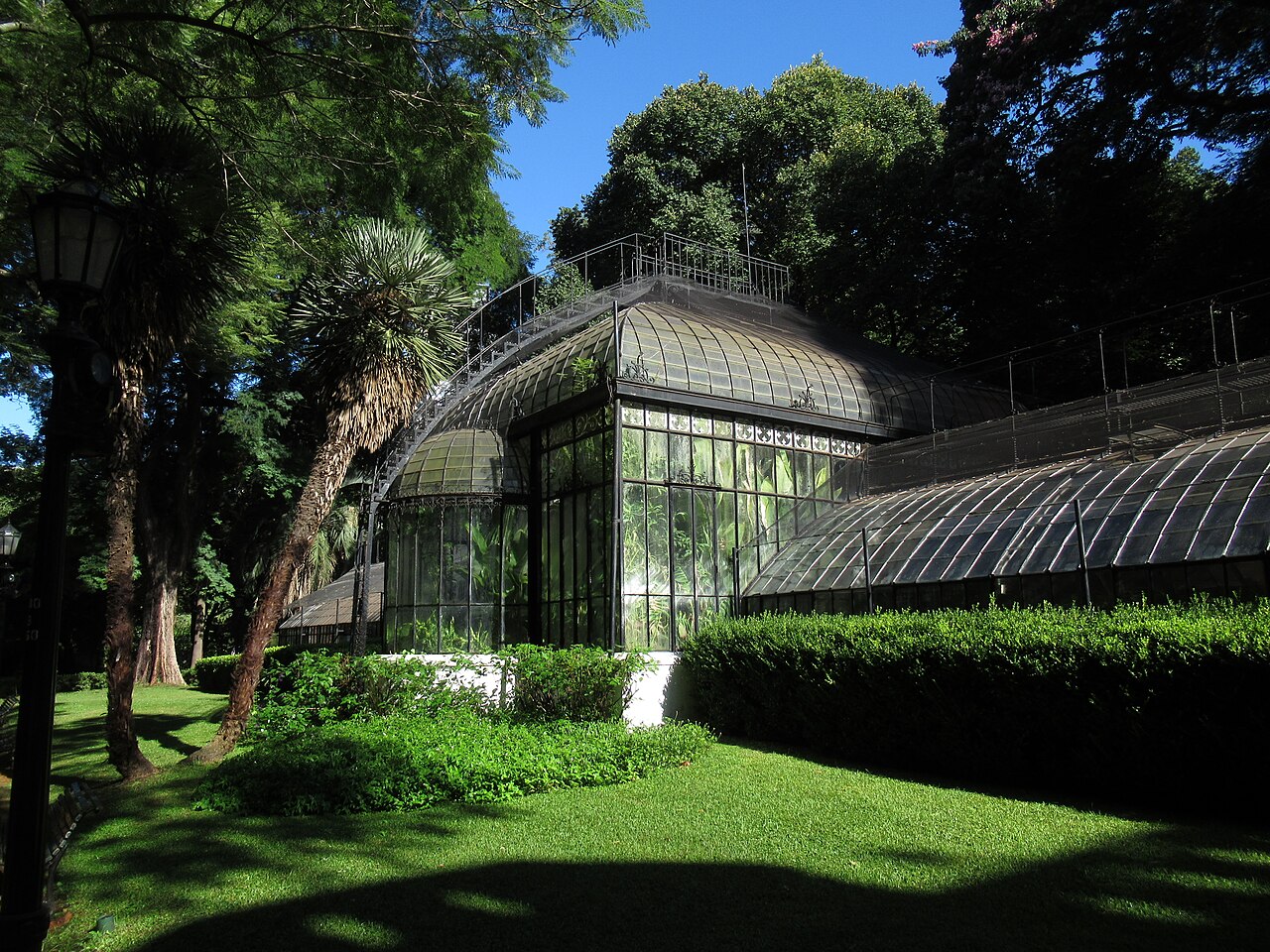
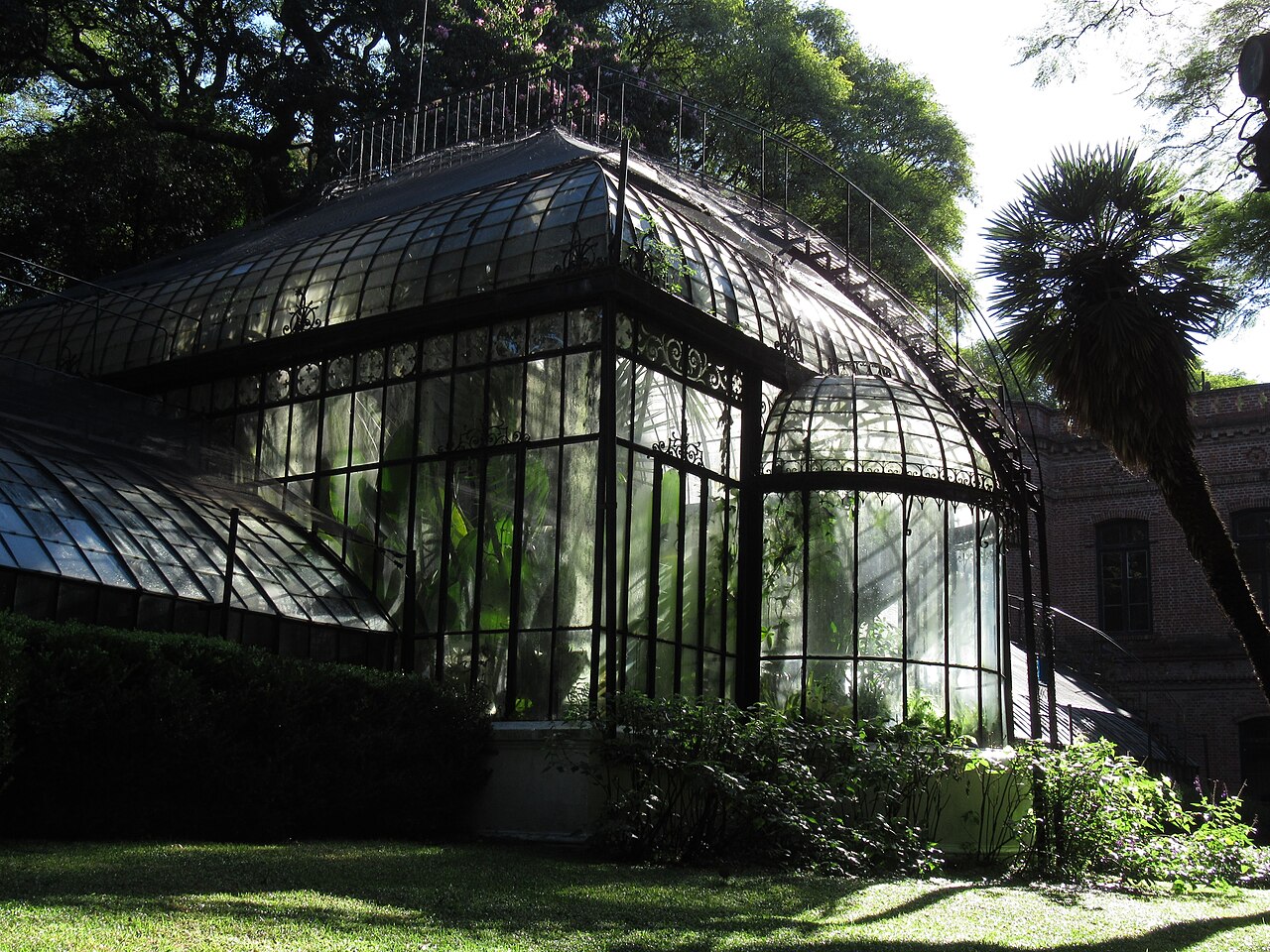
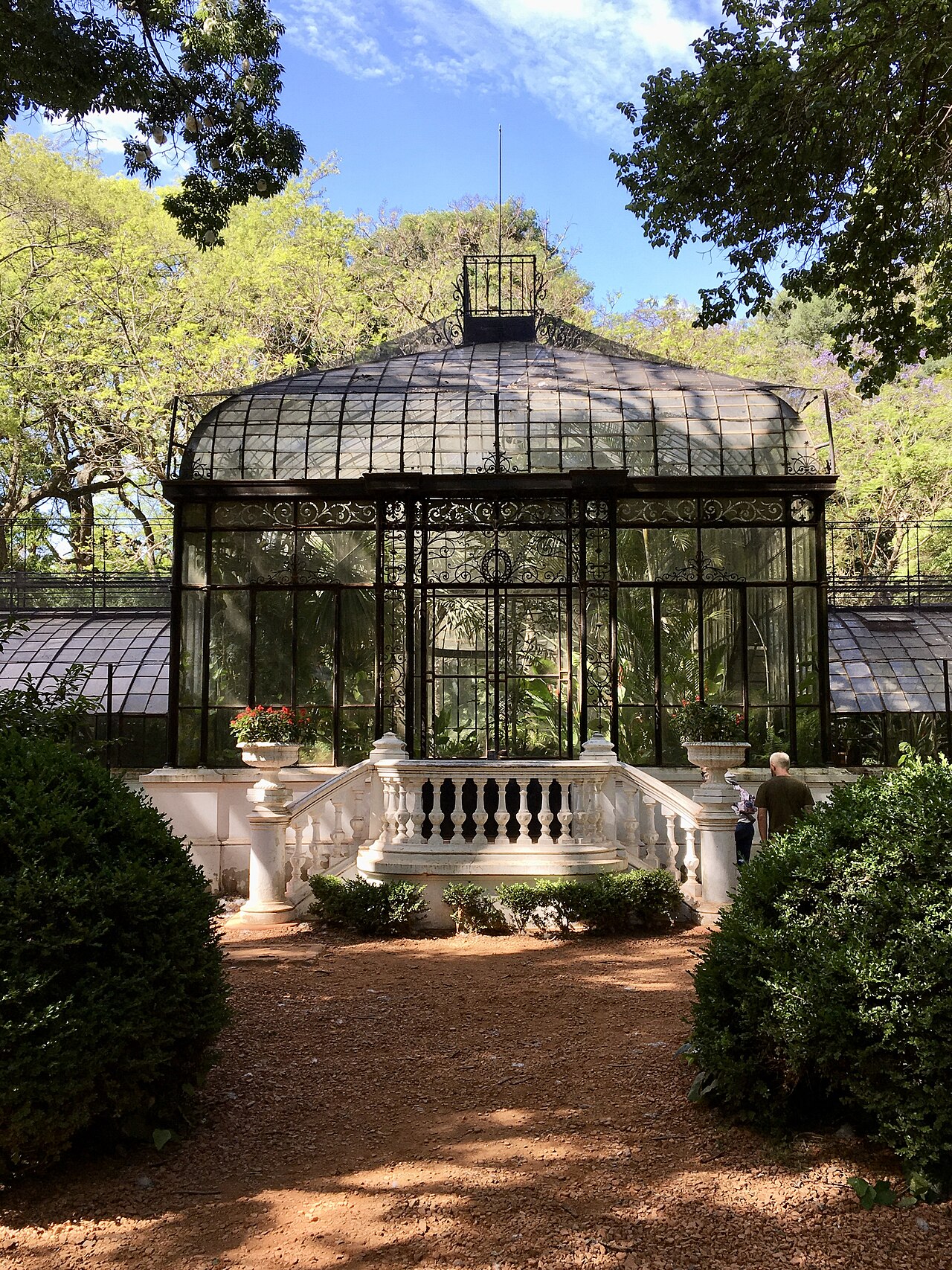
Exhibited and awarded a prize at the 1889 Paris World's Fair, this Art Nouveau iron-and-glass greenhouse crossed the Atlantic to join the brand-new Buenos Aires Botanical Garden in 1897, on the recommendation of its creator, landscape architect Carlos Thays. Of the garden's five greenhouses, it is today the only one permanently open to the public; it mainly houses bromeliads, ferns, and tropical plants from South America.
Affiliate links — booking through Verrière helps fund our research, at no extra cost to you.
History
The Buenos Aires Botanical Garden grew out of a proposal submitted on 22 February 1892 by the French-born landscape architect Carlos Thays, then the city's director of Parks and Promenades, who argued for a botanical and acclimatisation garden. The land in Palermo was handed over on 2 September 1892; it had to be built up with fertile soil before the garden opened on 7 September 1898. Thays lived in the garden's central house, a building designed in 1881.
The large greenhouse, the principal one among the garden's five, was imported from France in 1897, according to the garden's official website. It is said to have won an award at the 1889 Exposition Universelle in Paris.
The garden took its founder's name in 1937 and was declared a National Historic Monument in April 1996. The Art Nouveau greenhouse is often described as the only surviving winter garden in that style.
Architecture and engineering
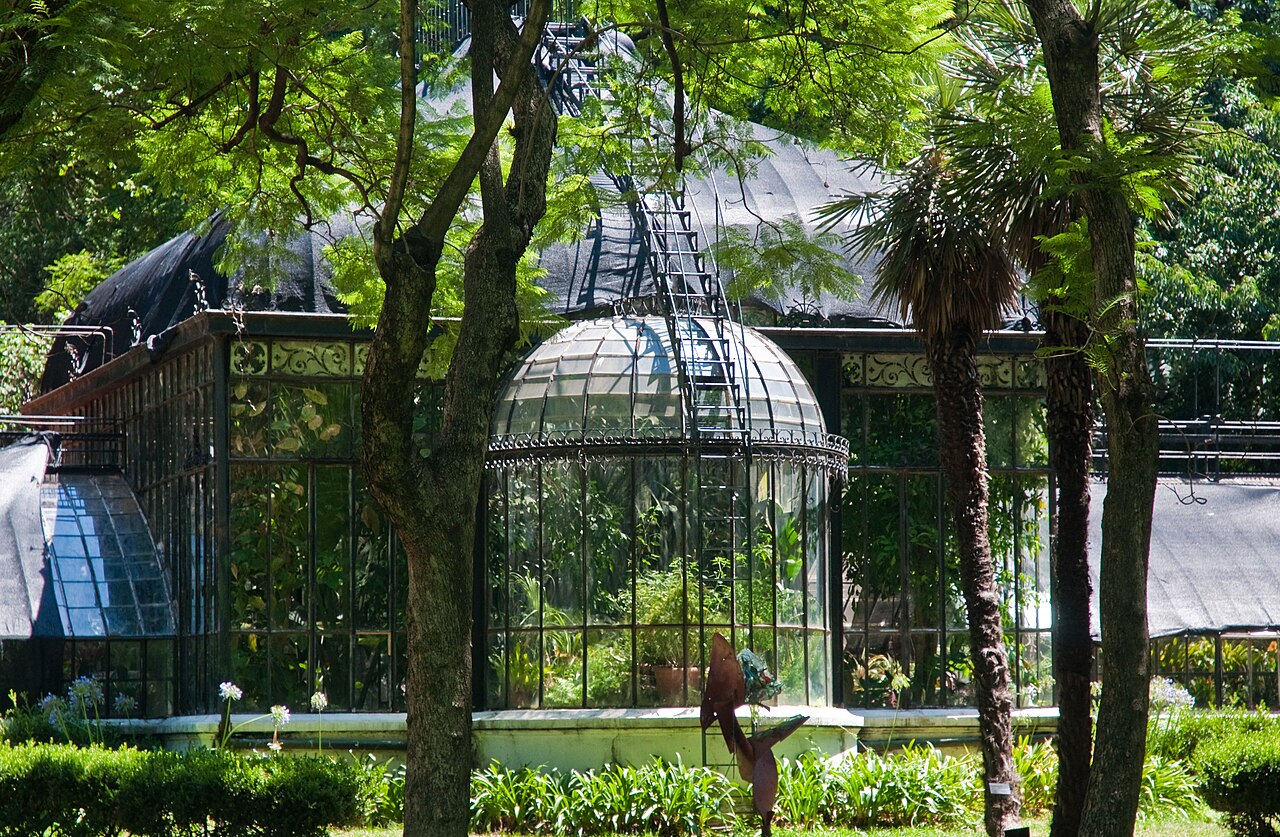
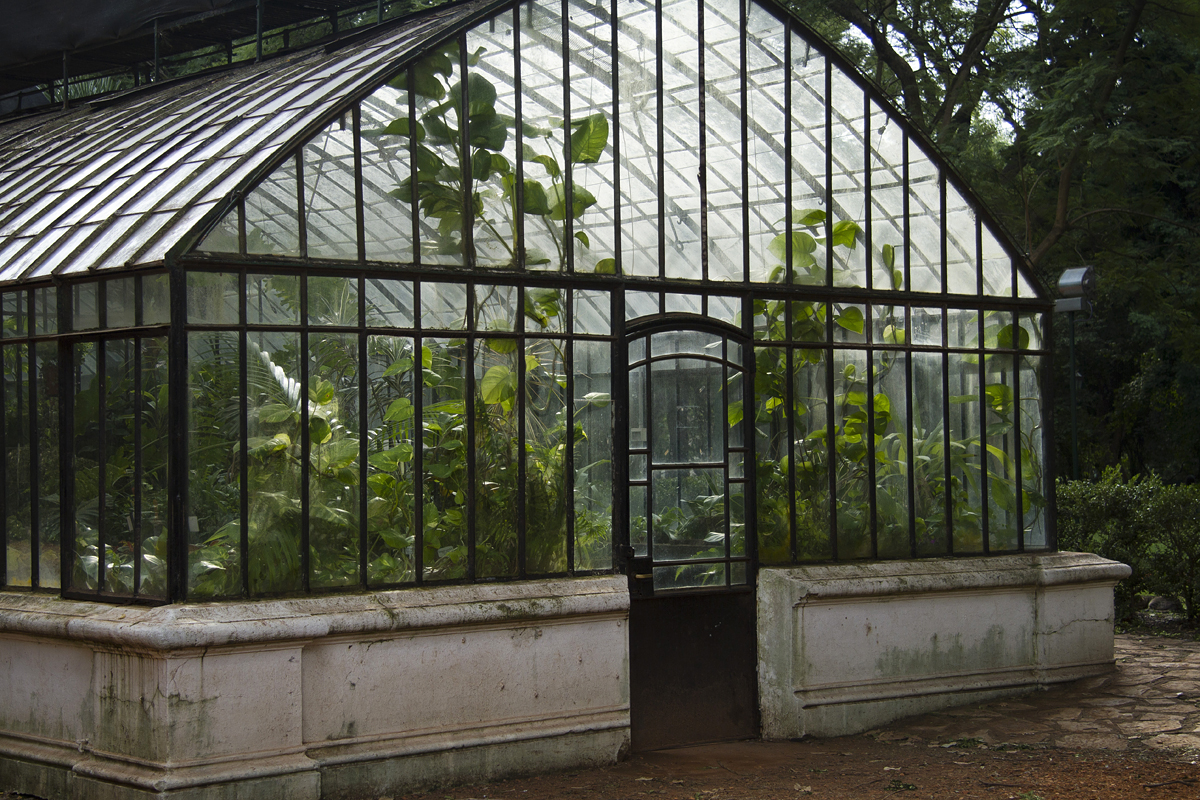
The main greenhouse is 35 metres long and 8 metres wide. It combines an iron frame with broad expanses of glass, and the garden's website presents it as an example of the use of iron and glass in building around the turn of the twentieth century. Its decorative vocabulary belongs to Art Nouveau, which sets it apart from the utilitarian greenhouses around it.
It is the largest of the garden's five glasshouses; the four smaller ones are used for propagation, bulbs, and cacti and succulents. Its elongated single-volume plan lends itself to a linear walk past the tropical beds.
Plant collections
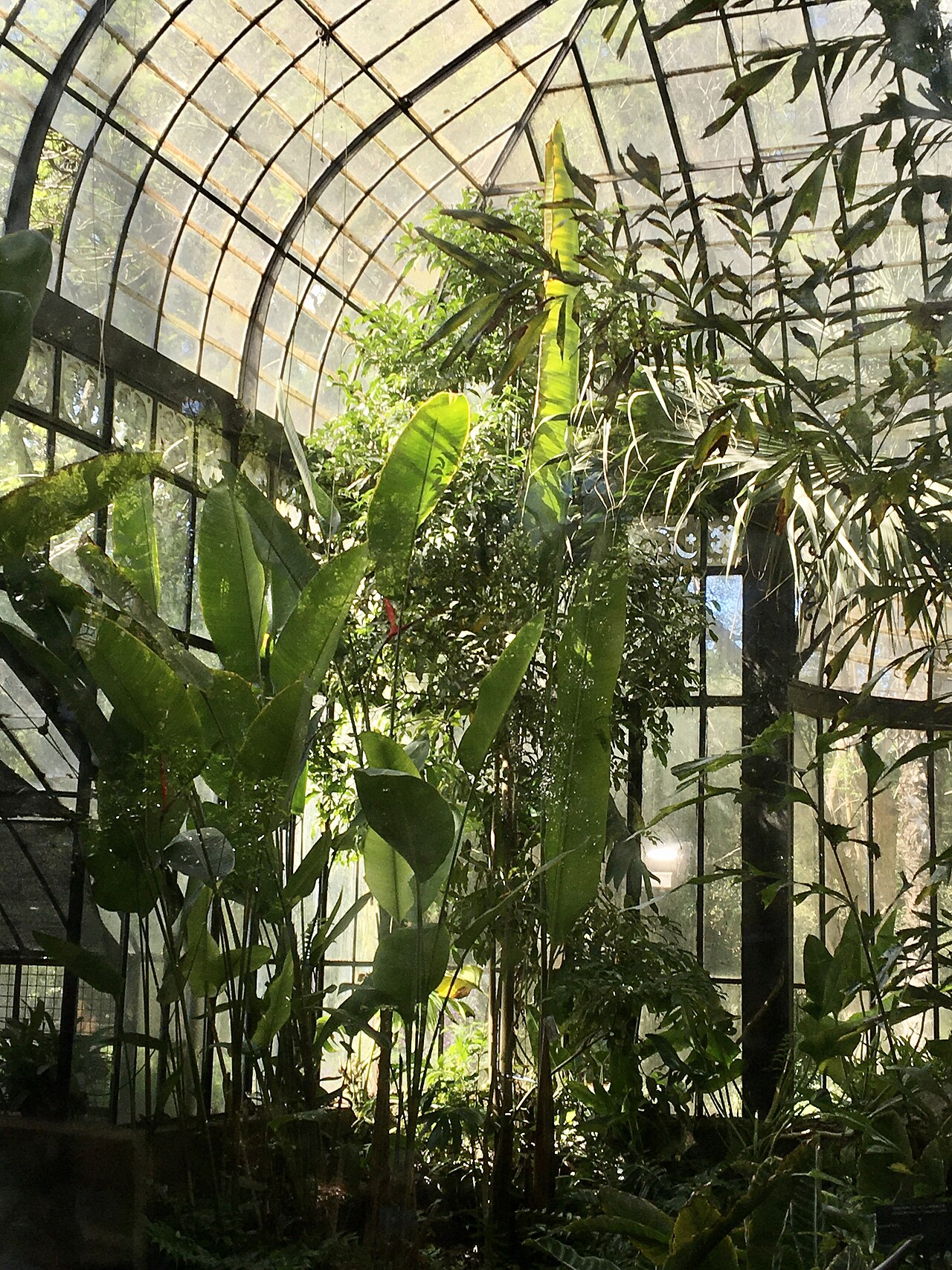
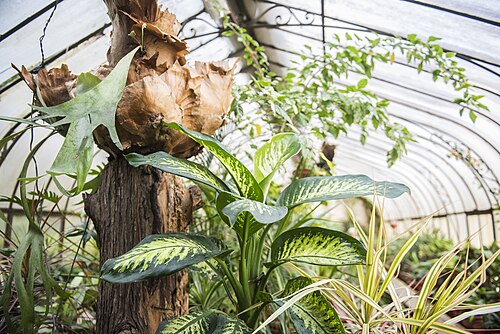
The main greenhouse holds the garden's tropical and subtropical species, some 2,500 plants. In particular it keeps scientific collections of bromeliads and ferns for conservation and study.
It sits within a garden of roughly 7 hectares laid out on Thays's principles: a geographical sector where plants are grouped by continent, with an important place for the flora of Argentina's provinces, and a systematic sector arranged by family according to the Engler system. The garden also has collections of cacti, cycads, palms and yerba mate, as well as Roman, French and Oriental-style gardens.
Visiting
The garden lies in Palermo near Plaza Italia and forms part of one of Buenos Aires's largest green districts. The Art Nouveau greenhouse is among its main attractions, reached on a walk that also takes in sculptures (the garden holds around thirty works of art), the geographical sections and Thays's former house. One to two hours is enough to see it all. The southern spring, from September onwards, is the most pleasant season for the outdoor paths.
34.58° S, 58.41° W
Greenhouses nearby
Architecture nearby
Do you have a good photo of this greenhouse? Suggest it for this page →
Affiliate links — booking through Verrière helps fund our research, at no extra cost to you.