Indoor Showhouses, University of Alberta Botanic Garden
Near Devon (Parkland County), Alberta

Sources checked October 2026
- Style
- Glazed display houses: tropical, arid and temperate
- Dimensions
- Three showhouses
- Status
- Open to the public in season; winter closure 15 Nov 2026 to 17 Jan 2027
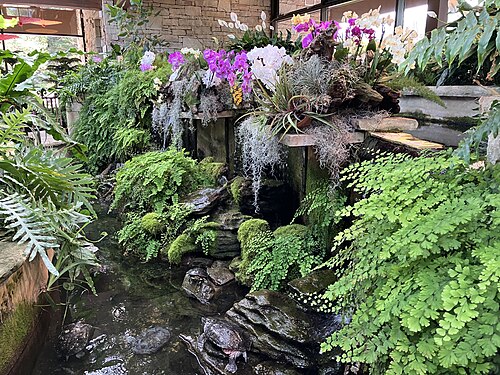
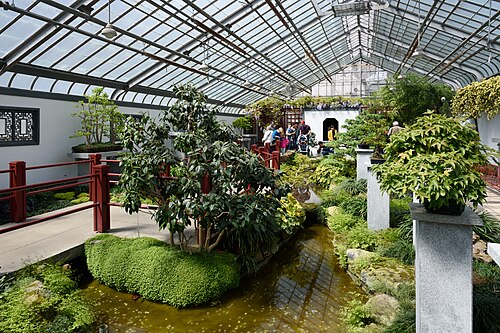
In the University of Alberta Botanic Garden near Devon, three indoor showhouses shelter plants that prefer warmer conditions than the garden's outdoor collections: a tropical house, an arid house and a temperate house. The official website mentions palms, orchids, cacti, succulents and Japanese camellias. The tropical house, called the "Tropical Plant and Butterfly House" in the garden's 2018 fact sheet, currently has no butterflies. Free-licence photographs show the glazed envelope of these houses.
Affiliate links — booking through Verrière helps fund our research, at no extra cost to you.
History
The story of the three current showhouses is read through that of the garden. Founded in 1959 on land donated to the university by Colonel Sandy Dyde, an Edmonton lawyer, the garden was devastated by the floods of spring 1975. A grant of $572,405 from the Devonian Foundation, matched by the Department of Advanced Education, then paid for reconstruction, 110 more acres, a headquarters building and greenhouses. A university alumni text dated June 1980 describes that building as including two large greenhouses: a service greenhouse for growing plants to be set out, and one housing an indoor rock garden, funded by a $110,000 matching grant from the Muttart Foundation and meant to open to the public eventually.
In recognition of the gift the garden became the Devonian Botanic Garden. The opening of the Kurimoto Japanese Garden in 1990 marked the start of daily visiting, from spring to autumn. In March 2017 it took the name University of Alberta Botanic Garden, and the Aga Khan Garden was completed in 2018. The 2018 fact sheet already names three houses, the "Tropical Plant and Butterfly House", the "Arid Plant House" and the "Temperate Showhouse"; the current official page speaks of three showhouses (tropical, arid, temperate) and states that the tropical house has no butterflies at present, which the garden hopes to bring back.
Architecture and engineering
Each showhouse reproduces a climate: an equatorial atmosphere, warm, humid and permanently summery, for the tropical house; hot, dry and often windy conditions for the arid house; a regime of distinct seasons for the temperate house.
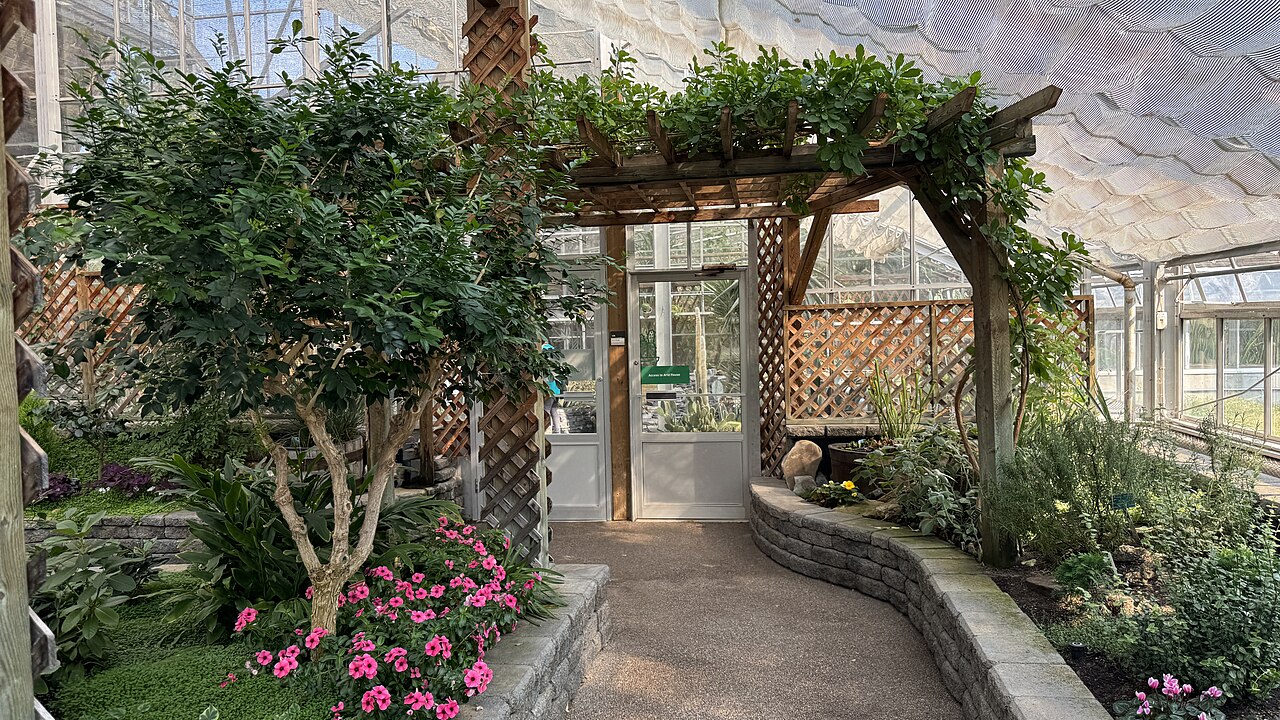
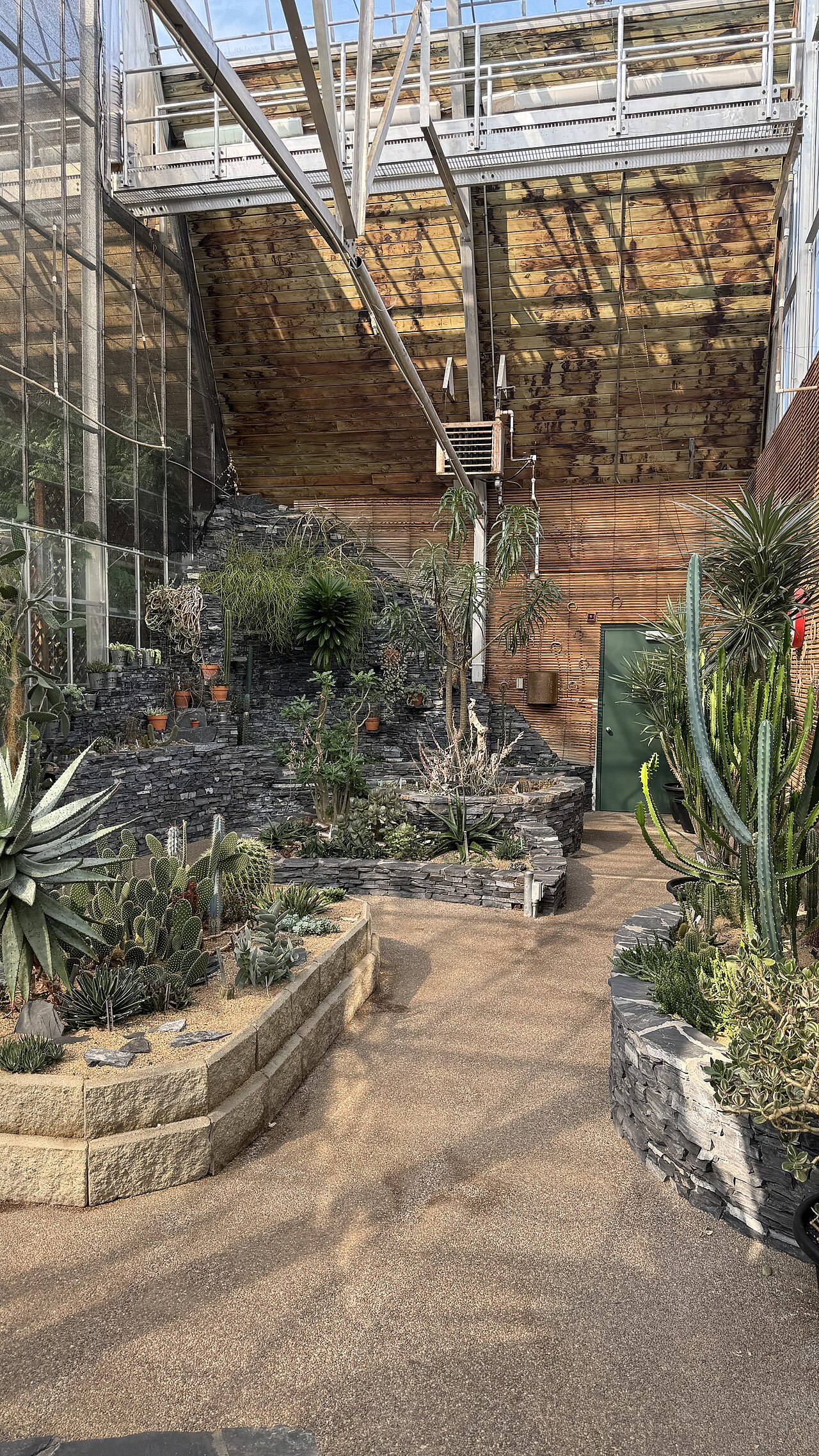
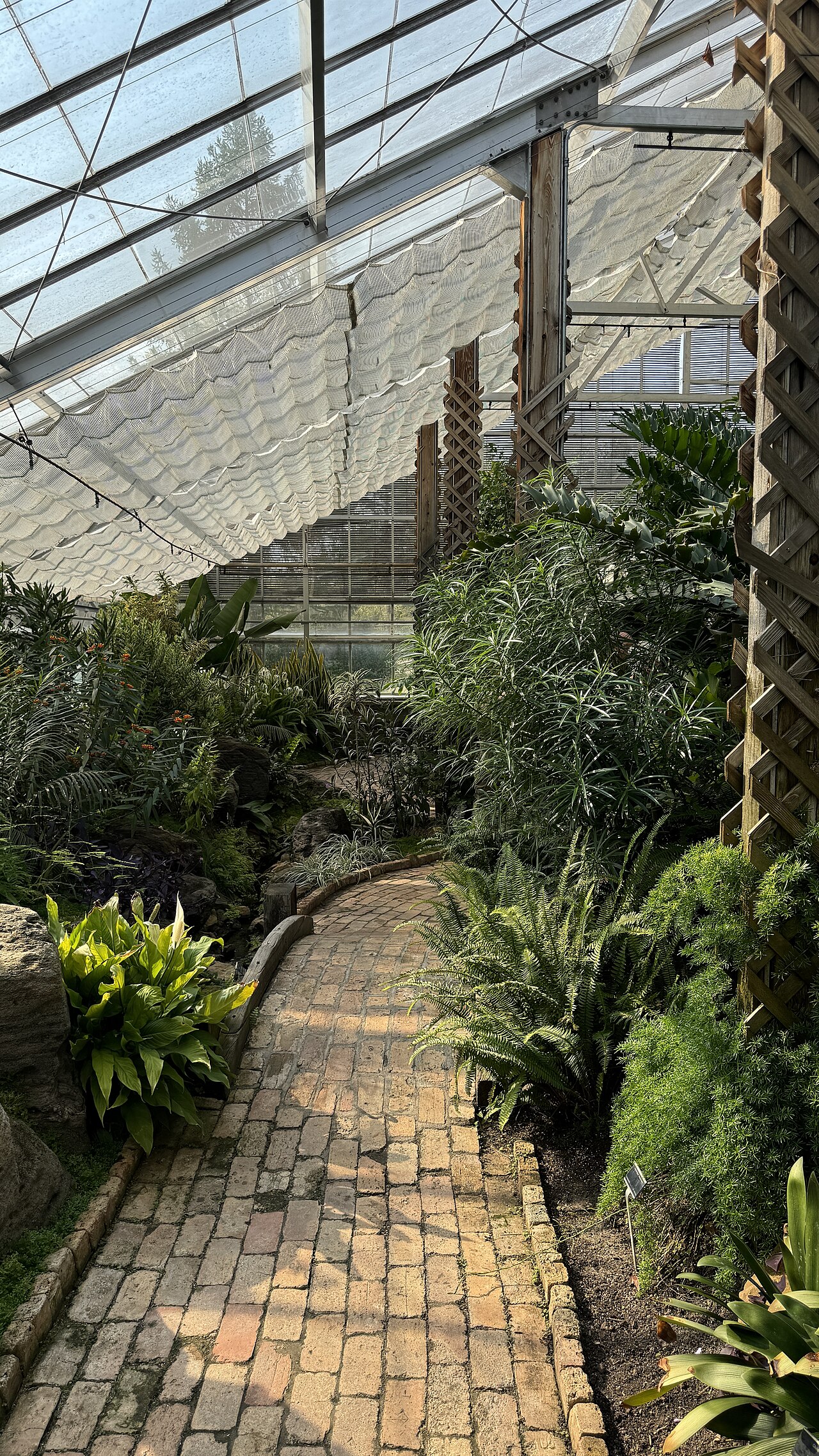
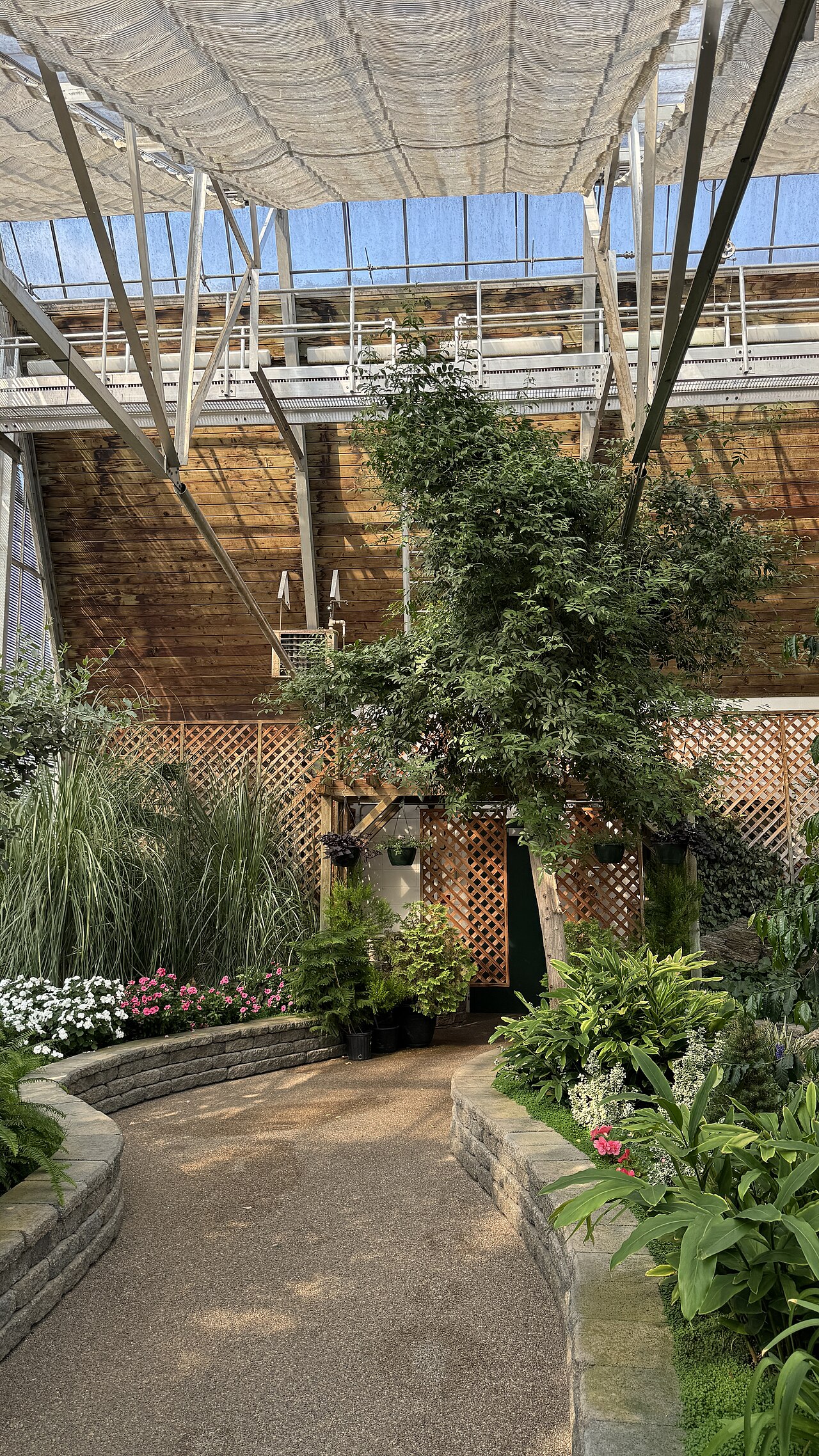
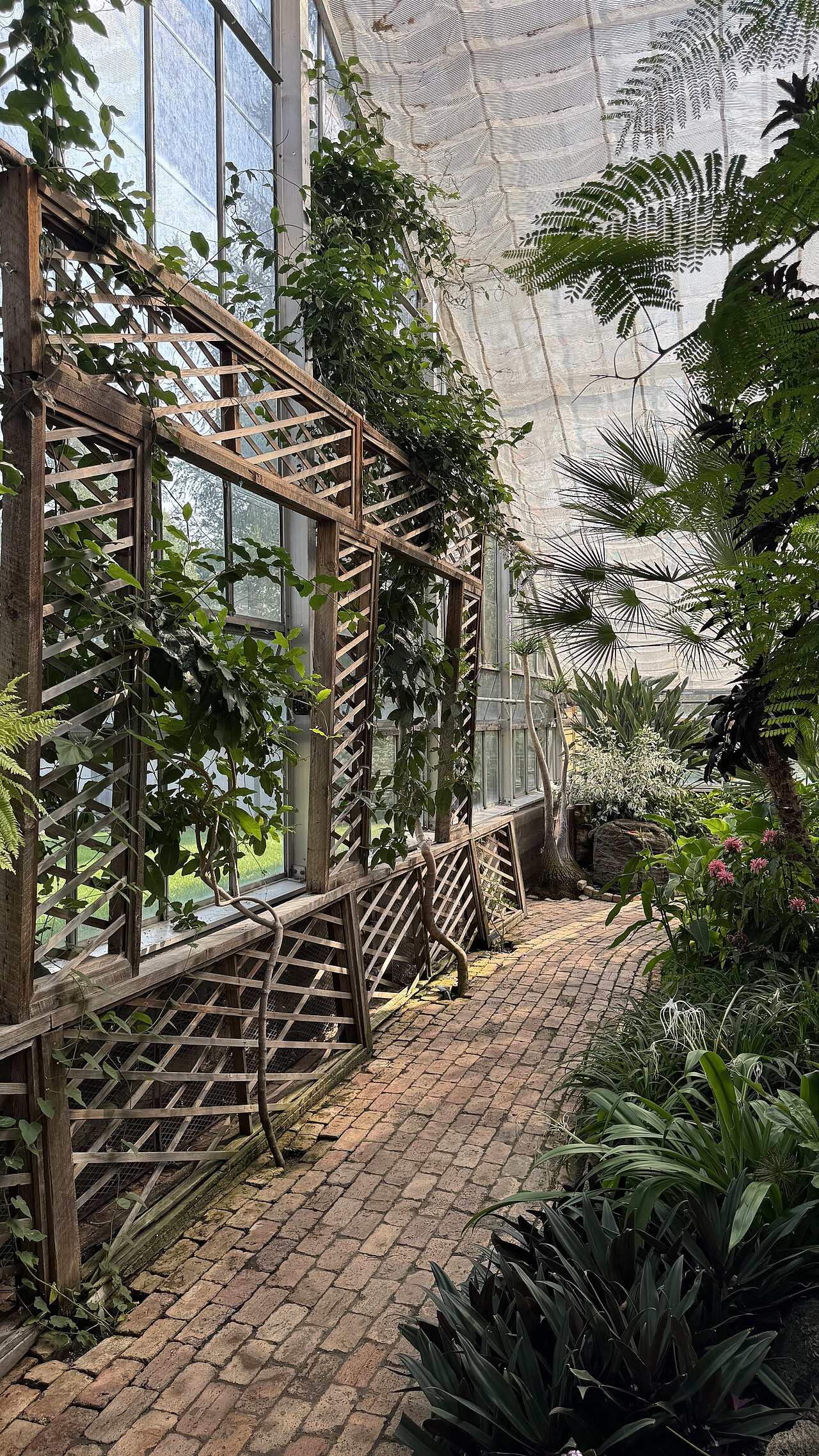
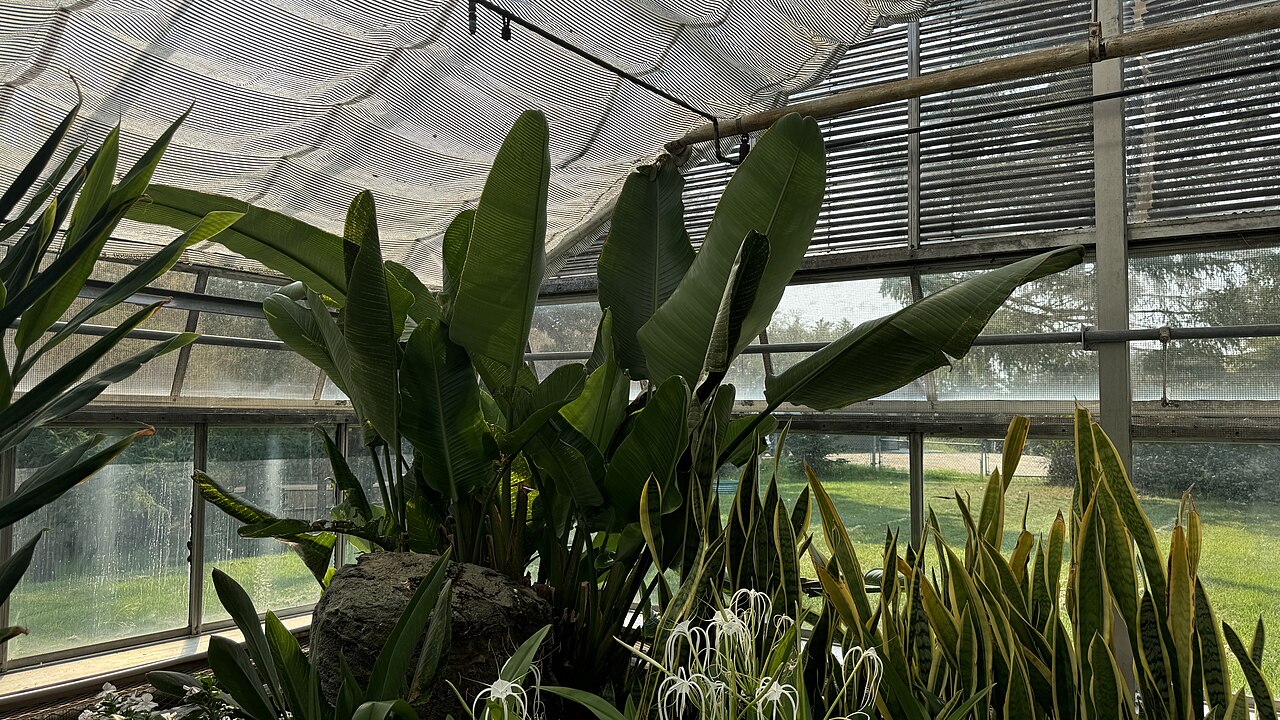
The free-licence photographs in the Wikimedia Commons category devoted to the showhouses show a glazed envelope: roof and walls glazed in panes divided by a metal frame, large white shade cloths stretched under the roof, slatted blinds, timber cladding on the high walls and a maintenance walkway under the glass in the tallest hall. Inside, the beds are edged with retaining walls of stone blocks, with wooden lattices and pergolas and continuous-surface paths; the arid house is built with walls of stacked flat stone. A door marked "Access to Arid House" links the arid house to another room.
Plant collections
The tropical house gathers plants from equatorial regions: common houseplants, rotating blooms, tall palms and orchids. The arid house shows cacti and succulents adapted to hot, dry and often windy environments. The temperate house, devoted to regions with distinct seasons, shows plants known for their products, such as coffee, black pepper and sweet potato, and several Japanese camellias (Camellia japonica), whose flower has a place in the Japanese tea ceremony and in origami. A 2015 photograph published on Wikimedia Commons also places marshmallow (Althaea officinalis) there.
Butterflies gave the tropical house its full name, the "Tropical Plant and Butterfly House": the 2018 fact sheet uses it, a 2015 photograph cites a "tropical and butterfly house", and an undated travel account describes free-flying butterflies. The official page now states that no butterflies live there.
Visiting
The showhouses are visited together with the garden, about 11.5 km west of Edmonton and 5.9 km north of Devon. The official website says they can be visited during the late-fall season, which follows reduced hours, and that the garden then closes from 15 November 2026 to 17 January 2027. The 2018 fact sheet advises allowing at least two hours for the garden, much of which is wheelchair-accessible thanks to its brick paths.
Combine with the Kurimoto Japanese Garden, the Aga Khan Garden opened in 2018, the Patrick Seymour Alpine Garden and the Indigenous Peoples Garden. In Edmonton, the Muttart Conservatory completes the region's circuit of glasshouses.
53.41° N, 113.76° W
Greenhouses nearby
More greenhouses — Canada
Do you have a good photo of this greenhouse? Suggest it for this page →
Sources (8)
- ualberta.ca/en/botanic-garden/gardens/indoor-showhouses.html
- ualberta.ca/en/botanic-garden/visit/index.html
- ualberta.ca/en/botanic-garden/media-library/documents/uabg-fact-sheet_2018.pdf
- sites.ualberta.ca/~alumni/history/affiliate/80jundevon.htm
- en.wikipedia.org/wiki/University_of_Alberta_Botanic_Garden
- commons.wikimedia.org/wiki/Category:Showhouses_at_the_University_of_Alberta_Botanic_Garden
- openstreetmap.org/way/310264481
- stephentravels.com/the-great-outdoors/university-of-alberta-botanic-garden/
Affiliate links — booking through Verrière helps fund our research, at no extra cost to you.