Tropical Greenhouse, Central Experimental Farm
Ottawa, Ontario
Entry updated on October 5, 2026
- Year
- 1938
- Architect
- Lord & Burnham (manufacturer)
- Style
- Octagonal metal-and-glass pavilion with an ogee roof
- Dimensions
- 40 × 40 ft (≈12 × 12 m), about 1,600 sq ft (≈150 m²)
- Status
- Open to the public year-round
This small octagonal glass-and-metal pavilion, designed by the American manufacturer Lord & Burnham, first stood within a range of glasshouses in Major's Hill Park, in downtown Ottawa. Moved to the Central Experimental Farm in 1938 for horticultural research, it became a tropical garden open to the public in the 1970s. It forms part of the Main Greenhouse Range (Building 50), a recognized federal heritage building since 1996, and was restored between 2010 and 2015 by Watson MacEwen Teramura Architects.
Affiliate links — booking through Verrière helps fund our research, at no extra cost to you.
History
1 min
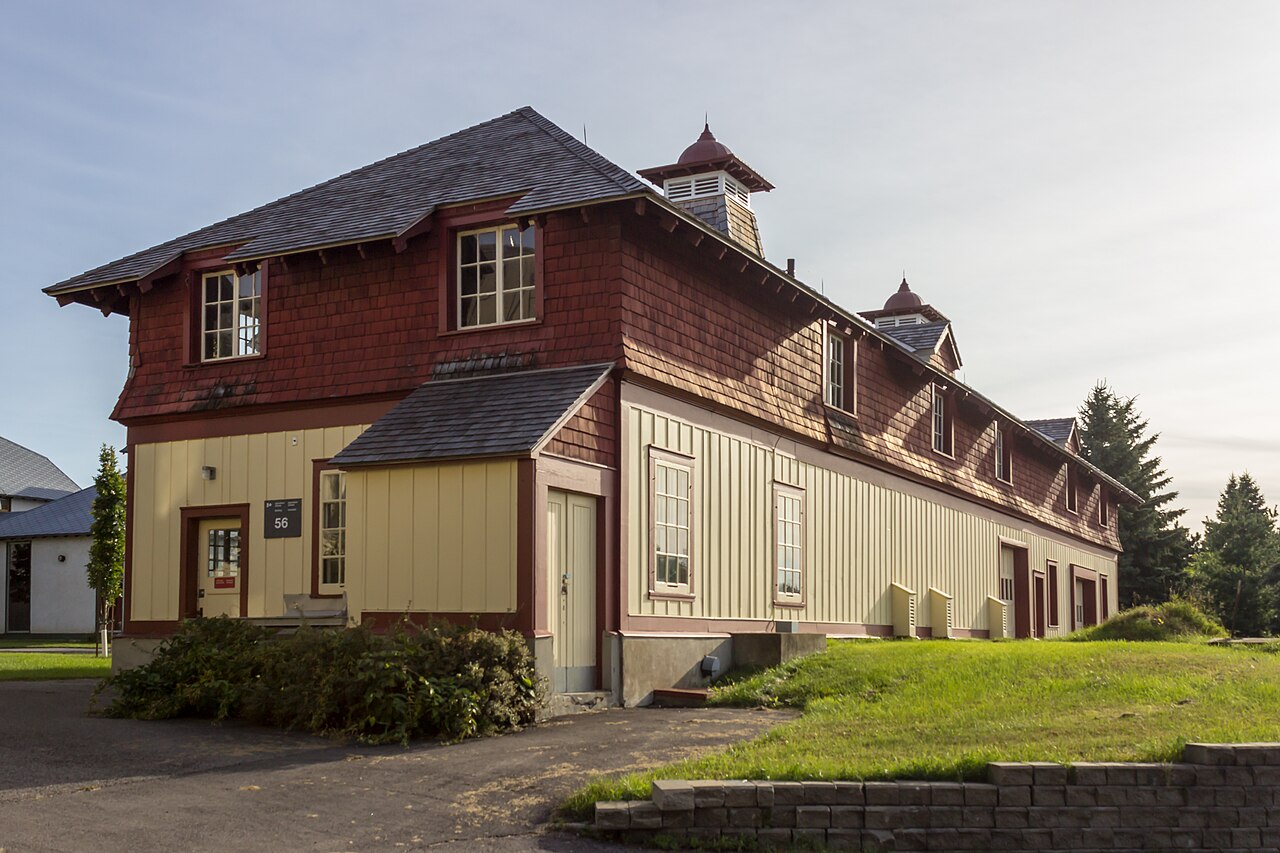
The Central Experimental Farm grew out of the Act Respecting Experimental Stations, which came into force in 1886 after lobbying by the agriculture minister John Carling and by William Saunders, its first director; the farm became the centrepiece of the Dominion Experimental Farms. The tropical greenhouse, however, was not built there. The octagonal pavilion first belonged to a larger range of glasshouses in Major's Hill Park, in downtown Ottawa, and was moved in 1938 to Maple Drive, at the heart of the farm, to serve horticultural research. Its construction date is less certain: Gardens Ottawa gives 1928, while Ottawa Magazine described it in 2017 as a century-old conservatory.
The pavilion became a tropical garden open to the public in the 1970s. It is the most carefully detailed part of the Main Greenhouse Range, or Building 50, also known as the Motherwell Greenhouse: a series of interconnected glasshouses built in stages between 1915 and 1967 and recognized as a federal heritage building on 29 February 1996.
Over the years the planting came to press against glass and metal weakened by Ottawa's weather. The greenhouse closed in 2010 for a five-year restoration led by Watson MacEwen Teramura Architects, work that later won an award. During the project, rescued and donated plants were kept in another greenhouse and set out in the Ornamental Gardens each summer. Early in 2015 the Agriculture and Agri-Food Canada team took delivery of new plants to enlarge the collection, and the greenhouse reopened just after Mother's Day that year.
Architecture and engineering
1 min
The pavilion fits within a square of about 40 by 40 feet, a little over 12 metres a side, for a floor area of some 1,600 square feet (close to 150 m²). Its design is credited to the American greenhouse manufacturer Lord & Burnham. The federal heritage character statement singles out its octagonal plan, the ogee-shaped glass roof, the picturesque entrance with decorative, panelled and glazed wooden doors, and the pattern of vertical metal mullions dividing the glass panels of walls and roof. Ottawa Magazine likened it to a garden lantern whose canopy glows green through the foliage at night.
The rest of the Main Greenhouse Range is more utilitarian: repeated modules on concrete foundations, with partial-height concrete block walls and glass set in wood or metal frames, attached to an L-shaped spine of single-storey, flat-roofed headerhouses. Two further ogee roofs mark the east entrances. Inside the pavilion, the restoration reorganised the planting into four curved beds set back from the glass walls around a circular path, and many plants are grown in pots buried in the soil to slow their growth.
Plant collections
1 min
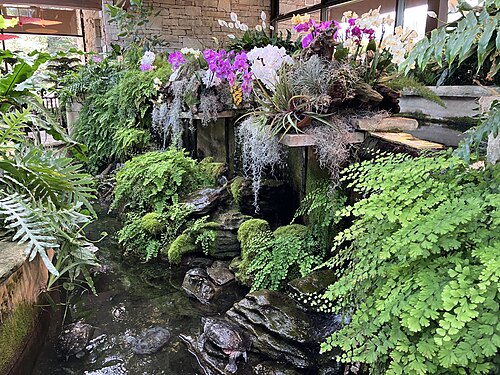
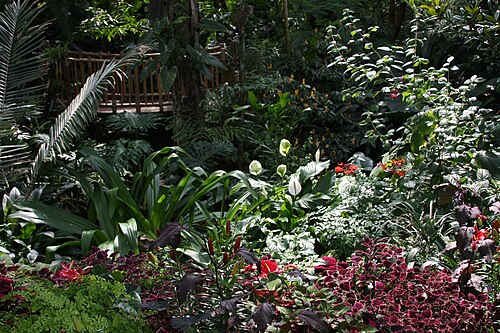
The collection brings together heat-loving plants, tropical rainforest species, cacti and succulents, arranged in raised beds along the circular path. It is built on the plants rescued from the original planting, which the Agriculture and Agri-Food Canada team supplemented early in 2015 with new specimens to enlarge and diversify it; several ficus, two jades and a bed of dry-climate plants were among the first features installed.
While the greenhouse was closed, visitors could see these plants each summer in a bed of the Ornamental Gardens near the old Cereal Barn: papayas, along with brugmansia, frangipani (Plumeria) and oleander in flower. Since the reopening, a Norfolk pine planted beside a water feature has grown more than six feet in two years, according to a facilities officer interviewed in 2017. The Friends of the Farm now describe a renewed collection, larger and more diverse than before.
Visiting
1 min
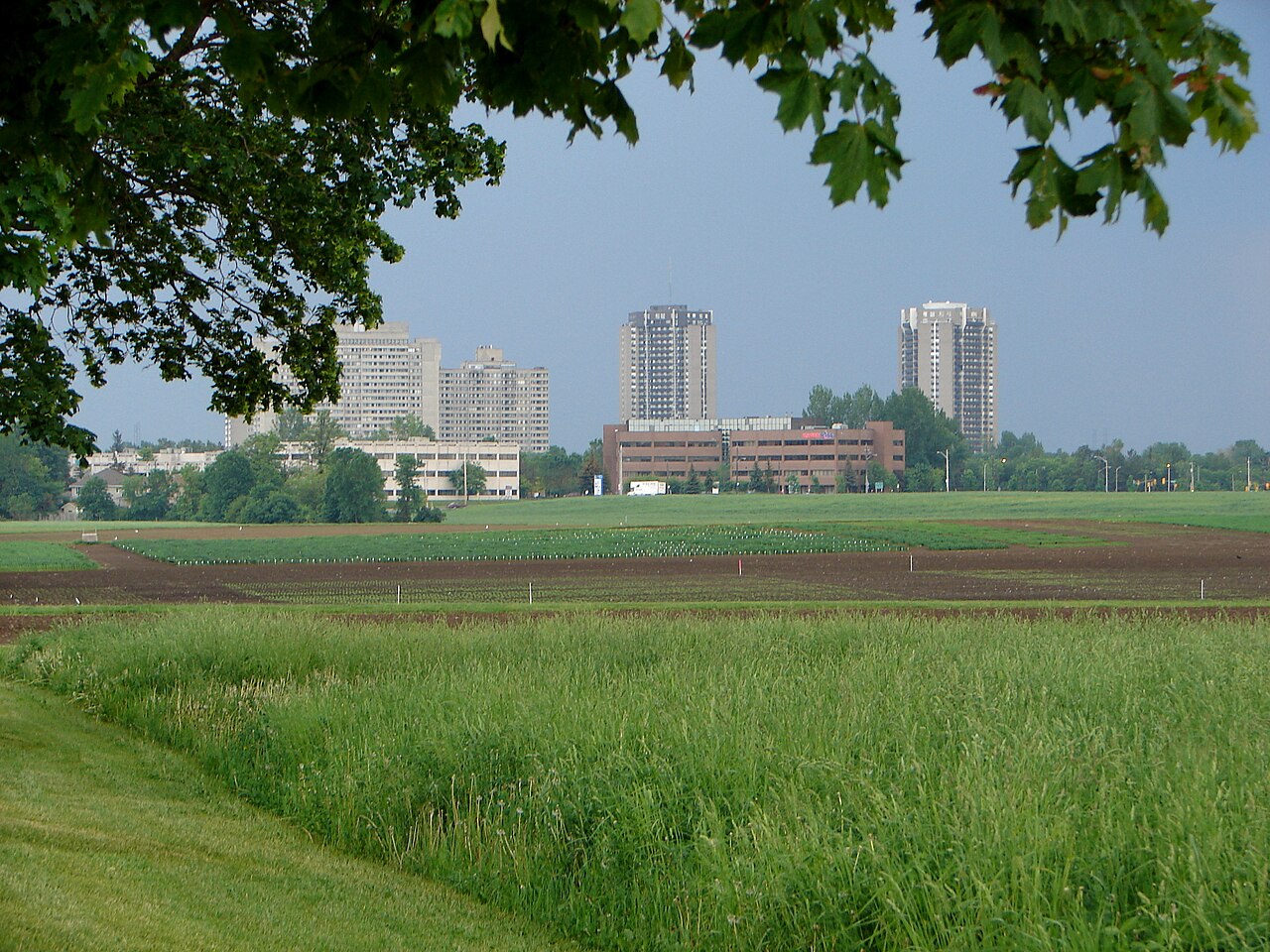
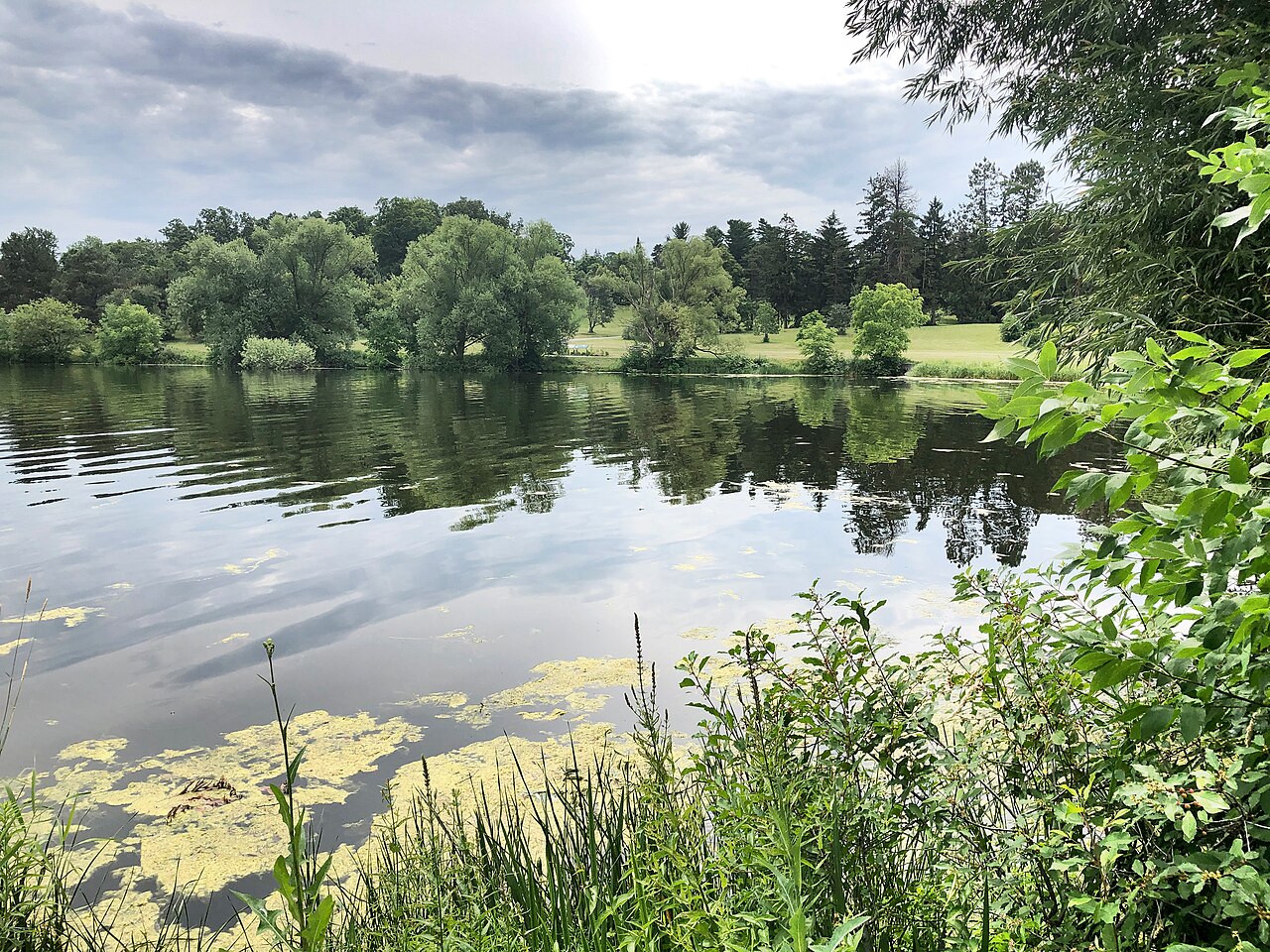
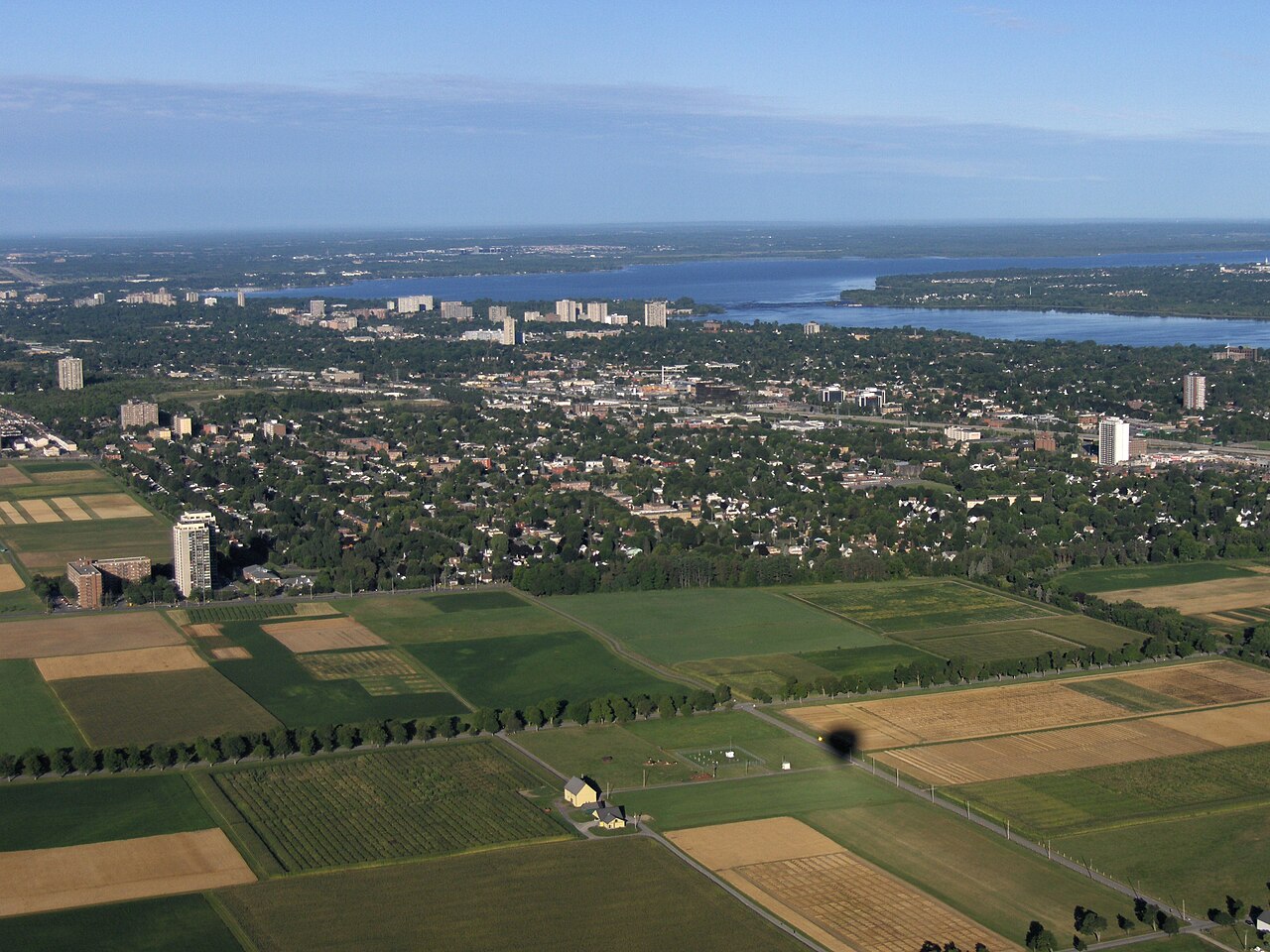
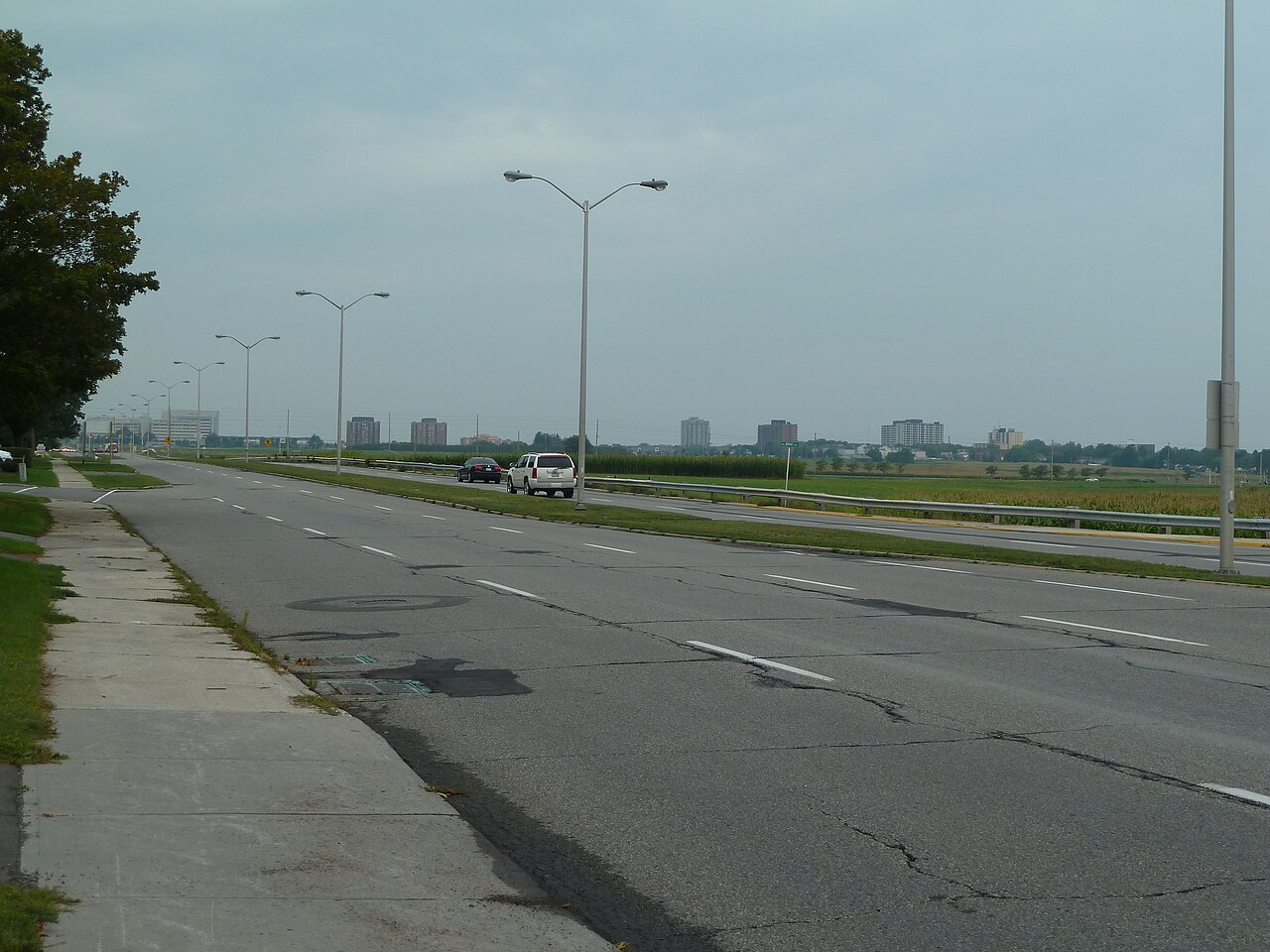
The greenhouse stands on Maple Drive, opposite the Saunders Building, in the middle of the Central Experimental Farm, a national historic site surrounded by the city. Open year-round, it is above all a warm, light-filled refuge in winter, which the local press recommends to Ottawans short of warmth; its small size makes for a short visit. In the warmer months it combines well with the neighbouring Ornamental Gardens, known for their lilacs, heritage roses, peonies and irises, with the Dominion Arboretum and with the Canada Agriculture and Food Museum, the farm's other public areas.
45.39° N, 75.71° W
Greenhouses nearby
More greenhouses — Canada
Do you have a good photo of this greenhouse? Suggest it for this page →
Sources (7)
- friendsofthefarm.ca/plan-your-visit/attractions/
- historicplaces.ca/en/rep-reg/place-lieu.aspx?id=4670
- ottawamagazine.com/going-out/need-a-tropical-getaway-soak-up-the-sun-inside-a-century-old-
- friendsofthefarm.ca/wp-content/uploads/2019/01/spring15.pdf
- gardensottawa.ca/gardens/tropictropical-greenhouse-at-the-central-experimental-farm/
- en.wikipedia.org/wiki/Central_Experimental_Farm
- en.wikipedia.org/wiki/Ornamental_Gardens