The Green Planet
City Walk, Dubai

Sources checked September 2026
- Year
- 2016
- Architect
- Grout McTavish Architects
- Style
- Cubic bio-dome with a faceted, origami-like skin
- Dimensions
- 5,574 m² across four levels, built around a 25-meter-tall artificial tree
- Status
- Open to the public
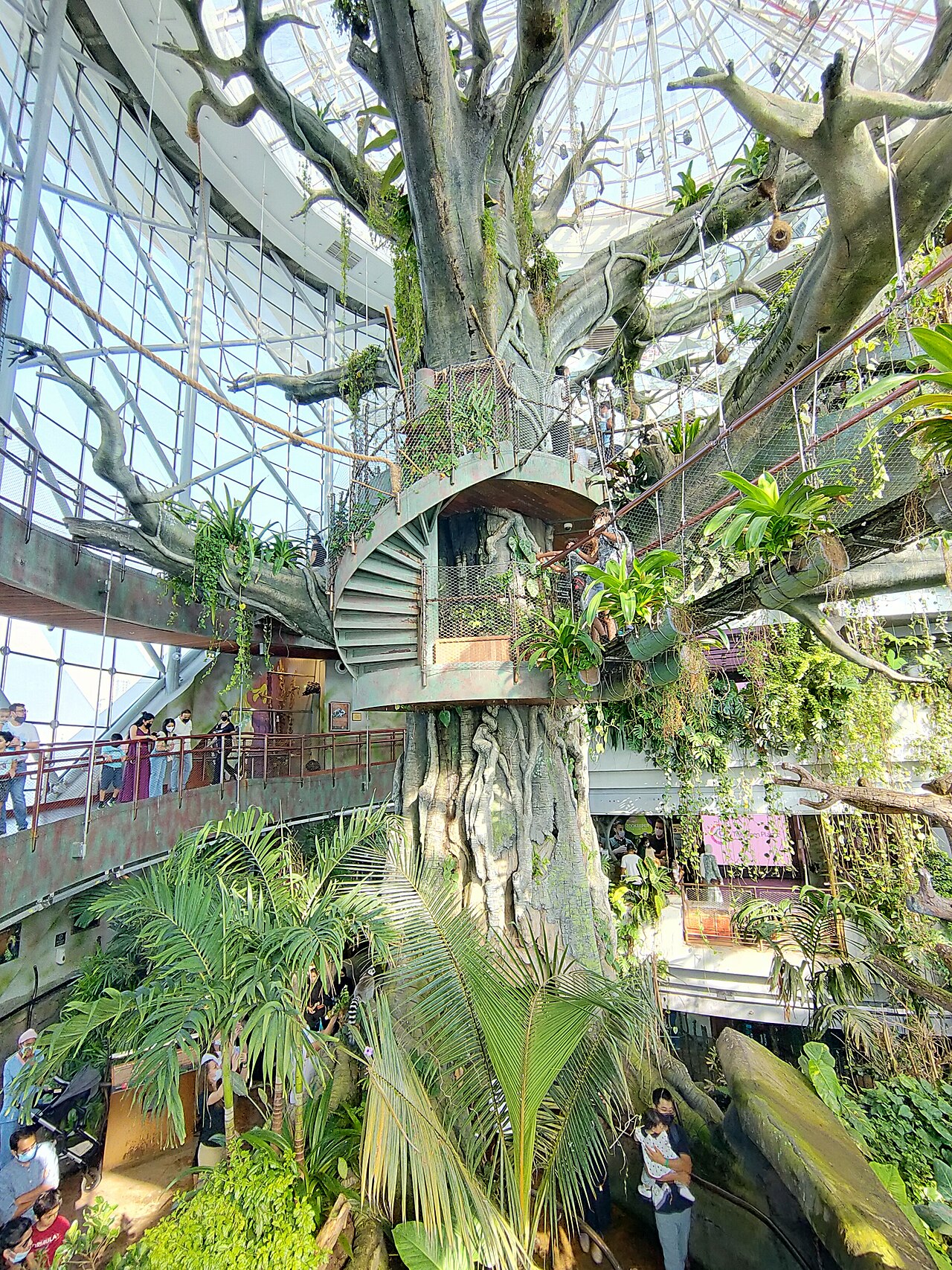
Opened on September 1, 2016, at City Walk, The Green Planet is a bio-dome designed by Vancouver-based Grout McTavish Architects in the form of a 30-meter cube with a faceted, origami-like skin. Inside, four levels arranged around a 25-meter-tall artificial tree recreate a humid rainforest home to roughly 3,000 plants and animals, from sloths to anacondas and thousands of butterflies. Special glazing, designed to maximize ultraviolet penetration while filtering out the desert heat, together with a low-speed ventilation system, keeps an equatorial climate going in the middle of the Gulf.
Affiliate links — booking through Verrière helps fund our research, at no extra cost to you.
History
The Green Planet was designed between 2013 and 2016 by the Vancouver practice Grout McTavish Architects, led by Clive Grout and Brad McTavish, for City Walk, a shopping and residential district of Dubai. The brief was unusual: to sustain a complete tropical rainforest, with plants, mammals, birds, reptiles, insects and fish, in a city where outdoor temperatures can reach 52 °C. The architects worked with an international team of specialist engineers, scientists and animal husbandry experts.
Completed in 2016, the building was conceived as both an attraction and a science centre. It was planned for around 750,000 visitors a year and includes education spaces running curricula approved by the Ministry of Education. Its opening drew wide coverage in North American architecture media, from Canadian Architect to Architect Magazine, as well as in the Vancouver and Dubai press.
Architecture and engineering
The design plays on a contrast between outside and in: a cube with a faceted skin, often likened to folded origami, wraps a cylindrical biome that holds the forest. The architects give a floor area of about 60,000 square feet, or roughly 5,600 m².
The visitor route borrows the vertical structure of a giant kapok tree (Ceiba pentandra), an emblem of the American tropics. The visit begins at ground level on a flooded Amazon riverbank, then high-speed lifts carry visitors straight up to the canopy, from where a spiral ramp descends through the successive layers of the forest. Keeping an equatorial climate going in the desert depends on advanced life-support systems, water recycling, condensate harvesting and passive humidification.
Plant collections
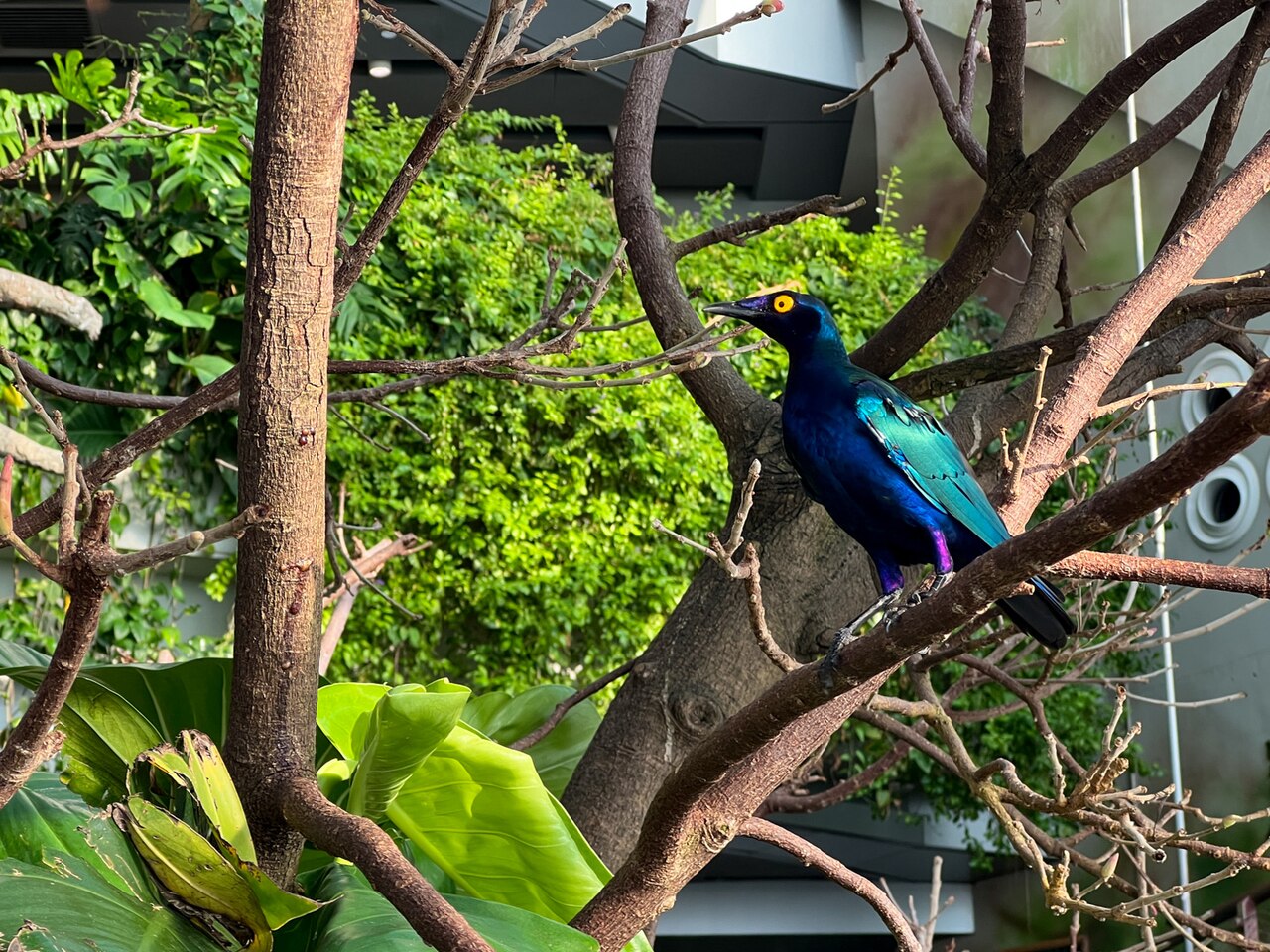
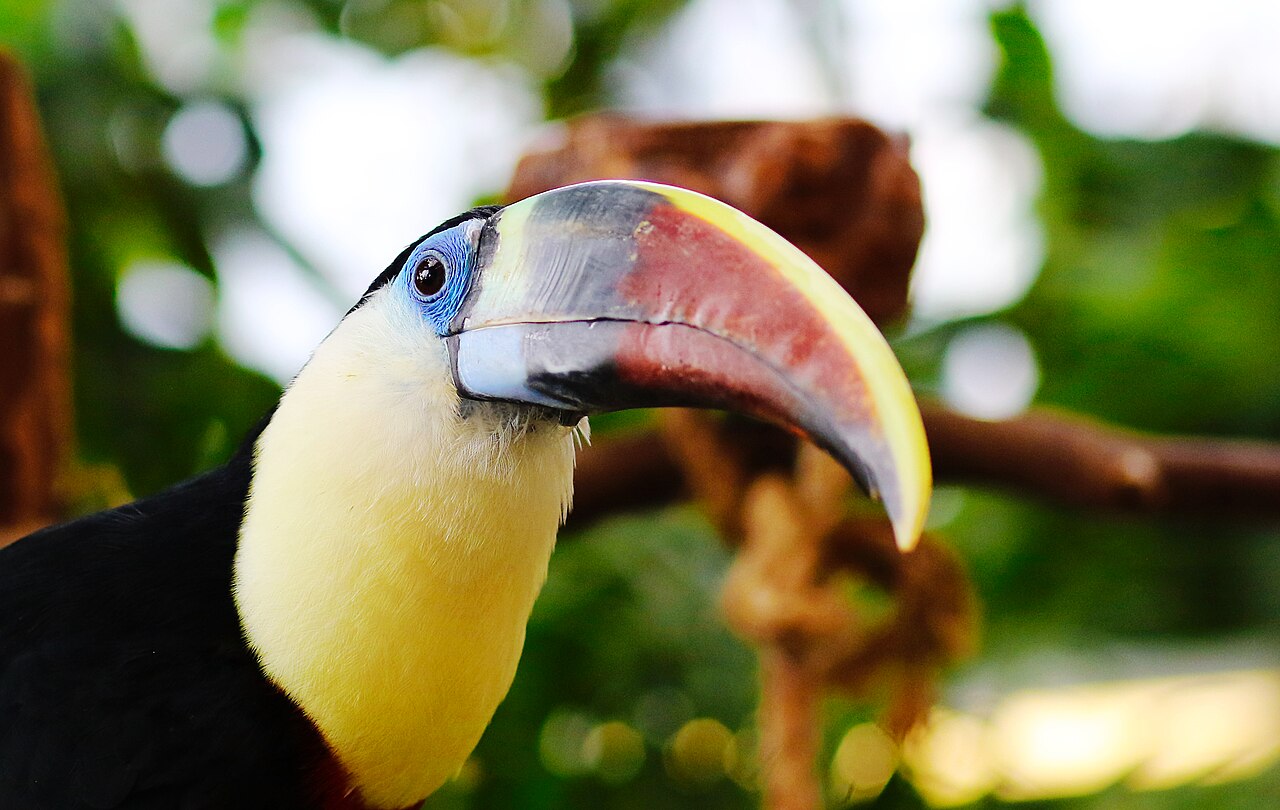
The operator counts more than 3,000 plants and animals spread across five areas: the canopy, the mid-storey, the forest floor, the flooded rainforest and a nocturnal section, Creatures of the Night. Harmless animals move freely around visitors and birds fly over the walkways, while dangerous species are kept in enclosures.
Residents include two-toed sloths, a tamandua, cotton-top tamarins from Colombia, a threatened species, lemurs from Madagascar, blue-and-gold macaws, flying foxes with wingspans of up to 1.8 metres, two anacondas around four metres long and Burmese pythons. Armadillos, echidnas, porcupines and sugar gliders complete the collection.
Visiting
The Green Planet stands in City Walk, a pedestrian district close to central Dubai, so it combines easily with a stroll through the surrounding streets. Allow about two hours for the five levels of forest, more if adding one of the animal encounters offered on top of general admission.
Because the whole building is air-conditioned, the experience is much the same in any season, including the height of summer, when the city's outdoor gardens are hard going.
25.21° N, 55.26° E
Greenhouses nearby
Architecture nearby
Do you have a good photo of this greenhouse? Suggest it for this page →
Affiliate links — booking through Verrière helps fund our research, at no extra cost to you.