Museum of Islamic Art, Doha
Doha
Sources checked October 2026
- Year
- 2008
- Architect
- I. M. Pei
- Type
- Islamic art museum
- Access
- Open to the public, closed on Wednesdays; tickets on arrival or online (official website, October 2026)
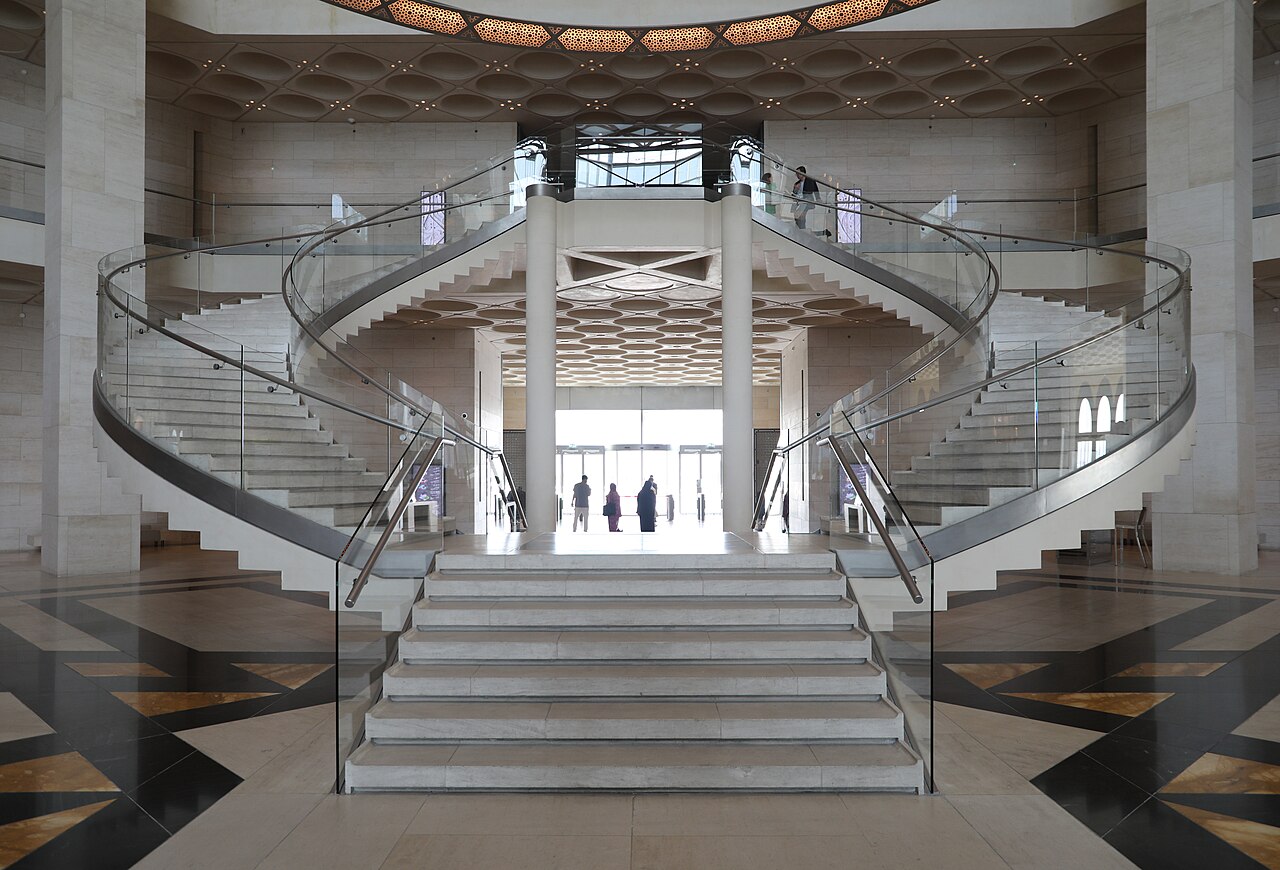
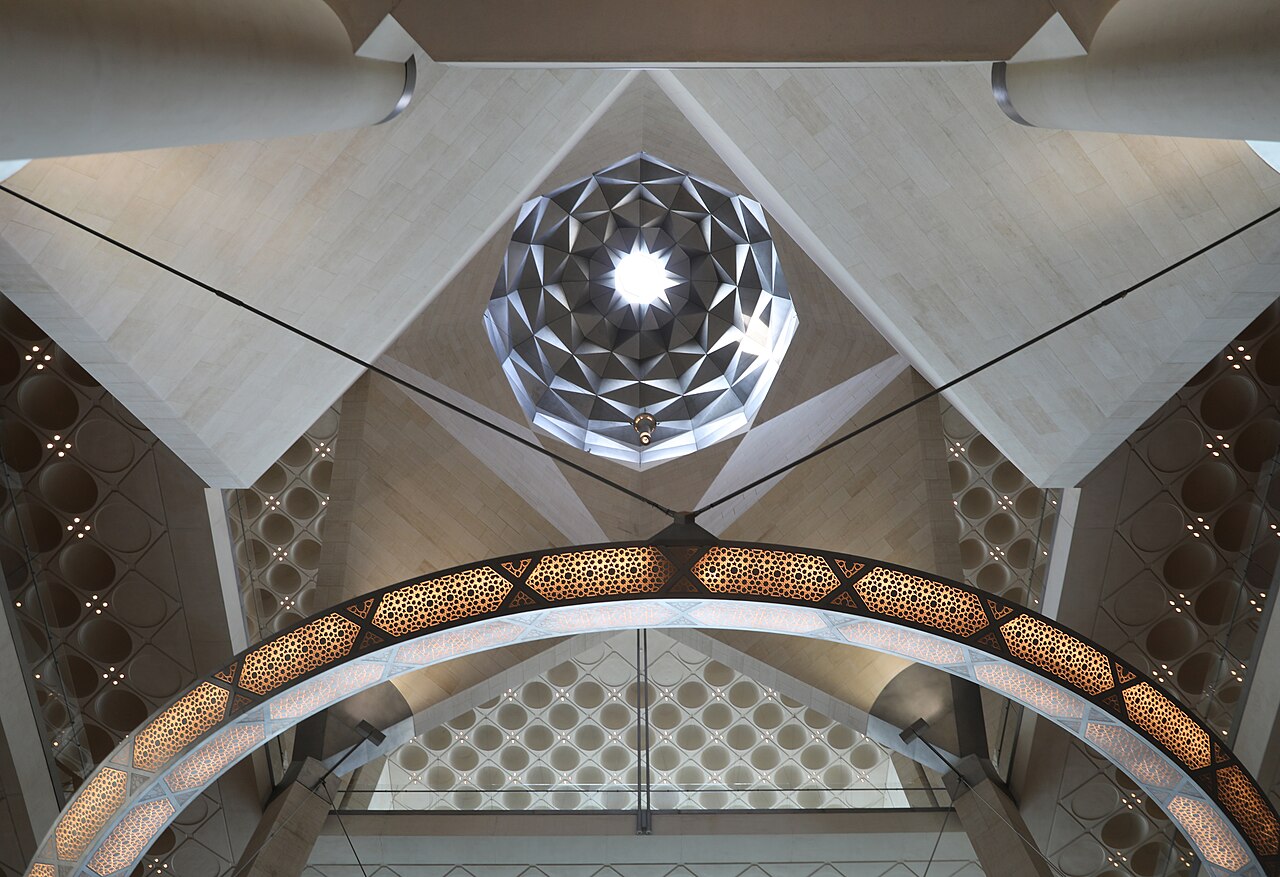
Designed by I. M. Pei, this Islamic art museum stands on an artificial island off the Doha Corniche. Its five-storey main building, in cream-coloured limestone, houses in a central tower an atrium topped by a faceted dome, with a curved double staircase. Opened in 2008, it displays, across eighteen galleries, Islamic art dating from the 7th to the 20th century.
Affiliate links — booking through Verrière helps fund our research, at no extra cost to you.
History
In 1999, the then-emir, Sheikh Hamad bin Khalifa Al Thani, commissioned I. M. Pei to design the museum. Pei, who had given up full-time practice in 1990, agreed, and the international competition launched in 1997 was set aside.
Pei knew little of Islamic architecture. He travelled through the Muslim world for six months, including Cordoba, Sousse, Fatehpur Sikri and the Great Mosque of Damascus, looking for what he called its "essence". It was at the Ibn Tulun Mosque in Cairo (9th century) that he believed he found it most compellingly, and the ablution basin of that mosque, a 13th-century Mamluk installation, inspired the building.
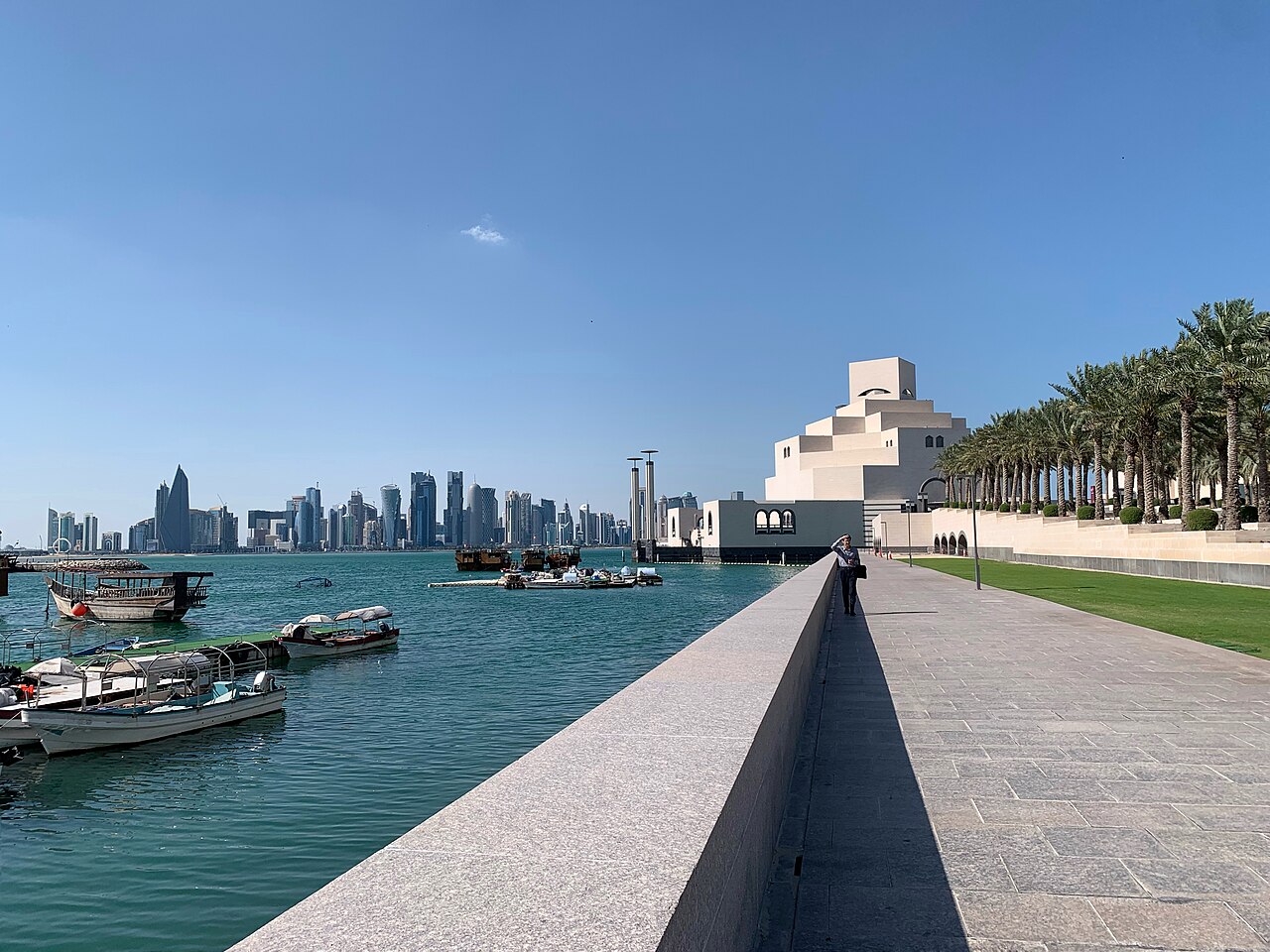
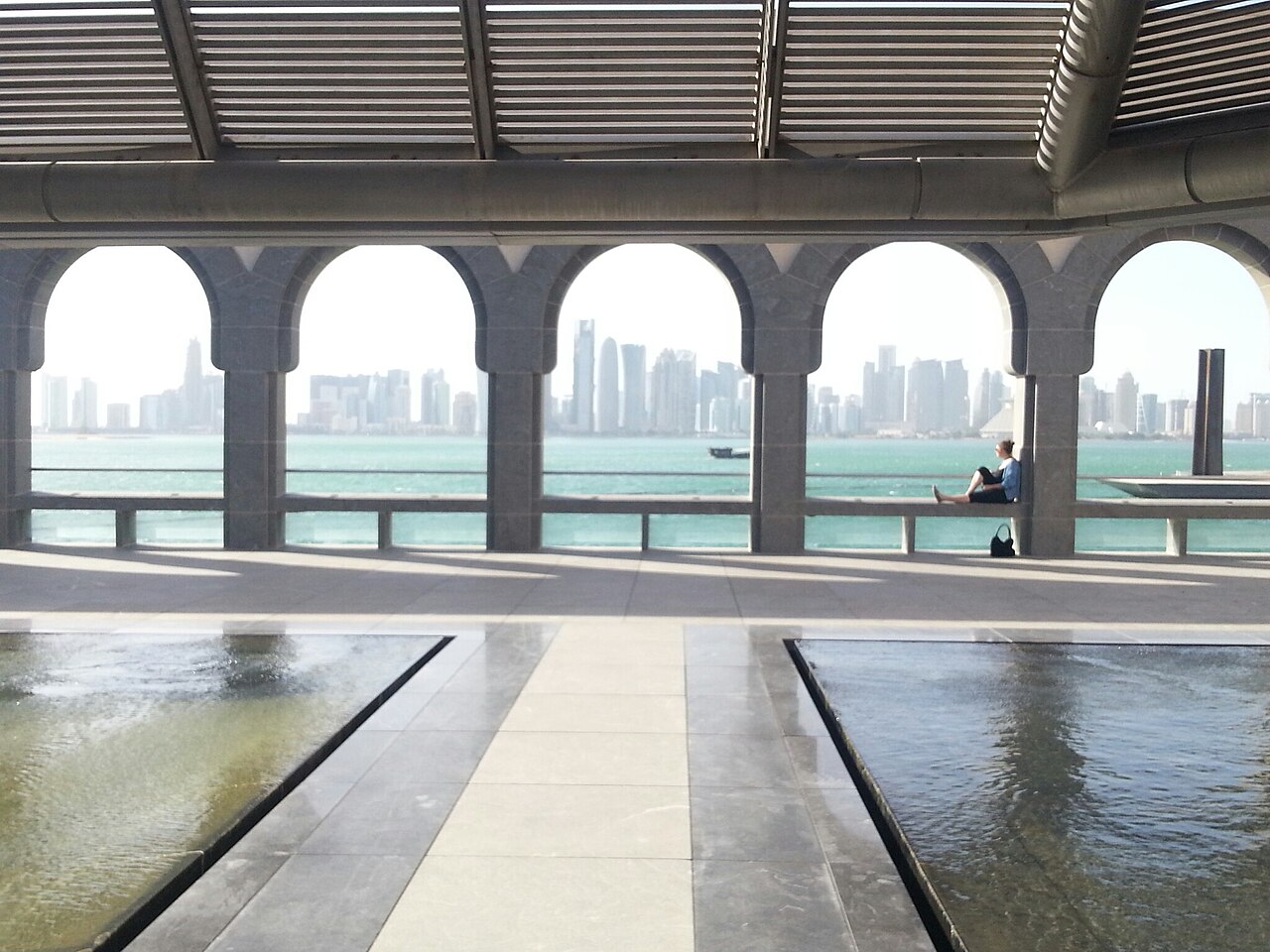
Pei rejected every site offered along the Corniche, fearing that future developments would block the views and the movement of the sun. He said he had asked whether it might be possible to create a site of his own. The museum stands on land reclaimed from the sea, so that other buildings could never surround it or deprive it of natural light.
The museum was inaugurated on 22 November 2008 by Sheikh Hamad and opened to the public in December 2008. In late 2021, a ten-month project that included reinstalling the permanent collections led to the reopening of 5 October 2022.
Architecture
The complex consists of a five-storey main building and an education wing, joined by a large central courtyard. On approach, the whole reads as a stark stack of cream-coloured limestone volumes, which capture the changes in light and shade through the day, with almost no windows. A central tower conceals the dome of the atrium. On the north side, a window 45 m tall, covering all five levels, looks out over the bay. The courtyard is closed off by tall walls with arched openings, a further nod to Ibn Tulun; to the east, across the courtyard, the education wing and library form a simple rectangular box in the same limestone. A long promenade leads to the museum, with a fountain, a tree-lined walk and a small bridge across the water.
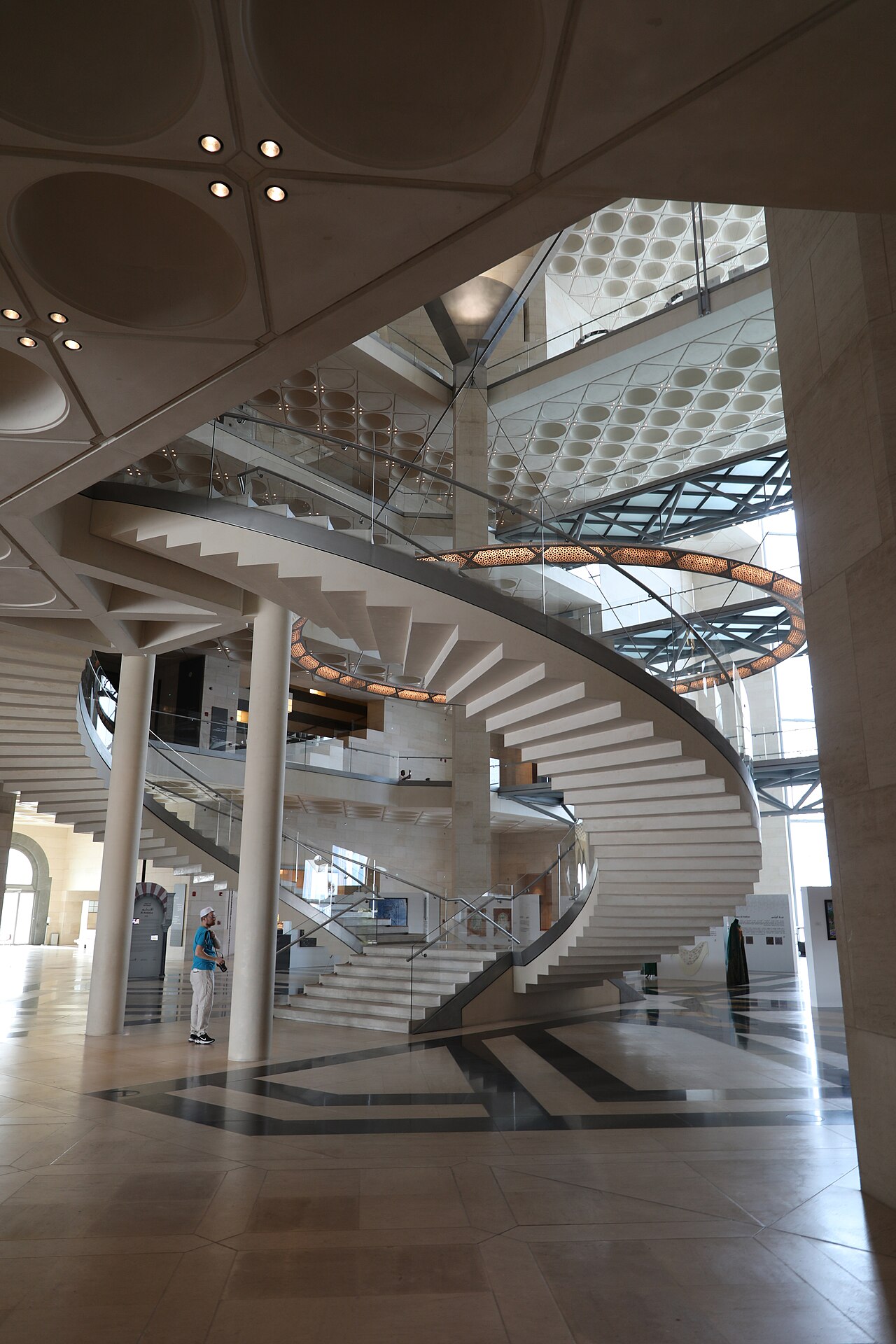
In the atrium, a curved double staircase leads up to the first floor, and an ornate circular metal chandelier floats above it, repeating the curve of the staircase. At the top of the atrium, an oculus catches light and reflects it in patterns within the faceted dome. Small domed coffers on the ceiling carry on the interplay of light and shadow; on the floor, the tiling carries geometric patterns, which recur throughout the museum, even on the ceilings of the lifts. The galleries, designed by Jean-Michel Wilmotte, use darker stone and wood surfaces that contrast with the limestone cladding.
The ablution basin of Ibn Tulun has a square base under a dome, whose pendentives make the transition from square to octagon, then from octagon to circle. The subtle striping of the facade echoes the black-and-white bands of the Mamluk period on the Great Mosque of Damascus, and the block-like, almost cubist volumes draw on the fortified ribats of Tunisia from the 8th and 9th centuries.
Use today
The museum presents Islamic art dating from the 7th to the 20th century: manuscripts, coins, textiles, ceramics, glass, jewellery, precious stones, woodwork and metalwork, collected from three continents, from the Middle East as far as Spain and China. Eighteen galleries organise it by wide historical and cultural themes, by period and by geography. The route begins on the ground floor with an immersive gallery that tells the story of Pei and his design for the museum.
The museum also has a library devoted to Islamic art, a café and, on the top floor, Alain Ducasse's restaurant IDAM. Around the building, the museum's park, open day and night, offers picnics, a café, a playground and bicycle hire; Richard Serra's sculpture 7 stands a short walk away along the promenade.
Visiting
The museum is open Sunday to Tuesday and Saturday from 9am to 7pm, Thursday from 9am to 9pm and Friday from 1:30pm to 7pm; it is closed on Wednesday. The park stays open 24 hours.
Tickets can be bought on arrival, or reserved in advance to choose a time slot. A ticket is valid for a single entry, on the date of admission only, and cannot be refunded or exchanged; general admission includes the temporary exhibitions and the permanent collection galleries. Allow at least two hours. Dress code: shoulders and knees covered, otherwise entry may be refused. All visitors pass a security check, and large bags are left in the cloakroom. Photography is allowed for personal, non-commercial use, in available light: no tripods, selfie sticks or flash.
You can arrive by car, taxi or the museum's free shuttle buses; there is a taxi stand in the car park. The limited parking spaces fill up very quickly, particularly at weekends, and the car park closes during major events in the park.
Photos
25.30° N, 51.54° E
Greenhouses nearby
Sources (15)
- mia.org.qa/en/about-us/
- mia.org.qa/en/about-us/architecture/
- mia.org.qa/ar/about-us/architecture/
- mia.org.qa/en/visit/
- mia.org.qa/en/visit/visitor-guidelines/
- mia.org.qa/en/visit/galleries/
- mia.org.qa/en/visit/mia-park/
- mia.org.qa/en/calendar/i-m-pei-and-the-making-of-the-museum-of-islamic-art/
- visitqatar.com/intl-en/things-to-do/art-culture/museums-galleries/museums/museum-of-islami
- thenationalnews.com/arts-culture/art-design/2025/11/14/how-im-pei-found-the-soul-of-islami
- dezeen.com/2025/01/14/museum-of-islamic-art-im-pei-21st-century-architecture/
- raya.com/2020/09/05/تحدي-العمارة-في-متحف-الفن-الإسلامي
- en.wikipedia.org/wiki/Museum_of_Islamic_Art,_Doha
- wikidata.org/wiki/Q1148353
- openstreetmap.org/relation/10671567
Affiliate links — booking through Verrière helps fund our research, at no extra cost to you.