Glasshouses and Victorian Conservatory, Talbot Botanic Gardens, Malahide Castle
Malahide, County Dublin

Sources checked October 2026
- Architect
- Unknown (glasshouses of several periods)
- Style
- Glasshouses of several periods in a walled botanic garden; domed glass Victorian conservatory
- Dimensions
- 1.6 ha walled garden, seven glasshouses
- Status
- Open to the public (walled garden and Butterfly House open daily)
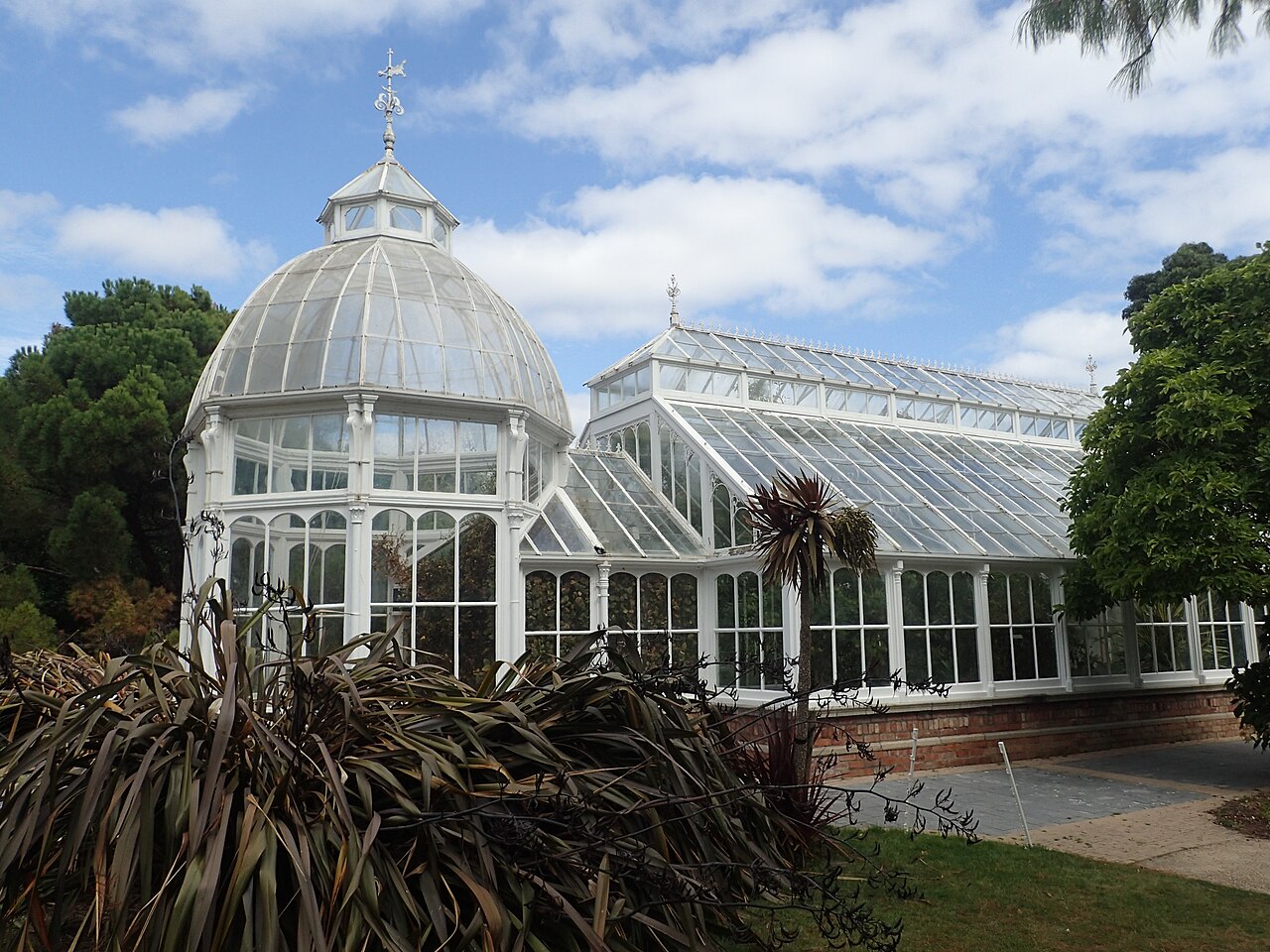
In the 1.6-hectare walled garden of Malahide Castle, north of Dublin, seven glasshouses surround the botanical collections that Lord Milo Talbot, 7th Baron Talbot of Malahide, assembled between 1948 and 1973: plants from Australasia, Asia, North Africa and South America. The Victorian conservatory, crowned by a glass dome, is not original to the site; Irish sources say it came from a convent in south County Dublin. The Peach House and the Dutch House rank among the garden's oldest glasshouses, and the Cambridge Glasshouse holds what the castle calls Ireland's only exotic butterfly house.
Affiliate links — booking through Verrière helps fund our research, at no extra cost to you.
History
The lands and harbour of Malahide were granted to Richard Talbot in 1185, and the family held them, apart from an interruption between 1649 and 1660, until 1976. The botanic garden is far more recent. According to the official timeline, Milo Talbot inherited the castle in 1949 and left the Foreign Office in 1956 to devote more time to his collection, which the castle's website describes as assembled between 1948 and 1973. He brought back plants from Australasia, Asia, North Africa and South America, noted the origin and growing history of each, and had glasshouses built to shelter them. The Peach House is said to have entered the walled garden in 1901, according to a photo caption; the official site ranks it and the Dutch House among the garden's oldest glasshouses.
After Milo's death in 1973 his sister Rose, facing death duties, had to sell. Dublin County Council, now Fingal County Council, acquired the castle, gardens and demesne in 1976, and the castle opened to the public in 1977. A council-led refurbishment, whose visitor centre reopened in February 2012, also reached the garden: in 2013 a restoration firm reported completing extensive works in the 'secret garden' and the Cambridge greenhouse, designed by the council's own architects.
The Victorian conservatory is a late arrival. The Irish Times (2015) described a roughly 100-year-old glasshouse acquired by the council during the recent restoration and believed to come from a convent garden in Killiney; a photo caption says it was bought in the 1990s from a nunnery in Cabinteely.
Architecture and engineering
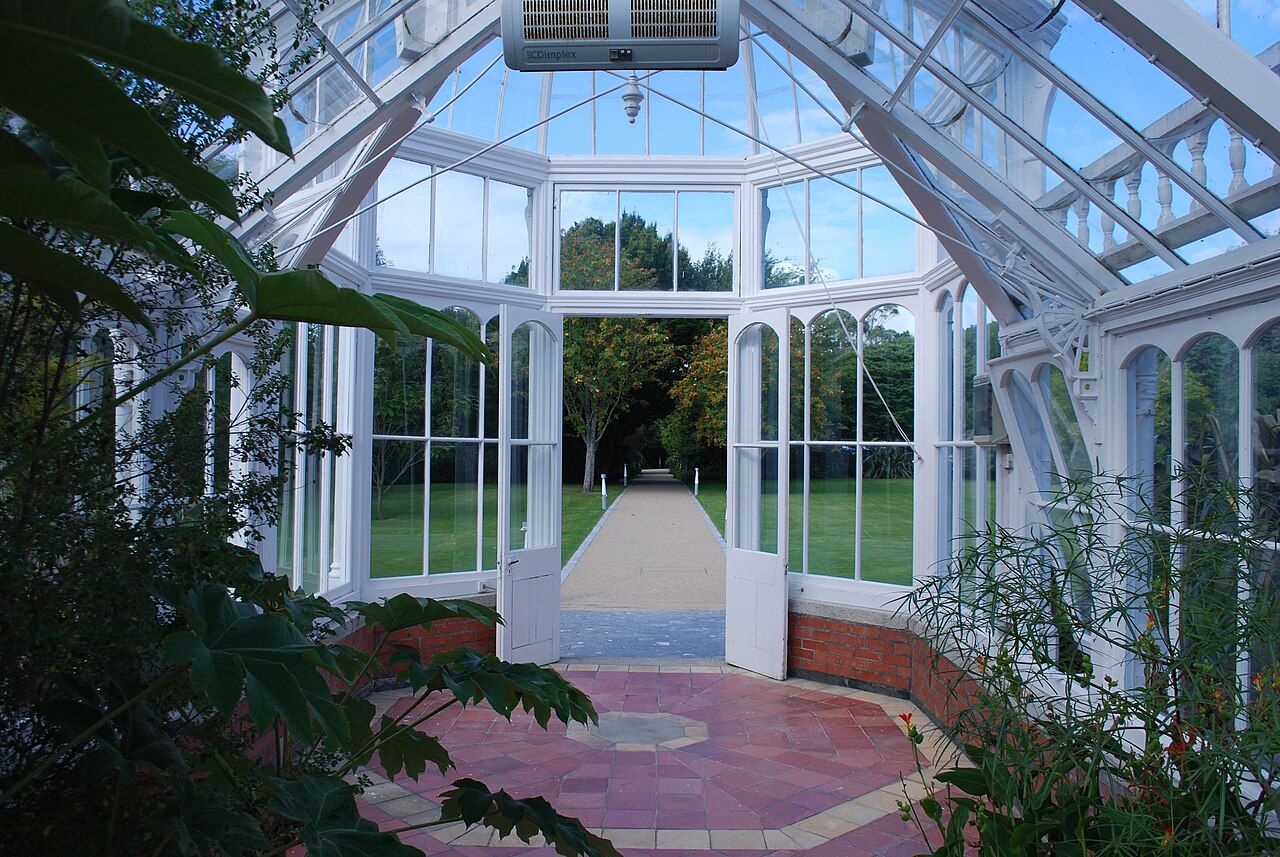
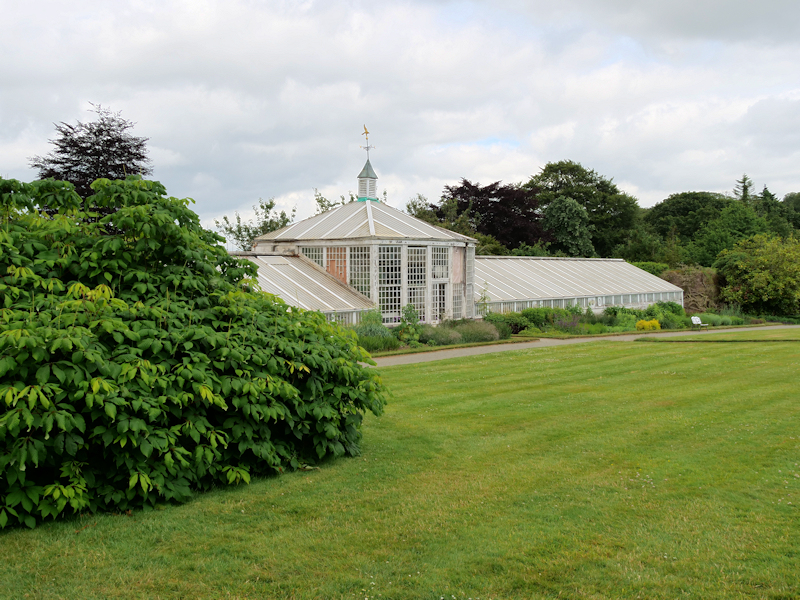
The walled botanic garden covers 1.6 hectares according to Wikipedia (one garden blogger gives two hectares) and holds seven glasshouses. The Victorian conservatory, round in plan, stands at the end of a path: a white structure crowned by a glass dome. It is not original to the site. The blogger describes it as a combination of several buildings rescued from a convent, and a photo caption adds that it began as a glasshouse designed to stand against a wall, later given a second section that made it freestanding.
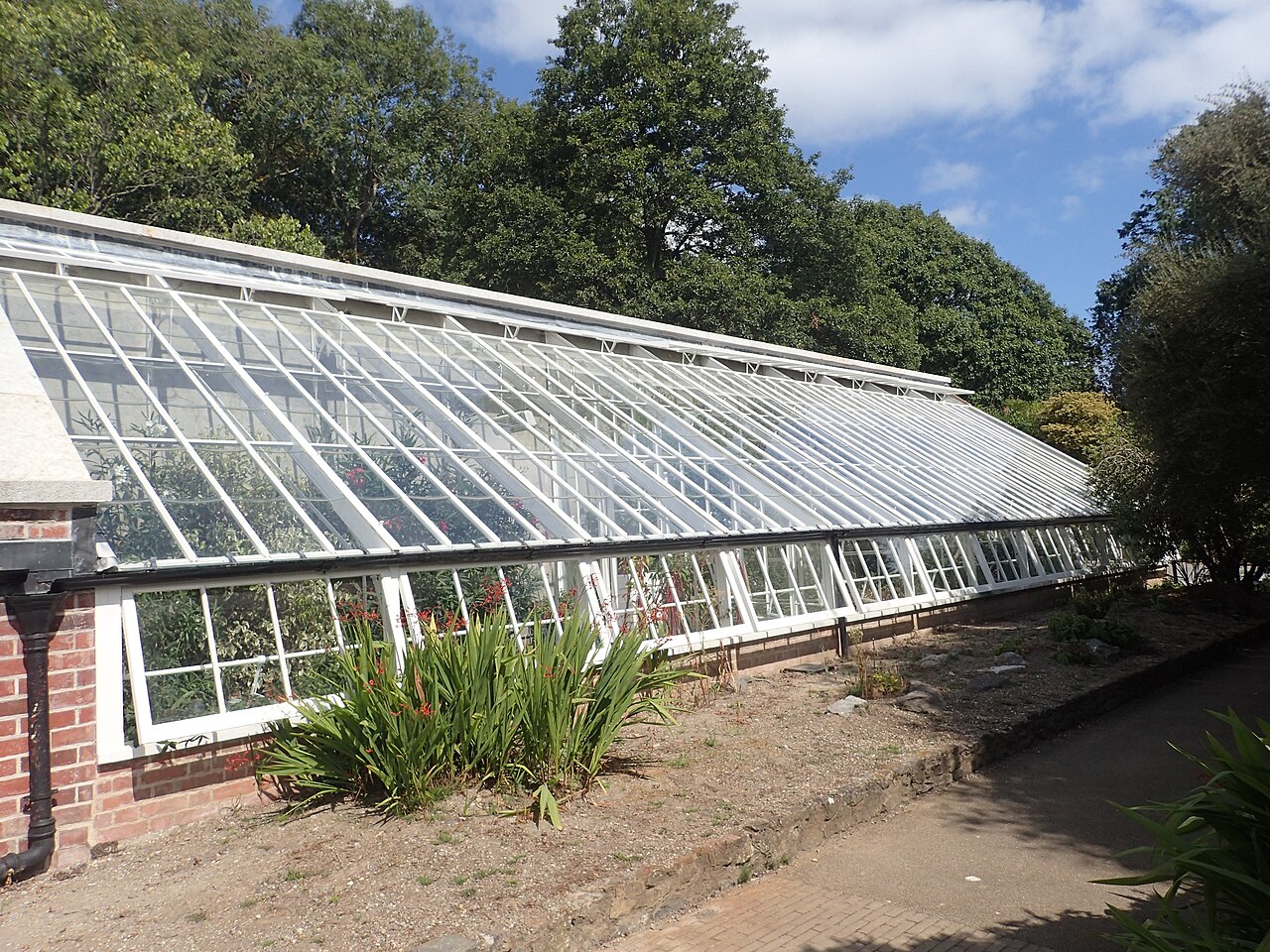
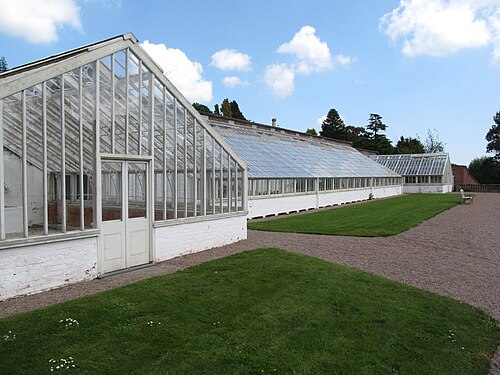
The Dutch House is a traditional-style glasshouse glazed with large panes known as Dutch lights. The Cambridge Glasshouse, home to the butterfly house, is a large glasshouse with a fully glazed exterior, planted with tropical vegetation inside. The official site names the Peach House and the Dutch House as the garden's oldest glasshouses.
Plant collections
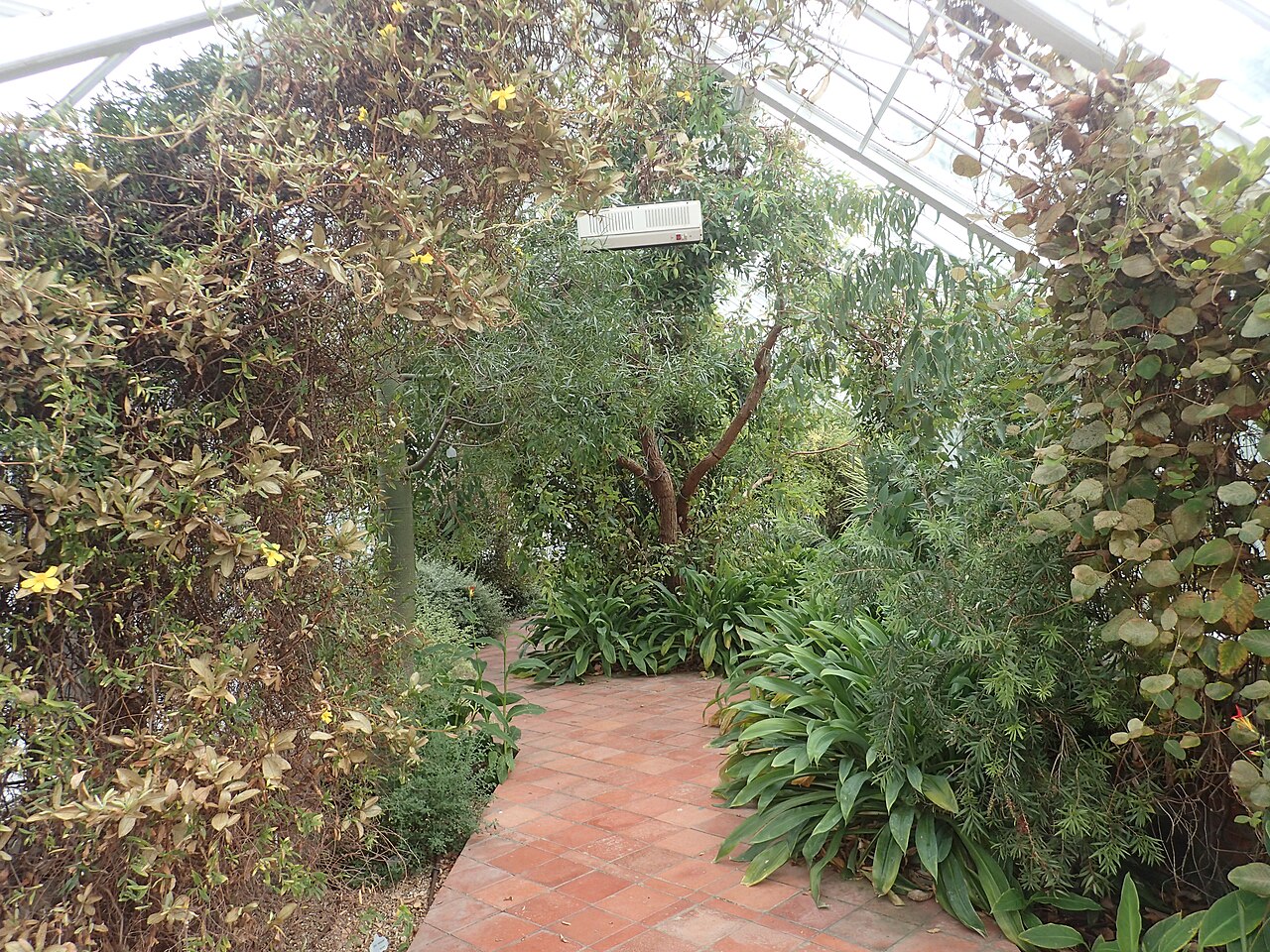
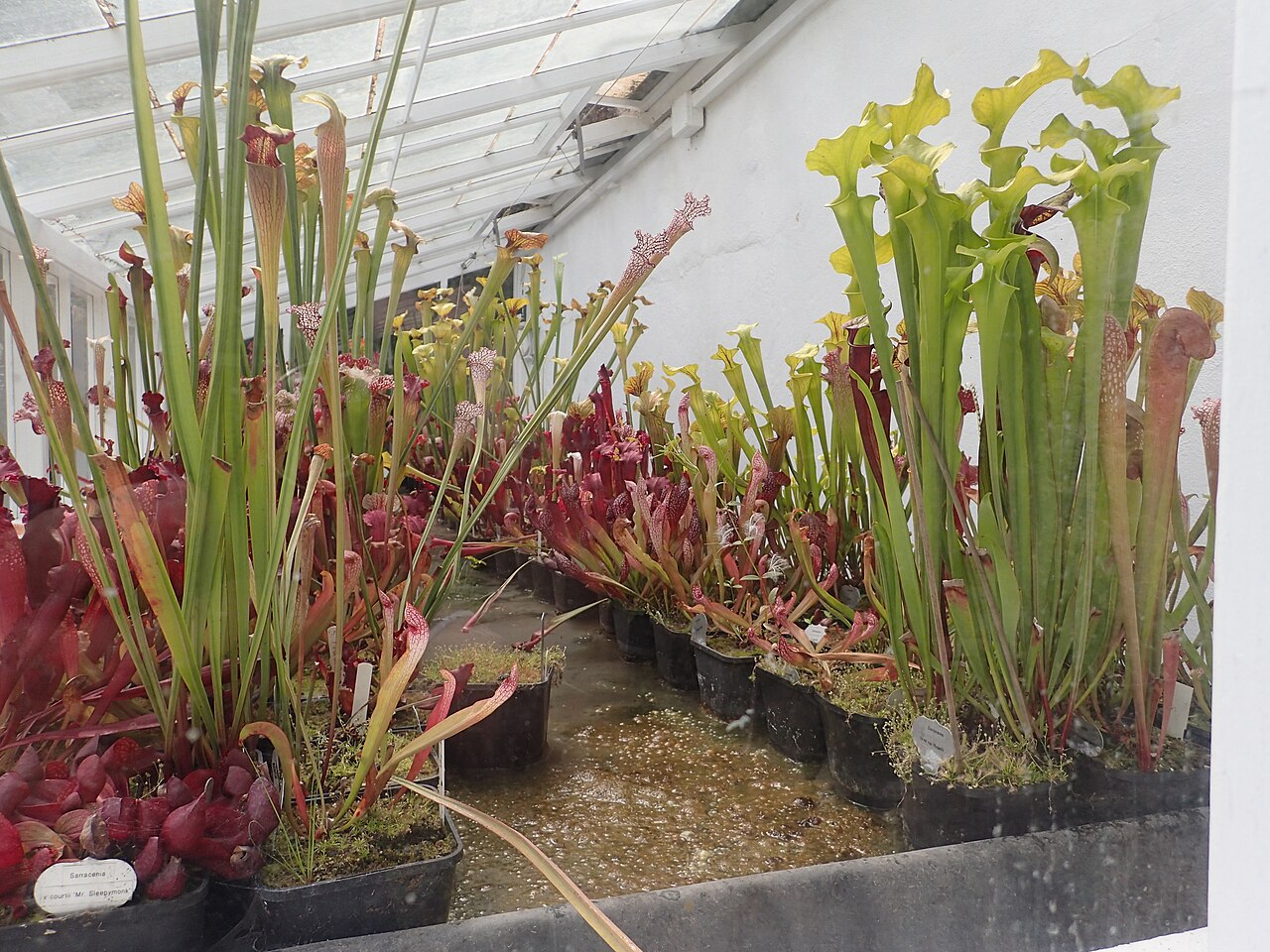
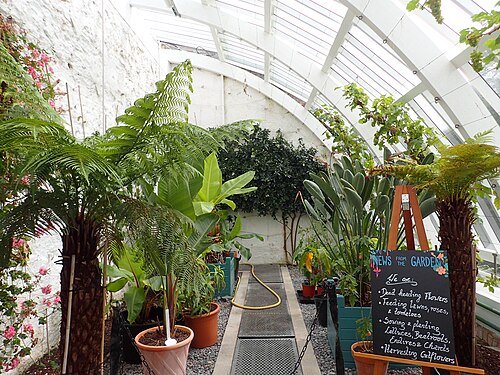
The garden bears Lord Milo's stamp: plants from Tasmania, Australia and New Zealand, South American flowers beside the walled garden's pond, and the National Plant Collection of Olearia (daisy-bush), which includes a hybrid named 'Talbot de Malahide'. Under glass, the Peach House is largely given over to Australasian shrubs and tender climbers; the Dutch House holds Mediterranean plants, including a pink peony; and the Victorian conservatory shelters, according to a gardening website in 2018, Southern Hemisphere plants such as Hibbertia scandens. The official site also cites a collection of North American Sarracenia, said to be the only one to have received the Royal Horticultural Society's 'AGM' accolade.
In the Cambridge Glasshouse, butterflies fly freely among tropical plants; the official pages speak both of 'hundreds' of butterflies and of more than twenty species. In 2015 a garden writer noted that alpine and auricula houses were not open to the public.
Visiting
The walled botanic garden lies behind the castle. According to the official site, the walled garden and the Butterfly House open daily, and the whole demesne deserves at least two hours, more with the guided castle tour. The conservatory stands at the end of a path, near the parterre.
The garden is busiest in summer, though the castle says it has interest in every season. A visit combines well with the Fairy Trail, with the Casino Model Railway Museum, part of the same group of attractions, or, some 16 km to the north, with the 1905 conservatory at Ardgillan Castle, another relocated Victorian glasshouse restored by the same council.
53.45° N, 6.16° W
Greenhouses nearby
More greenhouses — Ireland
Do you have a good photo of this greenhouse? Suggest it for this page →
Sources (8)
- malahidecastleandgardens.ie/the-gardens/
- malahidecastleandgardens.ie/botanic-gardens/
- malahidecastleandgardens.ie/butterfly-house/
- malahidecastleandgardens.ie/history/
- en.wikipedia.org/wiki/Malahide_Castle
- irishtimes.com/life-and-style/homes-and-property/helping-ireland-s-old-conservatories-to-s
- bimireland.ie/?p=4353
- theirishaesthete.com/2019/08/19/needing-attention/
Affiliate links — booking through Verrière helps fund our research, at no extra cost to you.