Curvilinear Range & Great Palm House
Glasnevin, Dublin

Sources checked October 2026
- Year
- 1843–1869 · Palm House 1884
- Architect
- Richard Turner (Curvilinear Range); James Boyd & Son of Paisley (Great Palm House)
- Style
- Victorian curvilinear iron
- Dimensions
- Two distinct greenhouse complexes
- Status
- Open to the public
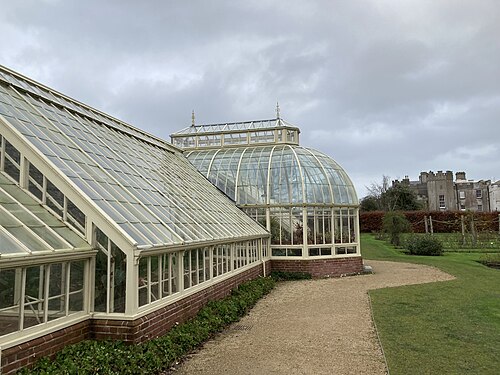
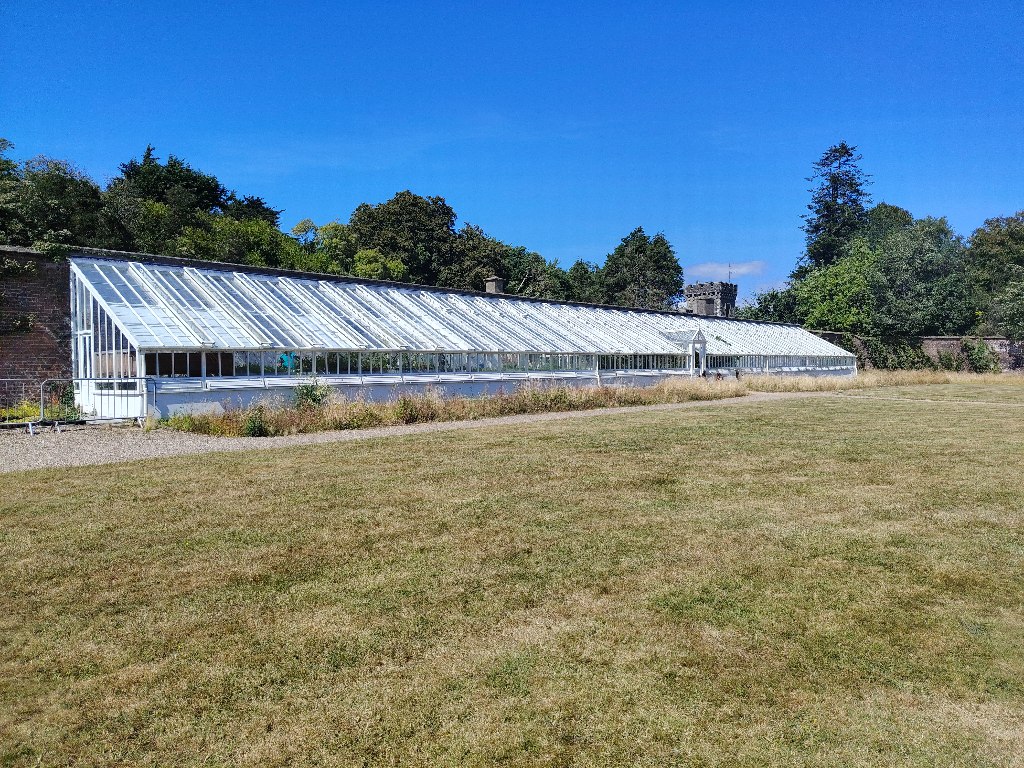
Built by Dublin ironmaster Richard Turner, who was at the same time building Kew's Palm House with the architect Decimus Burton, the Curvilinear Range owes its curved silhouette to his mastery of bent iron; its size was doubled in 1869. Its central dome long featured on Irish postage stamps. A short walk away, the Great Palm House, which replaced a glasshouse damaged by a storm, was prefabricated at Paisley, Scotland, in timber and wrought iron by James Boyd & Son and erected in Dublin in 1884; restored from 2002 to 2004, it won the Europa Nostra prize for architectural conservation.
Affiliate links — booking through Verrière helps fund our research, at no extra cost to you.
History
The National Botanic Gardens at Glasnevin were founded in 1795 by the Dublin Society, later the Royal Dublin Society, on the former demesne of the poet Thomas Tickell beside the River Tolka; they passed to state control in 1877.
The Curvilinear Range was commissioned in the 1840s under the curator David Moore. Its oldest part, the east wing, was put up in 1843–44 by the Dublin contractor William Clancy, who ruined himself on an estimate that proved hopelessly low; his name still appears on a gutter, and the RDS's over the entrance. The ironmaster Richard Turner, who was working on Kew's Palm House in the same years, then built the west wing (1845–46) and the central pavilion, completed in March 1848, with the architect Frederick Darley involved from 1844. In January 1868 a scheme submitted under the name of Turner's son William proposed doubling each wing by adding a matching north-facing side. In 1995 the Office of Public Works completed an exemplary restoration, recognised with a Europa Nostra award.
The Great Palm House replaced an earlier glasshouse, widely thought ugly and badly damaged in a storm. The new structure was prefabricated at Paisley, in Scotland, and erected in Dublin between March and October 1884. In the 1990s high winds smashed some of its glazing and exposed its decay; dismantled, conserved and reassembled by the OPW from 2002, it was opened by the Taoiseach in 2004 and likewise won a Europa Nostra award.
Architecture and engineering
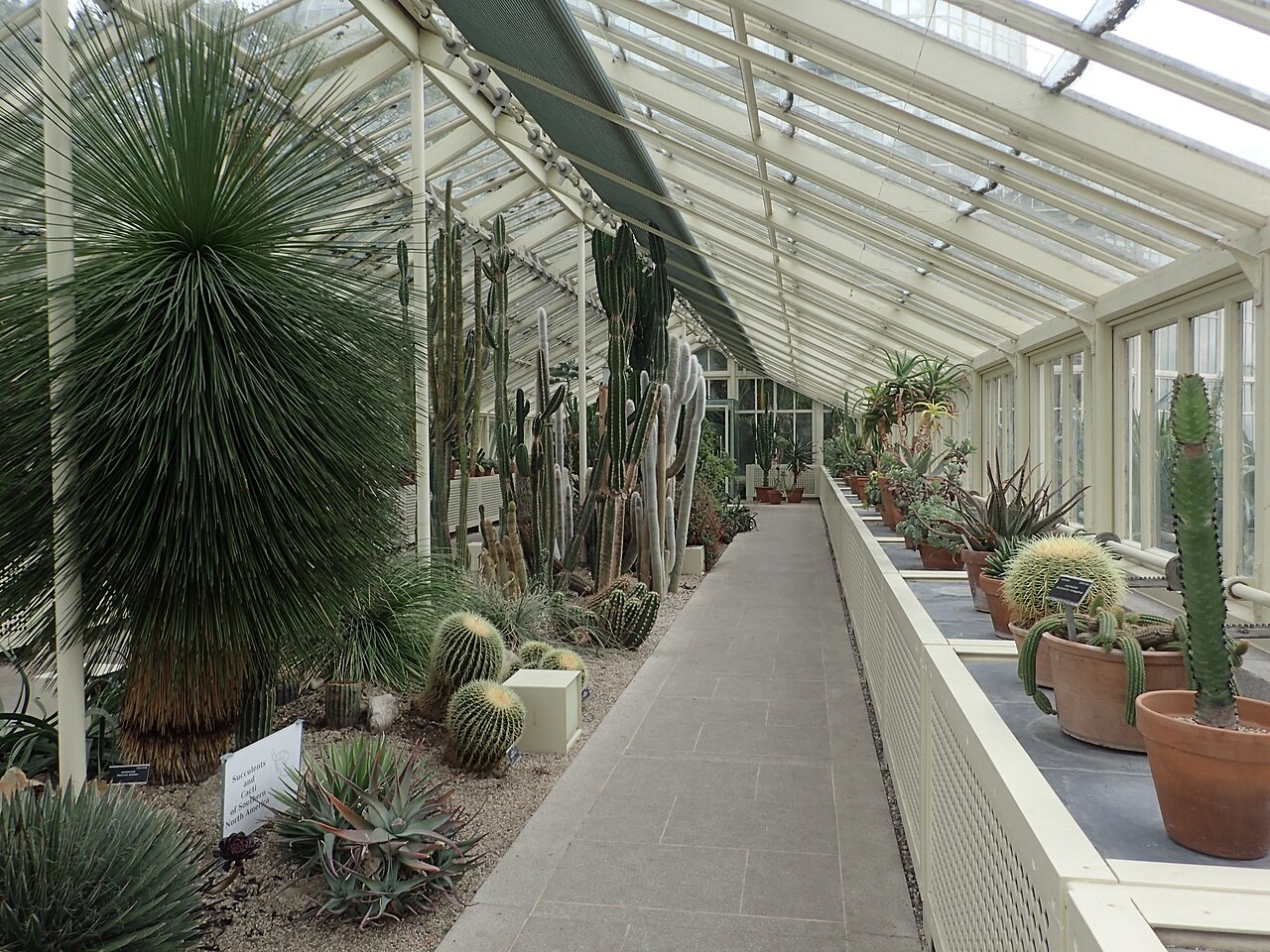
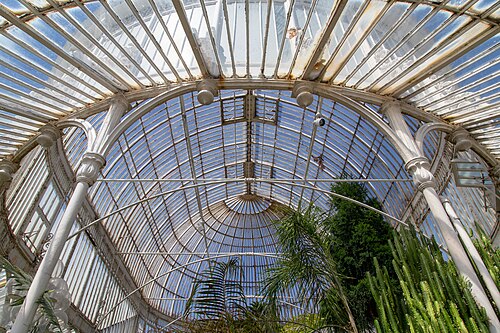
The Curvilinear Range takes its name from its curved roofs, carried on a slender wrought-iron frame enlivened with scrolls. Each wing originally measured about 100 feet long, 18 wide and 18 high (30 × 5.5 × 5.5 m); the taller central pavilion is a rectangle topped by a lantern. The extension of the late 1860s doubled the depth of the wings by taking out their back walls. During the 1995 restoration less than a fifth of the ironwork was judged beyond repair, and repairs were made in wrought iron, whereas Kew and Belfast had turned to steel. The central dome appeared on Irish architecture stamps in the 1980s.
The Great Palm House, of timber, wrought iron and glass, stands about 65 feet high, 80 wide and 100 long (roughly 20 × 24 × 30 m). Prefabricated by James Boyd & Son of Paisley, near Glasgow, at a cost of £800, it was shipped in pieces and assembled on site; the gardens' own website says simply that the ironwork was made in Glasgow.
Plant collections
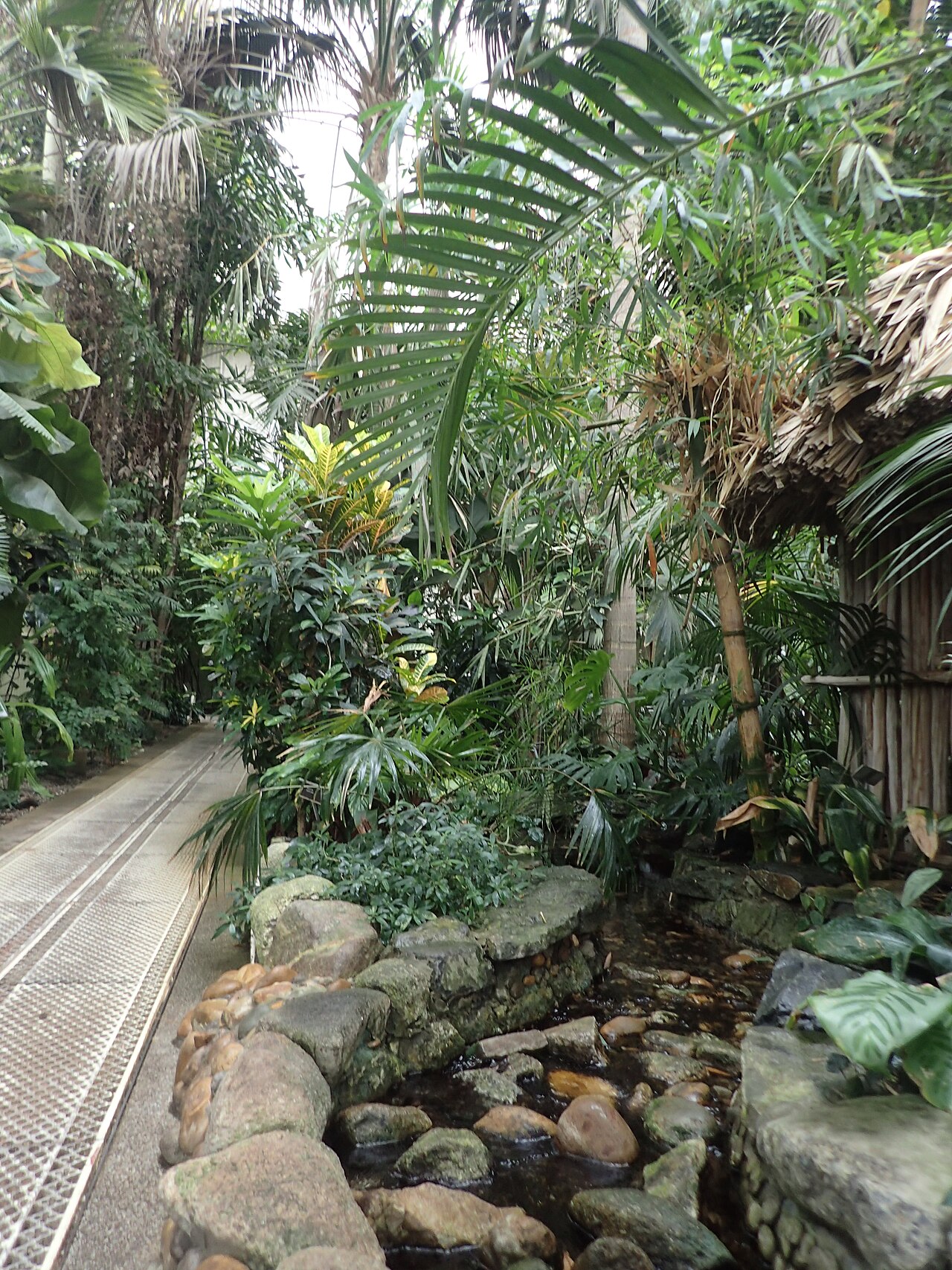
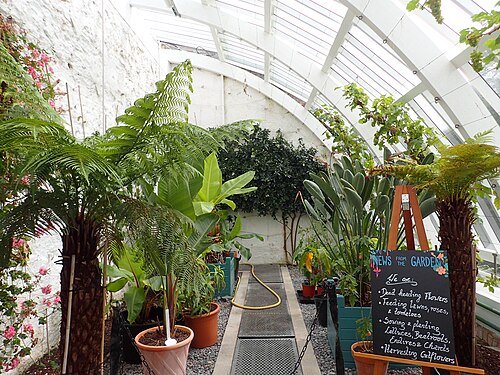
The west wing of the Curvilinear Range is devoted to the mountains of South-East Asia, notably Vireya rhododendrons from the Philippines, Borneo and New Guinea, along with tree ferns, orchids, pitcher plants and gymnosperms. The east wing gathers plants from the southern hemisphere — Australia, South Africa and South America — including Proteaceae and Restionaceae that recall the old supercontinent of Gondwana.
The Great Palm House holds tropical trees and is known above all for its cycads. Orchids have a special place at Glasnevin: it was here, in the 1840s, that David Moore first raised orchids from seed to flowering. Nearby, the Victoria waterlily house, designed by Duncan Ferguson and built in 1854, is now awaiting restoration.
Visiting
The gardens cover some twenty hectares on the banks of the Tolka in Glasnevin, on Dublin's north side, and hold more than 20,000 species and cultivars. The Curvilinear Range and the Great Palm House stand a short walk apart and fit easily into a single circuit, which can take in the Alpine House and Alpine Yard with their changing seasonal displays.
Half a day allows time for the glasshouses and the main outdoor collections, and the glasshouses make a welcome refuge on a damp Dublin day.
53.37° N, 6.27° W
Greenhouses nearby
Architecture nearby

More greenhouses — Ireland
Do you have a good photo of this greenhouse? Suggest it for this page →
Sources (7)
- botanicgardens.ie/glasnevin/glasshouses/
- historyireland.com/curvilinear-range-national-botanic-gardens-glasnevin/
- archiseek.com/1869-curvilinear-range-botanic-gardens-glasnevin-co-dublin/
- archiseek.com/1884-great-palm-house-botanic-gardens-glasnevin-dublin/
- theirishaesthete.com/tag/national-botanic-gardens/
- irelandseye.com/aarticles/travel/attractions/gardens/glasnevn.shtm
- buildingsofireland.ie/buildings-search/building/50130057/national-botanic-gardens-great-pa
Affiliate links — booking through Verrière helps fund our research, at no extra cost to you.