Tropical Plant Garden, Hanbat Arboretum (한밭수목원 열대식물원)
Daejeon (Seo-gu)
Entry updated on October 5, 2026
- Year
- 2011
- Architect
- Unknown
- Style
- Contemporary tropical glasshouse
- Dimensions
- 1,600 m² floor area on an 8,853 m² site
- Status
- Open to the public
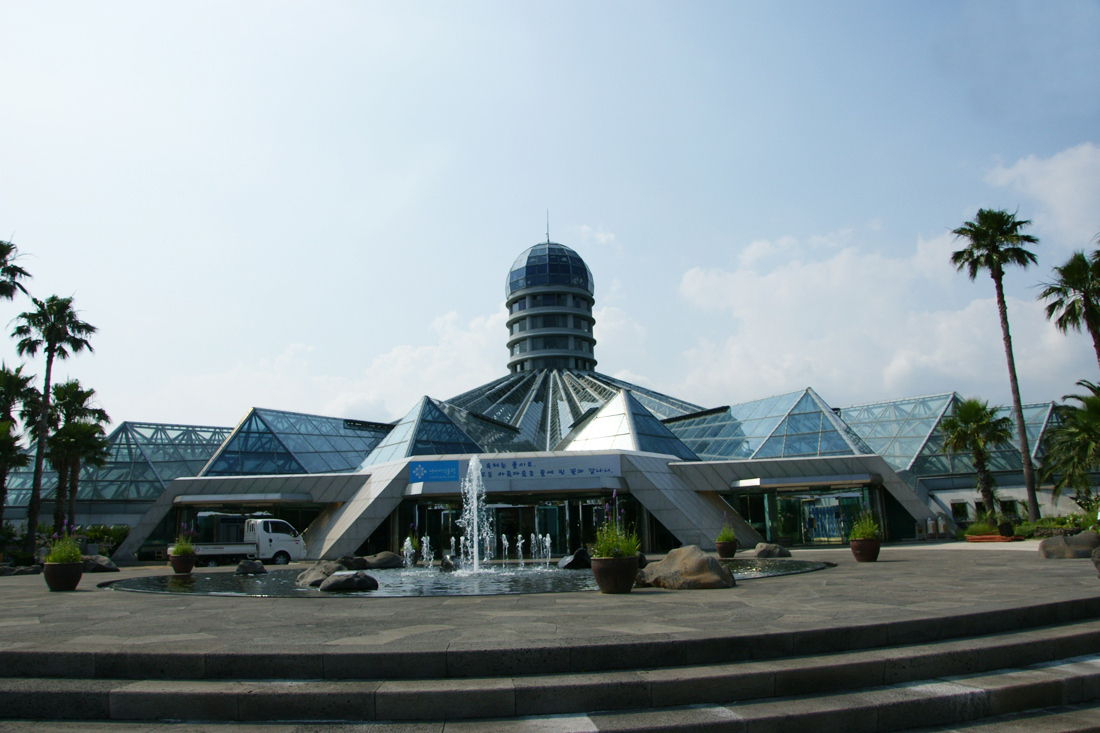
Opened on 29 October 2011 in the East Garden of Hanbat Arboretum, a large urban arboretum laid out in Daejeon on the former south-gate plaza and car parks of the 1993 Expo, this tropical garden under glass offers 1,600 m² of floor space on an 8,853 m² site. Korea's first tropical garden centred on the mangrove, it grows 21 species of mangrove plants, including Rhizophora. Its six themed gardens, from the mangrove to the succulents by way of palms and tropical fruit trees, bring together some 380 tropical and subtropical species.
Affiliate links — booking through Verrière helps fund our research, at no extra cost to you.
History
1 min
Hanbat Arboretum is the outcome of a long municipal project. It began in 1991 as an office managing tree seedlings, reorganised in 1996 and joined in 2004 by a nursery research institute. Laid out on the former south-gate plaza and car parks of the 1993 Daejeon Expo, it opened its West Garden on 28 April 2005, took the name Hanbat Arboretum in 2008 and was officially opened on 9 May 2009; some sources give 2008 as the opening year.
The Tropical Plant Garden opened on 29 October 2011 in the East Garden, and the same year the arboretum was registered as a public arboretum. It was the first tropical garden in the country centred on the mangrove, an ecosystem sometimes called 'the Earth's carbon store'. Older descriptions list four themed gardens and 198 species, about 9,300 plants; the arboretum's current presentation counts six themed gardens and some 380 species. The glasshouse is also used for research on adapting to climate change and for the conservation of rare plants.
Architecture and engineering
1 min
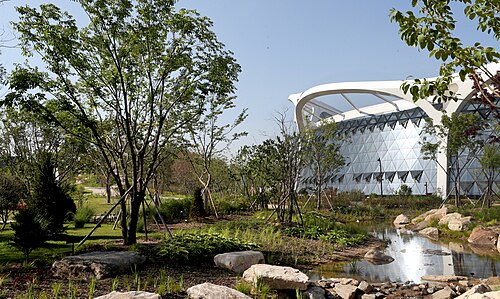
The Tropical Plant Garden occupies a separate glasshouse building, apart from the outdoor gardens, in the East Garden of the arboretum. It offers 1,600 m² of floor space on an 8,853 m² site, a modest footprint within an arboretum of 37 to 39 hectares depending on the source, which the local press describes as the largest urban arboretum in Korea.
Inside, the space is divided into themed gardens: mangrove, palms, tropical flowering trees, tropical rainforest, tropical fruit trees and succulents. The air is warm and heavy with moisture, a sensation local reporters note as soon as they step inside. The sources consulted give neither the designer nor the height or structural system of the building.
Plant collections
1 min
According to the arboretum's current presentation, the glasshouse grows some 380 tropical and subtropical species. The mangrove is the centrepiece: 21 species of mangrove plants grow there, including mangroves of the genus Rhizophora, which made it the first garden of its kind in Korea when it opened. The tropical fruit section shows mango, guava, banana, pineapple and passion fruit, while the other gardens are devoted to palms, tropical flowering trees, rainforest plants and succulents.
Beyond display, the collections support educational programmes for pupils and the general public, research on adaptation to climate change and the conservation of rare plants.
Visiting
1 min
The Tropical Plant Garden lies in the East Garden of Hanbat Arboretum, in the Dunsan government district of Seo-gu, Daejeon. The arboretum, which welcomes some 900,000 visitors a year on average, is bordered by Expo Science Park, the Government Complex Daejeon and the Gapcheon stream. Half an hour is enough for the glasshouse itself, a welcome refuge in winter when the outdoor gardens are dormant. The visit continues through the East Garden's themed gardens, among them magnolias, medicinal plants, rock garden, roses and bamboo, and the wetland and wildflower gardens of the West Garden.
36.37° N, 127.39° E
Greenhouses nearby
More greenhouses — South Korea
Do you have a good photo of this greenhouse? Suggest it for this page →