Hwanho Park Botanical Garden glasshouse (환호공원 식물원)
Pohang (Buk-gu, Yangdeok-dong), North Gyeongsang
No freely licensed photo of this greenhouse yet. Do you have one? Suggest it for this page →
Sources checked October 2026
- Year
- 2025
- Style
- Large arched glasshouse with curves evoking a sunrise
- Dimensions
- 130 m long, 35 m wide, 22 m high
- Status
- Open to the public since 1 October 2025
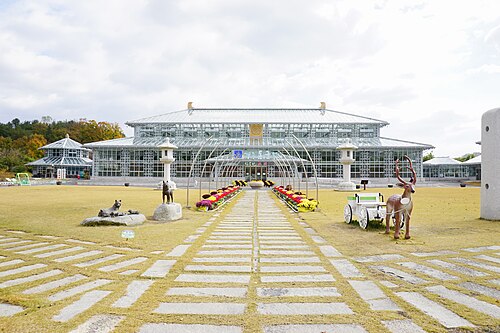
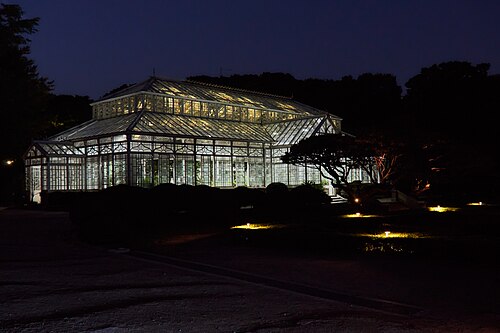
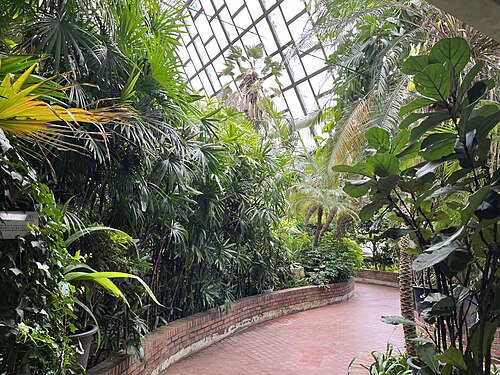
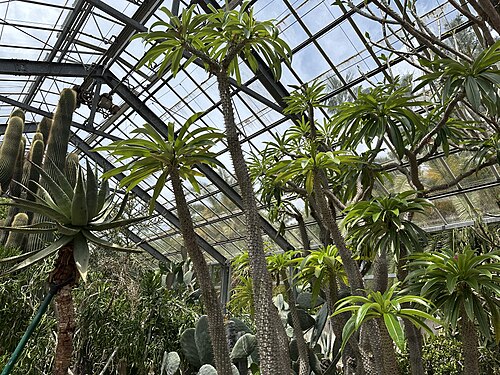
Opened on 1 October 2025 in the northern part of Hwanho Neighbourhood Park in Pohang, this arched glasshouse is 130 m long, 35 m wide and 22 m high, its curve evoking a sunrise over the sea. It shelters more than 200 rare tropical and subtropical species, among them baobab, coconut palm, mangrove, olive and large cacti, with a mini wetland, a rainforest-style skywalk and a waterfall. The 114-hectare park was built by a private developer on public land; the glasshouse is run by the city's facilities management corporation.
Affiliate links — booking through Verrière helps fund our research, at no extra cost to you.
History
Hwanho Park Botanical Garden stands in the northern part of Hwanho Neighbourhood Park (환호근린공원) in Pohang, in North Gyeongsang Province. The park's 54-hectare southern part was laid out in 2001 and now holds the Space Walk and the city's art museum; the 60-hectare northern part had been left undeveloped.
In July 2020, the "sunset" rule for urban parks, which automatically strips park designation from land reserved for a park but never developed, led the city to hand the project to a private company: it was to build the park on public land and donate it to the city, in return for permission to build housing on part of the land. The completion ceremony took place on 30 September 2025, and the botanical garden opened the next day, 1 October; the Chuseok holidays that followed drew crowds. Hwanho is the first of three parks of this kind planned in Pohang.
The glasshouse is run by the Pohang Facilities Management Corporation. After the opening, the local press reported parking and toilet shortages while recalling civic groups' criticism of the share of land converted to housing.
Architecture and engineering
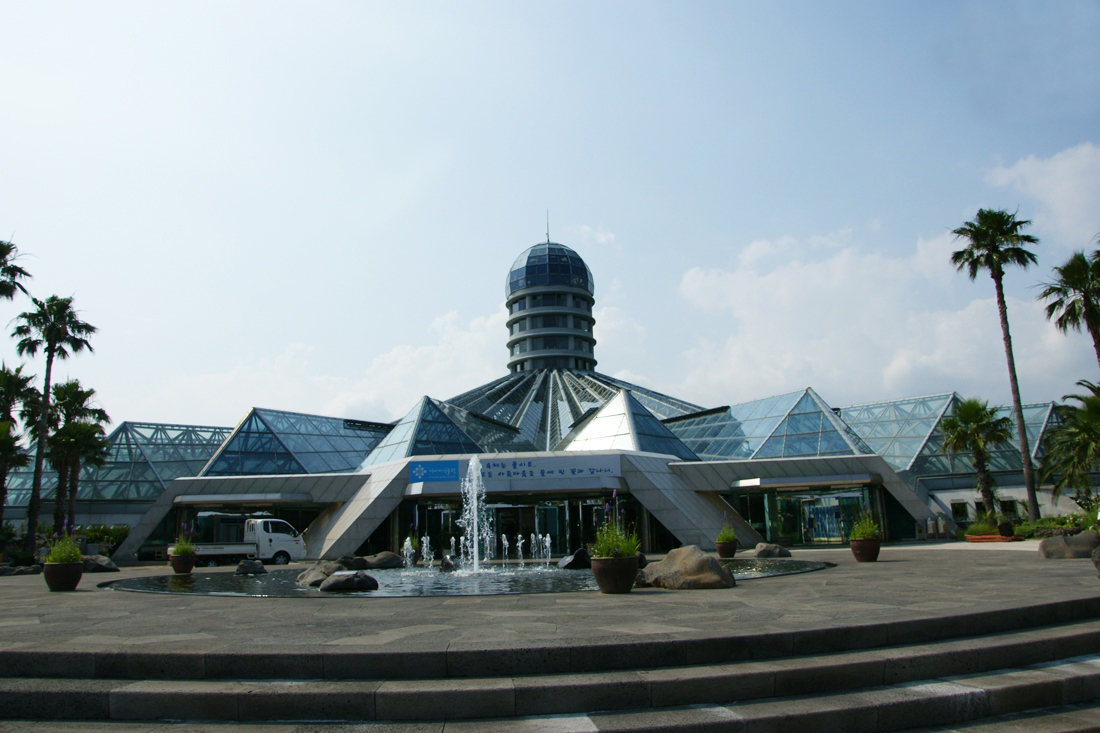
The main building is an arched glasshouse 130 m long, 35 m wide and 22 m high, whose curved line was drawn to evoke a sunrise. The local press says an advanced temperature and humidity control system keeps a constant tropical and subtropical climate inside all year. The area given by the operator on its information page is 4,211.54 m².
The official site describes a complex made up of the display glasshouse, a cultivation glasshouse, a catering and rest building, a management building and a car park. Inside, the route includes a mini wetland where aquatic plants grow, an elevated skywalk reproducing the experience of a tropical rainforest, a waterfall serving as a photo spot, and a stamp trail for visitors. Outdoors, night lighting and a musical fountain were reported at the opening.
Plant collections
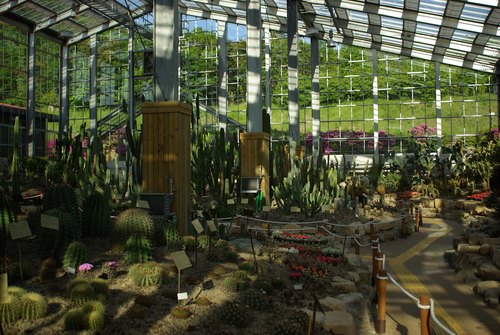
The glasshouse displays more than 200 rare species of tropical and subtropical trees and plants, according to the city and the press. Among those most often cited are the baobab (Adansonia digitata), coconut palm (Cocos nucifera), Canary Island date palm (Phoenix canariensis), olive (Olea europaea), large cacti, the mangrove, represented according to the garden's guide by the red mangrove (Rhizophora mangle), and the banyan or Bengal rubber tree (Ficus benghalensis).
The garden's online plant guide also details the silk-cotton tree (Bombax ceiba), the African tulip tree (Spathodea campanulata) and the blackboard tree (Alstonia scholaris). The official site speaks of a space where Mediterranean, tropical and subtropical plants mix. Outdoors, a rose garden and seasonal themed beds extend the visit. The activity programme includes a stamp trail, guided greenhouse tours and seasonal lectures.
Visiting
The glasshouse stands in the north of Hwanho Park, which the official site describes as blending sea and nature, in the Yangdeok-dong district of Pohang. The park also has a pedestrian bridge, a "sky pond" (하늘연못), a reading forest, a lawn ("Hwanho-tteul") and a looping boardwalk.
An hour is enough for the glasshouse; with the park, half a day is comfortable. In the southern part of the same park, the Space Walk and the Pohang Museum of Art are now linked by a pedestrian axis, and the park is also pleasant in the evening, under the lighting. A Korean tourism portal lists free parking.
36.07° N, 129.39° E
Greenhouses nearby
More greenhouses — South Korea
Do you have a good photo of this greenhouse? Suggest it for this page →
Sources (10)
- bq.phsisul.kr/intro/guide/
- bq.phsisul.kr/intro/about/
- bq.phsisul.kr/intro/facilities/
- bq.phsisul.kr/plants/introduction/view.php?id=4
- yna.co.kr/view/AKR20250930147900053
- kbsm.net/news/view.php?idx=492035
- kbsm.net/news/view.php?idx=490496
- hidomin.com/news/articleView.html?idxno=594845
- kbmaeil.com/article/20251004500077
- ktriptips.com/kor/tourspot/4082002
Affiliate links — booking through Verrière helps fund our research, at no extra cost to you.