Quito Botanical Garden Orquideario
Quito, Pichincha
Entry updated on October 1, 2026
- Year
- 1995
- Style
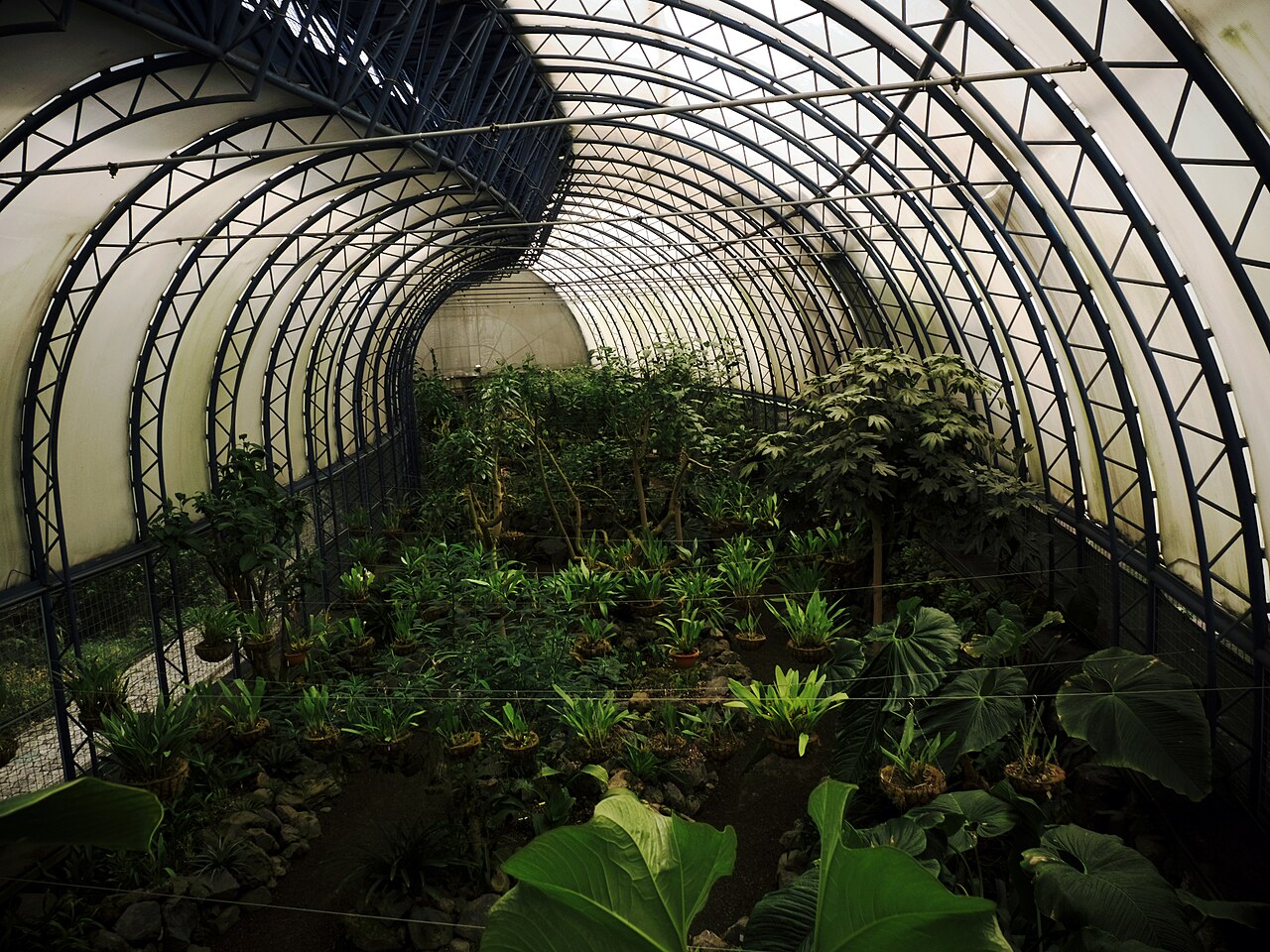
- Metal structure in three parts: two greenhouses flanking a domed central hall
- Dimensions
- Warm house ≈185 m², cool house ≈462 m², central space ≈493 m²
- Status
- Open to the public
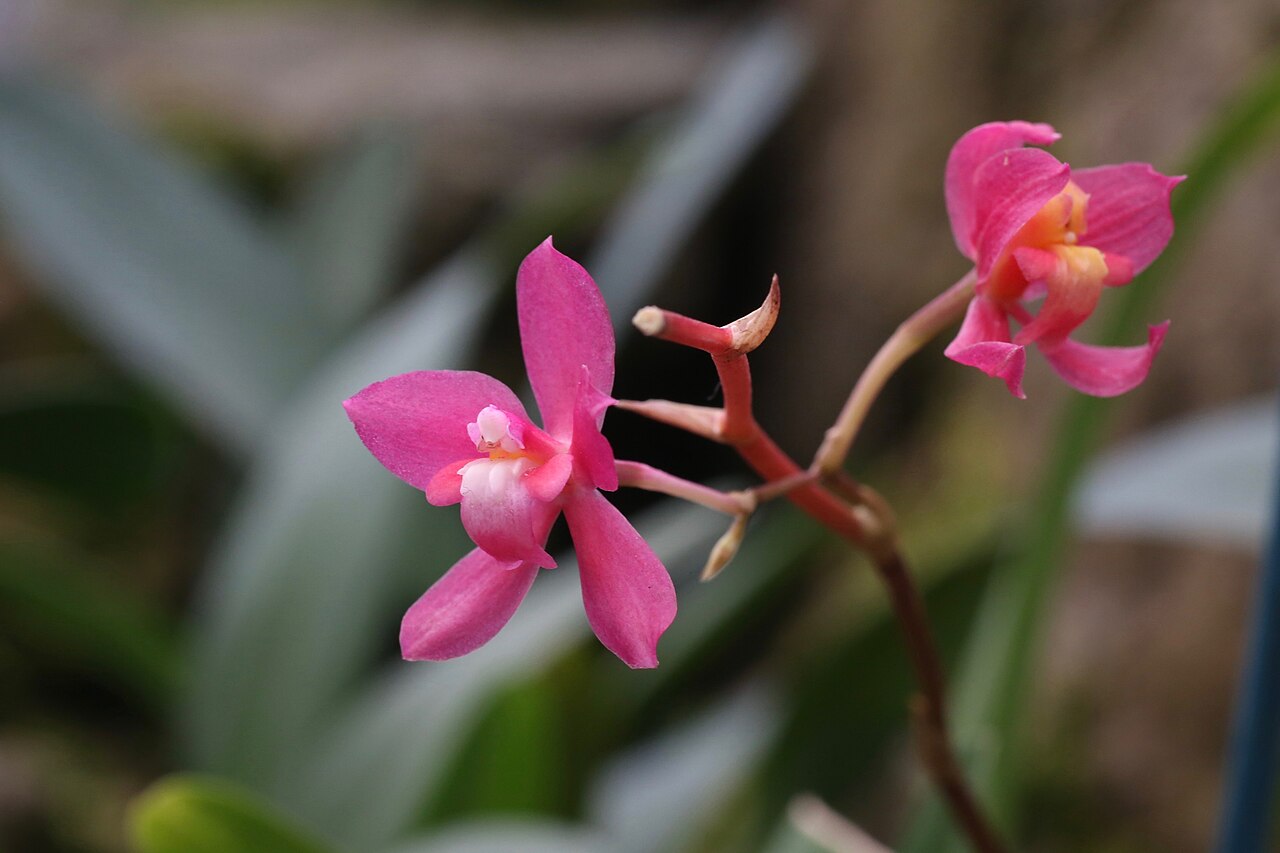
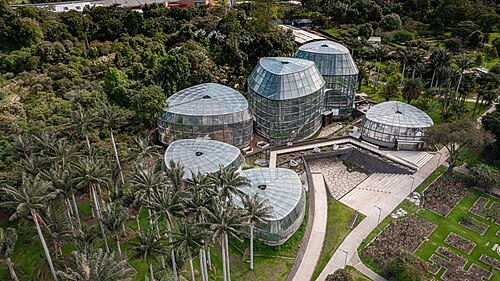
The orquideario is the centrepiece of the Quito Botanical Garden, laid out in La Carolina park on the site of the former municipal nursery. Construction began in August 1995 thanks to a substantial donation from Gisela Neustaetter. The metal structure comprises a closed greenhouse for warm-climate plants, a greenhouse for cool-climate plants and, between them, a domed space reserved for cultural and scientific events. Tropical and high-altitude orchids are displayed on stones, on the ground or on tree trunks, in a collection of more than 1,200 species.
Affiliate links — booking through Verrière helps fund our research, at no extra cost to you.
History
1 min
The Quito Botanical Garden was born in 1989 from an agreement between the Ecuadorian Museum of Natural Sciences, the Gardening Club and the Municipality of Quito, which turned the former municipal nursery of La Carolina park into a botanical garden. In June 1991 the Fundación Botánica de los Andes was set up to carry out work on the knowledge, protection and conservation of Ecuador's flora.
The orquideario is the centrepiece of the site. The sources consulted place the decisive donation by Gisela Neustaetter in 1995 (the month differs between accounts) and say that building work began in August of that year. About 3,000 orchid plants, grown by the Quito Orchidology Association or rescued from threatened areas, were moved into it. The garden's present management recalls that the whole was built up over the years under the impetus of this donor.
The orquideario has hosted a series of exhibitions: "A Thousand and One Orchids" in 2006 with the Quito Orchidology Association, the Universal Orchid Exhibition of 2009 (held at the Itchimbía Crystal Palace, with 28,000 visitors and a scientific conference on Andean orchids), and in 2019 the 6th International Orchid Exhibition "Alexander von Humboldt", marking the naturalist's 250th birthday, during which four new species were described.
Architecture and engineering
1 min
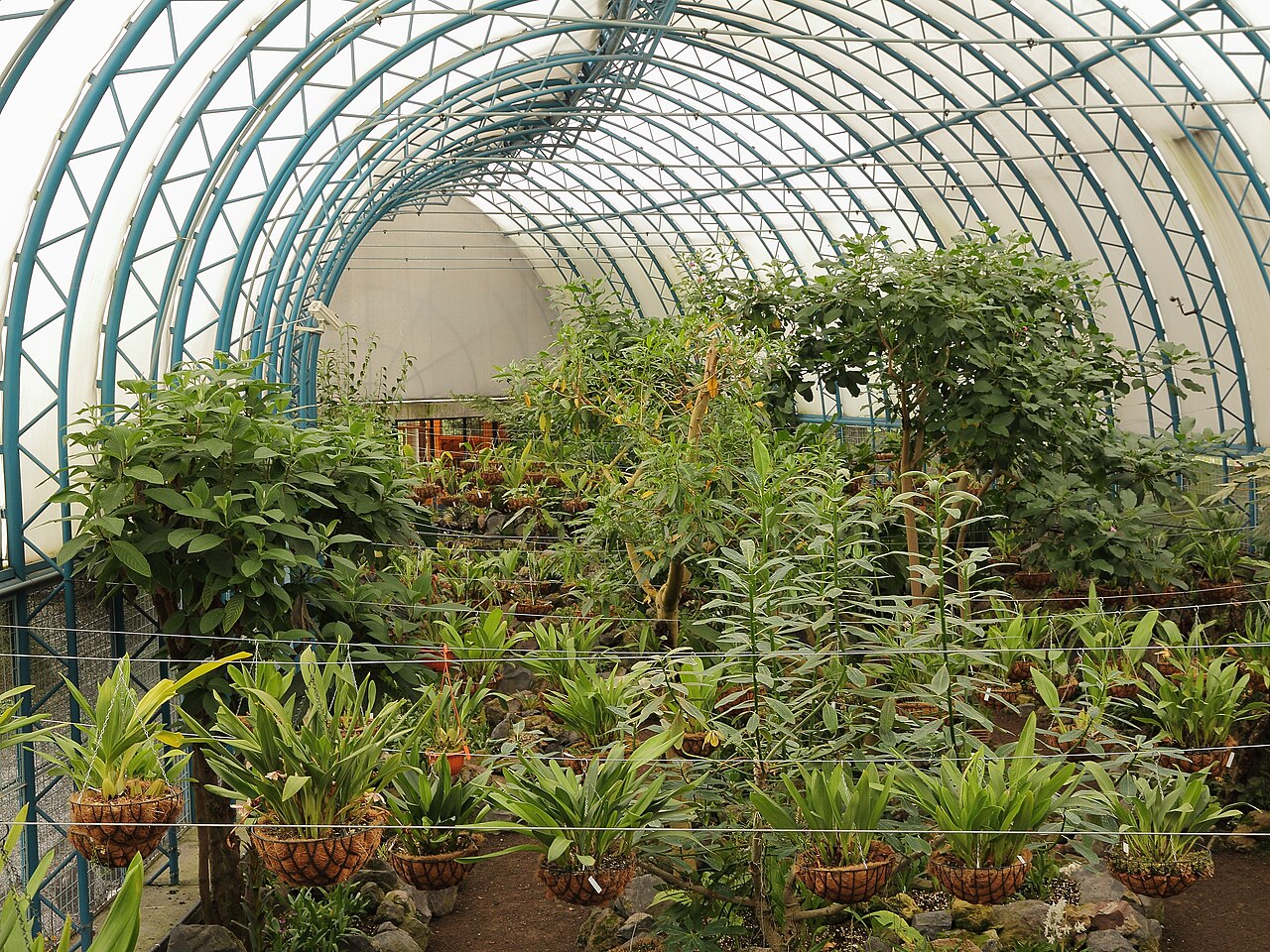
The orquideario is a metal-framed building arranged in three parts. On one side stands a closed greenhouse of 185 m² for warm-climate plants; on the other, a greenhouse of 462 m² for cool-climate plants. Between them lies a central space of 493 m² under a dome, used for cultural, scientific and social events.
Climate control across the complex is handled by a computerised irrigation system with electronic controls, which allows the two houses to be kept under distinct conditions. The split reflects Ecuadorian geography: orchids from the tropical lowlands and those from montane forest do not share the same needs for heat and humidity. The sources consulted give neither the architect's name nor the exact nature of the glazing, so these points are left out.
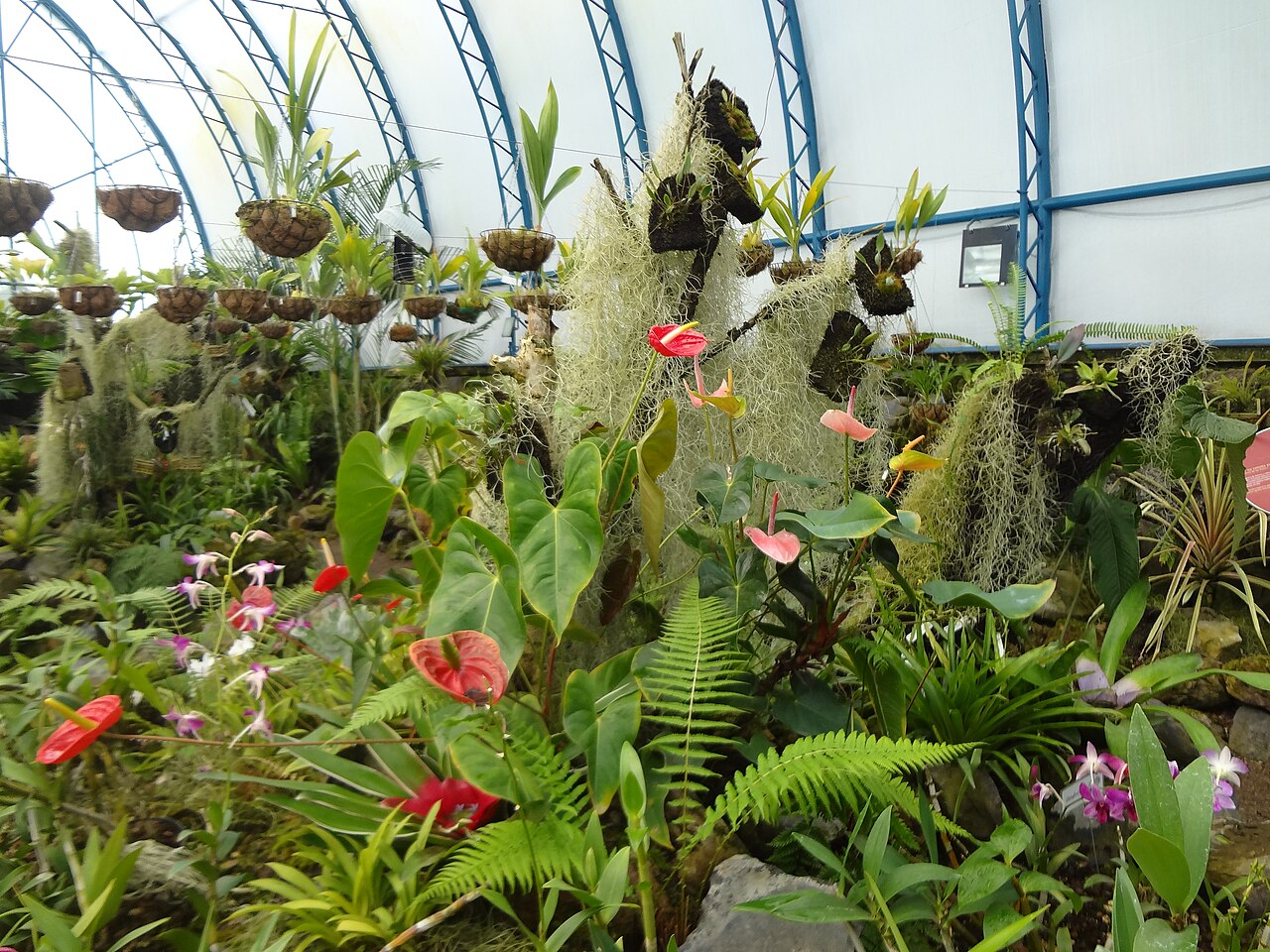
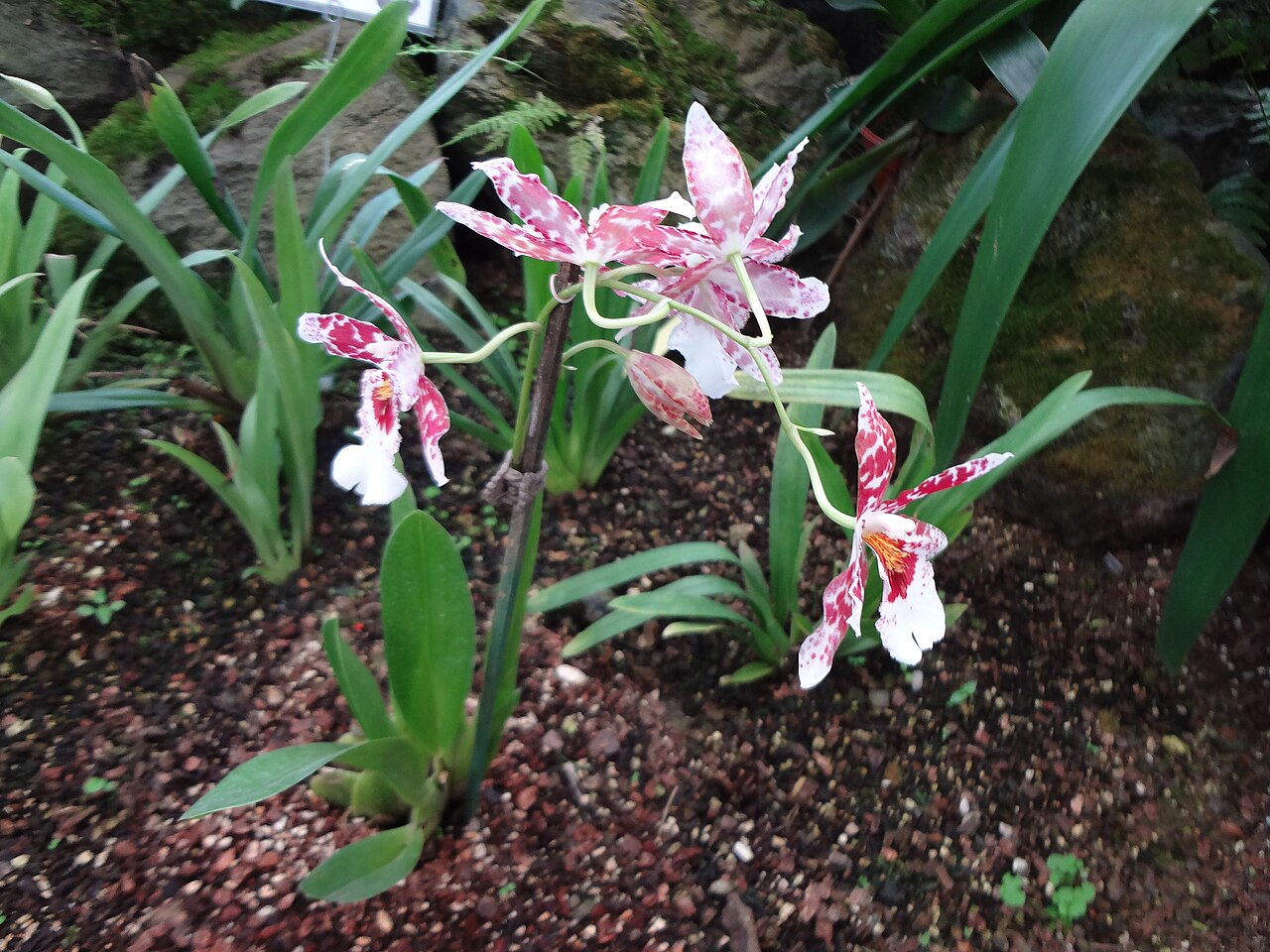
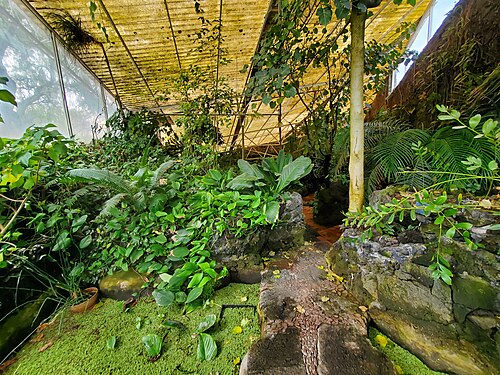
The plants are not lined up on benches but placed, as in the wild, on stones, directly in the ground or mounted on tree trunks, which gives the houses the look of a miniature understorey.
Plant collections
1 min
The two houses hold more than 1,200 orchid species, including native Ecuadorian species and hybrids. The warm house shows tropical orchids, the cool house those of higher altitude, which grow in the cloud forests of the Andes. Part of the stock comes from rescues: plants recovered from areas where their habitat was under threat were entrusted to the garden.
The exhibitions organised with orchid societies have been accompanied by scientific conferences, and four new species were published in connection with the 2019 show, which gives the orquideario a place in the description of the Andean flora.
The rest of the garden complements the glasshouses with open-air plantings: wetlands, cloud forest, páramo, medicinal plants and native fruit trees.
Visiting
1 min
The orquideario lies inside the Botanical Garden, itself within La Carolina park, near the Ecuadorian Museum of Natural Sciences. The garden covers about 18,600 m², so a full visit, glasshouses included, fits into half a day at most.
The orchid exhibitions, organised with the Quito Orchidology Association, are the best moments to see many species in flower; it is worth checking the calendar with the garden beforehand. La Carolina park, a large public space at the heart of the business district, allows the outing to be extended, as does the neighbouring natural history museum.
0.19° S, 78.48° W
Greenhouses nearby
Do you have a good photo of this greenhouse? Suggest it for this page →