Reptile Gardens Sky Dome
Rapid City, South Dakota
Entry updated on October 5, 2026
- Year
- 1964–1965 · rebuilt in 1977
- Architect
- Unknown
- Style
- Black plexiglass dome on an aluminium grid
- Dimensions
- Dome 60 ft (≈18 m) high
- Status
- Open to the public
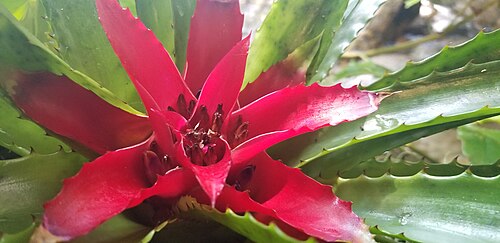
Built when Reptile Gardens moved to its present site south of Rapid City in the mid-1960s, the Sky Dome houses the Safari Room, an indoor tropical forest described as the first of its kind in America, where visitors walk among free-roaming reptiles and birds. Destroyed by an electrical fire on 22 August 1976, it was rebuilt over the following winter and reopened in spring 1977. Beneath its 60-foot black plexiglass dome, held in an aluminium grid, orchids, bromeliads and caladiums grow around the skeleton of a ponderosa pine that survived the blaze.
Affiliate links — booking through Verrière helps fund our research, at no extra cost to you.
History
1 min
Reptile Gardens began in 1937, when Earl Brockelsby, a young reptile enthusiast who had worked at a Rapid City roadside attraction, opened an 18-by-24-foot building on Skyline Drive, with pits dug to show local animals, mostly snakes. Sources disagree on the exact opening day (19 May or 3 June) and on the founder's age at the time.
In 1965 highway construction forced the attraction off its first site. It moved six miles south of town into the Spring Creek valley, on the road to Mount Rushmore, and gained a dome housing a Safari Room: a tropical oasis where visitors walked among free-roaming reptiles and birds, an idea Brockelsby was among the first in the United States to pursue. Several sources date the building of the dome to 1964; others tie it to the opening of the new site in 1965.
In August 1976 (on the 22nd, according to Wikipedia) an electrical fire destroyed the upper structure. The plastic dome melted over everything below and the heat-weakened aluminium frame collapsed into the Safari Room, killing hundreds of reptiles and birds, some of them irreplaceable. A new dome went up over the following winter, the Safari Room was replanted with cactus and exotic plants delivered by the semi-load, and the park reopened in spring 1977. In November 2025 a separate fire destroyed a detached agricultural shelter; it did not reach the dome, which reopened soon afterwards.
Architecture and engineering
1 min
The Sky Dome is a black plexiglass dome 60 feet (about 18 metres) high, held in an aluminium grid. Its dark outline makes it one of the most recognisable buildings among South Dakota's attractions. The first dome already combined an aluminium structure with a plastic skin; according to a 1976 newspaper article cited by Wikipedia, it was at the time of its construction the largest plastic dome built with the Systems Abstracta design.
Inside, the visit unfolds over several levels. The main floor is taken up by the Safari Room, a tropical garden arranged around the skeleton of a large ponderosa pine that has stood there since the beginning: it narrowly escaped being crushed in 1976 and was kept as the centrepiece of the rebuilt room. A mezzanine holds the snake exhibits, while the lower level is given over to crocodilians and amphibians. The enclosures are temperature- and humidity-controlled.
Plant collections
1 min
The Safari Room gathers hundreds of orchids, bromeliads and caladiums, together with other tropical plants from many parts of the world, beneath tall trees. One especially lush corner is known as Tortuga Falls. Sculptures from Papua New Guinea and Indonesia stand among the plants, where lizards and frogs roam free alongside parrots, small tortoises and a turtle pond.
The mezzanine shows venomous and non-venomous snakes, among them pythons, cobras, mambas and rattlesnakes, as well as poison dart frogs, giant tarantulas and an exact cast of an Archelon turtle fossil described as the largest ever found. The lower level belongs to Maniac, a large saltwater crocodile whose measurements vary between the park's and the tourist board's pages: nearly 16 feet and about 1,250 pounds, or over 16 feet and more than 1,300 pounds.
Visiting
1 min
Reptile Gardens lies six miles (nearly 10 km) south of Rapid City on US Highway 16, the road to Mount Rushmore, so a visit fits easily into a day in the Black Hills. The Sky Dome is the heart of the park, but the grounds are also laid out as walking gardens with many flowerbeds, and the local tourist board describes the place as a botanical garden as much as a reptile zoo. In summer the programme adds animal presentations, including Darwin, a laughing kookaburra whose call carries near Tortuga Falls. On a cold or wet day the Safari Room offers a warm, humid refuge from the weather outside.
43.99° N, 103.27° W
Greenhouses nearby
More greenhouses — United States
Do you have a good photo of this greenhouse? Suggest it for this page →
Sources (7)
- reptilegardens.com/activities/main-exhibits/sky-dome/
- reptilegardens.com/about-us/history/
- en.wikipedia.org/wiki/Reptile_Gardens
- southdakotamagazine.com/reptile-gardens
- visitrapidcity.com/exploring-reptile-gardens-everything-you-need-to-know/
- kotaradio.com/2025/11/24/reptile-gardens-reopens-after-fire-that-killed-multiple-animals/
- openstreetmap.org/way/713455173