Wetlands glass dome (The Florida Aquarium)
Tampa, Florida

Sources checked October 2026
- Year
- 1995
- Architect
- HOK (Hellmuth, Obata + Kassabaum); structural engineering: Walter P Moore
- Style
- Seashell-shaped glass dome housing re-created wetlands
- Dimensions
- Dome 80 ft (≈24 m) tall; more than 1,100 glass panels
- Status
- Open to the public with aquarium admission, daily
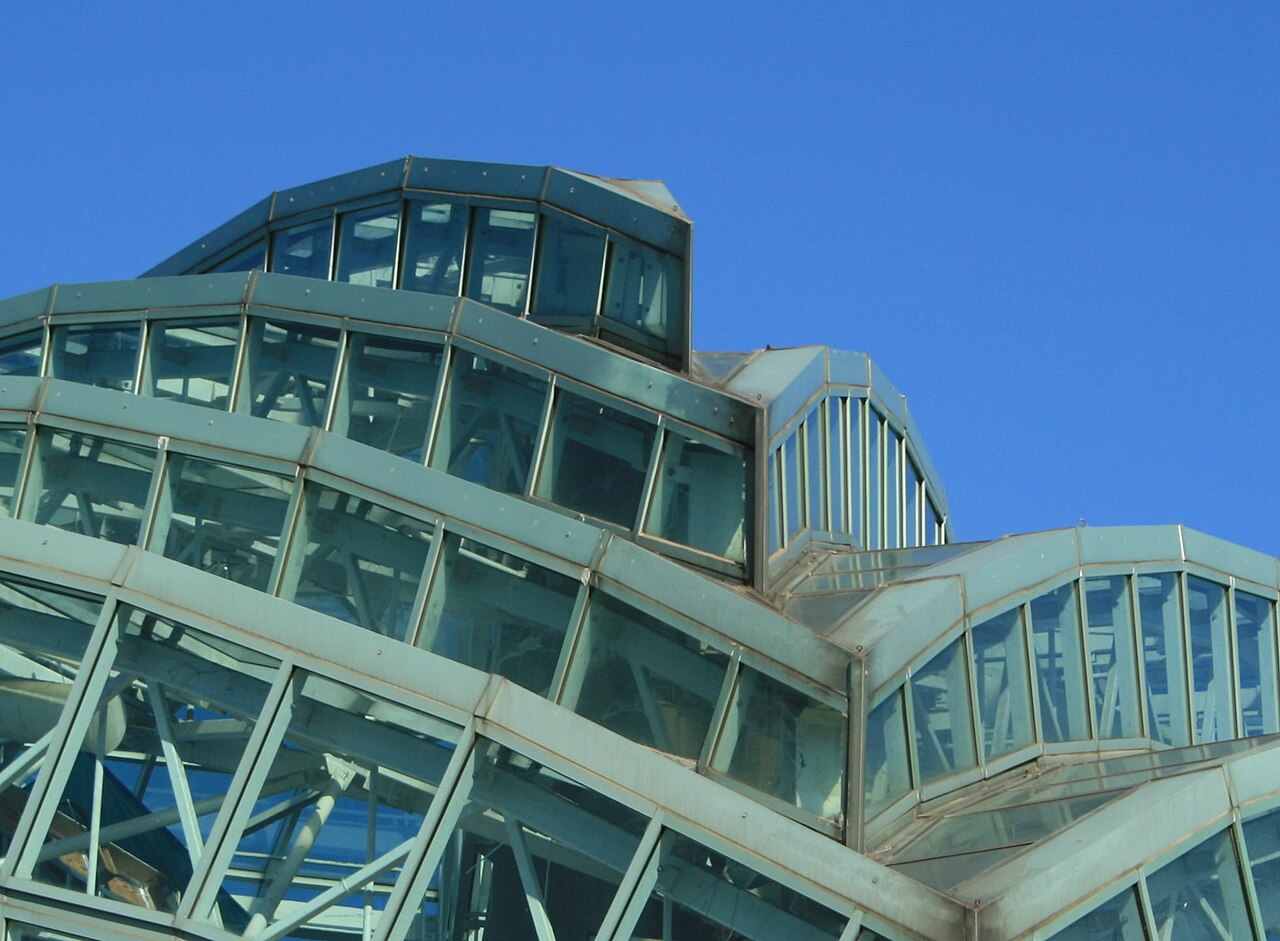
The architectural signature of the Florida Aquarium, which opened in 1995 in Tampa's Channelside district, the seashell-shaped glass dome houses the "Wetlands of Florida" exhibit. It stands 80 feet tall and is covered with more than 1,100 glass panels with a reflective coating, designed to let through the light plants need while filtering out heat. Under this roof, mangroves, free-flying birds, turtles, an alligator and river otters re-create Florida's wetlands. This entry covers the glazed hall, not the aquarium as a whole.
Affiliate links — booking through Verrière helps fund our research, at no extra cost to you.
History
The Florida Aquarium opened on 31 March 1995 in the Channelside district, on the Tampa waterfront. Privately funded, it was designed by HOK, and the City of Tampa took over its debt in 1999. Before opening, the local press noted that its most striking exterior element, the dome, looked more like a greenhouse than a fish tank. According to the Tampa Bay Times in September 1994, the plants were due to arrive in October and the fish, birds and other animals in November and December.
The approach is to tell the story of Florida's water rather than line up tanks: visitors follow water's route from a surging spring to a mangrove swamp, under a bridge and on to a sandy shore. The dome houses the first chapter of that story, the wetlands, which opened with an underground spring, streams and rivers, sawgrass marshes, cypress swamps and mangroves, as described at the time. The aquarium today notes that its dome, built in 1995, brings free-flying birds, fish, reptiles and living mangroves under a single roof, and that it has grown mangroves in-house from the start.
The aquarium later was placed on the 2012 "100 Years, 100 Places" list of the Florida chapter of the American Institute of Architects.
Architecture and engineering
The dome is shaped like a seashell. It stands 80 feet tall (about 24 m) and its covering has more than 1,100 panels. Walter P Moore provided the structural engineering for this curved, shell-shaped roof; HOK was the architect. The 1994 Tampa Bay Times explains that the panels are not ordinary glass: regular glass would let in too much heat for visitors. Each combines two sheets of glass with a reflective coating laminated between them. The coating reflects more than 54 percent of the infrared rays that cause heat and lets 70 percent of the visible light, needed for plant growth, pass through.
Inside, a misting system keeps up the feel of a hot, steamy day, and gently sloped ramps lead visitors gradually down to the underwater galleries. The sources give different floor areas for the whole building (120,000, 152,000 or 250,000 square feet) and none measures the glazed hall alone.
Plant collections
The Florida Aquarium's own wetlands page lists birds flying under the dome, turtles, freshwater fish, an alligator, North American river otters, roseate spoonbills and white ibises. It says mangroves have thrived there for thirty years, and the aquarium says it has sent saplings around the world to help restore coastal ecosystems.
Before opening, the aquarium announced more than 200 plant species for the whole institution, and the 1994 description of the hall mentioned towering cypress trees, sawgrass marshes and bogs. That list describes the plan.
Visiting
The hall is part of the aquarium route, at 701 Channelside Drive, and is visited with the admission ticket. At opening it was the first stop on the visit, before the underwater galleries. In 1994 the aquarium estimated the average full visit at two and a half hours.
The "Wander Through the Wetlands Trail" is walked on foot, among the free-flying birds, under the glass. The Channelside waterfront district lends itself to extending the outing.
27.94° N, 82.44° W
Greenhouses nearby
More greenhouses — United States
Do you have a good photo of this greenhouse? Suggest it for this page →
Sources (9)
- flaquarium.org/explore/habitats/wetlands-of-florida/
- flaquarium.org/visit/
- flaquarium.org/visit/visitor-information/aquarium-map/
- tampabay.com/archive/1994/09/06/a-peek-under-the-glass/
- heraldtribune.com/story/business/real-estate/2020/12/19/florida-buildings-love-no-63-flori
- aza.org/connect-stories/stories/30-years-of-impact-at-the-florida-aquarium-a-legacy-of-con
- walterpmoore.com/projects/florida-aquarium
- en.wikipedia.org/wiki/Florida_Aquarium
- tourtampabayarchitecture.com/page_10-html/
Affiliate links — booking through Verrière helps fund our research, at no extra cost to you.