Conservatory, Bellingrath Gardens and Home (Lord & Burnham greenhouse)
Theodore (near Mobile), Alabama

Sources checked October 2026
- Year
- 1935
- Architect
- Lord & Burnham
- Style
- Conservatory of brick, steel, wood and glass, with a central rotunda
- Status
- Open to garden visitors (stop 3 on the estate's official map)
In Bellingrath Gardens and Home at Theodore, near Mobile, the Conservatory is a glasshouse that the estate dates to 1935 and describes as a "Lord and Burnham" greenhouse. It was built to grow and show off exotic tropical plants that a Mobile winter would have killed, and a coal-fired boiler in a neighbouring brick building originally heated it. A ponytail palm about thirty feet tall stands in the central rotunda, and coffee plants and vanilla vines have taken over part of the original raised benches. The building looks onto the rose garden.
Affiliate links — booking through Verrière helps fund our research, at no extra cost to you.
History
Bellingrath, on the Fowl River south of Mobile, began with land that Walter Bellingrath bought in 1917 as a fishing camp, according to Wikipedia. Bessie Bellingrath started developing the garden in 1927 with the architect George Bigelow Rogers; it first opened to the public on 7 April 1932 and became a year-round attraction in 1934, when the couple moved to the estate. The house, designed by Rogers, was completed in 1935.
The Conservatory belongs to the same period. The estate's website says it was built in 1935 to grow and showcase exotic tropical plants, while the National Register of Historic Places nomination dates it to about 1934 as the "Exotica Conservatory" and places the original boiler house at the same date, now a rose-garden storage building. According to Garden & Gun, the greenhouse was designed by Lord & Burnham, which the magazine calls the leading American greenhouse design firm. The estate's executive director sees it as a status symbol, an entertaining space and a way to reach a tropical paradise without leaving the property. Founded in 1849 in Buffalo, New York, and closed in 1988, the company made wood-and-glass greenhouses and conservatories as well as boilers.
The estate points out that the interior layout is similar to that of the 1930s, although the plants have changed: the original raised benches were converted into in-ground beds. Hurricane Frederic in September 1979 badly hurt the garden's plantings but, according to the National Register file, caused only minor structural damage to buildings; the greenhouse is among the original features still standing. The whole estate has been on the National Register since 1982.
Architecture and engineering
The National Register inventory describes the "Exotica Conservatory" as a brick building with a steel frame, wood and glass, dated to about 1934. The original boiler house, also of brick, measures 40 by 15 feet (about 12 by 4.6 m); the coal-fired boiler that heated the greenhouse stood there, according to the estate's website. The same inventory lists a separate greenhouse, metal-framed with glass glazing and a corrugated transite base, dated to about 1951 and rated non-contributing; it should not be mistaken for the historic Conservatory.
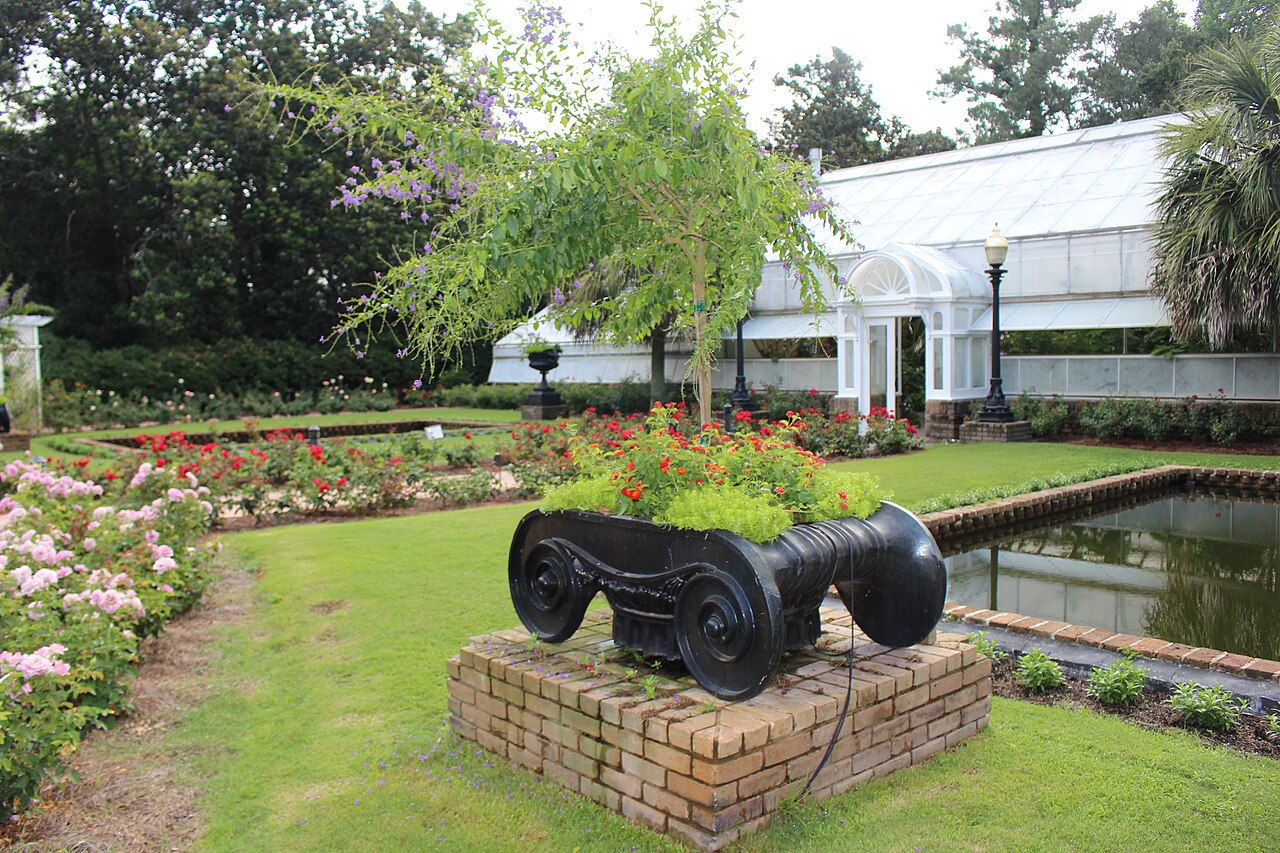
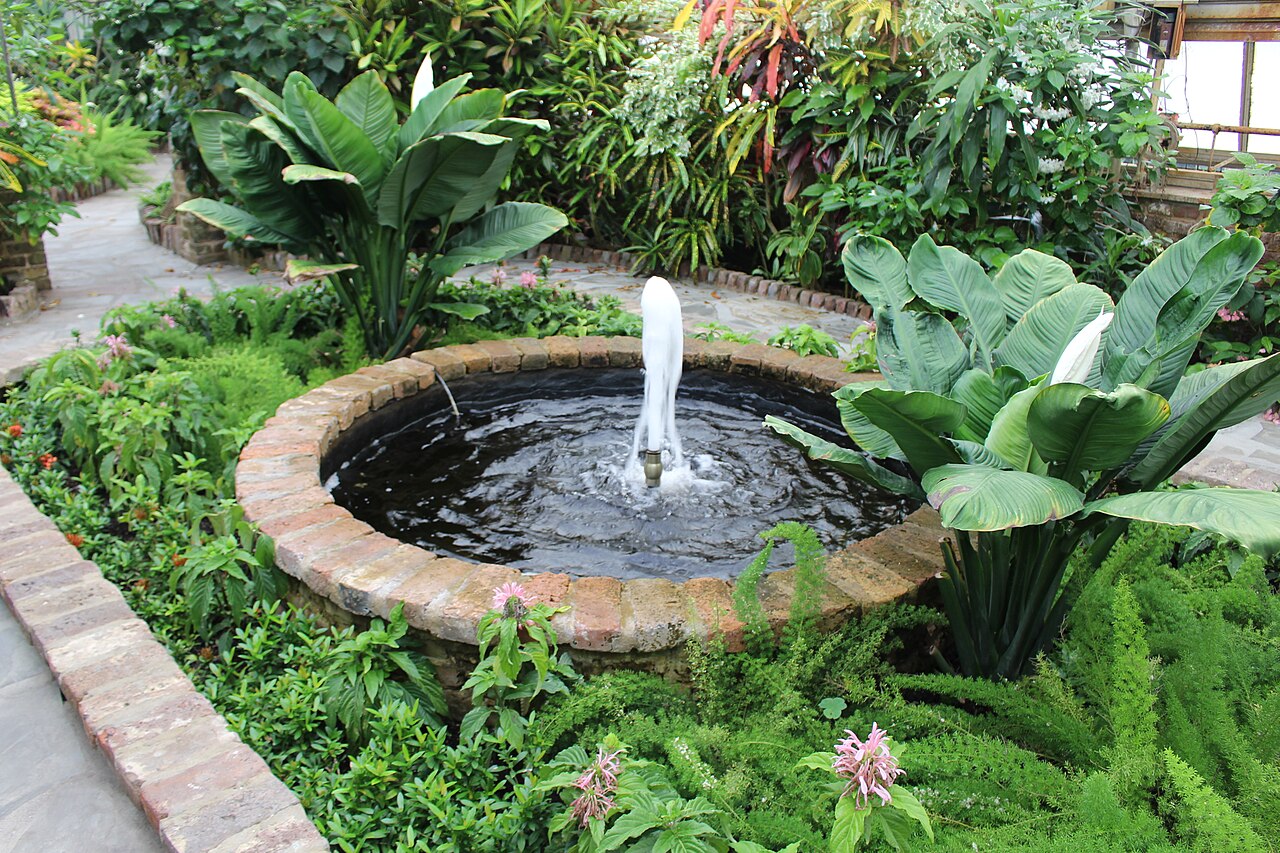
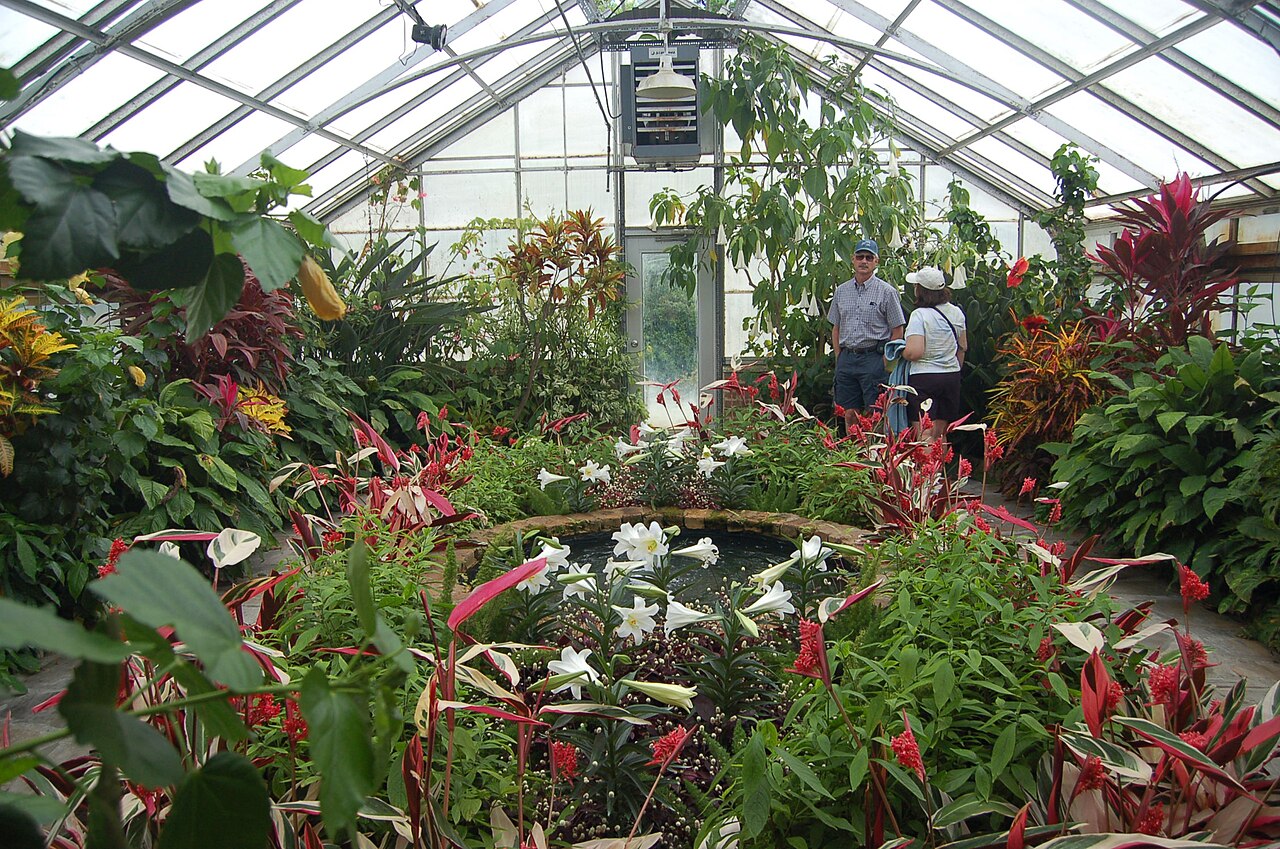
Free photographs from 2018 taken from the rose garden show a pitched glazed roof, white-painted framing, a small entrance porch topped by an arched fanlight and a masonry base carrying pale panels; the building runs alongside a rectangular brick-edged pool. Inside, a 2012 public-domain photograph from the federal National Scenic Byways Program shows a glazed roof with slender bars, plants growing up under the glass and a glazed door at the far end; another, from 2018, shows a circular brick-edged basin with a fountain jet. The estate speaks of a "central rotunda". On OpenStreetMap the footprint is a central block with two wings, about 34 m long and 11 m wide.
Plant collections
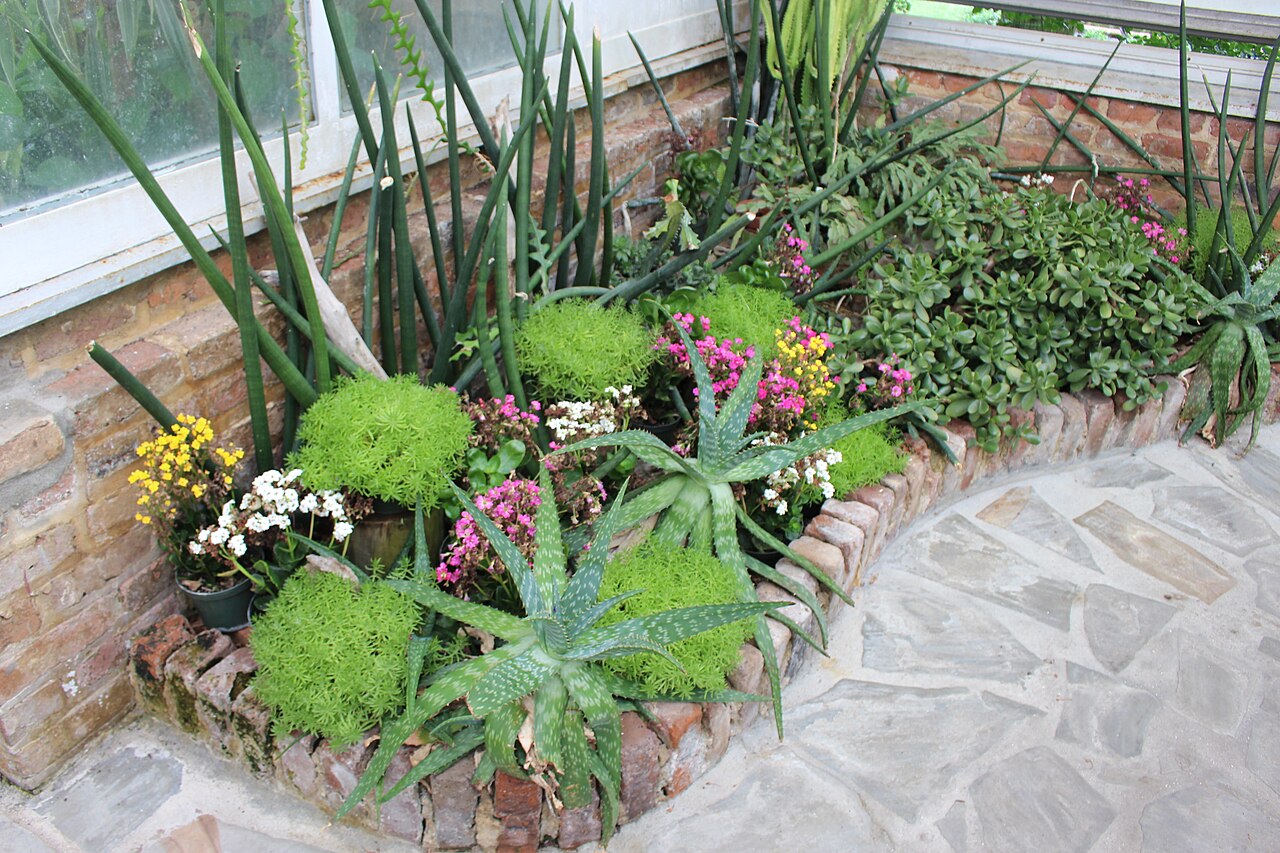
The signature plant is a ponytail palm about thirty feet (roughly nine metres) tall in the central rotunda; the estate says it has grown there for decades. Since the original benches were replaced by in-ground beds, the house has held coffee plants and vanilla vines, and staghorn ferns hang here and there, according to Garden & Gun. The official website notes that the building was designed for tropical plants that would not survive an ordinary Mobile winter, and that the species have changed since the 1930s.
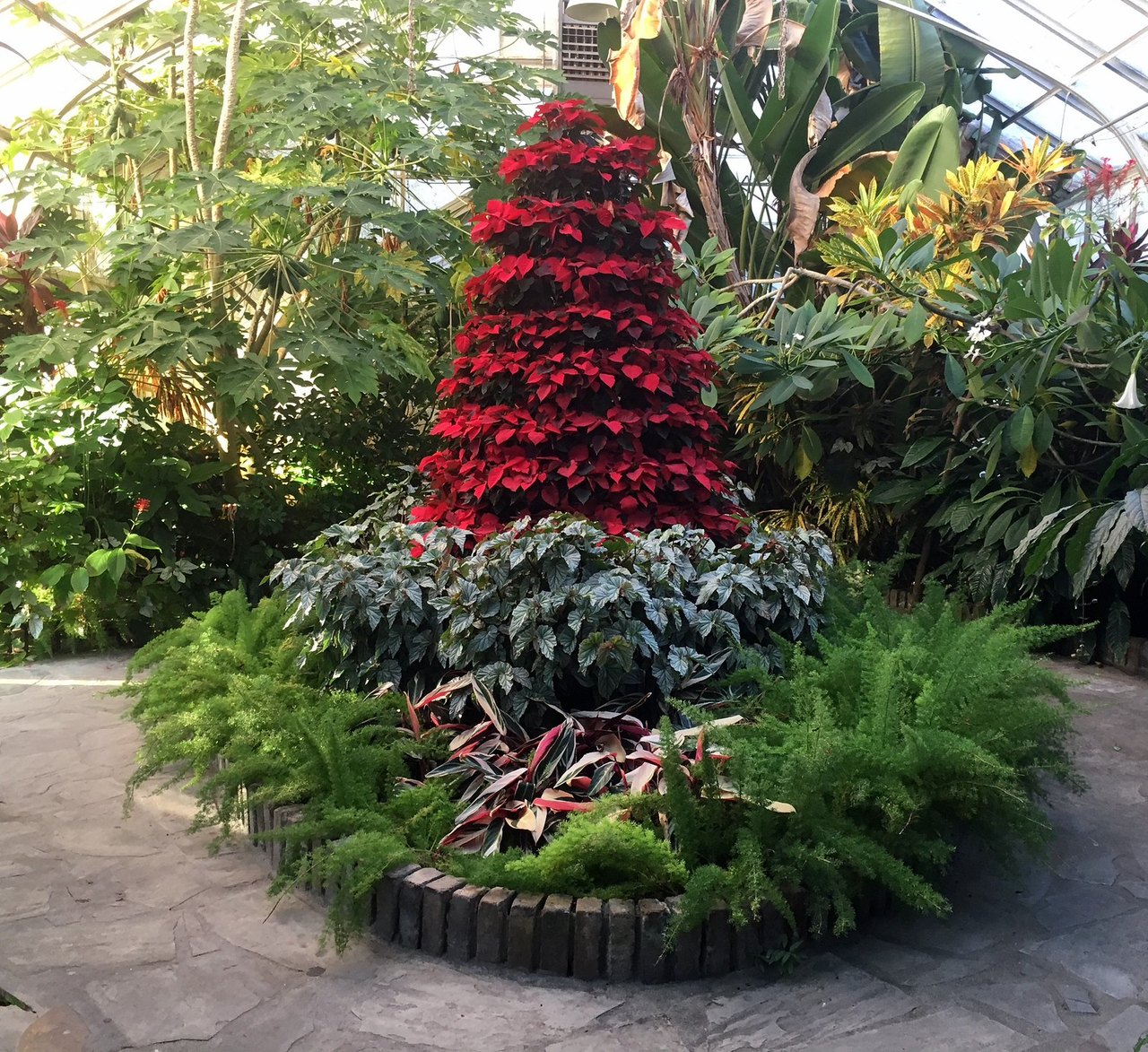
Photographs from 2018 on Wikimedia Commons also show bromeliads, orchids, ferns and fruiting pineapples among foliage plants in bright colours. According to the estate's leadership, visitors are transported to the steamy tropics when they come in winter, although Alabama's climate stays mild.
Visiting
The conservatory overlooks the rose garden, reached by heading east from the gift shop and cafe, according to an Islands article of May 2026; it is stop 3 on the estate's Browse the Estate map. The neighbouring rose garden follows a circular layout based, in the National Register nomination's words, on the Rotary Club emblem. The garden's leadership singles out winter for the sense of being somewhere else.
The rest of a visit covers roughly 65 acres (26 ha) of cultivated gardens within an estate of about 900 acres (360 ha), according to Wikipedia: Mirror Lake, the great lawn in front of the 1935 house, the terraces and the Fowl River, as the National Register file describes them. The estate also runs seasonal events, among them Magic Christmas in Lights.
30.43° N, 88.14° W
Greenhouses nearby
More greenhouses — United States
Do you have a good photo of this greenhouse? Suggest it for this page →
Sources (8)
- bellingrath.org/discover/browse-the-estate/
- bellingrath.org/visit/estate-map/
- bellingrath.org/about/history/
- npgallery.nps.gov/GetAsset/ec821496-9514-432a-83e8-c79ef20beeae
- mobile.org/articles/post/seven-standout-greenhouses/
- gardenandgun.com/seven-standout-greenhouses
- islands.com/2183268/bellingrath-gardens-alabama-once-thriving-fishing-lodge-now-botanical-
- en.wikipedia.org/wiki/Bellingrath_Gardens_and_Home
Affiliate links — booking through Verrière helps fund our research, at no extra cost to you.