Enneüs Heerma Bridge
Amsterdam
Sources checked November 2026
- Year
- 2001
- Architect
- Nicholas Grimshaw
- Type
- Road, tram, cycle and pedestrian bridge
- Access
- In service, open to the public (Arcam, November 2026)
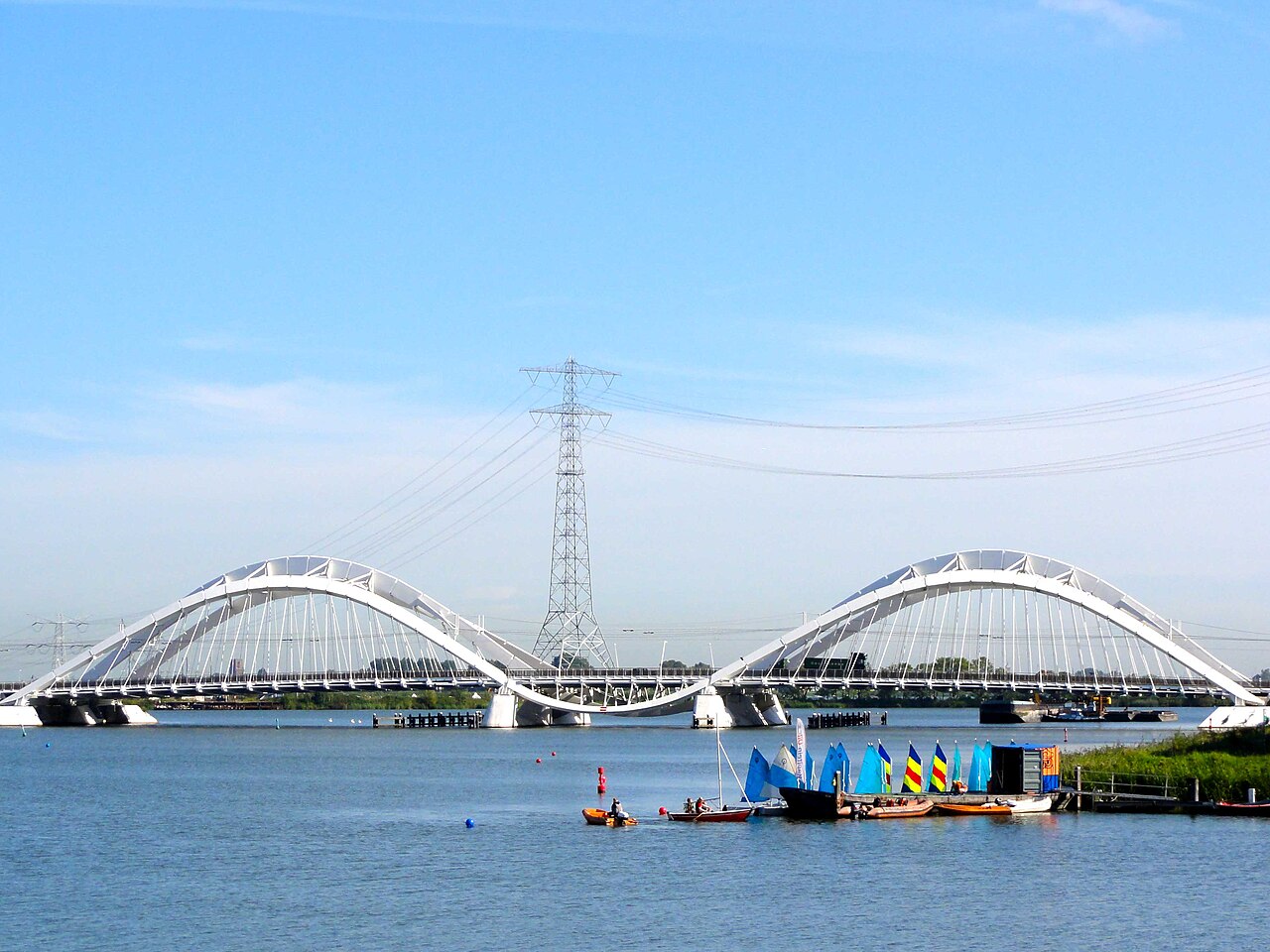
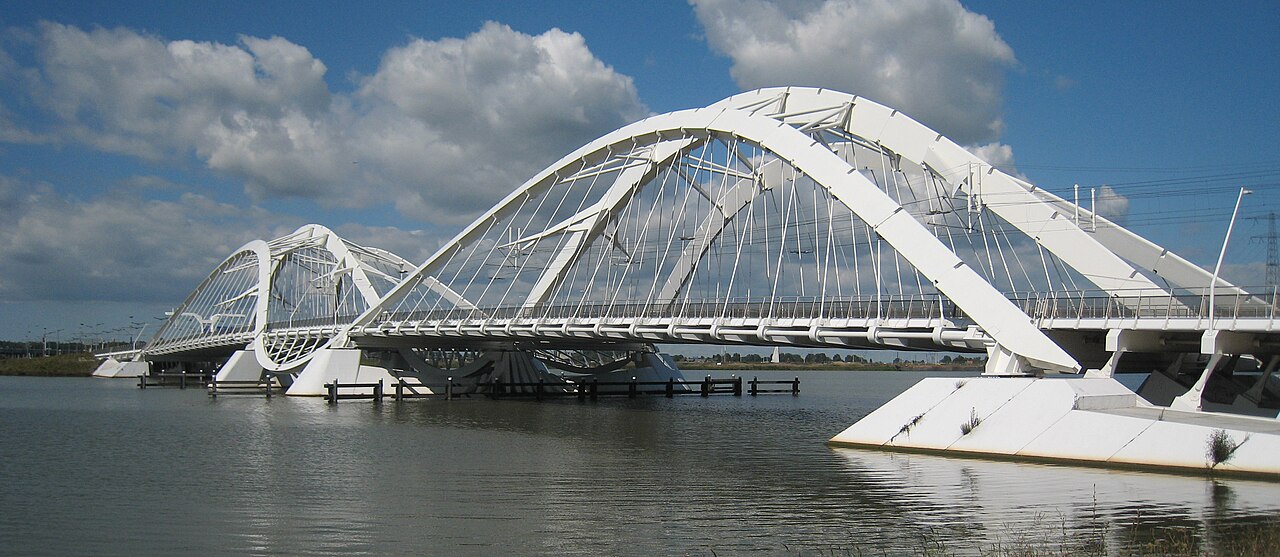
Designed through a competition by Nicholas Grimshaw (Grimshaw & Partners), the Enneüs Heerma Bridge links Zeeburgereiland to Steigereiland and opens the way into IJburg. Two large white steel arches, joined by a central span with an inverted arch, give it the shape of two waves. Opened in 2001, it won the Nationale Staalprijs (the Dutch national steel prize) in 2002, in the category of infrastructure and other steel structures.
Affiliate links — booking through Verrière helps fund our research, at no extra cost to you.
History
The bridge is named after Enneüs Heerma (1944-1999), a CDA politician from Amsterdam. It was designed through a competition by the British architect Nicholas Grimshaw and his practice, Grimshaw & Partners, with the architect Neven Sidor, for the City of Amsterdam. Opened in 2001, it links Zeeburgereiland to Steigereiland, which is in turn connected to the artificial islands of Haveneiland, Rieteilanden and Centrumeiland: it is the gateway to IJburg.
In 2002 the design won the Nationale Staalprijs (the Dutch national steel prize) in the category of infrastructure and other steel structures. The jury saw it as a landmark marking the crossing from the old city to the new land. Up close, it found the detailing somewhat coarse, and the inverted middle arches seemed to it superfluous on strictly structural grounds; but with them, it judged, the bridge meets its primary expectation: to be "a magnificent gateway to IJburg".
Architecture
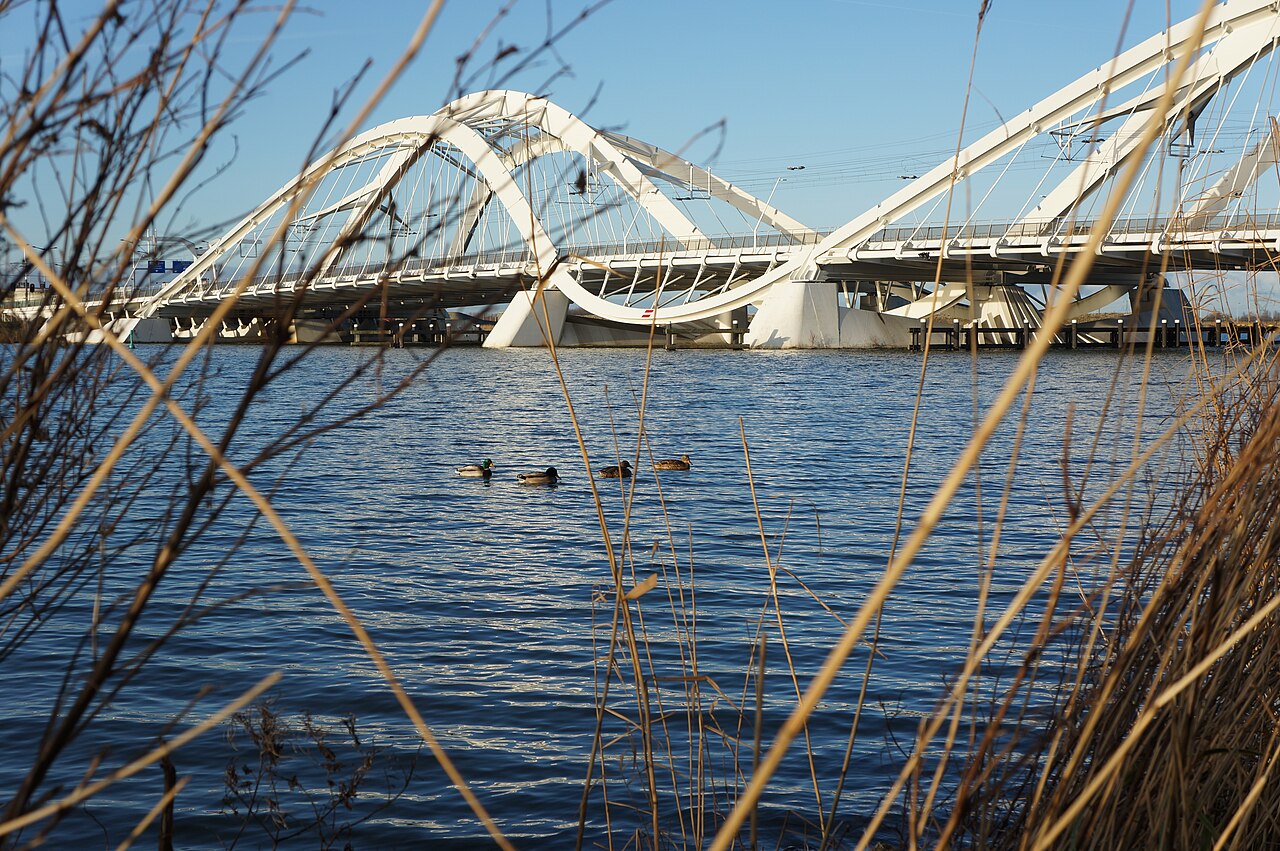
The bridge crosses the water in five spans of white steel whose profile undulates like two waves. In the centre, two main arches of 75 m each are joined by a 30 m middle span whose arch points downwards; on either side, a 25 m approach span extends the whole. The two main arches are conventional arches, while the inverted arch that links them works as a bow-string truss. The thrust of the main arches is taken by tie rods beneath the deck, which hangs from the steel structure on hangers.
The white girders form two decks with a marked gap between them, to heighten the sense of crossing water. A second, smaller bridge between two islands uses the same materials in a different configuration. The shape of the large bridge has earned it the popular nicknames "Beha" (bra) and "Cup IJ".
Use today
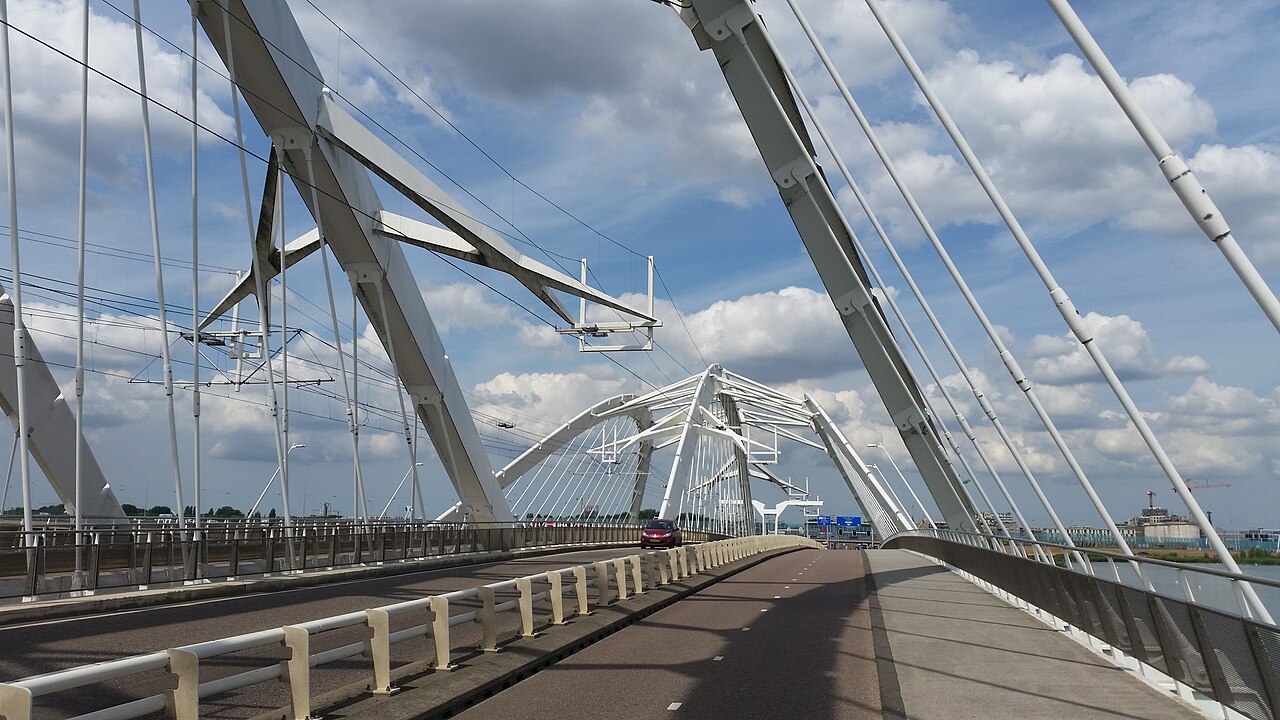
The competition-winning design brings together on one structure two tram tracks, two cycle paths, footpaths and several lanes for cars; trams have run over it since 2005. The bridge is an important link between IJburg and the rest of Amsterdam.
Visiting
A public structure on the IJburglaan, open to everyone.
Photos
52.36° N, 4.98° E
Greenhouses nearby
Architecture nearby
By the same architect
Affiliate links — booking through Verrière helps fund our research, at no extra cost to you.