Vlinderpaviljoen (Butterfly Pavilion), ARTIS Royal Zoo
Amsterdam (Plantage), North Holland

Sources checked October 2026
- Year
- 2006
- Architect
- Helmut Sprenger (sprenger von der lippe); interior landscape: Landlab
- Style
- Contemporary glasshouse with a transparent air-cushion roof; landscaped tropical garden on several levels
- Dimensions
- ≈ 1,000 m² (1,910 m² of usable floor area according to the architects)
- Status
- Open to the public, inside the ARTIS zoo grounds
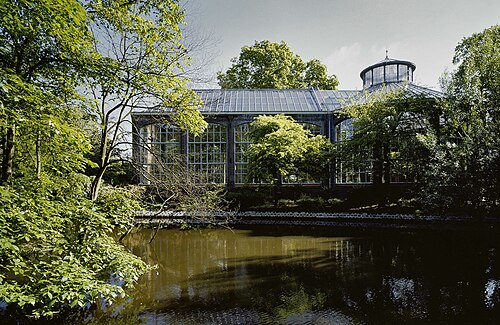
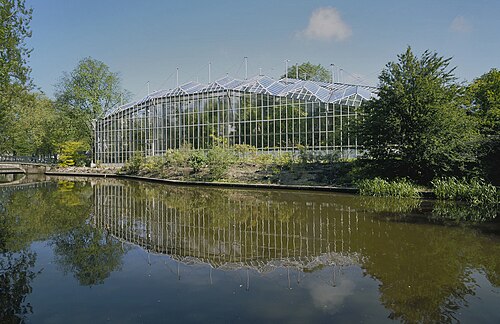
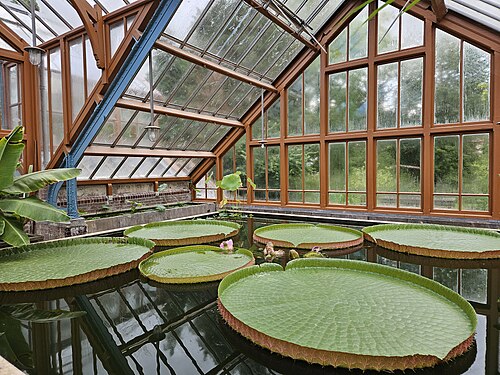
Designed by the German architect Helmut Sprenger and built between 2004 and 2006 for Amsterdam's ARTIS zoo, the Vlinderpaviljoen is a large glasshouse with a transparent air-cushion roof, joined to the park's neighbouring tropical greenhouse. It shelters a tropical garden modelled in relief, with a four-metre waterfall, planting islands and water channels, where more than a thousand butterflies fly freely. Opened in 2006 according to a specialist magazine and Wikipedia, it is billed as the largest butterfly pavilion in the Netherlands.
Affiliate links — booking through Verrière helps fund our research, at no extra cost to you.
History
The Vlinderpaviljoen is a facility of ARTIS zoo; the client named by Rod'or Advies is Natura Artis Magistra. According to the architecture firm sprenger von der lippe, the project spanned 2004 to 2006, commissioned directly by the zoo, with a full design and artistic supervision brief; it connects to existing buildings, including the Borneo greenhouse. Rod'or Advies, the firm that handled technical advice, the tender and occasional supervision of the water features, places the preparation in 2005-2006 and the execution in 2006.
The magazine Vlinders, which interviewed the pavilion's manager in 2009, gives the opening as September 2006, and Dutch Wikipedia says 2006, after the insectarium opened in 2005; Rod'or Advies, however, writes 4 October 2007. The interior is credited there to Landlab, in consultation with Helmut Sprenger and ARTIS, whereas the architects' page credits Plan de Campagne (Arnhem) for the landscape.
In 2009, despite its position at the very back of the park, the pavilion drew visitors who came specially for the butterflies, according to its manager. ARTIS belongs to IABES, an organisation promoting butterfly gardens, because of this pavilion, according to Wikipedia. The zoo's accessibility page still lists it in 2026.
Architecture and engineering
Rod'or Advies describes a large greenhouse under a transparent air-cushion roof, connected to the Borneo greenhouse. The architects give a gross floor area of 2,115 m² and a usable area of 1,910 m², while Amsterdam's visitor-information site quotes about 1,000 m². Structural engineering was by Eilers + Vogel (Hanover) and Van Rossum (Amsterdam).
Inside, the floor rises from the foyer into a landscape with more than 4 metres of height difference, dotted with planting islands and water channels, with a grotto beneath the highest level and a broad waterfall dropping 4 metres. The paths, a mosaic of natural stone slabs set in concrete, branch among the beds; their slopes are designed for wheelchairs and the maintenance vehicle, although the zoo notes that the wheelchair path is steep. The modelled base is made of expanded polystyrene, a light and strong material, with cables and pipes for water, irrigation and electricity running beneath; the water flows mostly in buried gutters, only a small part appearing between permeable joints, where it forms a wadeable spot.
Plant collections
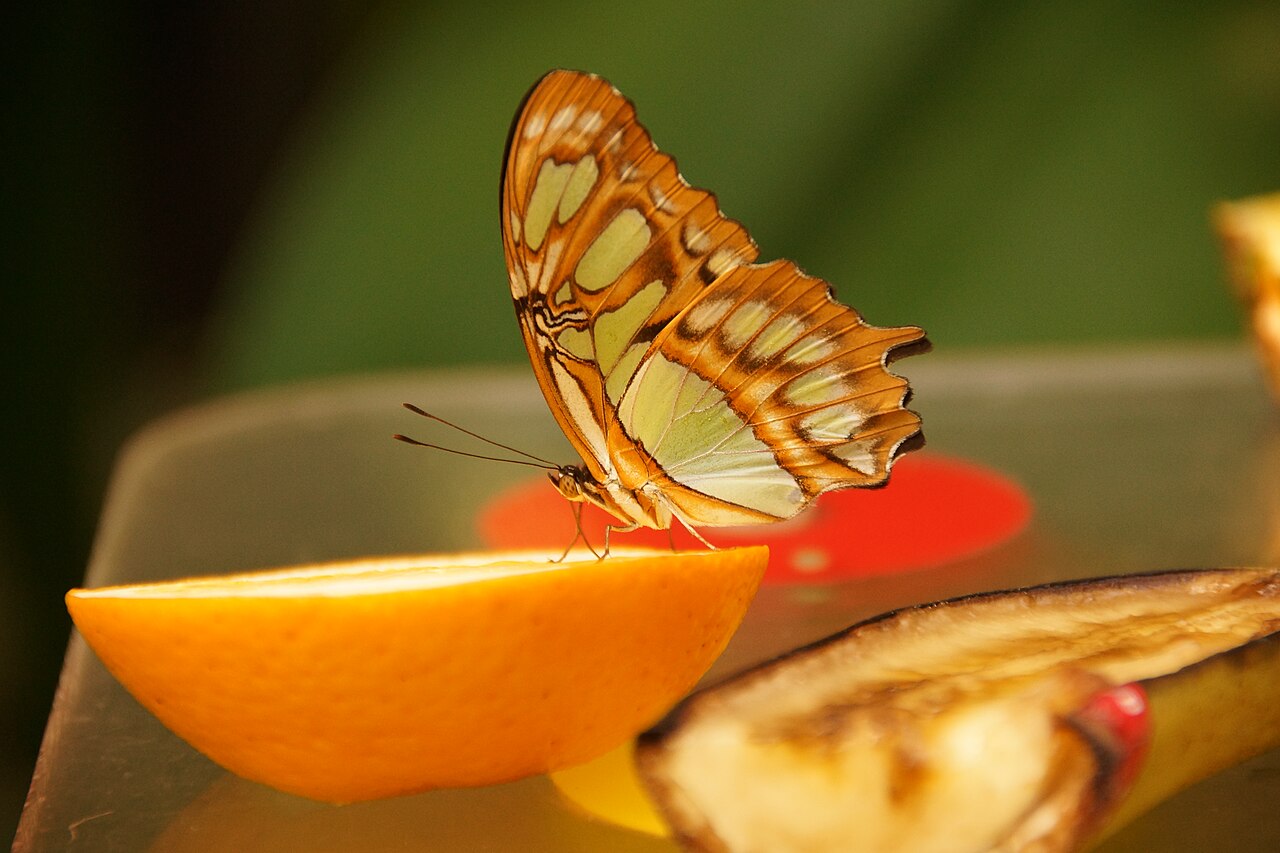
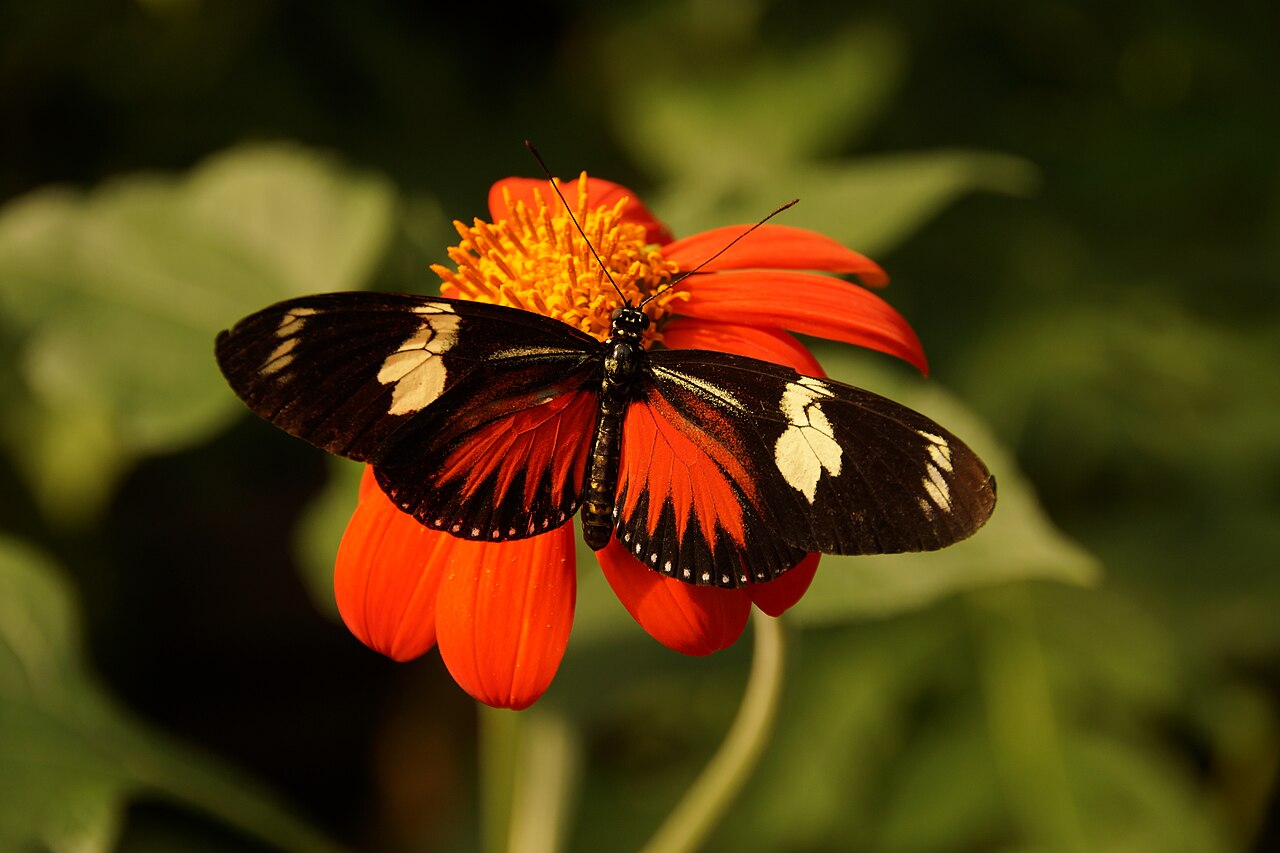
The tropical garden holds flowering and foliage plants chosen for their function: each plant is either a nectar source or a host plant for caterpillars, according to the manager interviewed by Vlinders in 2009. Around a thousand butterflies fly in the house at any time; at the time of the interview it was 30 °C inside. The species named in the zoo's documents and in that interview include the morpho, with its large blue wings, owl butterflies, whose courtship flight begins at dusk, and passion-flower butterflies, favoured in winter because they need less daylight. Small poison dart frogs of the Anthony's type can be heard near the water.
In 2009 some 700 pupae arrived each week: about 150 from the zoo's own breeding, 50 from Malaysia and 500 from Costa Rica, with 90 to 95 per cent hatching. A hatching display and a rearing area with caterpillars are visible to the public. A garden of native butterflies, planted with nectar and host plants, adjoins the pavilion.
Visiting
The pavilion lies at the back of the park, near the Muidergracht, next to the insectarium. Visitors can watch butterflies emerge from their pupae in the hatching display, and a study table on butterfly senses stands near the waterfall; lessons were offered to school classes in 2009. Owl butterflies show themselves more in the late afternoon, according to the manager interviewed.
Amsterdam's visitor-information site mentions a lift, a level entrance, an adapted toilet and a route for assistance dogs. The neighbouring native butterfly garden completes the visit; the insectarium and the Borneo greenhouse are next door, and the Hortus Botanicus, already described in this atlas, is less than a kilometre away.
52.37° N, 4.92° E
Greenhouses nearby
More greenhouses — Netherlands
Do you have a good photo of this greenhouse? Suggest it for this page →
Sources (7)
- sprengervonderlippe.de/projekte/694/
- rodoradvies.nl/project/inrichting-vlindertuin-artis-te-amsterdam/
- artis.nl/nl/plan-je-bezoek/toegankelijkheid
- artis.nl/media/va1hawb2/artis_dierenspeurtocht.pdf
- natuurtijdschriften.nl/pub/558841/VLIN2009024001006.pdf
- iamsterdam.com/nl/zien-en-doen/attracties-en-bezienswaardigheden/overzicht/vlinderpaviljoe
- nl.wikipedia.org/wiki/Artis
Affiliate links — booking through Verrière helps fund our research, at no extra cost to you.