Palmenkas (Hortus Botanicus Amsterdam)
Amsterdam

Sources checked September 2026
- Year
- 1911–1912
- Architect
- Johan Melchior van der Mey
- Style
- Amsterdam School (Dutch Expressionism), iron, stone and glass dome
- Dimensions
- Monumental dome housing an Encephalartos altensteinii about 350 years old
- Status
- Open to the public
Built in 1911–1912 by architect Johan Melchior van der Mey in the expressionist style of the Amsterdam School, the Palmenkas was erected at the request of the garden's board to persuade Professor Hugo de Vries to remain at the head of the Hortus. Beneath its dome of iron, stone and glass grows an Encephalartos altensteinii about 350 years old, one of the oldest potted plants in the world. The greenhouse also holds trees said to have been planted by De Vries himself, including a cinnamon tree, along with an imposing Philodendron bipinnatifidum with spectacular aerial roots.
Affiliate links — booking through Verrière helps fund our research, at no extra cost to you.
Practical info
- Tickets
- Garden admission: adult €14.75, student €8.50 (show card), child 5–17 €8.50, under 4 free. Tickets online or at the gate, card payment only, Museumkaart not valid (prices listed in October 2026).
- Opening hours
- Open daily 10am–5pm, except 25 December and 1 January; hours may vary on special days or during events. The Palm House is currently partially closed for renovation. No cloakroom or lockers: suitcases and large backpacks are not permitted in the garden.
- Getting there
- Plantage Middenlaan 2A, 1018 DD Amsterdam. Nearest metro station: Waterlooplein; nearest tram stop: Mr. Visserplein. Drop-off in front of the gate, no long-term parking; disabled spaces on Muiderstraat and Plantage Parklaan.
Frequently asked questions
Do I have to buy my ticket online?
No: you can buy it in the Hortus online ticket shop or directly at the garden gate. Payment is by card only; cash is not accepted.
How much time should I allow?
The Hortus suggests around 1 to 1.5 hours. It is calmest on weekdays, 10–11am and 4–5pm; weekends and school holidays tend to be busier.
Are dogs allowed?
No: dogs and other pets are not allowed, except guide and assistance dogs on a lead. Suitcases and large backpacks are also refused.
History
Amsterdam's Hortus Botanicus dates back to 1638, when the city created a medicinal garden, the Hortus Medicus. Around the turn of the twentieth century it was directed by the botanist Hugo de Vries, in post from 1885 to 1918, who earned the garden international standing. When De Vries considered leaving Amsterdam for New York, the city met several of his demands, including a new house for palms and ferns; a laboratory bearing his name followed in 1915.
The Palm House was built in 1911–1912 for the municipal Public Works department. The Hortus attributes it to the architect Johan Melchior van der Mey (1878–1949), a leading figure of the Amsterdam School, while the national monuments register is more cautious, describing the design as 'probably' his. According to one local source, the new house replaced a wooden structure that had grown too low for the palms.
The building is protected as a national monument (rijksmonument). In 1987 the whole garden came close to closing when the University of Amsterdam withdrew its funding, but public support saved it. In June 2012 the house's centenary was marked by a series of classical concerts held among the palms.
Architecture and engineering
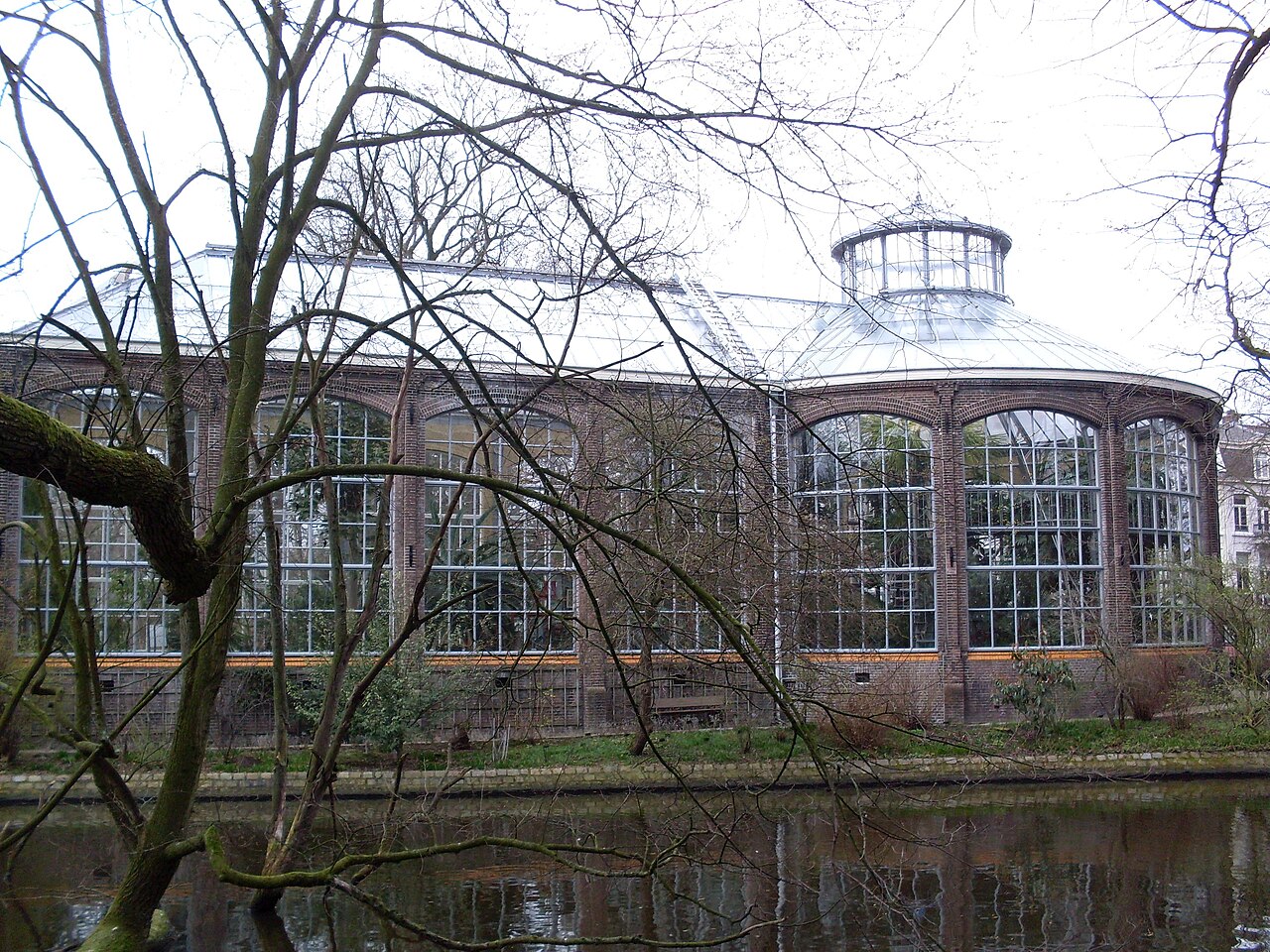
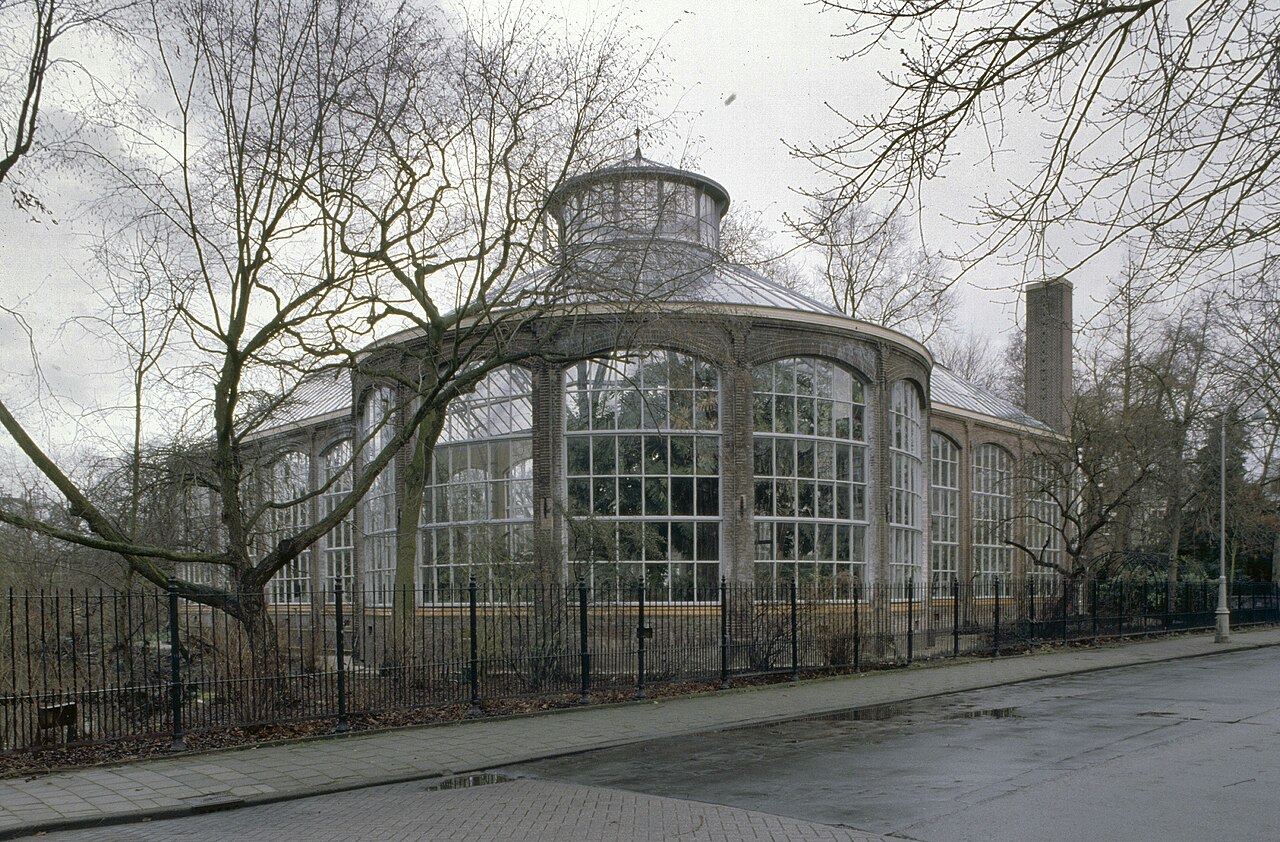
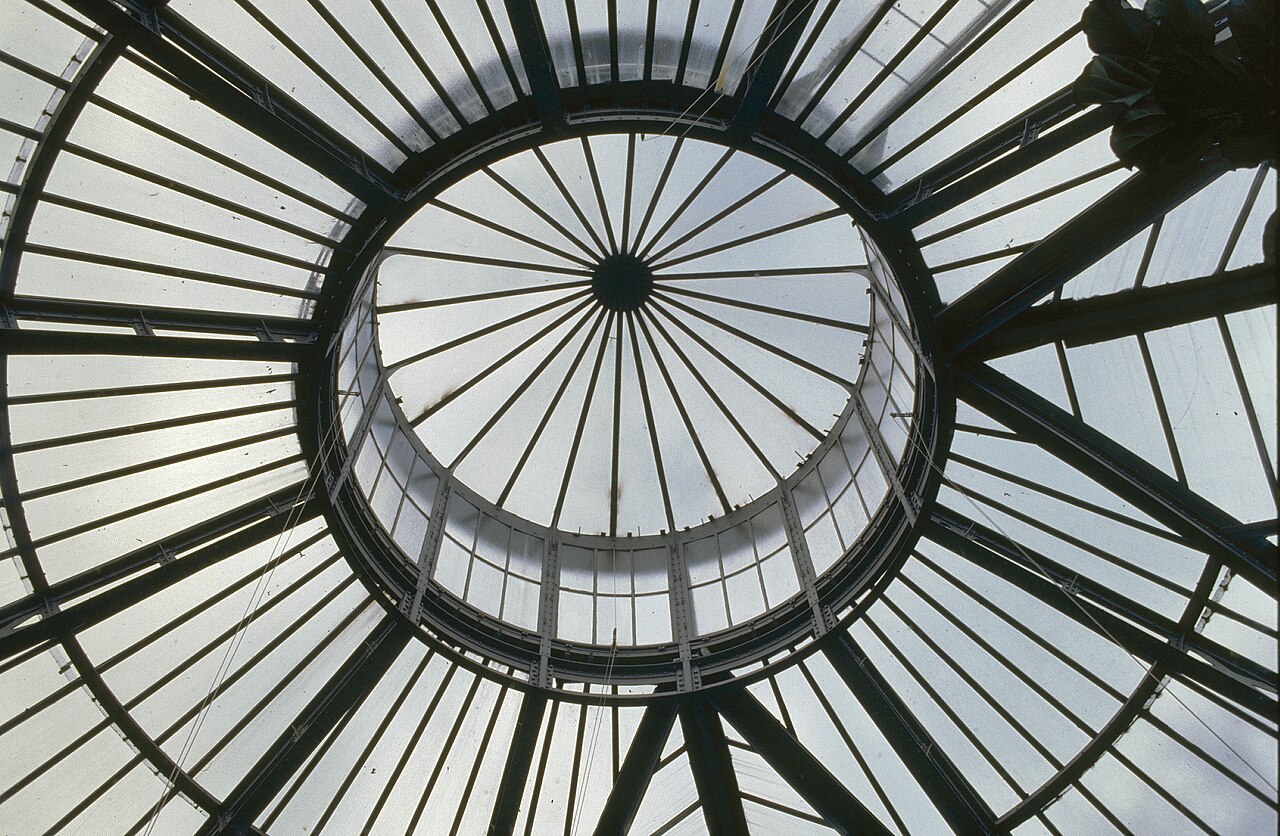
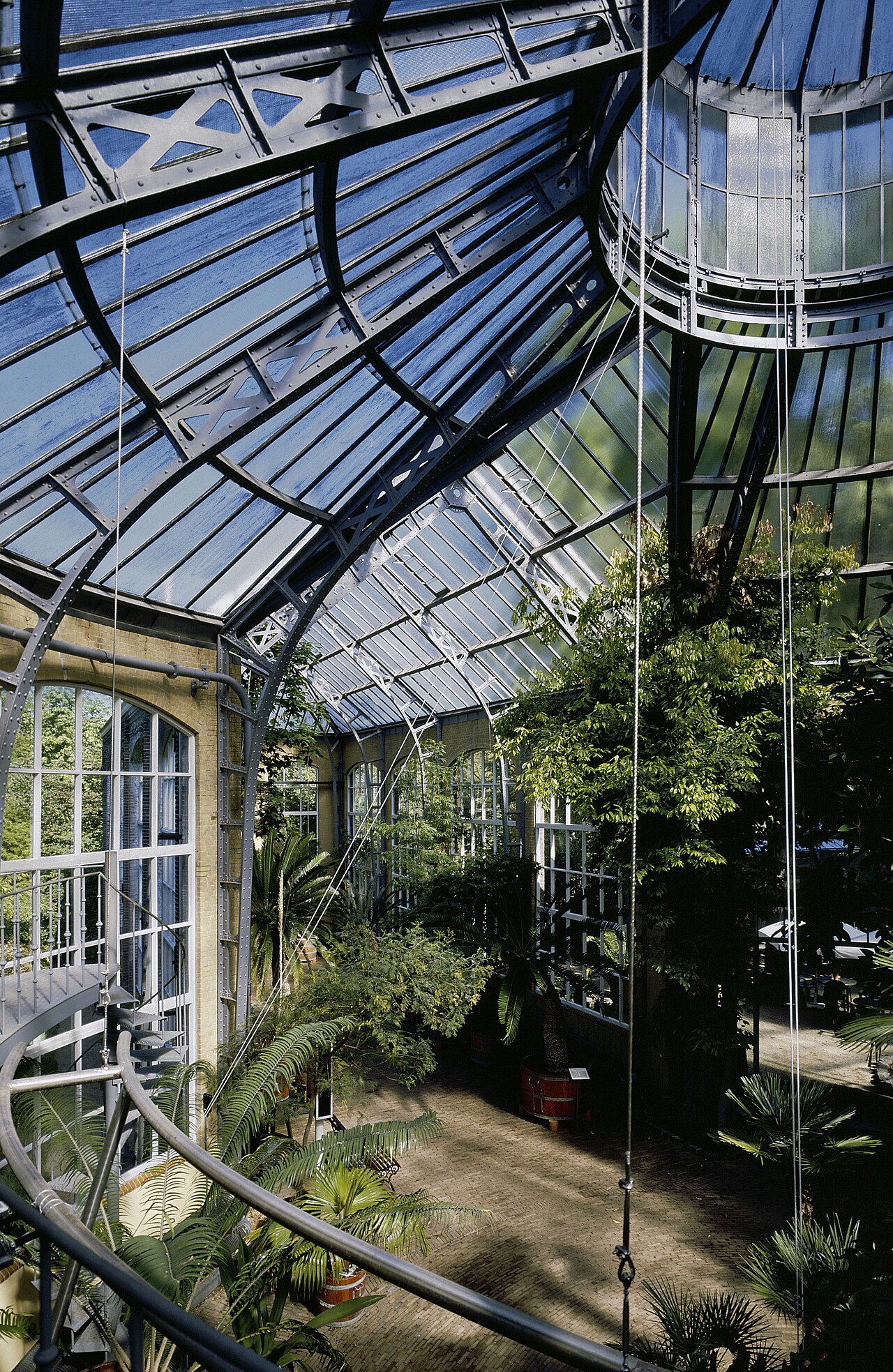
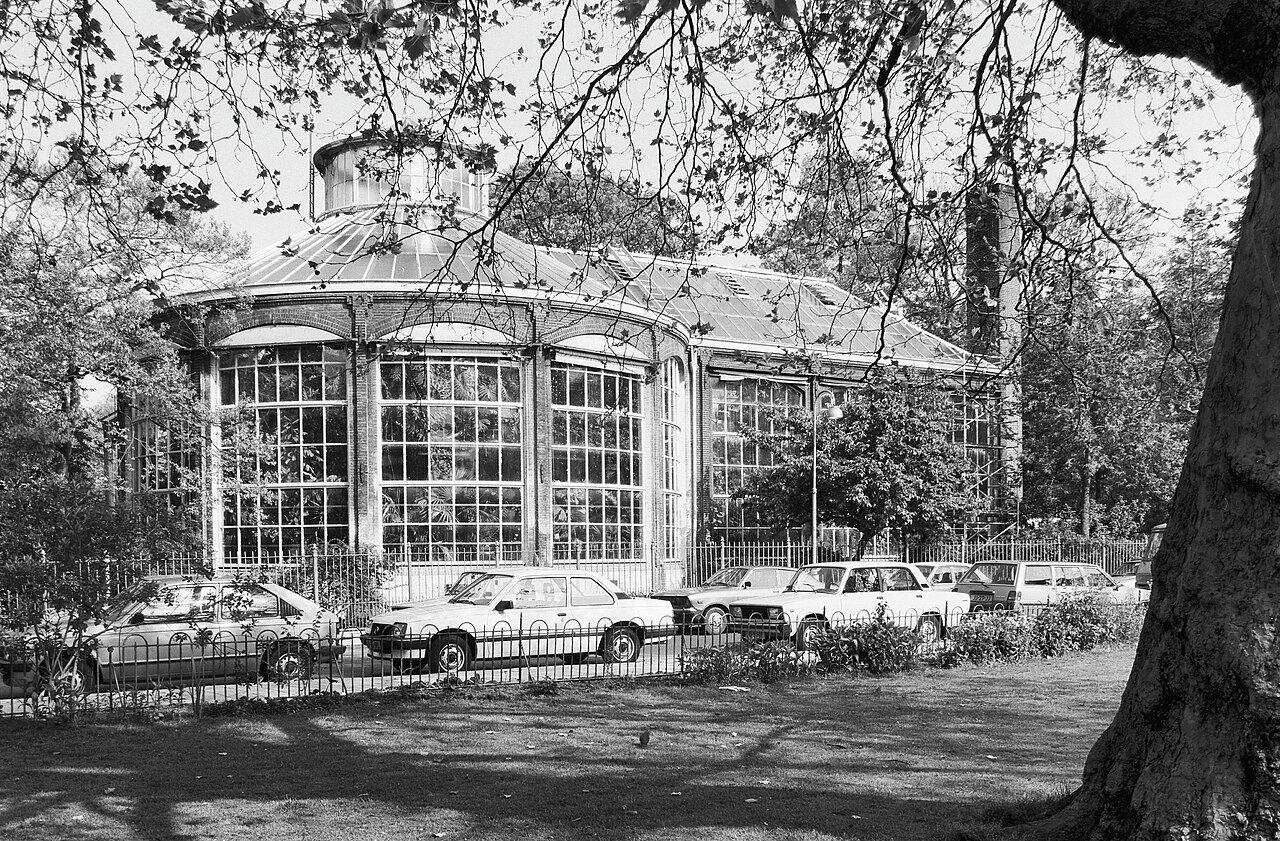
The Palm House is L-shaped, built of iron, dark-brown brick and glass at the southern corner of the garden, beside the Hortus pond. At its heart is a circular hall covered by a pyramidal roof of iron and glass, crowned by a lantern and a weathervane. The roof is carried on twelve riveted frames arranged like the spokes of a wheel.
Two wings extend from this rotunda: to the north-west, a four-bay hall that formed the original palm house, and to the north-east, a three-bay hall that housed the ferns. The brick pilasters are enlivened with decorative brickwork and mouldings in the expressionist spirit of the Amsterdam School, set against an industrial vocabulary of steel and glass. Inside, an iron spiral staircase climbs to a gallery, and the original sliding blinds used for shading can still be seen. The large windows were later re-divided into 36 panes.
Plant collections
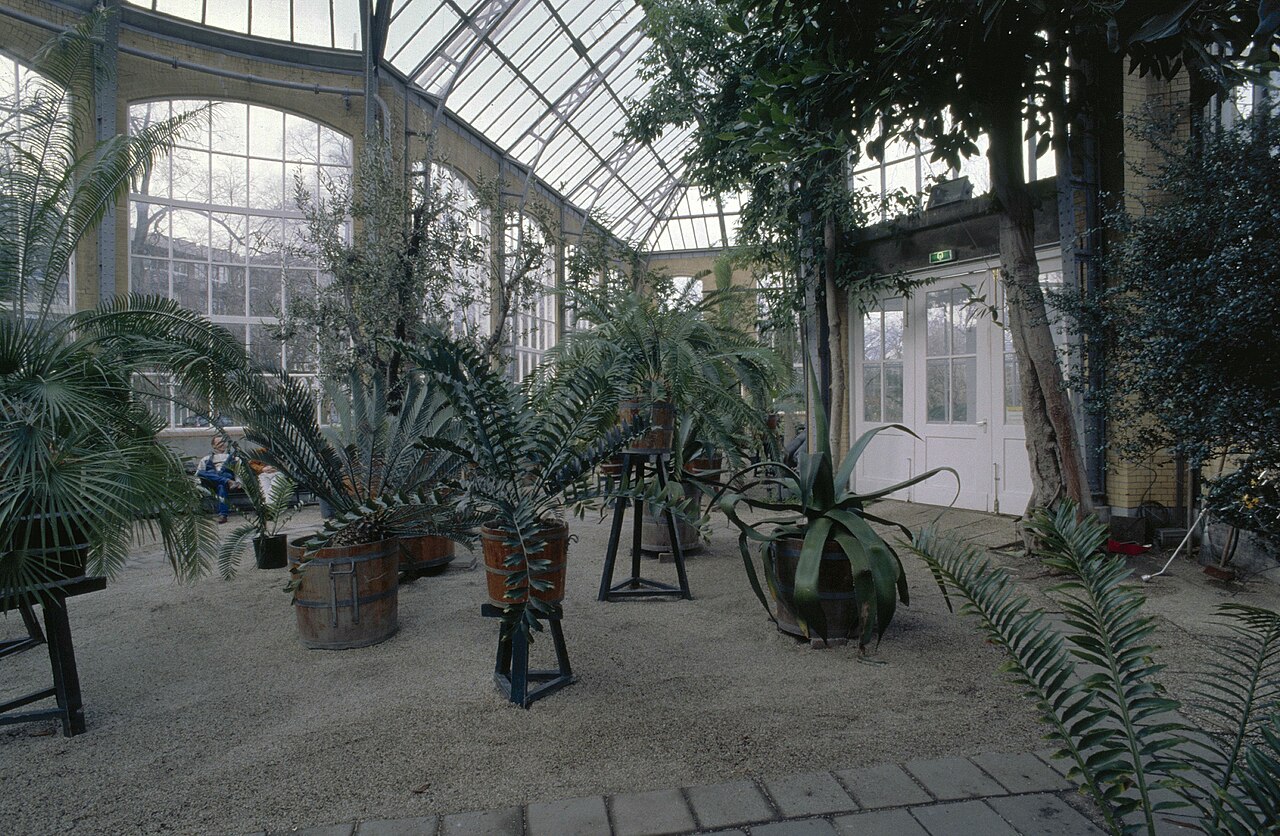
The house holds the Hortus's palms and cycads, around a hundred taxa according to the monuments register. Its centrepiece is an Eastern Cape giant cycad, Encephalartos altensteinii, whose age the garden estimates at 300 or 350 years; it ranks among the oldest known pot plants and never leaves the house. Nearby grows Encephalartos woodii, extinct in the wild and known in cultivation only as male plants.
Several trees are said to have been planted by Hugo de Vries himself: a cinnamon tree (Cinnamomum burmannii) and two figs, Ficus macrophylla and Ficus lyrata. A Philodendron bipinnatifidum with long aerial roots is another eye-catcher. In summer most of the potted plants are moved outdoors, so the house is at its fullest in winter.
Visiting
The Hortus lies in the Plantage district east of the historic centre, on Plantage Middenlaan, and the Palm House occupies its southern corner beside the pond. It is seen as part of a circuit that also takes in the Three Climates Greenhouse, the Butterfly House and the carnivorous-plant collection, together with the outdoor sections, among them the medicinal garden, the semicircle and the dunes and pond.
Winter is the best time to see the palms, cycads and potted plants gathered under the dome, since most of the potted plants spend the summer outdoors. A visit combines easily with Artis Zoo and the Dutch Resistance Museum, both close by.
52.37° N, 4.91° E
Greenhouses nearby
More greenhouses — Netherlands
Do you have a good photo of this greenhouse? Suggest it for this page →
Sources (8)
- dehortus.nl/en/garden-and-greenhouses/palmhouse/
- dehortus.nl/en/garden-and-greenhouses/
- dehortus.nl/en/garden-and-greenhouses/cycads/
- monumentenregister.cultureelerfgoed.nl/monumenten/495304
- en.wikipedia.org/wiki/Hortus_Botanicus_(Amsterdam)
- amsterdamfm.nl/palmenkas-hortus-botanicus-100-jaar/
- amsterdamexplore.com/blog/hortus-botanicus-amsterdam/
- openstreetmap.org/way/57863706
Affiliate links — booking through Verrière helps fund our research, at no extra cost to you.