Oud Groevenbeek grape house (druivenkas)
Ermelo, Gelderland

Sources checked October 2026
- Year
- Between 1910 and 1915; restored 1997-1998
- Style
- Iron-and-glass grape house with a ventilation lantern, on a low brick wall
- Dimensions
- 25 m long; two compartments
- Status
- Estate freely accessible, glasshouse seen from the paths; interior open on special days (Open Monument Day, the winegrower's open day on 13 September 2025)
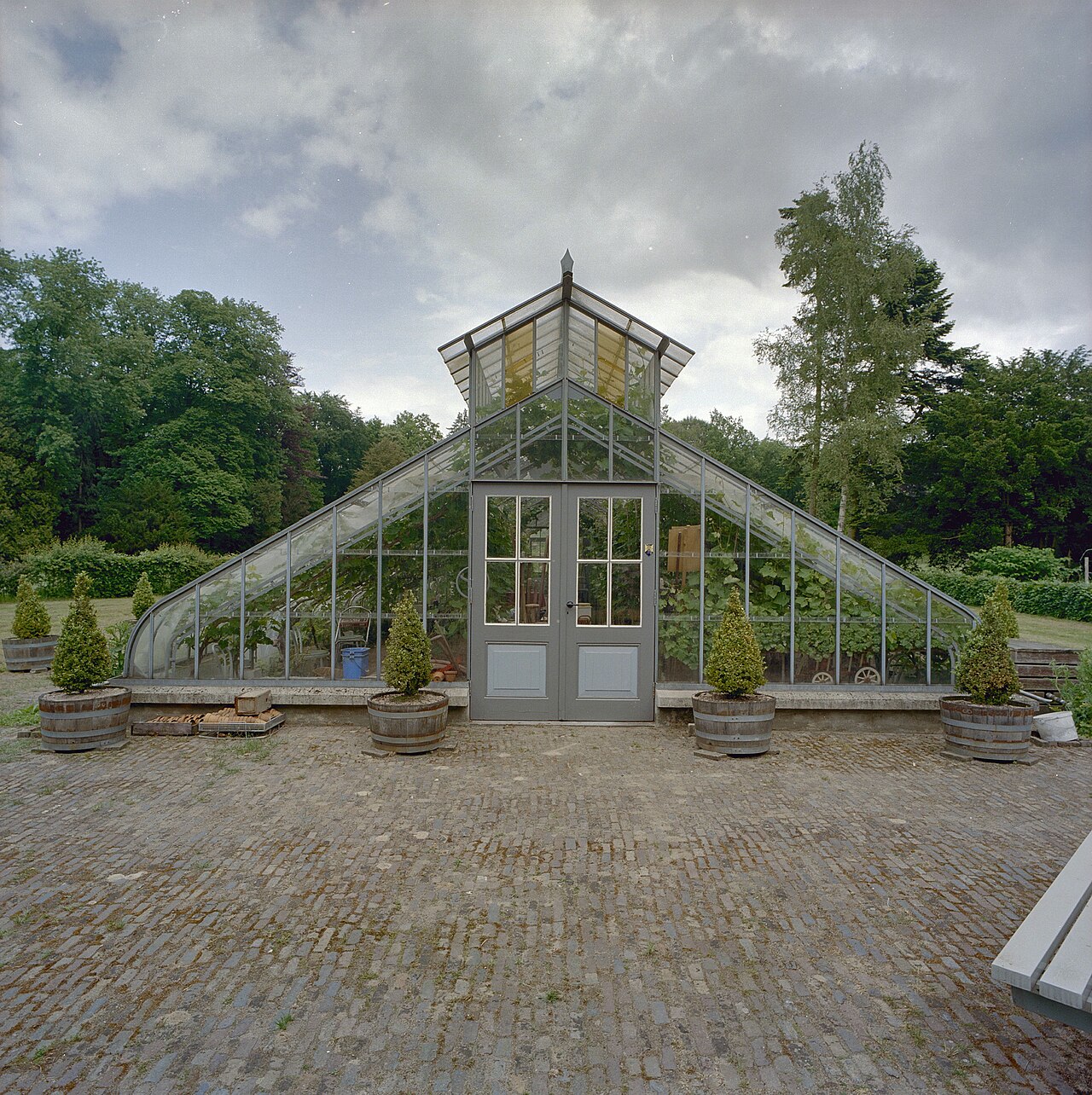
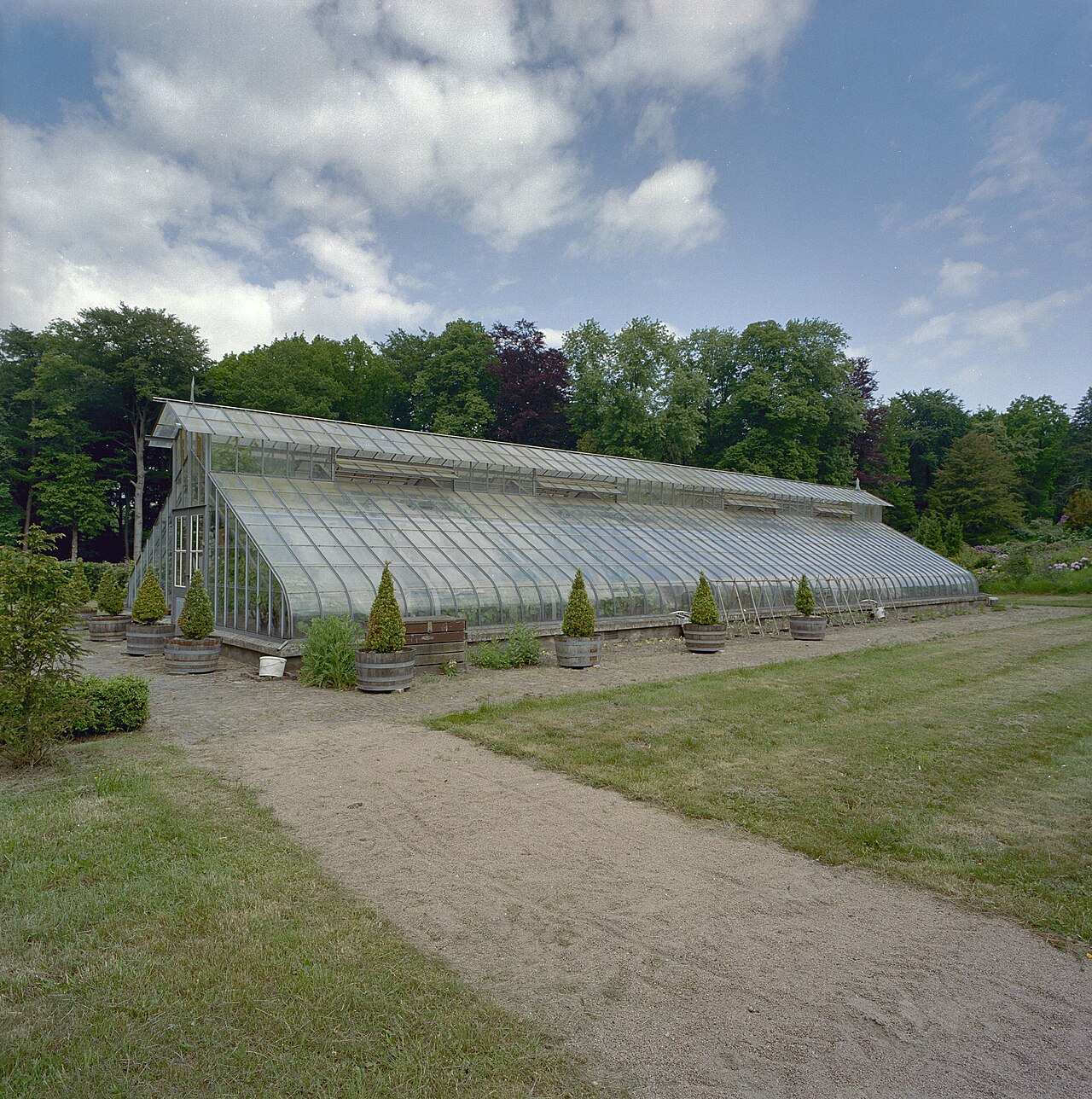
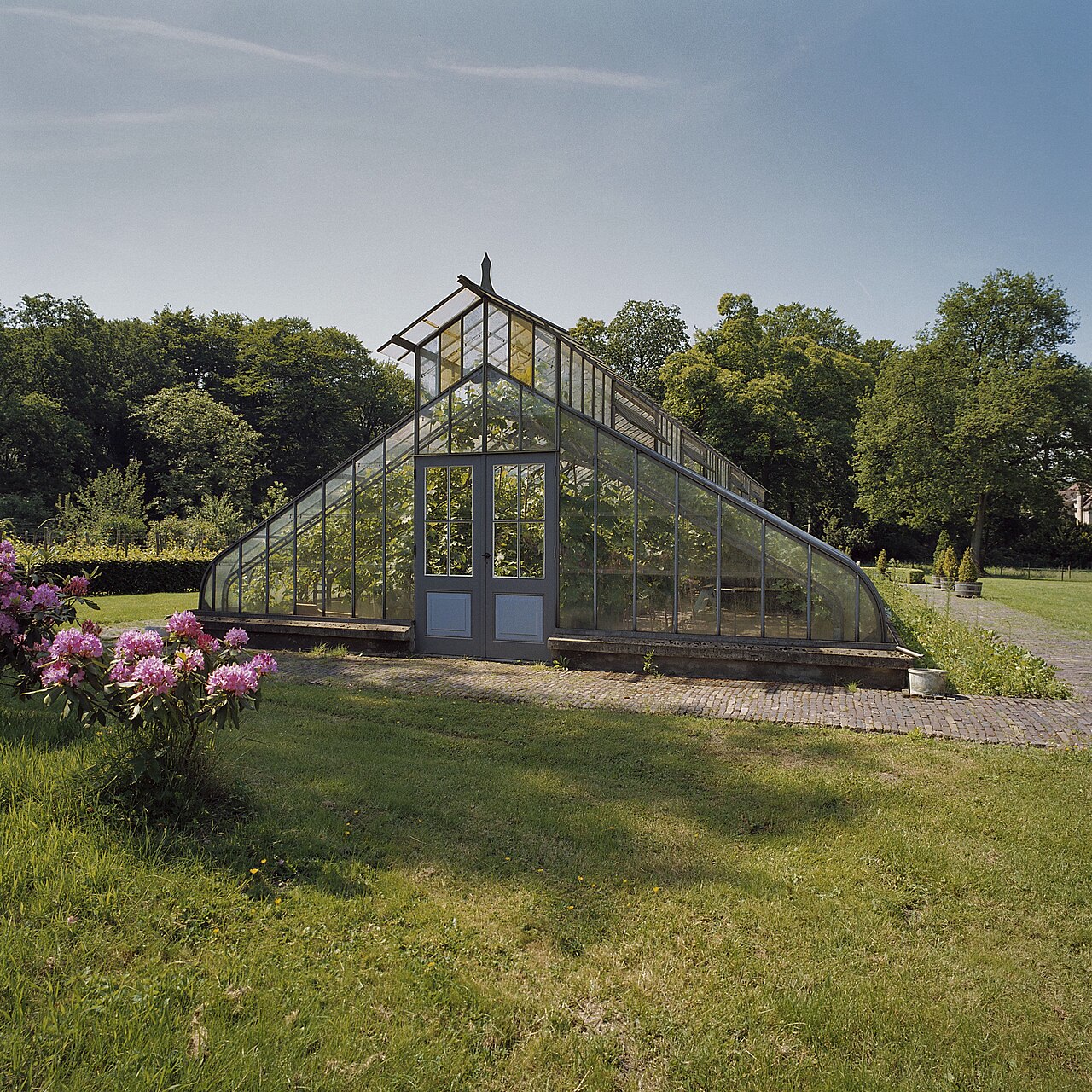
Between the Jugendstil villa and the water tower of the Oud Groevenbeek estate in Ermelo, an iron-and-glass grape house 25 m long is the sole survivor of a vast glasshouse complex. Sources date it between 1910 and 1915. Topped by a ventilation lantern, it was restored in the late 1990s and still shelters vines planted in the ground, from which about fifty bottles of wine are made each year. The estate belongs to Natuurmonumenten; the glasshouse can be seen from the paths and its interior opens on particular days.
Affiliate links — booking through Verrière helps fund our research, at no extra cost to you.
History
Oud Groevenbeek began in the 19th century as a "reclamation estate" at the meeting point of the Putten and Speuld woods and the Ermelo heath. In 1903 J. H. van Schermbeek bought it, had the existing house demolished and replaced it with a larger Jugendstil villa, built in 1907-1908 to designs by the Harderwijk firm of Van Essen and Van Zeggeren. Around the same time several outbuildings appeared, including a glasshouse complex with a flower house and a grape house. The castle-shaped water tower, raised in 1912 on an artificial mound, supplied the villa, the kitchen garden and the glasshouses; according to a note by the Ermelo nature and environment platform, a small gas plant under the tower heated the glasshouses and fed the lighting.
The date of the grape house varies: about 1910 for the monuments register, 1915 for Natuurmonumenten and for the reference study on Dutch glasshouses, which sees it as part of an ensemble imported from England on a scale unknown elsewhere in the Netherlands. The register credits the complex to Van Schermbeek, or possibly already to his predecessor. Natuurmonumenten recalls that it evoked London's Crystal Palace, that it consisted mainly of flower houses and that flower growing was the great passion of a former owner.
The estate, by then in decay, was sold to Natuurmonumenten in 1968. Of the glasshouse complex only the grape house survives, restored in the late 1990s (1997 according to the reference study, 1998 according to the register) with its original structure kept. It is protected as a national monument together with the rest of the estate.
Architecture and engineering
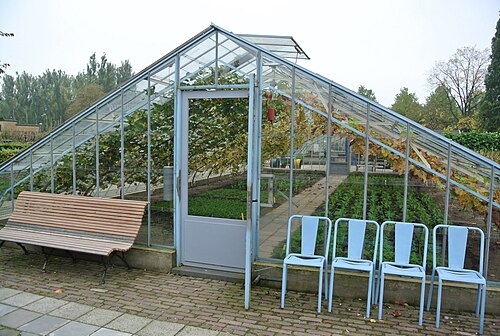
The monuments register describes a rectangular glasshouse of unusual form, its frame made of eight iron trusses with diagonal bracing standing on a low brick wall. The trusses form a sharp angle at the ridge and curve over the brick base, and a ventilation lantern crowns the ridge. Natuurmonumenten credits the graceful outline to the use of small curved panes of glass and notes that the old gear-wheel mechanism that operates the windows works again; the stated length is 25 m. Photographs by the national heritage agency (RCE), available on Wikimedia Commons, show details of the hand wheel, the gear wheel and the floor grilles of the ventilation system.
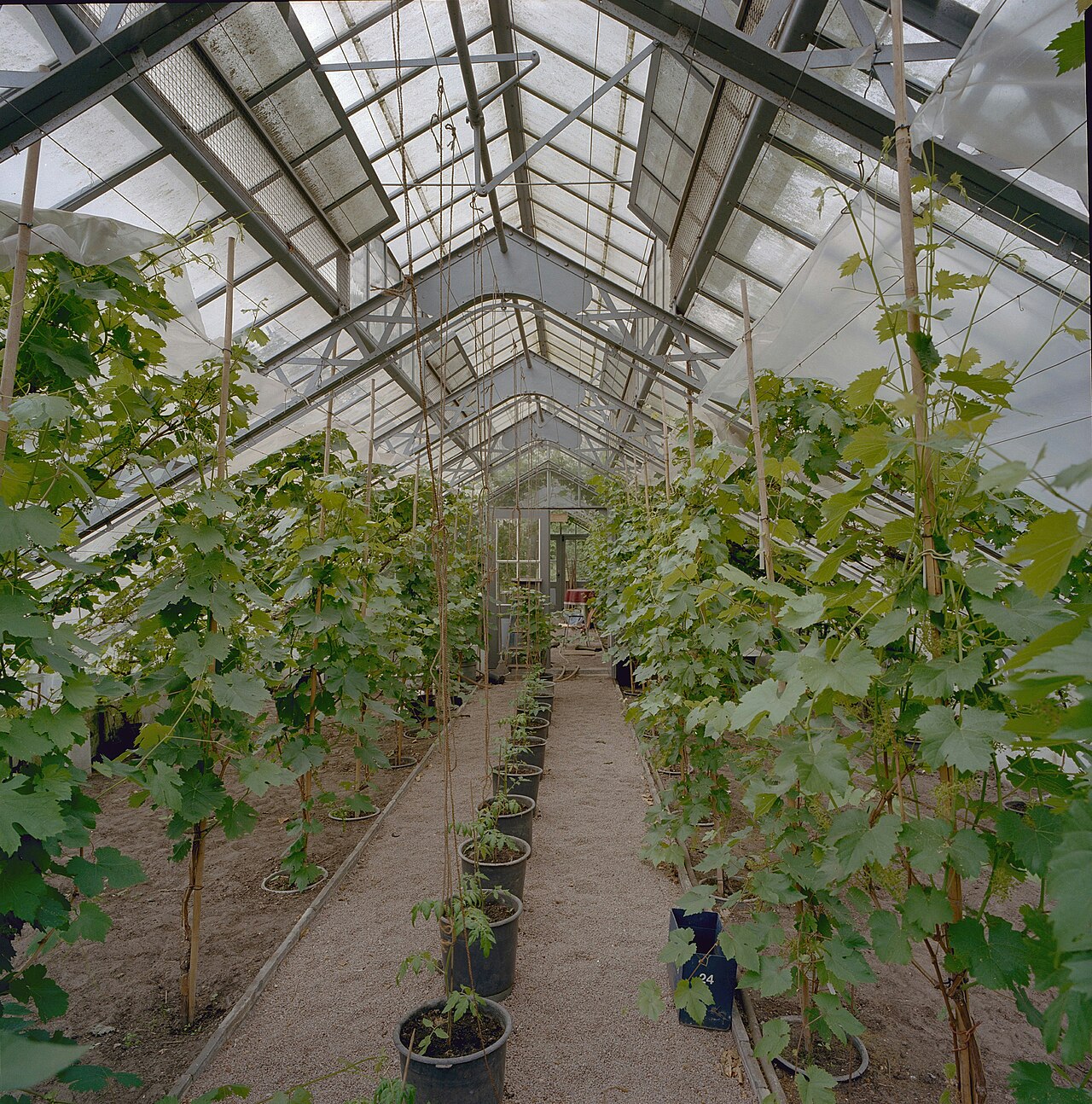
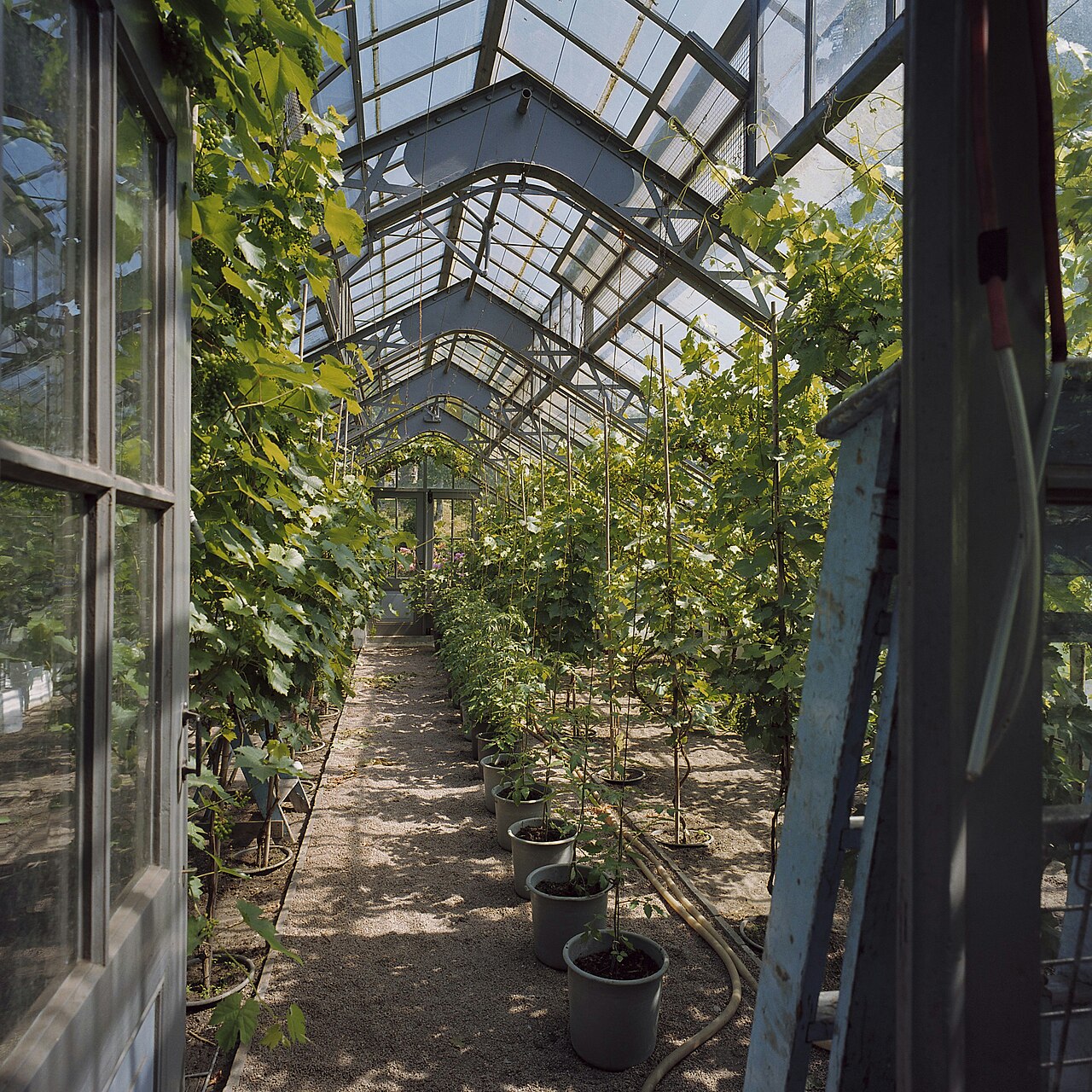
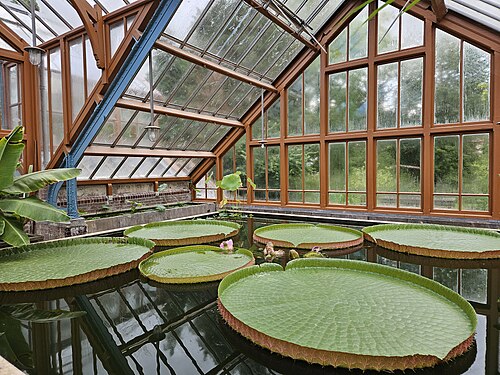
The reference study calls it a two-compartment glasshouse, a "connecting glasshouse": it now stands free between the higher water tower and the villa. Inside, a few of the original growing beds and a partition wall with doors remain; the restoration respected the original construction. The vines are planted in the ground.
Plant collections
The glasshouse is planted with vines growing in the ground. Natuurmonumenten reports vines some of which are 90 years old, while an announcement for Open Monument Day 2024 speaks of vines a century old. The amateur winegrower who runs the planting stated in September 2025 that three table-grape varieties from 1916 survive and that the glasshouse now holds 43 varieties of table and wine grapes; the neighbouring vineyard, planted in 1983, carries eight wine-grape varieties. Natuurmonumenten reports a yield of about 50 bottles a year, sold as "Château Oud Groevenbeek".
An older note by the local environment platform mentions more than 200 vines across glasshouse and vineyard, some forty varieties, and water and fertiliser supplied from outside to inside to limit disease. Before the restoration the glasshouse complex housed mainly flowers. The figures differ from source to source.
Visiting
The Natuurmonumenten estate is freely accessible, but the villa cannot be visited (it is let as holiday suites). The grape house is seen from the path: the route described by the association from the Putterweg car park passes the villa and the glasshouse before reaching the estate's tea house, run by volunteers and open three days a week. The interior opens only on certain days: on Open Monument Day (14 September 2024) and, on 13 September 2025, on the winegrower's open day, with a guided visit of the glasshouse and free wine tasting. On Open Monument Day, rangers also lead visitors from the glasshouse to the 1912 water tower, whose platform offers a view over the park and whose cellars shelter bats in winter. Mid-September is therefore the most favourable moment; at other times the glasshouse combines well with a walk towards the Groevenbeek heath.
52.28° N, 5.61° E
Greenhouses nearby
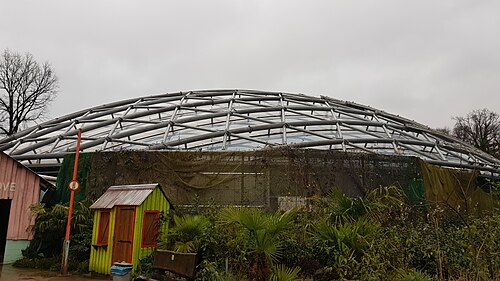
More greenhouses — Netherlands
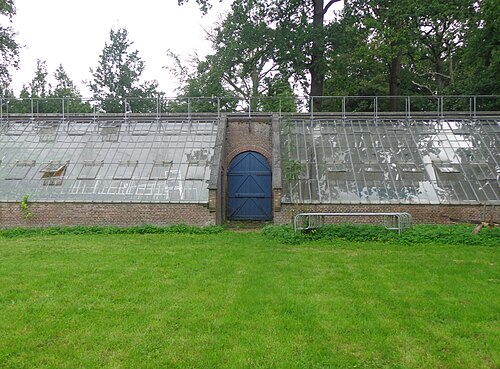
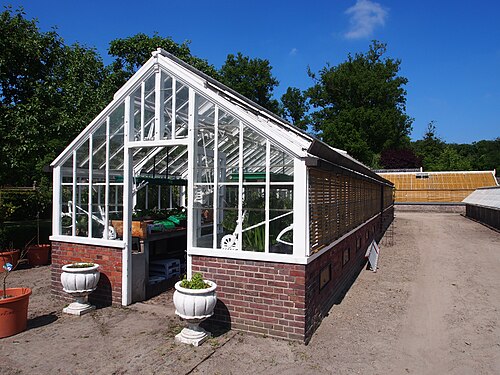
Do you have a good photo of this greenhouse? Suggest it for this page →
Sources (9)
- natuurmonumenten.nl/natuurgebieden/landgoed-oud-groevenbeek/monumenten/villa-oud-groevenbe
- natuurmonumenten.nl/eten-en-drinken/theehuis-oud-groevenbeek-gd
- monumenten.nl/monument/523877
- kasseninnederland.nl/wp-content/uploads/Kassenboek-web-04-Hoofdstuk-4.pdf
- ermelosweekblad.nl/agenda/2025/9/13/open-dag-wijngaard-chateau-oud-groevenbeek-1202785
- ermelosweekblad.nl/lokaal/lokaal/1065978/14-september-open-monumentendag-natuurmonumenten-
- nieuw-groevenbeek.nl/NG/oudste-geschiedenis/oud-groevenbeek/
- nmpermelo.nl/EF/16.htm
- veluwe.nl/locatie/landgoed-oud-groevenbeek/
Affiliate links — booking through Verrière helps fund our research, at no extra cost to you.