Collection glasshouse and orangeries of the Oude Hortus (old botanic garden of Utrecht)
Utrecht, Utrecht province
Entry updated on October 3, 2026
- Year
- 1907
- Architect
- Plans signed by D. Kruijf, chief supervisor of the university buildings (2004–2005 restoration: Vlaardingerbroek & Wevers)
- Style
- Five-bay composite glasshouse of timber, iron and glass (1907); 18th-century orangeries
- Status
- Open to the public with Utrecht University Museum
Laid out in 1724 between the Nieuwegracht and the Lange Nieuwstraat, the Oude Hortus is Utrecht University's former botanic garden, descended from a physic garden created in 1639. It keeps an orangery of 1724 and a second orangery, the Zaadhuis, built in 1767–1768. In 1907 its nineteenth-century glasshouses gave way to a composite glasshouse of five parallel bays in timber, iron and glass, joined by a glazed corridor. Superseded in 1991 by the new garden at Fort Hoofddijk, the site was saved and attached to the University Museum; the large glasshouse was restored in 2004–2005.
Affiliate links — booking through Verrière helps fund our research, at no extra cost to you.
History
1 min
On 11 March 1639, three years after the university was founded, Utrecht's city council decided to plant the Sonnenborgh bastion with medicinal herbs for medical students; the first director, Henricus Regius (1598–1679), published a catalogue of 678 plants in 1650. Having outgrown that site, the garden moved after the city bought the house 'De Roos' on the Nieuwegracht in 1723, whose deep plot ran through to the Lange Nieuwstraat; in 1724 Joseph Serrurier laid out a new hortus there with geometric beds arranged according to Herman Boerhaave's system. An orangery was built in 1724 and a second one, the Zaadhuis, in 1767–1768, brought into use by Professor Johann David Hahn.
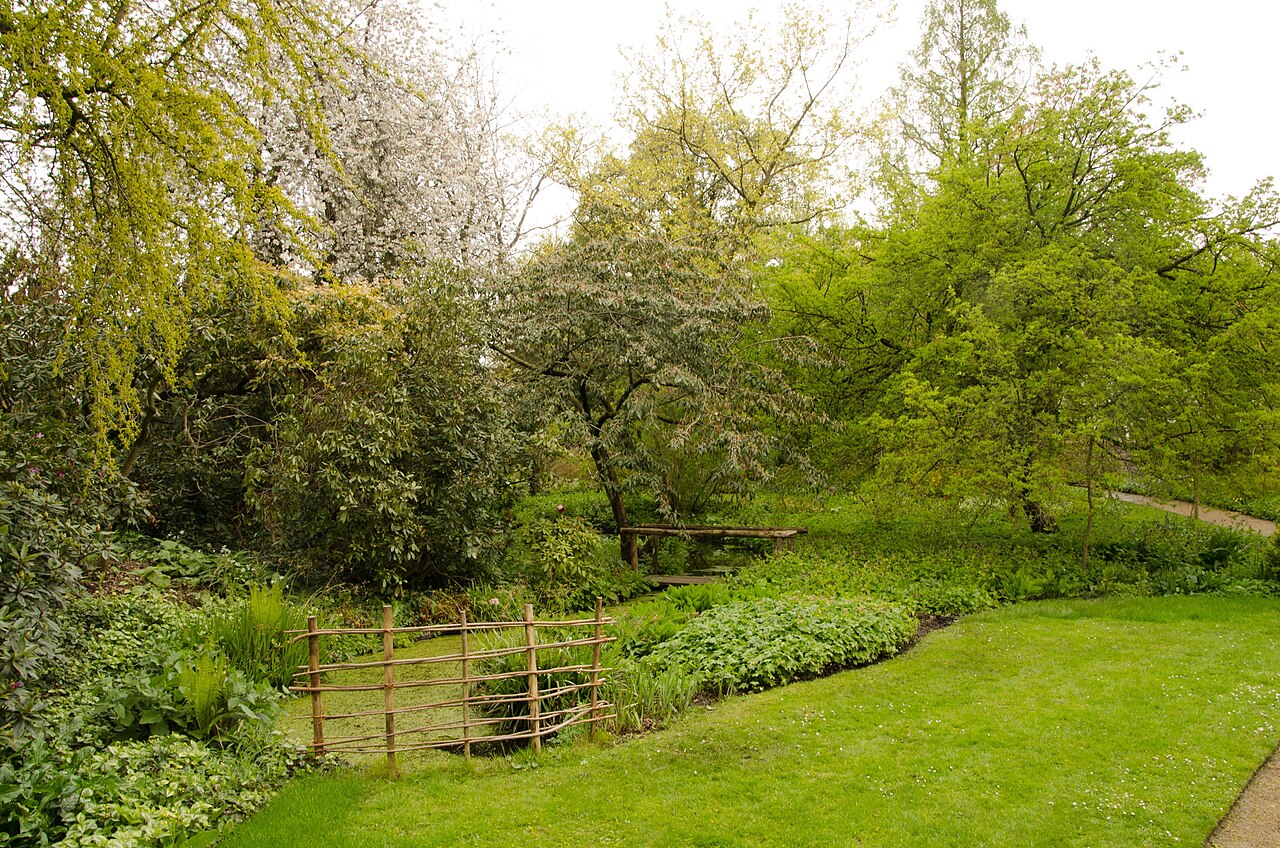
In the nineteenth century the garden was reshaped in the landscape style, around 1822 under Jan Kops and around 1859 under Friedrich Anton Wilhelm Miquel. A succession of glasshouses followed, among them a parabolic iron house in 1848 and a palm house of the same shape in 1866. In 1907 these were pulled down to make way for a composite collection glasshouse whose plans bear the signature of D. Kruijf, chief supervisor of the State University buildings.
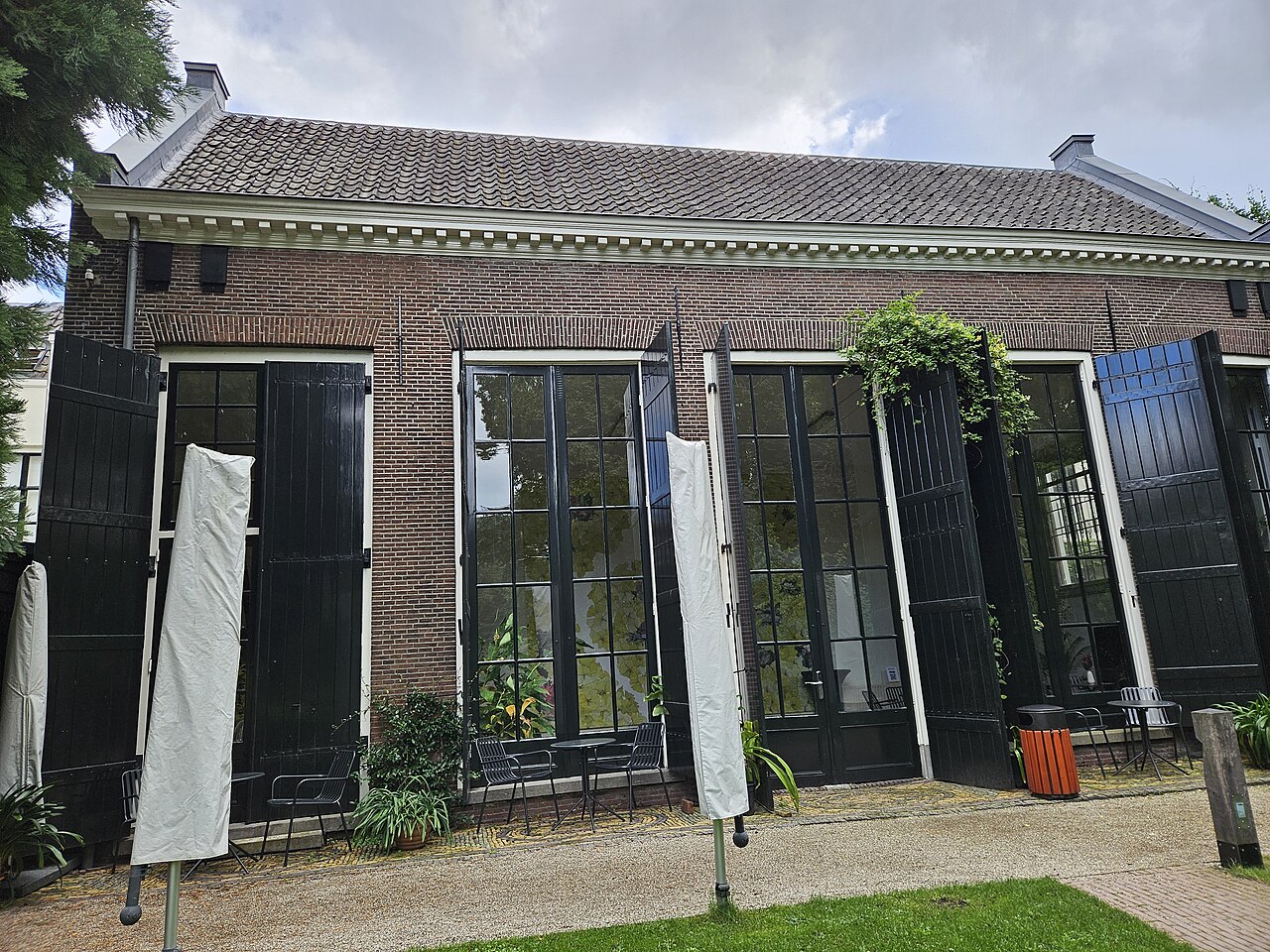
During the Second World War people hid in the garden, sometimes twenty at a time, and the staff kept scarce fuel for heating the glasshouses. Once the new garden at Fort Hoofddijk was completed in 1991 the Oude Hortus lost its role, but pressure from a working group and a neighbourhood committee secured its survival. The University Museum moved into the old botanical laboratory in 1996; the Zaadhuis became a café in 2002, and the large glasshouse was restored in 2004–2005 to a plan by the firm Vlaardingerbroek & Wevers.
Architecture and engineering
1 min
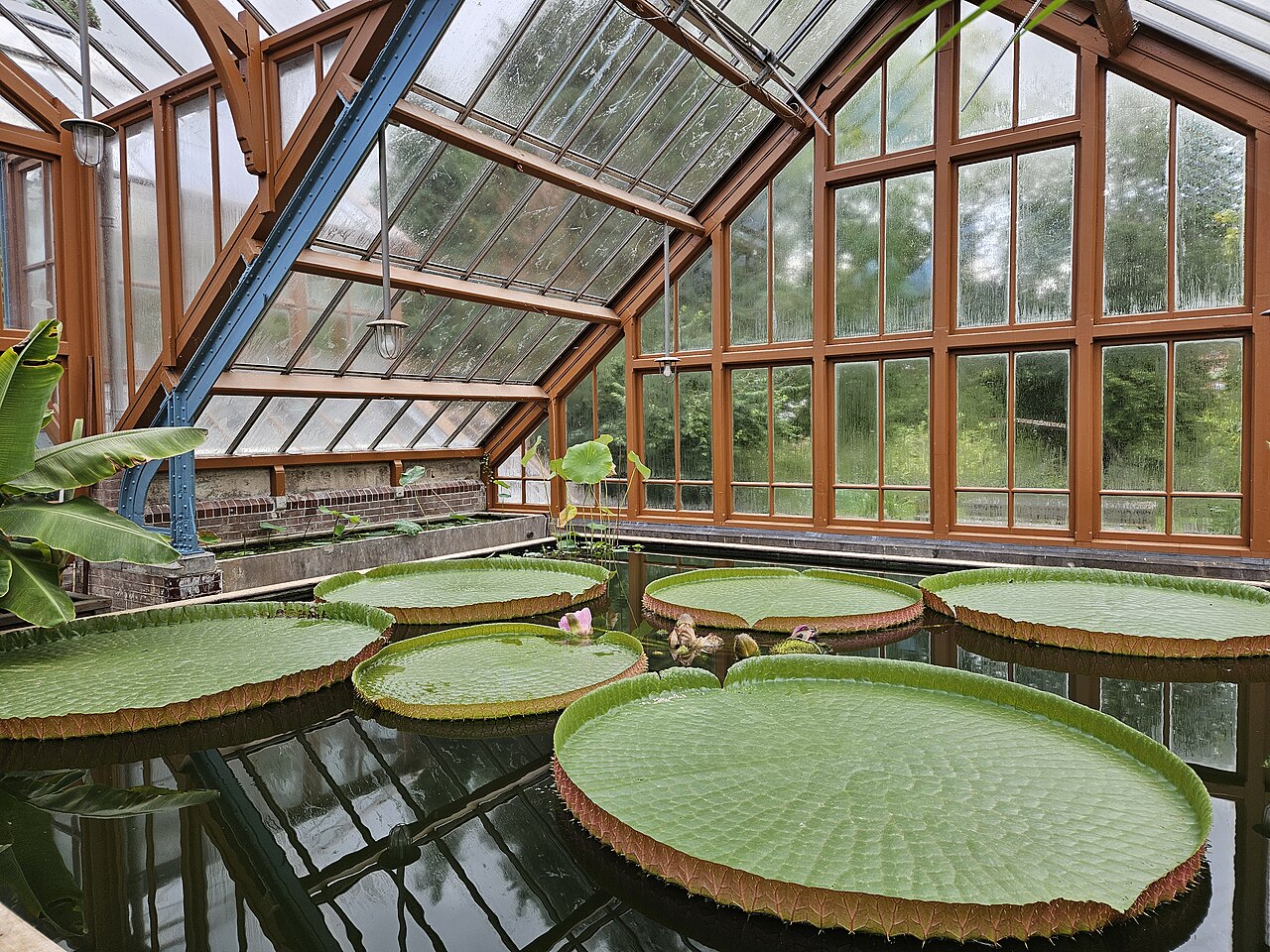
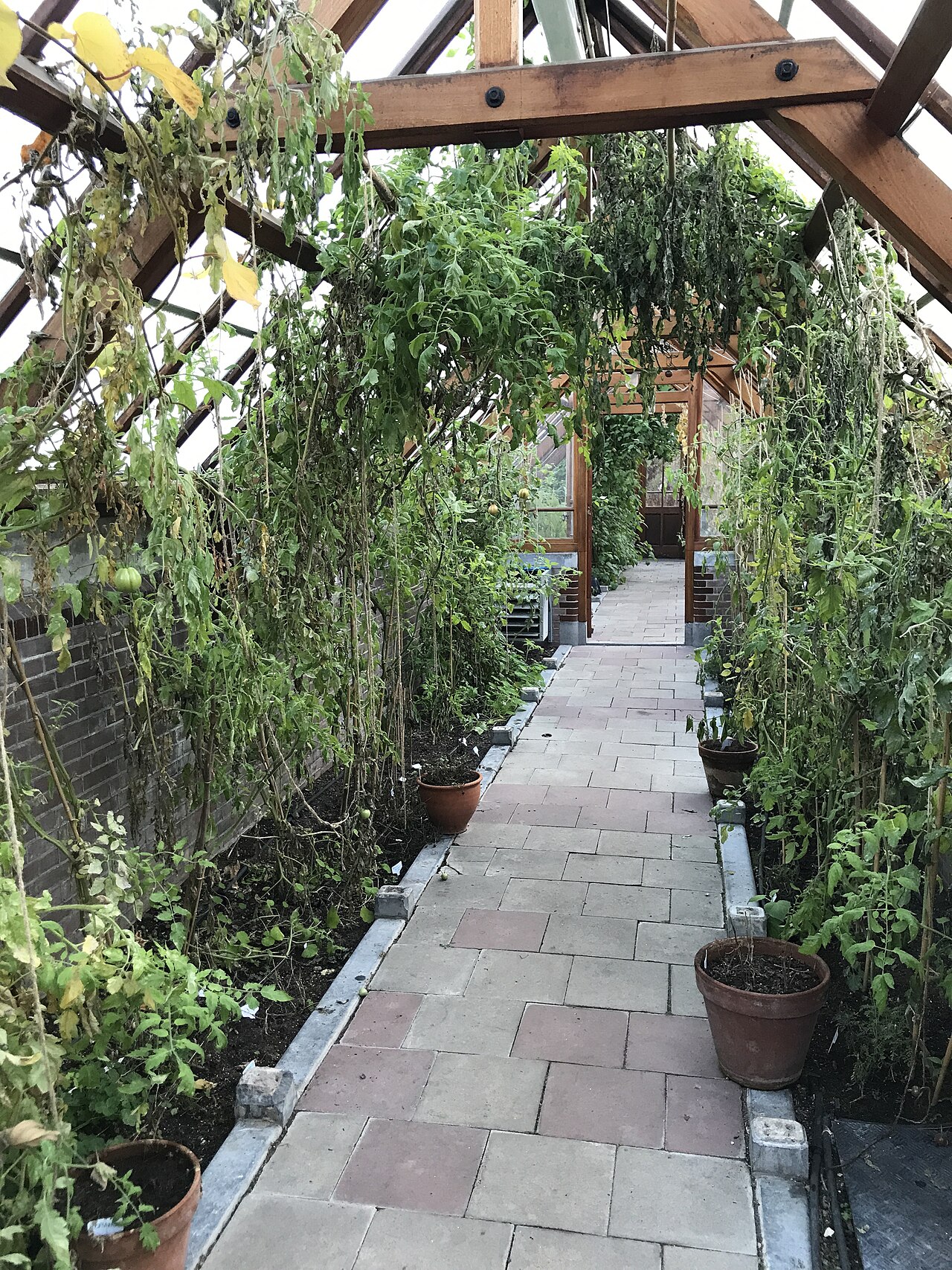
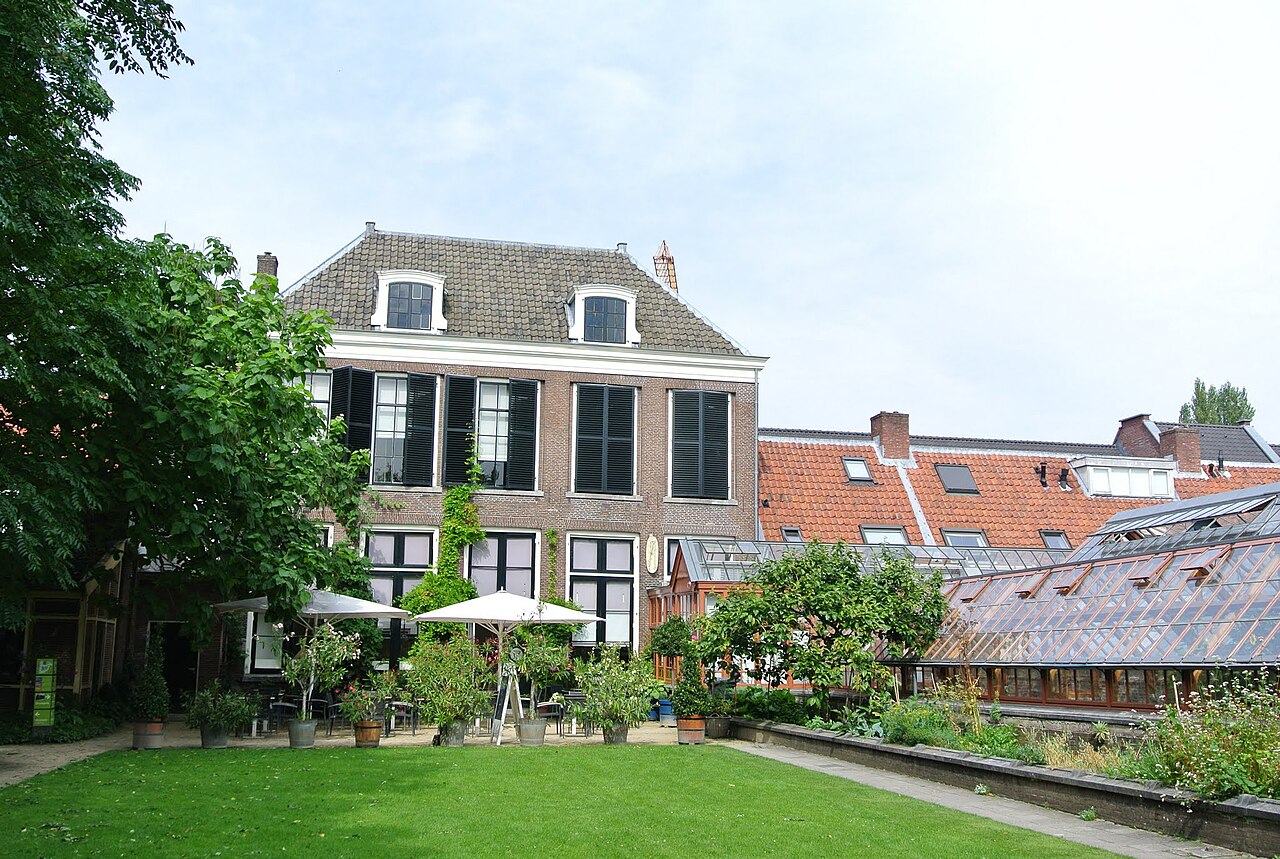
The 1907 glasshouse consists of five parallel houses linked at the back by a corridor under a glazed saddle roof, which connects with the Zaadhuis. Brick dwarf walls are capped with natural stone slabs; the side and end walls are wooden frames with glazing bars, under timber-and-glass saddle roofs separated by valley gutters. Originally dark teak, the woodwork was painted white around 1930 and returned to a teak colour during the restoration. The second and third houses, the widest and tallest, rest on iron trusses; the wooden glazing bars of their roofs were later replaced with aluminium profiles. Beneath the front of the large left-hand house, a cellar held the coal-fired boiler of the steam heating, whose brick chimney still rises above the roof; the glasshouses were connected to the city's district heating around 1960. Reinforced-concrete benches stand over rainwater basins that raise the humidity.
The orangery of 1724, a single storey high, has cavity walls and a stone floor. The taller Zaadhuis has a cellar, an upper floor and an attic: the ground floor, partly raised to overwinter large trees, served as the orangery, the upper floor as a study room and the attic as a seed store.
Plant collections
1 min
The compartments of the 1907 glasshouse re-created different climates: a tropical house and houses for plants from dry regions. In the left-hand house, a growing table with raised edges that can be flooded and, at the front, a basin for the giant water lily Victoria amazonica bear witness to the cultivation of aquatic plants. Since the restoration, part of the glasshouse has resumed its original role, while the rest hosts exhibitions, performances and nature-education courses.
One of the orangeries is still used to overwinter tub plants, orange trees among them, and the garden keeps an eighteenth-century ginkgo, planted around 1730 according to the university, which counts it among the oldest outside Asia; Wikipedia goes further and calls it the oldest in Europe. In the south-east corner, the Regiustuin groups medicinal plants by their effects in memory of the 1639 garden, and an early twentieth-century cottage garden has been preserved.
Visiting
1 min
The Oude Hortus is visited together with Utrecht University Museum (UMU), at Lange Nieuwstraat 106, in the old quarter between the Nieuwegracht and the Lange Nieuwstraat. A tour links the themed gardens, the large pond dug at the heart of the garden during its restoration, the 1907 glasshouse and its climate compartments, then the two orangeries, including the Zaadhuis, now the museum café. The university's newer botanic garden at Fort Hoofddijk, in Utrecht Science Park, extends the picture, although its tropical glasshouses, closed since 1 December 2025, are due to be demolished and replaced by mid-2028 at the earliest.
52.08° N, 5.13° E
Greenhouses nearby
More greenhouses — Netherlands
All greenhouses — Netherlands →
Do you have a good photo of this greenhouse? Suggest it for this page →
Sources (6)
- umu.nl/oude-hortus/ontdek-meer-over-de-oude-hortus/
- kasseninnederland.nl/wp-content/uploads/Kassenboek-web-03-Hoofdstuk-3.pdf
- nl.wikipedia.org/wiki/Oude_Hortus_(Utrecht)
- openmonumentendagutrecht.nl/openstellingen/de-oude-hortus/
- uu.nl/en/botanic-gardens/about-us/history
- uu.nl/en/utrecht-university-botanic-gardens/about-us/the-gardens/tropical-greenhouses