Vine and Peach House and Tropical Glasshouse, Arundel Castle Gardens
Arundel, West Sussex

Sources checked October 2026
- Year
- 1852
- Architect
- Clarke & Hope (Vine House); Alitex (replica tropical glasshouse)
- Style
- Victorian lean-to glasshouse, wrought-iron frame on a brick back wall
- Dimensions
- 28 bays in two sections (Vine House); 3.8 × 18.9 m (tropical glasshouse)
- Status
- Open to the public with the castle gardens (2026 season: 1 April to 1 November); Vine House Grade II listed
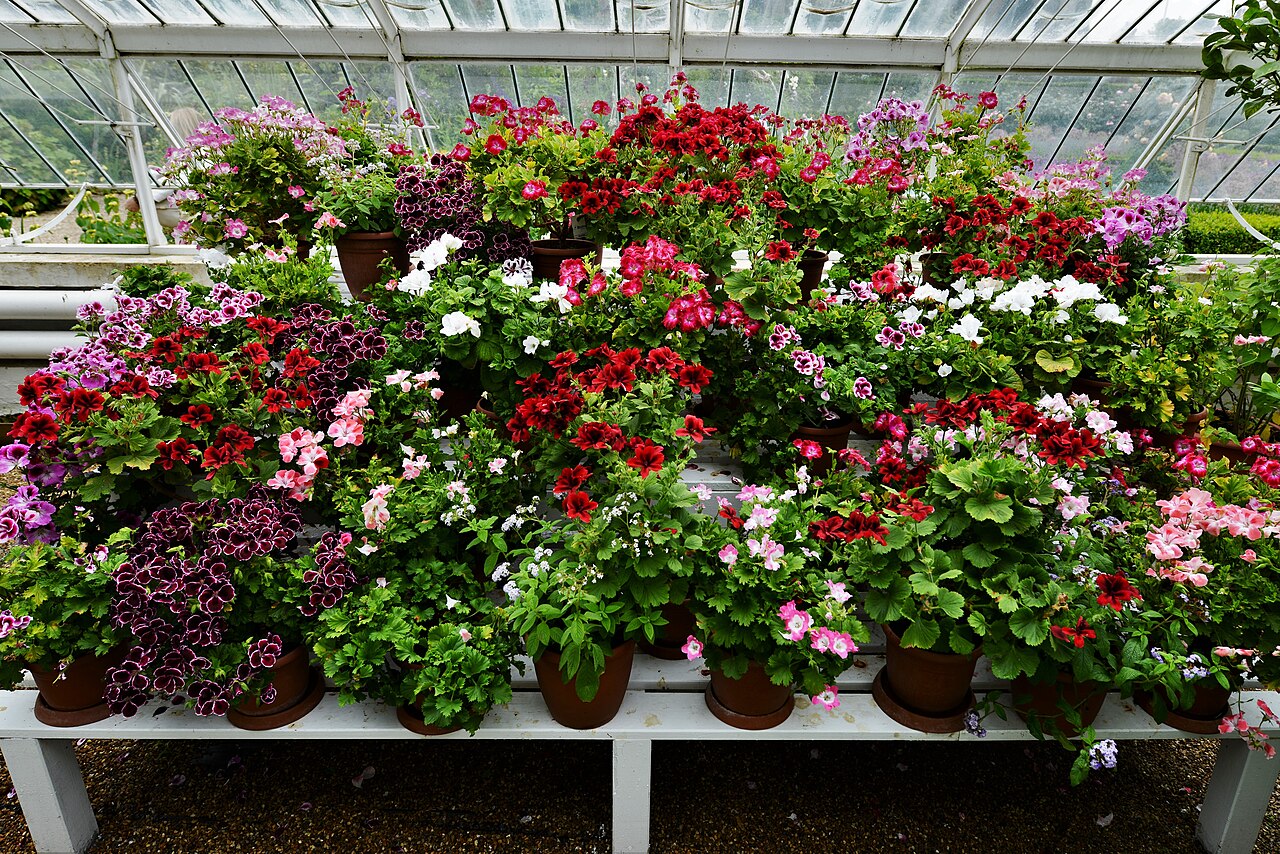
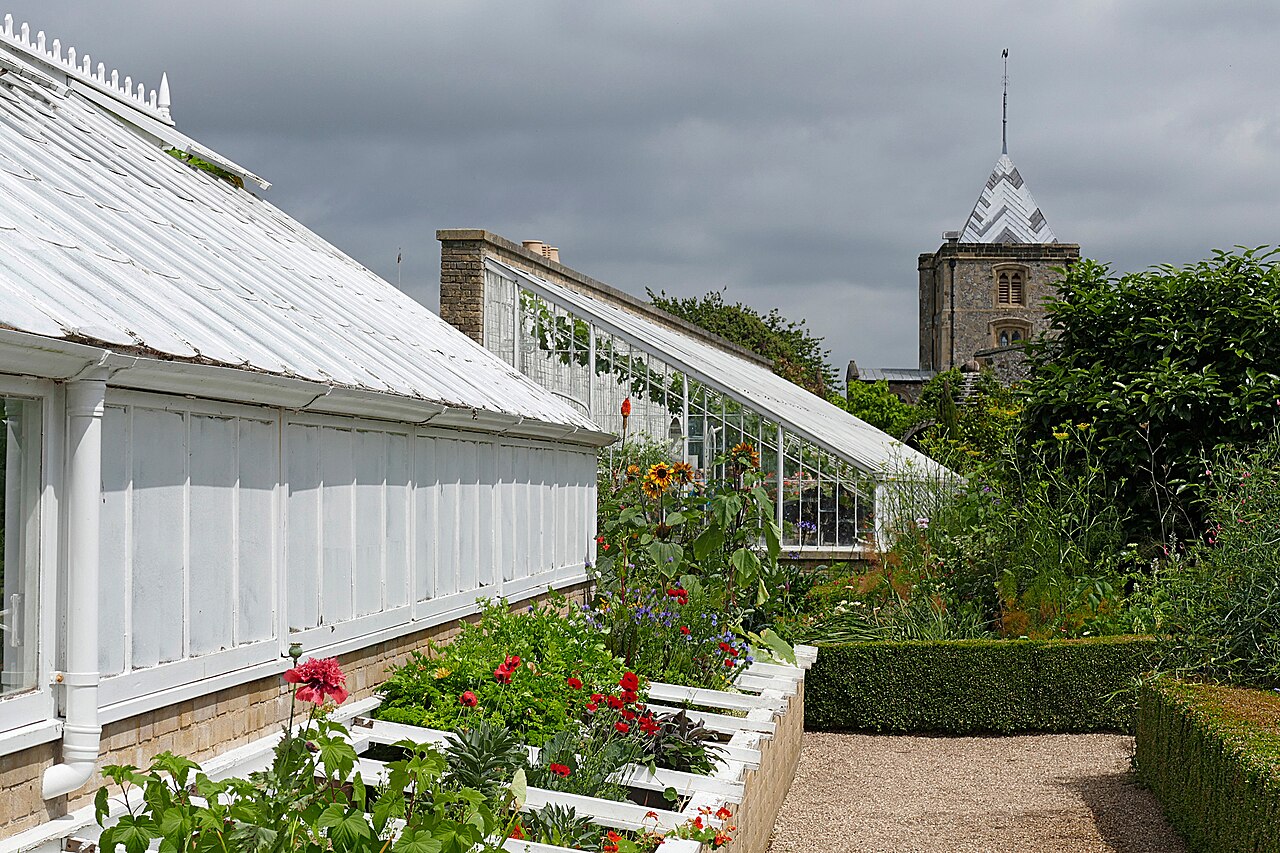
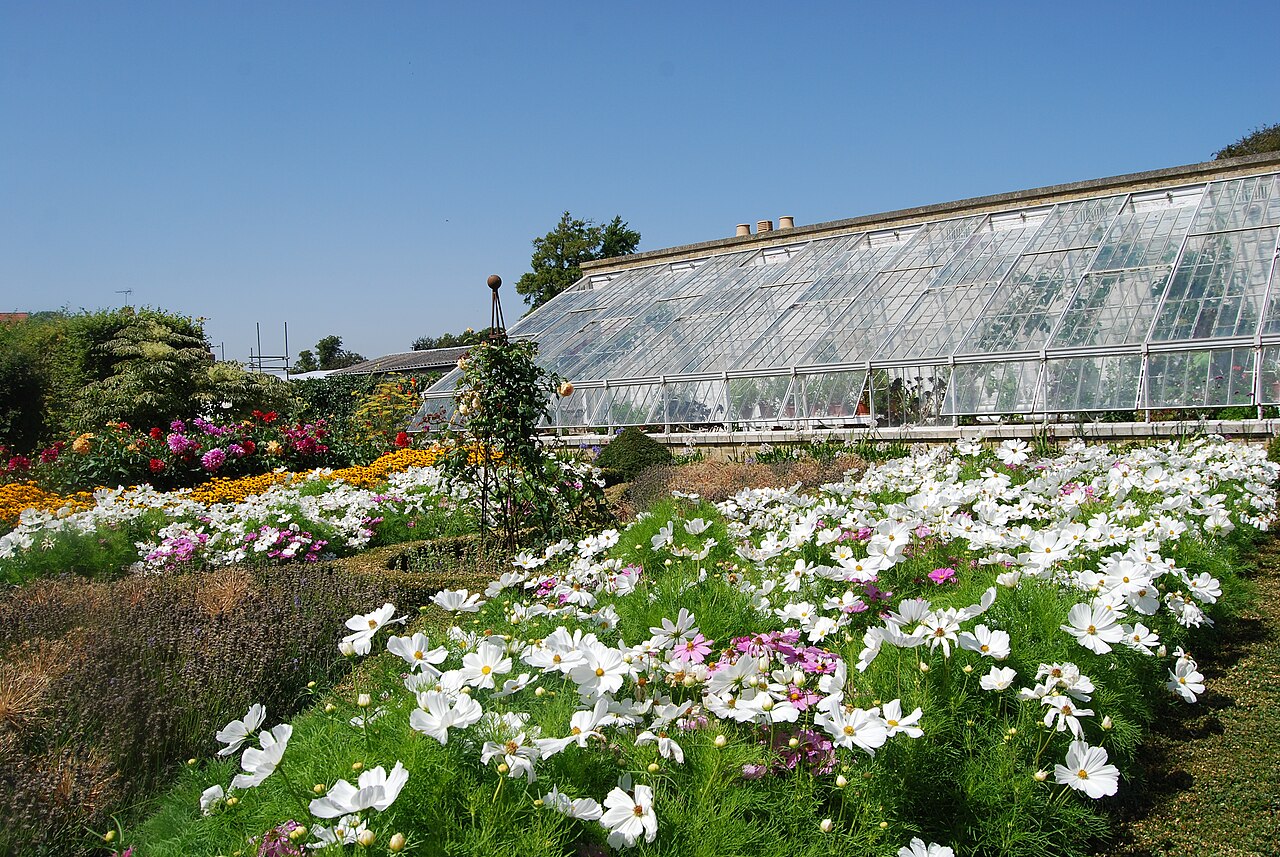
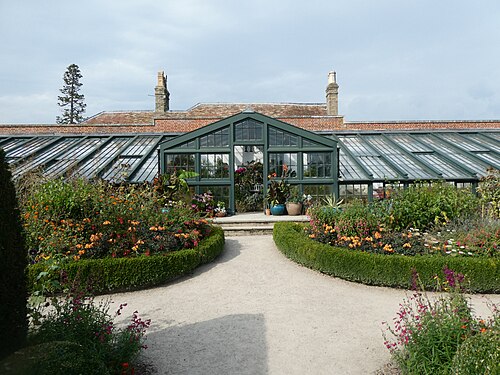
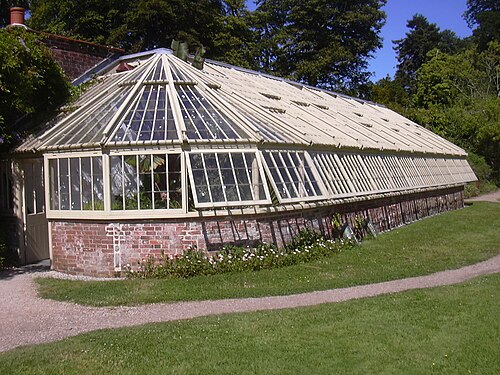
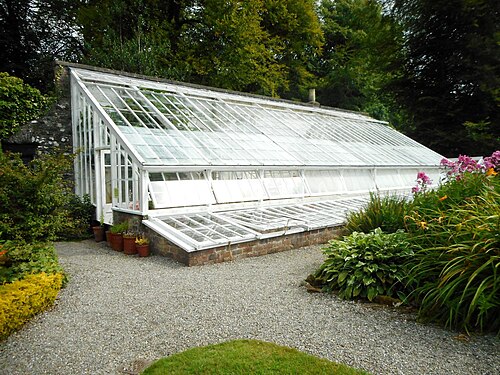
In the walled organic kitchen garden of Arundel Castle, the Vine House (also called the Vine and Peach House) is a long lean-to glasshouse of wrought iron and glass, 28 bays in two sections, Grade II listed since 1995. The castle dates it to 1852 and credits Clarke & Hope; other sources give 1850, and the listing text shows it on a drawing of 1854. Restored in 2000, it carries grape vines and peaches on its walls and houses the castle's pelargonium collection. Close by, a timber tropical glasshouse, an Alitex replica of a Messenger model, holds chillies, banana plants and papayas.
Affiliate links — booking through Verrière helps fund our research, at no extra cost to you.
History
The Vine House stands in the former walled kitchen garden of Arundel Castle. On 1 January 1874 the Journal of Horticulture and Cottage Gardener described a kitchen garden of 14 acres in three main parts, including a five-acre orchard and a five-acre walled garden whose walls carried peaches, apricots, figs, pears, plums and cherries. The walled garden also held forcing houses, a Peach House, vineries and pineapple pits, where several varieties were grown, among them Charlotte Rothschild, Black Antigua and Monserrat.
The castle (garden timeline, Great Gardens of the World page) speaks of a Vine House of 1852, built by Clarke & Hope; Parks & Gardens UK and the manufacturer Alitex give 1850; the Historic England listing text says only that the structure appears on a drawing of 1854 and names the firm Jones and Clark, later Henry Hope Ltd. It has been listed Grade II since 17 May 1995. In 2022 its head gardener told the Sussex Express that it is one of only three of its kind left.
The gardens, largely neglected before 1987, were restored that year; the castle's timeline places the restoration of the Vine House in 2000 and the creation of the organic kitchen garden by the Duchess of Norfolk in 2001. A timber glasshouse some twenty years old, which damp had left beyond repair, was replaced by a like-for-like replica of a Thomas Messenger model built by Alitex on the site of the former Pineapple House.
Architecture and engineering
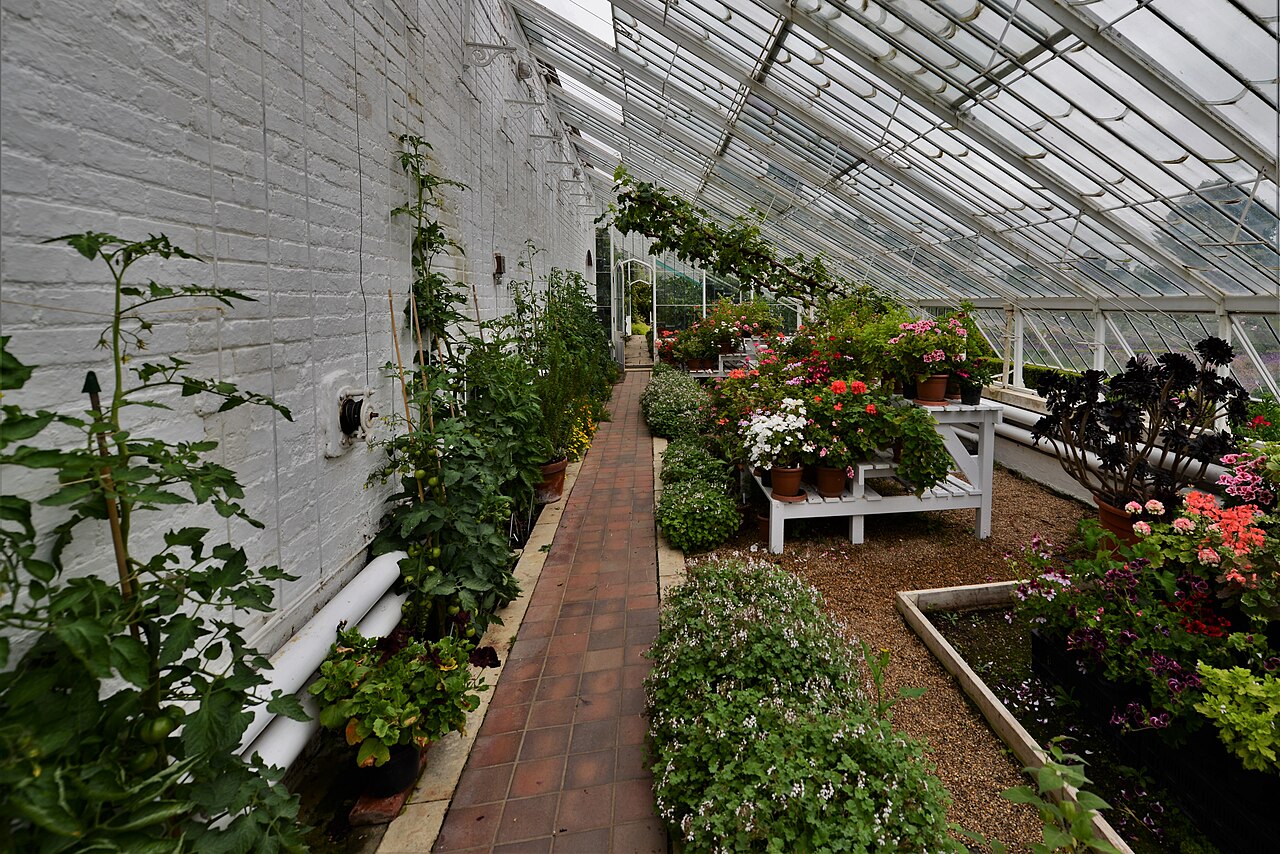
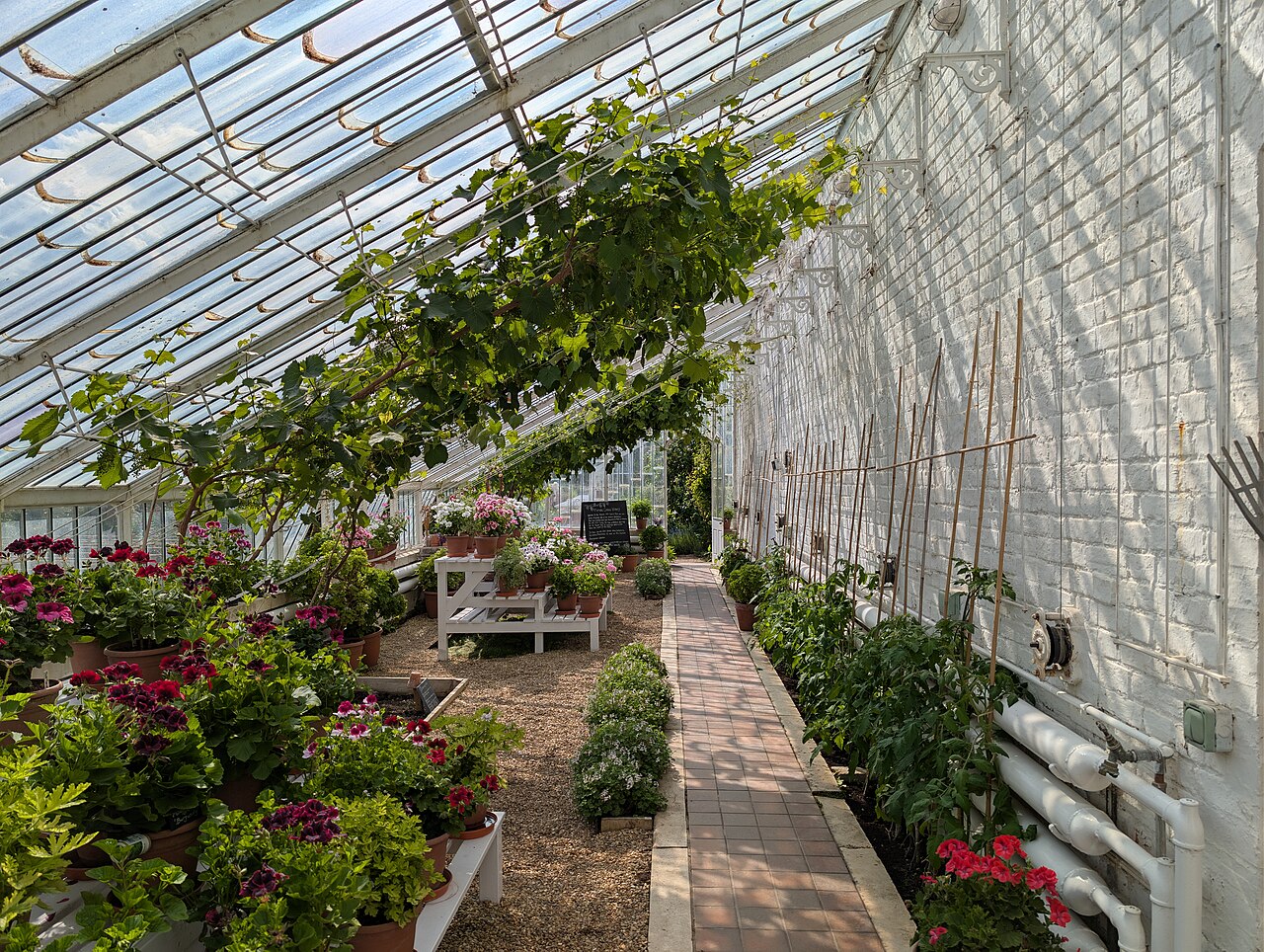
According to the listing text, the Vine House is a lean-to glasshouse with a stock-brick rear wall laid in Flemish bond, a brick plinth under the front glazing topped with stone coping, wrought-iron frames and glass panes, most of the original glazing surviving. It is 28 bays long and divided into two sections. The front has cambered arches, largely buried in the soil and probably meant for planting vines outside, and a sloping roof in which alternate bays open for ventilation. The centre and each end have a Gothick arched opening, with half-glazed doors in the centre and on the left. Inside, ventilation bricks and an elaborate system of pulleys and brackets were used to train the vines; the northern range was originally wired for vines and the southern range for peaches, according to the order book of the Hope firm.
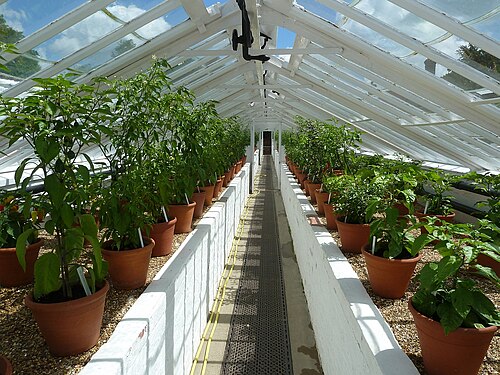
The neighbouring tropical glasshouse is a timber replica of a Thomas Messenger three-quarter-span lean-to, 3.8 m by 18.9 m, painted white. Underfloor heating and a ventilation system regulate the climate; the space is split between a propagation area and a tropical area, and cold frames form a third environment.
Plant collections
On the walls of the Vine House the castle reports grape vines and peaches, and the house also holds its pelargonium collection. In the nineteenth century the garden had vineries, a Peach House and pineapple pits, where several varieties of pineapple were grown.
The tropical glasshouse has three roles, as Alitex describes them: a propagation section growing chillies, hanging cucumbers, herbs, vegetables and medicinal plants; a tropical section with banana plants, guavas, papayas, date palms and strelitzias; and cold frames for culinary and medicinal herbs. In early autumn the castle's website singles out the fiery chillies of the Tropical House. The organic kitchen garden around these glasshouses supplies the castle with fruit, vegetables and cut flowers, according to Parks & Gardens UK.
Visiting
The glasshouses belong to the castle's garden route: the gardens page lists them after the Cut Flower Garden, in the kitchen-garden part. They stand in the west of the site, about 300 m from the keep. Visitors have published interior views from 2018 and from May 2026, although the castle itself does not detail access to the inside of the Vine House.
Early autumn brings out the chillies of the Tropical House and the dahlias of the Cut Flower Garden; spring belongs to the tulip festival. The visit can be extended to the Collector Earl's Garden (2008), the White Garden of the Fitzalan Chapel and the Water Gardens. The garden season runs from April to early November.
50.86° N, 0.56° W
Greenhouses nearby
More greenhouses — United Kingdom
Do you have a good photo of this greenhouse? Suggest it for this page →
Sources (8)
- arundelcastle.org/gardens/
- arundelcastle.org/gardens/history-timeline/
- arundelcastle.org/opening-times/
- britishlistedbuildings.co.uk/101248539-greenhouses-arundel
- alitex.co.uk/greenhouse-case-studies/arundel-castle/
- parksandgardens.org/places/arundel-castle
- greatgardensoftheworld.com/gardens/arundel-castle/
- sussexexpress.co.uk/news/people/why-arundel-castle-gardens-are-among-the-best-in-the-world
Affiliate links — booking through Verrière helps fund our research, at no extra cost to you.