Mackenzie & Moncur glasshouse, Geilston Garden walled garden
Cardross, Argyll and Bute (Scotland)

Sources checked October 2026
- Year
- 19th century; walled garden dated 1797
- Architect
- Mackenzie & Moncur (Edinburgh), glasshouse manufacturers
- Style
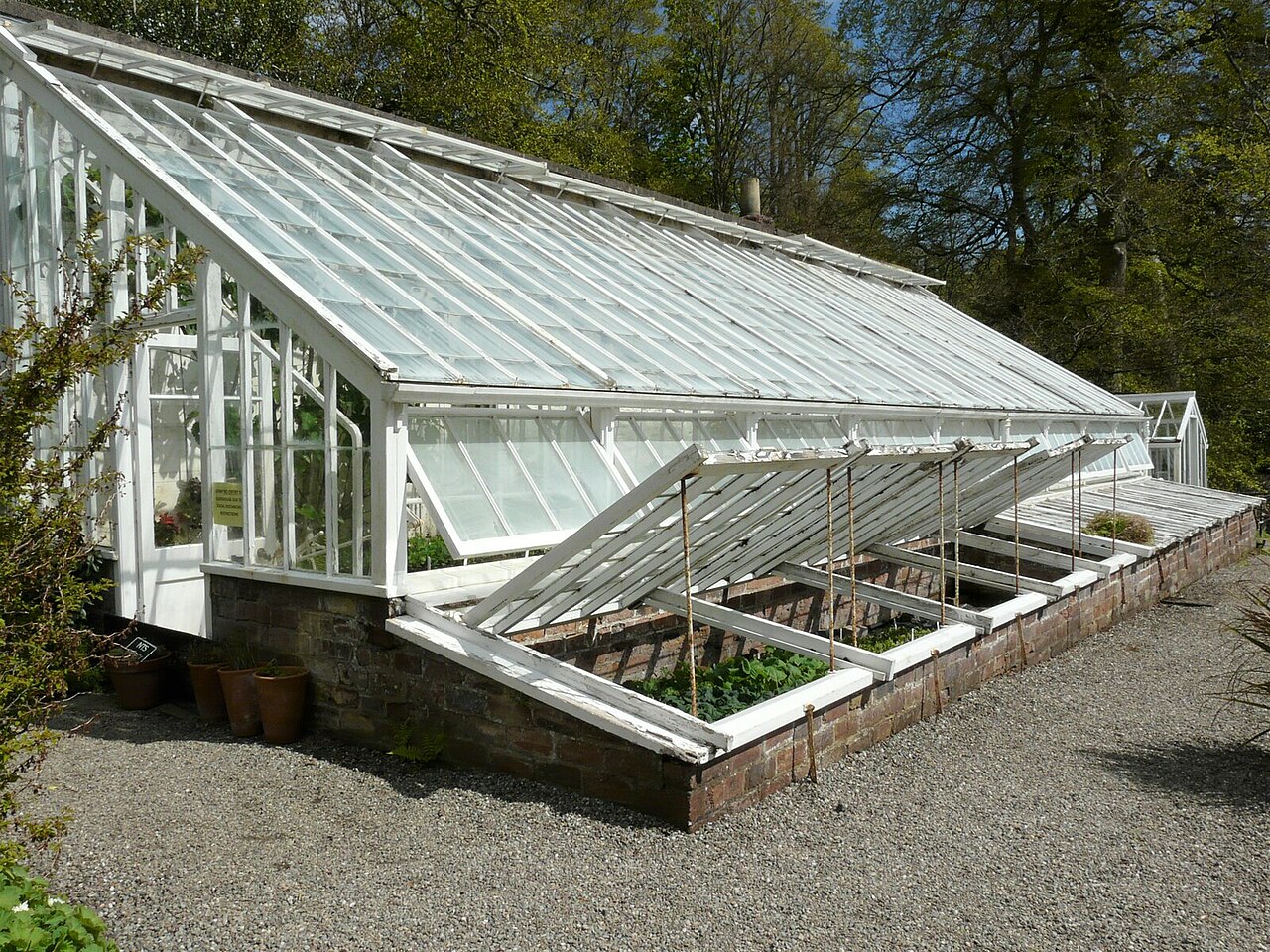
- Victorian lean-to glasshouse against the north wall of the walled garden, glazed roof and front with white-painted bars, heated by cast-iron pipes
- Status
- Open with the National Trust for Scotland garden (16 March to 31 October 2026); photographs of 2023 and 2024 show the interior; conditions of access to be checked
At the back of the walled garden at Geilston, a National Trust for Scotland property at Cardross on the north bank of the Clyde, a Victorian lean-to glasshouse stands against the north wall. Historic Environment Scotland's listing sees a large nineteenth-century glasshouse by Mackenzie & Moncur, while the garden wall is dated 1797. Restored, it still serves to propagate plants for the kitchen garden, and an article of March 2026 says its heating by wrought-iron floor grilles and cast-iron pipes, more than a century old, still works. The Trust and guidebooks list it among the garden's points of interest.
Affiliate links — booking through Verrière helps fund our research, at no extra cost to you.
History
Geilston is built around a house that the Scottish listing dates to 1766, with mid-nineteenth-century additions; guidebooks mention origins in the fourteenth century, a Glasgow tobacco merchant in the eighteenth century, then the Geils family from 1805. The large walled garden, north-east of the house, is dated 1797 by a datestone on a storage building in the north-west corner, whose window overlooks the weirs of the Geilston Burn. According to Wikipedia, Elizabeth Hendry bequeathed the estate to the National Trust for Scotland, leaving the life rent of the house to a friend, and the garden opened to the public after the friend's death.
Against the north wall of the walled garden, the listing describes a large nineteenth-century lean-to glasshouse by Mackenzie & Moncur, which it spells "Makenzie". The National Trust for Scotland calls it Victorian and built by this renowned Scottish manufacturer, whom a 2019 blog places in Edinburgh. Several guides speak of a recently restored glasshouse.
In June 2019 a visitor described it as still heated, by a modern oil boiler, and full of young vegetables, fruit and flowers. In March 2026 the newspaper The Herald wrote that the wrought-iron floor grilles and cast-iron pipes installed more than a century ago work as well as they did at the start.
Architecture and engineering
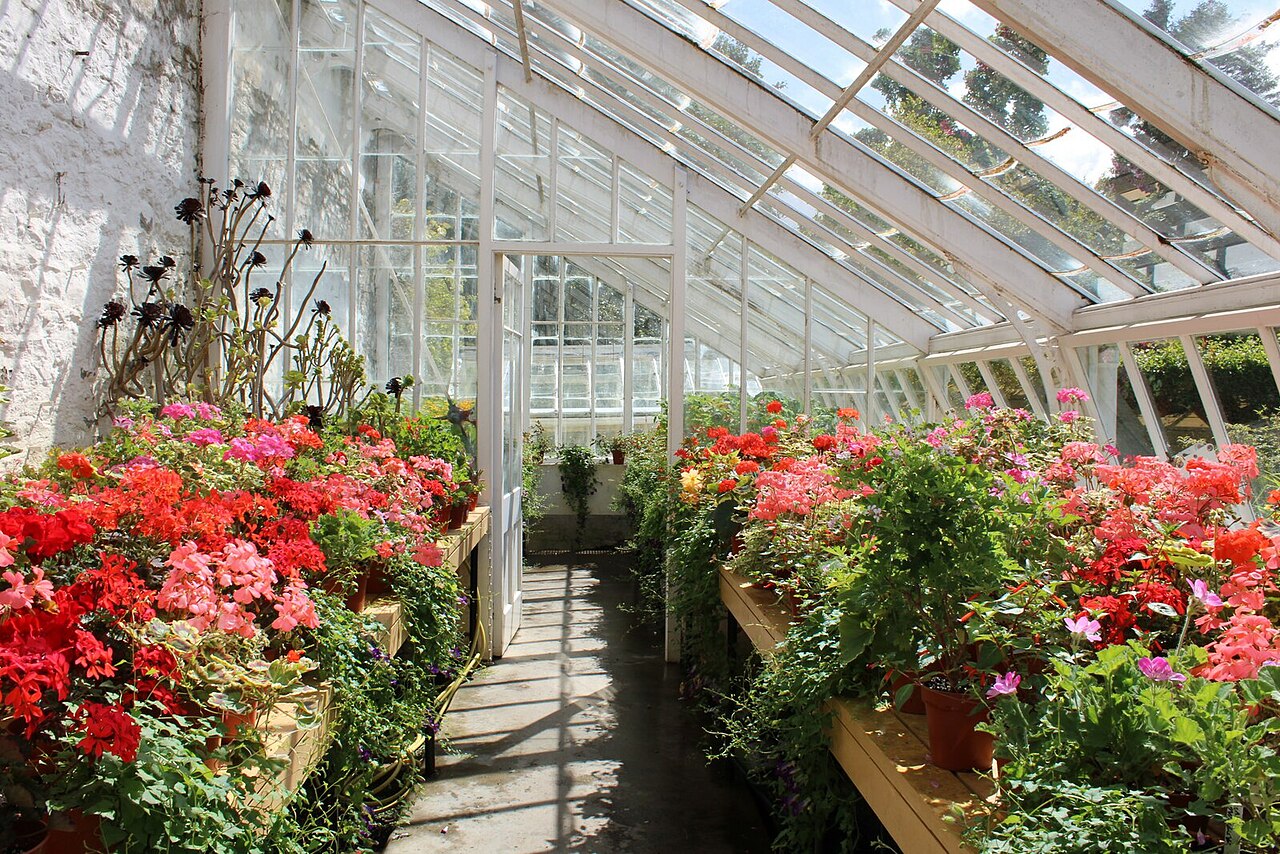
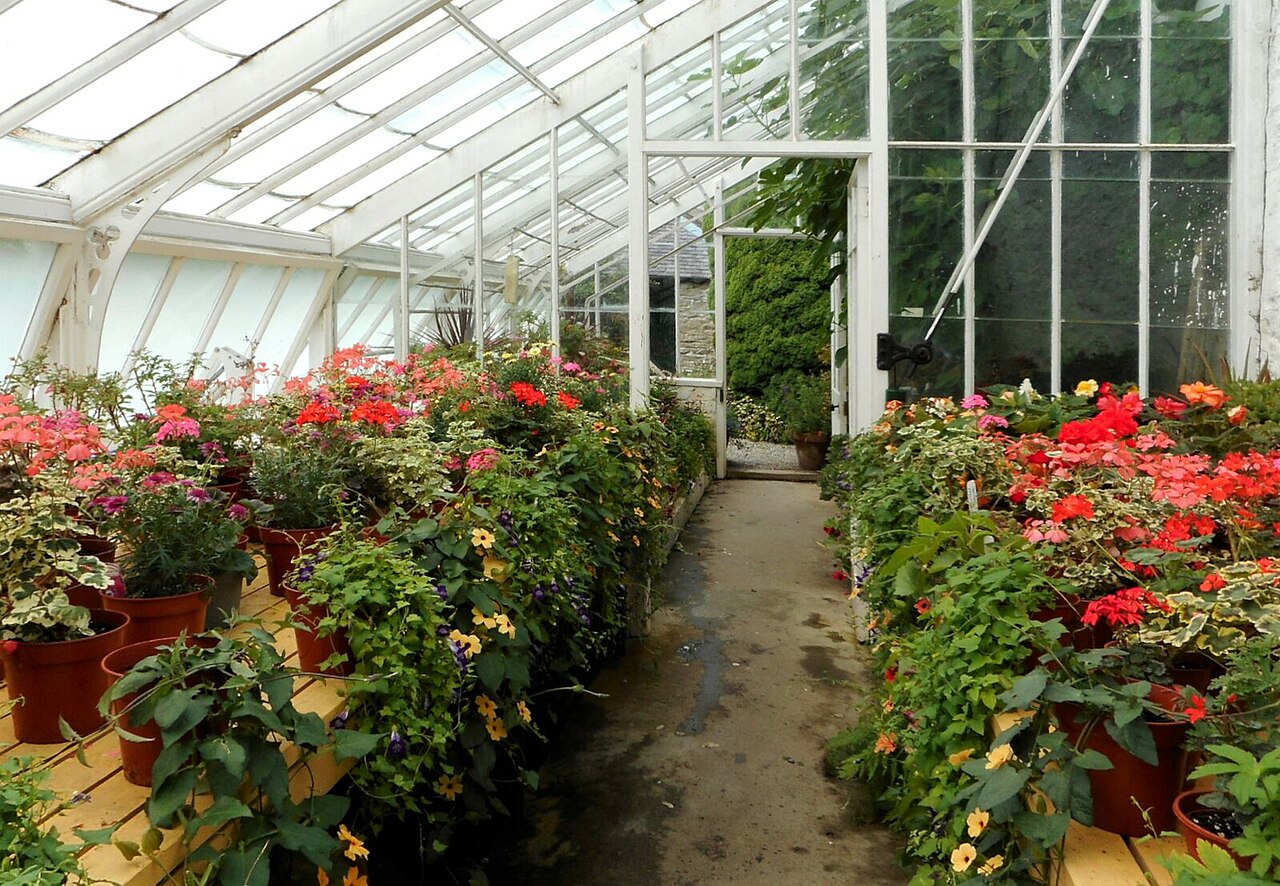
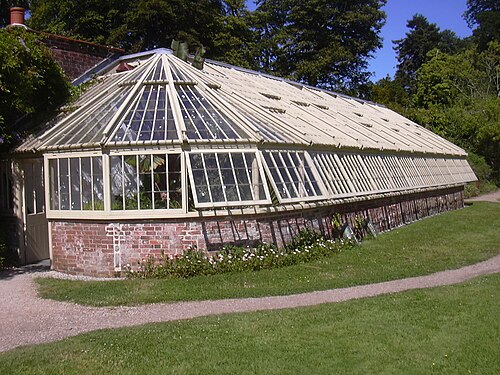
The listing (LB1181) describes, in the walled garden of 1797, "a large 19th-century lean-to greenhouse against the north wall". The wall is of pointed rubble with slab coping; according to Britain Express it stands about fifteen feet high and dates from the late eighteenth century. Photographs on Wikimedia Commons (2011 to 2024) show the glasshouse as a long glazed roof sloping one way, with slender white-painted bars, set on a brick base; cold frames are lined up in front of it and a door opens at the end. Inside, a central path separates two rows of wooden staging loaded with pots.
The Herald says the glasshouse is heated by a system of wrought-iron floor grilles and cast-iron pipes, installed more than a century ago. A 2019 visitor notes a modern oil boiler. The neighbouring storage building, of stone under a half-hipped roof, carries the date 1797.
Plant collections
According to the National Trust for Scotland, the glasshouse still plays a vital propagation role for the annual kitchen garden display. A visitor in June 2019 saw young vegetables, fruit and flowers there, among them pink and white phlox and an aeonium; in March 2026 the Herald wrote that seedlings due to be planted out in May are warmed inside. Photographs of 2023 and 2024 show staging full of pots of flowering plants in red and pink tones.
The neighbouring kitchen garden, surrounded by a beech hedge, produces rhubarb, potatoes, salads and soft fruit, sold from a stall in summer; an orchard occupies one side of that space. The plants grown under glass change with the seasons.
Visiting
The glasshouse stands at the back of the walled garden, beside the storage building dated 1797, whose discreet window looks onto the Geilston Burn; that window can also be seen from the footpath across the stream. The garden is open from 16 March to 31 October 2026; the walled garden is reached by a narrow iron gate near the rose garden, the other entrances having small steps. The kitchen garden comes to life in April and May, according to the Trust, and spring is when the Herald describes seedlings warmed under glass and, beside the burn, primroses and wood anemones. Cardross station is a twenty-minute walk away; Mackintosh's Hill House is 4.1 miles away as the crow flies, according to Britain Express.
55.97° N, 4.66° W
Greenhouses nearby
More greenhouses — United Kingdom
Do you have a good photo of this greenhouse? Suggest it for this page →
Sources (8)
- nts.org.uk/visit/places/geilston-garden/highlights/walled-garden
- nts.org.uk/visit/places/geilston-garden/planning-your-visit
- portal.historicenvironment.scot/apex/f?p=1505:300:::::VIEWTYPE,VIEWREF:designation,LB1181
- heraldscotland.com/life_style/25964736.geilston-garden-one-scotlands-least-known-loveliest
- discoverscottishgardens.org/garden/geilston-garden-nts/
- lomondappletree.co.uk/post/fabulous-geilston-gardens
- britainexpress.com/scotland/Strathclyde/gardens/geilston.htm
- en.wikipedia.org/wiki/Geilston_Garden
Affiliate links — booking through Verrière helps fund our research, at no extra cost to you.